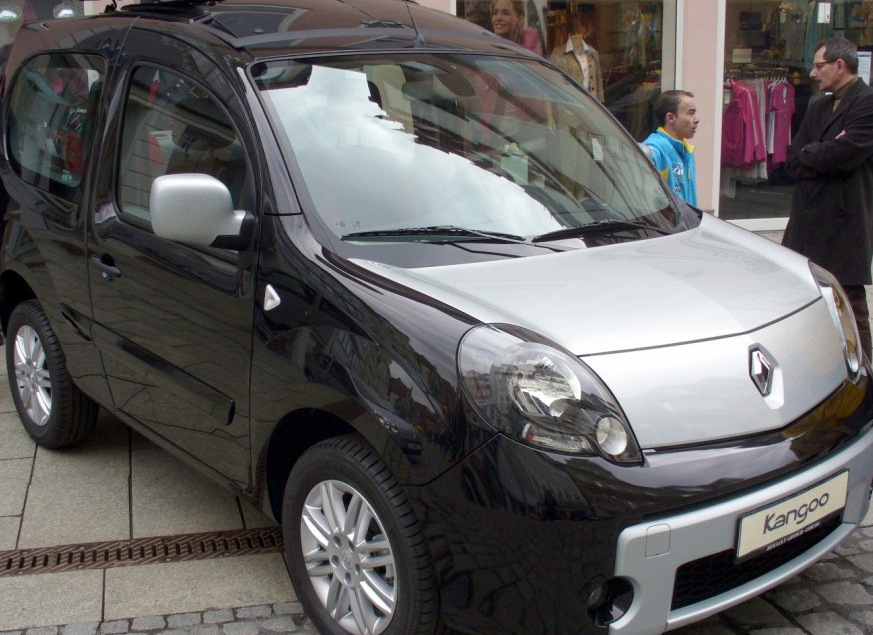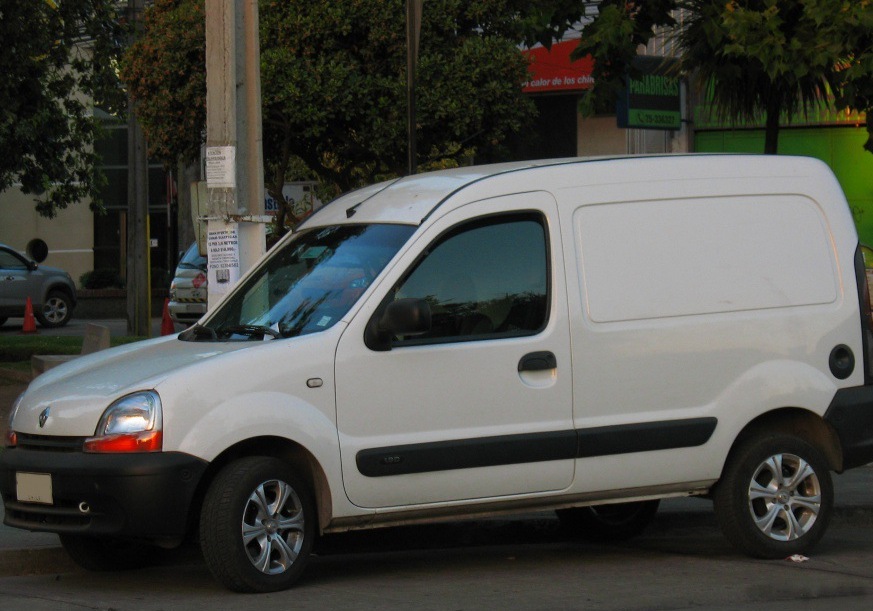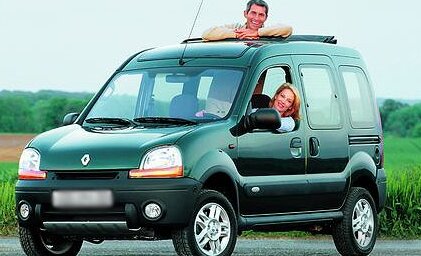
The Renault Kangoo I, produced from 1997 to 2007, represented Renault’s entry into the increasingly popular compact multi-purpose vehicle (MPV) segment. The first generation (KC) offered a practical and versatile solution for families and commercial users alike. Within the Kangoo I range, the 1.6i 16V 95 hp automatic variant, available from 2000 to 2003, occupied a middle ground, offering a balance between affordability, usability, and convenience. It aimed to provide a more relaxed driving experience than the base models while remaining accessible to a wider customer base than the more powerful engine options.
Technical Specifications
| Brand | Renault |
| Model | Kangoo |
| Generation | Kangoo I (KC) |
| Type (Engine) | 1.6i 16V (95 Hp) Automatic |
| Start of production | 2000 year |
| End of production | 2003 year |
| Powertrain Architecture | Internal Combustion engine |
| Body type | Minivan |
| Seats | 5 |
| Doors | 4 |
| Fuel consumption (urban) | 11 l/100 km (21.4 US mpg, 25.7 UK mpg, 9.1 km/l) |
| Fuel consumption (extra urban) | 6.3 l/100 km (37.3 US mpg, 44.8 UK mpg, 15.9 km/l) |
| Fuel consumption (combined) | 7.5 l/100 km (31.4 US mpg, 37.7 UK mpg, 13.3 km/l) |
| Fuel Type | Petrol (Gasoline) |
| Acceleration 0 – 100 km/h | 12.4 sec |
| Acceleration 0 – 62 mph | 12.4 sec |
| Acceleration 0 – 60 mph | 11.8 sec |
| Maximum speed | 162 km/h (100.66 mph) |
| Weight-to-power ratio | 11.6 kg/Hp, 86 Hp/tonne |
| Weight-to-torque ratio | 7.5 kg/Nm, 133.9 Nm/tonne |
| Power | 95 Hp @ 5500 rpm |
| Power per litre | 59.4 Hp/l |
| Torque | 148 Nm @ 4250 rpm (109.16 lb.-ft. @ 4250 rpm) |
| Engine layout | Front, Transverse |
| Engine Model/Code | K4M |
| Engine displacement | 1598 cm3 (97.52 cu. in.) |
| Number of cylinders | 4 |
| Engine configuration | Inline |
| Cylinder Bore | 79.5 mm (3.13 in.) |
| Piston Stroke | 80.5 mm (3.17 in.) |
| Number of valves per cylinder | 4 |
| Fuel injection system | Multi-port manifold injection |
| Engine aspiration | Naturally aspirated engine |
| Valvetrain | DOHC |
| Engine oil capacity | 4.9 l (5.18 US qt | 4.31 UK qt) |
| Coolant capacity | 6 l (6.34 US qt | 5.28 UK qt) |
| Kerb Weight | 1105 kg (2436.11 lbs.) |
| Max. weight | 1630 kg (3593.53 lbs.) |
| Max load | 525 kg (1157.43 lbs.) |
| Trunk (boot) space – minimum | 650 l (22.95 cu. ft.) |
| Trunk (boot) space – maximum | 2600 l (91.82 cu. ft.) |
| Fuel tank capacity | 50 l (13.21 US gal | 11 UK gal) |
| Max. roof load | 100 kg (220.46 lbs.) |
| Permitted trailer load with brakes (12%) | 900 kg (1984.16 lbs.) |
| Permitted trailer load without brakes | 590 kg (1300.73 lbs.) |
| Permitted towbar download | 75 kg (165.35 lbs.) |
| Length | 3995 mm (157.28 in.) |
| Width | 1663 mm (65.47 in.) |
| Width including mirrors | 2015 mm (79.33 in.) |
| Height | 1827 mm (71.93 in.) |
| Wheelbase | 2600 mm (102.36 in.) |
| Front track | 1405 mm (55.31 in.) |
| Rear track | 1415 mm (55.71 in.) |
| Front overhang | 692 mm (27.24 in.) |
| Rear overhang | 703 mm (27.68 in.) |
| Minimum turning circle | 10.95 m (35.93 ft.) |
| Drivetrain Architecture | Front wheel drive |
| Number of gears and type of gearbox | 4 gears, automatic transmission |
| Front suspension | Spring Strut |
| Rear suspension | Trailing arm |
| Front brakes | Ventilated discs |
| Rear brakes | Drum |
| Assisting systems | ABS (Anti-lock braking system) |
| Steering type | Steering rack and pinion |
| Power steering | Hydraulic Steering |
| Tires size | 175/65 R14 T |
| Wheel rims size | 14 |
Powertrain & Engine Architecture
The heart of this Kangoo variant is the Renault K4M engine, a 1.6-liter inline-four cylinder gasoline engine. This engine, widely used across the Renault range during the late 1990s and early 2000s, features a double overhead camshaft (DOHC) valvetrain with four valves per cylinder, contributing to its relatively good breathing and power output for its displacement. The K4M utilizes multi-point fuel injection, delivering fuel directly into the intake ports. The 95 horsepower output is achieved at 5500 rpm, while peak torque of 148 Nm (109 lb-ft) arrives at 4250 rpm. Paired with this engine is a four-speed automatic transmission, offering a level of convenience not found in the standard five-speed manual gearbox. This automatic transmission, while providing ease of use, does impact fuel economy and acceleration compared to its manual counterpart.
Driving Characteristics
The 1.6i 16V automatic Kangoo delivers a comfortable, if not particularly exhilarating, driving experience. Acceleration from 0-60 mph takes around 11.8 seconds, and top speed is around 100 mph. The automatic transmission prioritizes smooth shifts over outright performance. The gear ratios are tuned for fuel efficiency and everyday usability, meaning the engine can feel somewhat strained when accelerating hard or climbing hills. Compared to the manual version, the automatic suffers a slight performance penalty, but the convenience factor is a significant draw for many drivers. The Kangoo’s relatively soft suspension setup provides a comfortable ride, absorbing bumps and imperfections in the road well.
Equipment & Trim Levels
The 1.6i 16V automatic trim typically included features such as power steering, central locking, and an AM/FM radio. Interior upholstery was generally cloth, with a functional, durable design. Optional extras could include air conditioning, electric windows, and upgraded audio systems. The Kangoo’s interior is characterized by its practicality and spaciousness, with ample headroom and legroom for passengers. The rear seats can be folded down or even removed entirely, maximizing cargo capacity. The dashboard layout is simple and straightforward, prioritizing functionality over aesthetics.
Chassis & Braking
The Kangoo I utilizes a relatively simple chassis design, with a MacPherson strut front suspension and a trailing arm rear suspension. The front brakes are ventilated discs, providing adequate stopping power, while the rear brakes are drums. ABS (Anti-lock Braking System) was often included as standard equipment, enhancing safety. The suspension is tuned for comfort, prioritizing ride quality over sporty handling. The Kangoo’s relatively narrow tires (typically 175/65 R14) contribute to its comfortable ride but limit grip in cornering situations.
Market Reception & Comparison
The 1.6i 16V automatic Kangoo was generally well-received as a practical and affordable MPV. Critics praised its spacious interior, versatility, and comfortable ride. However, the automatic transmission was sometimes criticized for its lack of responsiveness and impact on fuel economy. Compared to the base 1.4-liter engine, the 1.6-liter offered a noticeable performance improvement. Compared to the more powerful 1.9-liter diesel engine, the 1.6-liter gasoline engine provided less torque but was generally quieter and smoother. Fuel economy was competitive for its class, averaging around 31.4 US mpg in combined driving.
Legacy
The Renault Kangoo I, particularly the 1.6i 16V automatic variant, has proven to be a relatively reliable vehicle. The K4M engine is known for its durability, and the automatic transmission, while not the most sophisticated, is generally dependable. In the used car market, these Kangoos are often sought after for their practicality and affordability. Maintenance is relatively straightforward, and parts are readily available. However, potential buyers should be aware of potential issues such as corrosion, particularly in areas exposed to salt. Overall, the 1.6i 16V automatic Kangoo remains a viable option for those seeking a practical and affordable MPV.