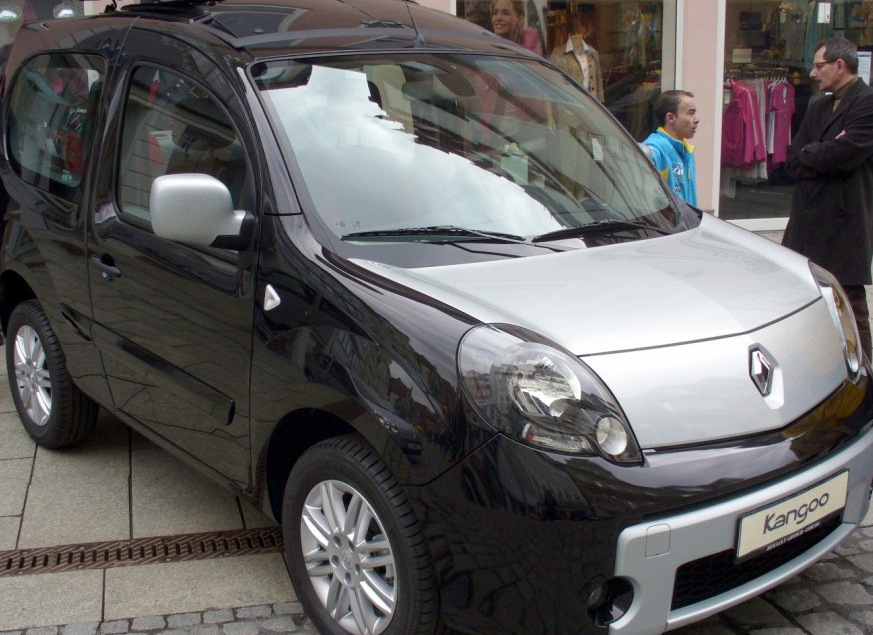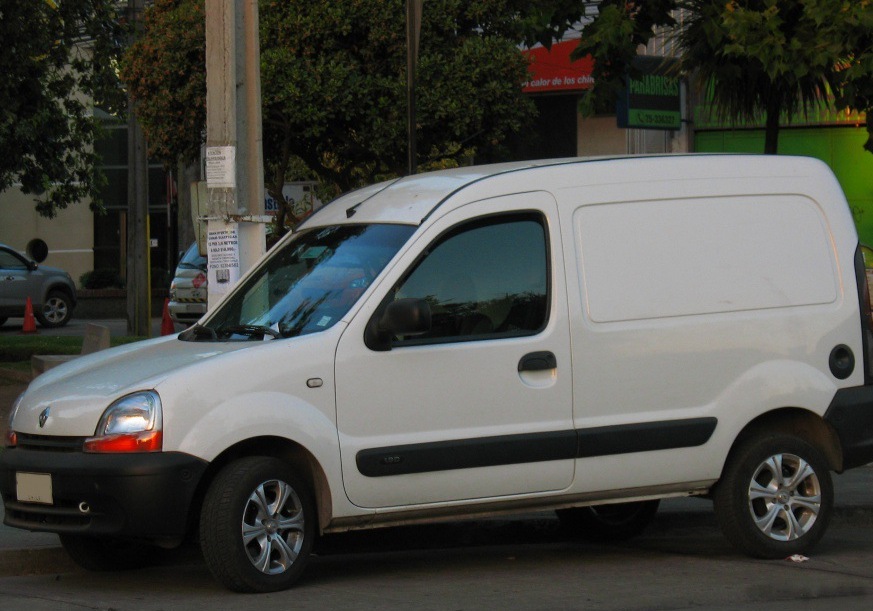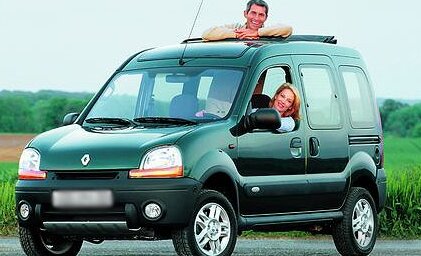
The Renault Kangoo I, specifically the 1.9 dTi variant producing 80 horsepower, was a popular choice in the European light commercial vehicle and multi-purpose vehicle (MPV) segment from 1999 to 2002. Positioned as a practical and economical option, it served as a workhorse for small businesses and families alike. This version of the Kangoo, built on the K4M platform, offered a balance between affordability, fuel efficiency, and cargo capacity. It occupied a middle ground in the Kangoo lineup, offering more performance than the base petrol engines but remaining more accessible than the higher-powered diesel options.
Technical Specifications
| Brand | Renault |
| Model | Kangoo |
| Generation | Kangoo I (KC) |
| Type (Engine) | 1.9 dTi (80 Hp) |
| Start of production | 1999 |
| End of production | 2002 |
| Powertrain Architecture | Internal Combustion engine |
| Body type | Minivan |
| Seats | 5 |
| Doors | 4 |
| Fuel consumption (urban) | 7.1 l/100 km (33.1 US mpg, 39.8 UK mpg, 14.1 km/l) |
| Fuel consumption (extra urban) | 4.9 l/100 km (48 US mpg, 57.6 UK mpg, 20.4 km/l) |
| Fuel consumption (combined) | 5.7 l/100 km (41.3 US mpg, 49.6 UK mpg, 17.5 km/l) |
| CO2 emissions | 152 g/km |
| Fuel Type | Diesel |
| Acceleration 0 – 100 km/h | 14.1 sec |
| Acceleration 0 – 62 mph | 14.1 sec |
| Acceleration 0 – 60 mph | 13.4 sec |
| Maximum speed | 160 km/h (99.42 mph) |
| Weight-to-power ratio | 14.9 kg/Hp, 66.9 Hp/tonne |
| Weight-to-torque ratio | 7.5 kg/Nm, 133.9 Nm/tonne |
| Power | 80 Hp @ 4000 rpm |
| Power per litre | 42.8 Hp/l |
| Torque | 160 Nm @ 2000 rpm (118.01 lb.-ft. @ 2000 rpm) |
| Engine layout | Front, Transverse |
| Engine Model/Code | F9Q Turbo |
| Engine displacement | 1870 cm3 (114.11 cu. in.) |
| Number of cylinders | 4 |
| Engine configuration | Inline |
| Cylinder Bore | 80 mm (3.15 in.) |
| Piston Stroke | 93 mm (3.66 in.) |
| Compression ratio | 18.3:1 |
| Number of valves per cylinder | 2 |
| Fuel injection system | Diesel Commonrail |
| Engine aspiration | Turbocharger |
| Valvetrain | OHC |
| Engine oil capacity | 5.2 l (5.49 US qt | 4.58 UK qt) |
| Coolant capacity | 7.4 l (7.82 US qt | 6.51 UK qt) |
| Kerb Weight | 1195 kg (2634.52 lbs.) |
| Max. weight | 1700 kg (3747.86 lbs.) |
| Max load | 505 kg (1113.33 lbs.) |
| Trunk (boot) space – minimum | 650 l (22.95 cu. ft.) |
| Trunk (boot) space – maximum | 2600 l (91.82 cu. ft.) |
| Fuel tank capacity | 50 l (13.21 US gal | 11 UK gal) |
| Max. roof load | 100 kg (220.46 lbs.) |
| Permitted trailer load with brakes (12%) | 1200 kg (2645.55 lbs.) |
| Permitted trailer load without brakes | 595 kg (1311.75 lbs.) |
| Permitted towbar download | 75 kg (165.35 lbs.) |
| Length | 3995 mm (157.28 in.) |
| Width | 1663 mm (65.47 in.) |
| Width including mirrors | 2015 mm (79.33 in.) |
| Height | 1827 mm (71.93 in.) |
| Wheelbase | 2600 mm (102.36 in.) |
| Front track | 1405 mm (55.31 in.) |
| Rear track | 1418 mm (55.83 in.) |
| Front overhang | 692 mm (27.24 in.) |
| Rear overhang | 703 mm (27.68 in.) |
| Minimum turning circle | 10.95 m (35.93 ft.) |
| Drivetrain | Front wheel drive |
| Number of gears | 5 |
| Gearbox type | Manual transmission |
| Front suspension | Spring Strut |
| Rear suspension | Trailing arm |
| Front brakes | Ventilated discs |
| Rear brakes | Drum |
| Assisting systems | ABS (Anti-lock braking system) |
| Steering type | Steering rack and pinion |
| Power steering | Hydraulic |
| Tires size | 165/70 R14 T |
| Wheel rims size | 5.5J x 14 |
INTRODUCTION
The Renault Kangoo I (KC) 1.9 dTi, produced between 1999 and 2002, represented a significant step forward in the compact van segment. Building upon the success of the original Kangoo, the 1.9 dTi model offered a diesel engine option that prioritized fuel economy and torque for practical applications. The Kangoo I, and this variant specifically, was designed to appeal to both commercial users needing a reliable delivery vehicle and families seeking a versatile and spacious MPV. Its boxy, utilitarian design maximized interior space, while the 1.9 dTi engine provided adequate power for everyday driving and hauling loads. It was a key player in Renault’s strategy to offer affordable and functional vehicles to a broad customer base.
Powertrain & Engine Architecture
The heart of the Kangoo I 1.9 dTi is the F9Q engine, a 1.9-liter inline-four cylinder diesel engine. This engine utilizes a turbocharger to boost power output to 80 horsepower. The F9Q engine is known for its robust construction and relative simplicity, contributing to its longevity. The 1.9 dTi employed a diesel common rail direct injection system, which improved fuel atomization and combustion efficiency compared to older indirect injection systems. This resulted in better fuel economy and reduced emissions. The engine features a single overhead camshaft (OHC) valvetrain operating two valves per cylinder. The five-speed manual transmission was the standard offering for this variant, providing a good balance between fuel efficiency and drivability. The transmission’s gear ratios were tuned for maximizing torque delivery at lower engine speeds, ideal for carrying loads or navigating urban environments.
Driving Characteristics
The 1.9 dTi engine in the Kangoo I delivers a noticeable amount of torque at low RPMs, making it well-suited for hauling cargo or navigating hilly terrain. However, with only 80 horsepower, acceleration is not its strong suit. 0-60 mph takes around 13.4 seconds, and top speed is limited to approximately 99 mph. The five-speed manual transmission allows drivers to keep the engine in its optimal power band, but requires frequent shifting during acceleration. Compared to the petrol-powered Kangoo models, the 1.9 dTi offers significantly better fuel economy. It also provides more torque, making it easier to carry heavy loads. However, it lacks the responsiveness and refinement of the higher-output diesel variants, such as the 1.9 dCi.
Equipment & Trim Levels
The Kangoo I 1.9 dTi typically came with a fairly basic level of equipment, reflecting its utilitarian focus. Standard features generally included power steering, central locking, and a driver’s airbag. Interior upholstery was typically cloth, and the dashboard featured a functional, no-frills design. Optional extras included air conditioning, electric windows, and a radio/cassette player. Higher trim levels, if available, might have added features like upgraded upholstery, alloy wheels, and a more comprehensive audio system. The Kangoo’s interior was designed for practicality, with durable materials and ample storage compartments.
Chassis & Braking
The Kangoo I 1.9 dTi utilizes a relatively simple chassis design. Front suspension consists of MacPherson struts, while the rear suspension employs a trailing arm setup. This configuration provides a comfortable ride quality, although handling is not particularly sporty. The front brakes are ventilated discs, providing adequate stopping power, while the rear brakes are drums. Anti-lock Braking System (ABS) was standard, enhancing safety during emergency braking situations. The Kangoo’s suspension was tuned to prioritize ride comfort and load-carrying capacity over dynamic handling.
Market Reception & Comparison
The Renault Kangoo I 1.9 dTi was generally well-received by critics and consumers alike. It was praised for its fuel efficiency, practicality, and affordability. However, some reviewers noted its lack of refinement and relatively slow acceleration. Compared to the petrol-powered Kangoo models, the 1.9 dTi offered superior fuel economy and torque, making it a more sensible choice for those who frequently carried heavy loads or drove long distances. Compared to the more powerful 1.9 dCi variant, the 1.9 dTi was more affordable but offered less performance. It represented a good compromise for buyers seeking a balance between cost and capability.
Legacy
The Renault Kangoo I 1.9 dTi has proven to be a relatively reliable vehicle, with many examples still on the road today. The F9Q engine is known for its durability, although regular maintenance is essential to prevent issues. Common problems include turbocharger failure and fuel injector issues. In the used car market, the 1.9 dTi variant is often sought after by those looking for a practical and economical workhorse. Its simple design and robust construction make it relatively easy and affordable to maintain. The Kangoo I 1.9 dTi remains a popular choice for small businesses, tradespeople, and families who need a versatile and reliable vehicle.