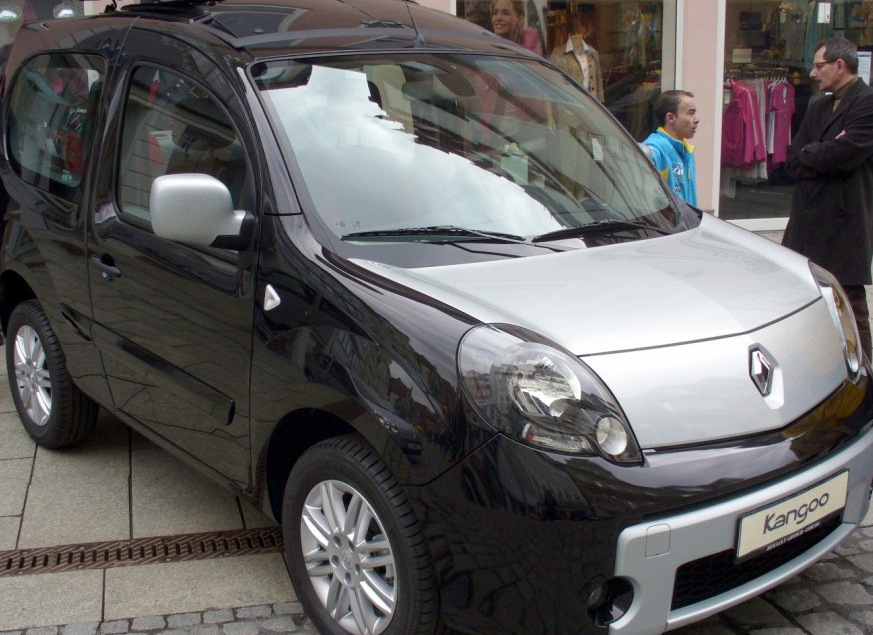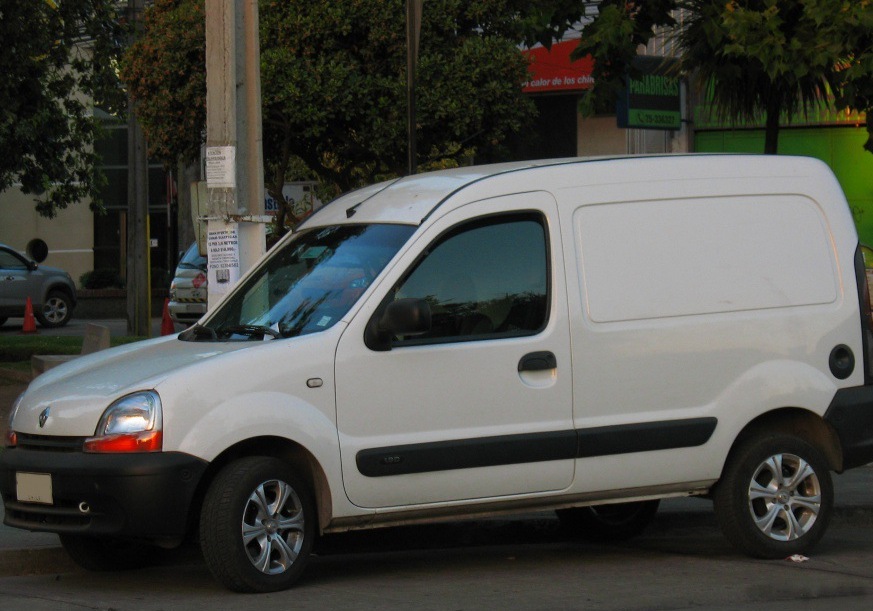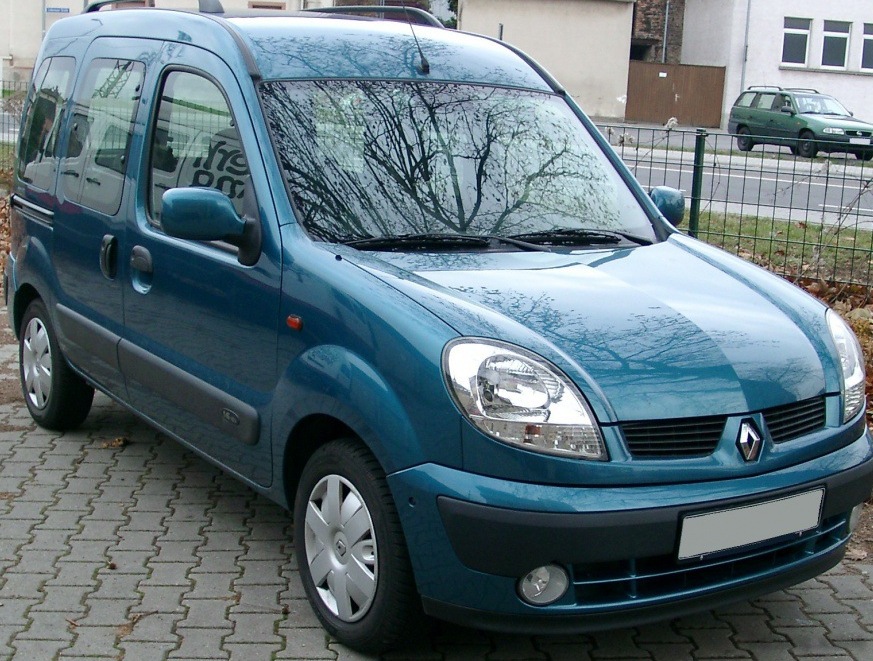
The Renault Kangoo I, specifically the 1.5 dCi variant producing 82 horsepower, was a popular choice in the European light commercial vehicle and leisure activity vehicle (LCV/MPV) segment from 2003 to 2005. This version, part of the KC facelift series, represented a balance between affordability, fuel efficiency, and practicality within the Kangoo range. It served as a core model for businesses needing a compact van and families seeking a versatile, spacious vehicle. The Kangoo I, launched in 1997, was Renault’s answer to the growing demand for small, van-based vehicles, offering a more car-like driving experience than traditional commercial vans.
Technical Specifications
| Brand | Renault |
| Model | Kangoo |
| Generation | Kangoo I (KC, facelift 2003) |
| Type (Engine) | 1.5 dCi (82 Hp) |
| Start of production | 2003 |
| End of production | 2005 |
| Powertrain Architecture | Internal Combustion engine |
| Body type | Minivan |
| Seats | 5 |
| Doors | 4/5 |
| Fuel consumption (urban) | 6.3 l/100 km (37.3 US mpg, 44.8 UK mpg, 15.9 km/l) |
| Fuel consumption (extra urban) | 4.6 l/100 km (51.1 US mpg, 61.4 UK mpg, 21.7 km/l) |
| Fuel consumption (combined) | 5.3 l/100 km (44.4 US mpg, 53.3 UK mpg, 18.9 km/l) |
| CO2 emissions | 139 g/km |
| Fuel Type | Diesel |
| Acceleration 0 – 100 km/h | 12.5 sec |
| Acceleration 0 – 62 mph | 12.5 sec |
| Acceleration 0 – 60 mph | 11.9 sec |
| Maximum speed | 155 km/h (96.31 mph) |
| Emission standard | Euro 3 |
| Weight-to-power ratio | 13.5 kg/Hp, 74.2 Hp/tonne |
| Weight-to-torque ratio | 6 kg/Nm, 167.4 Nm/tonne |
| Power | 82 Hp @ 4250 rpm |
| Power per litre | 56.1 Hp/l |
| Torque | 185 Nm @ 1750 rpm (136.45 lb.-ft. @ 1750 rpm) |
| Engine layout | Front, Transverse |
| Engine Model/Code | K9K |
| Engine displacement | 1461 cm3 (89.16 cu. in.) |
| Number of cylinders | 4 |
| Engine configuration | Inline |
| Cylinder Bore | 76 mm (2.99 in.) |
| Piston Stroke | 80.5 mm (3.17 in.) |
| Number of valves per cylinder | 2 |
| Fuel injection system | Diesel Commonrail |
| Engine aspiration | Turbocharger, Intercooler |
| Engine oil capacity | 5 l (5.28 US qt | 4.4 UK qt) |
| Kerb Weight | 1105 kg (2436.11 lbs.) |
| Max. weight | 1675 kg (3692.74 lbs.) |
| Max load | 570 kg (1256.63 lbs.) |
| Trunk (boot) space – minimum | 650 l (22.95 cu. ft.) |
| Trunk (boot) space – maximum | 2600 l (91.82 cu. ft.) |
| Fuel tank capacity | 50 l (13.21 US gal | 11 UK gal) |
| Max. roof load | 100 kg (220.46 lbs.) |
| Permitted trailer load with brakes (12%) | 900 kg (1984.16 lbs.) |
| Permitted trailer load without brakes | 590 kg (1300.73 lbs.) |
| Permitted towbar download | 75 kg (165.35 lbs.) |
| Length | 4035 mm (158.86 in.) |
| Width | 1672 mm (65.83 in.) |
| Width including mirrors | 2031 mm (79.96 in.) |
| Height | 1835 mm (72.24 in.) |
| Wheelbase | 2605 mm (102.56 in.) |
| Front track | 1405 mm (55.31 in.) |
| Rear (Back) track | 1410 mm (55.51 in.) |
| Front overhang | 730 mm (28.74 in.) |
| Rear overhang | 700 mm (27.56 in.) |
| Minimum turning circle | 10.95 m (35.93 ft.) |
| Drivetrain Architecture | Front wheel drive |
| Drive wheel | Front wheel drive |
| Number of gears and type of gearbox | 5 gears, manual transmission |
| Front suspension | Spring Strut |
| Rear suspension | Trailing arm |
| Front brakes | Ventilated discs |
| Rear brakes | Drum |
| Assisting systems | ABS (Anti-lock braking system) |
| Steering type | Steering rack and pinion |
| Power steering | Hydraulic Steering |
| Tires size | 175/65 R14 |
| Wheel rims size | 5.5J x 14 |
INTRODUCTION
The Renault Kangoo I (KC) facelift, produced from 2003 to 2005, represented a mid-cycle refresh of the original Kangoo launched in 1997. The 1.5 dCi 82 hp variant occupied a crucial position in the lineup, serving as a popular choice for buyers seeking a balance between economy and usability. Built on the X0/B0 platform, the Kangoo I offered a practical and affordable alternative to larger, more expensive vans and MPVs. This particular engine and power output was aimed at customers who prioritized fuel efficiency and lower running costs over outright performance.
Powertrain & Engine Architecture
The heart of the Kangoo I 1.5 dCi 82 hp is the K9K engine, a 1.5-liter inline four-cylinder diesel engine. This engine utilizes a common rail direct injection system, which delivers fuel directly into the combustion chamber at extremely high pressure, improving combustion efficiency and reducing emissions. The K9K engine is equipped with a turbocharger and intercooler, enhancing power output and torque. The 82 horsepower is achieved at 4250 rpm, while the peak torque of 185 Nm (136.45 lb.-ft.) is available from 1750 rpm. This provides a good level of low-end grunt, making it suitable for carrying loads or navigating urban environments. The engine features a two-valve per cylinder configuration. The Kangoo 1.5 dCi typically came paired with a five-speed manual transmission, although an automated manual transmission (Quickshift) was also available as an option. The transmission is front-wheel drive.
Driving Characteristics
The 1.5 dCi 82 hp Kangoo offers a practical, if not particularly exciting, driving experience. Acceleration is modest, taking around 12.5 seconds to reach 62 mph (100 km/h). However, the engine’s strong low-end torque makes it feel more responsive in everyday driving situations. The five-speed gearbox is well-matched to the engine, allowing for comfortable cruising at highway speeds. Compared to higher-powered versions of the Kangoo, such as those with the 1.9 dCi engine, the 1.5 dCi feels less refined and has a narrower power band. However, it compensates with significantly better fuel economy. The suspension is tuned for comfort, providing a reasonably smooth ride, even when carrying a load. Steering is light and easy, making it maneuverable in tight spaces.
Equipment & Trim Levels
The Kangoo I 1.5 dCi 82 hp was typically offered in relatively basic trim levels, focusing on practicality and affordability. Standard equipment generally included power steering, central locking, and an adjustable steering column. Interior upholstery was typically cloth, and the dashboard featured a functional, if somewhat utilitarian, design. Optional extras included air conditioning, electric windows, and a radio/CD player. Higher trim levels, such as the Expression or Privilege, added features like alloy wheels, upgraded interior trim, and additional safety equipment. The Kangoo’s interior is characterized by its spaciousness and versatility, with a configurable seating arrangement and a large cargo area.
Chassis & Braking
The Kangoo I utilizes a relatively simple chassis design, featuring a MacPherson strut front suspension and a trailing arm rear suspension. This setup provides a good balance between ride comfort and handling. The front brakes are ventilated discs, while the rear brakes are drums. ABS (Anti-lock Braking System) was standard equipment, enhancing safety. The Kangoo’s suspension is tuned to prioritize comfort and load-carrying capacity, rather than sporty handling. The steering is a rack and pinion system with hydraulic power assistance, providing light and easy steering feel.
Market Reception & Comparison
The Renault Kangoo I 1.5 dCi 82 hp was well-received in the European market as a practical and affordable LCV/MPV. Critics praised its fuel efficiency, spacious interior, and versatility. However, some criticized its modest performance and somewhat basic interior. Compared to other vehicles in its class, such as the Citroën Berlingo and Peugeot Partner, the Kangoo offered a similar level of practicality and affordability. The 1.5 dCi engine provided a good balance between economy and usability, making it a popular choice for both commercial and private buyers. The higher-powered 1.9 dCi versions offered more performance but came at a higher price and with slightly lower fuel economy.
Legacy
The Renault Kangoo I 1.5 dCi 82 hp has proven to be a relatively reliable and durable vehicle. The K9K engine is known for its robustness, and with regular maintenance, it can provide many years of service. In the used car market, these Kangoos are still relatively common and affordable. However, potential buyers should be aware of potential issues such as turbocharger wear and common rail injector problems. Overall, the Kangoo I 1.5 dCi 82 hp remains a practical and economical choice for those seeking a versatile and affordable light commercial vehicle or MPV.