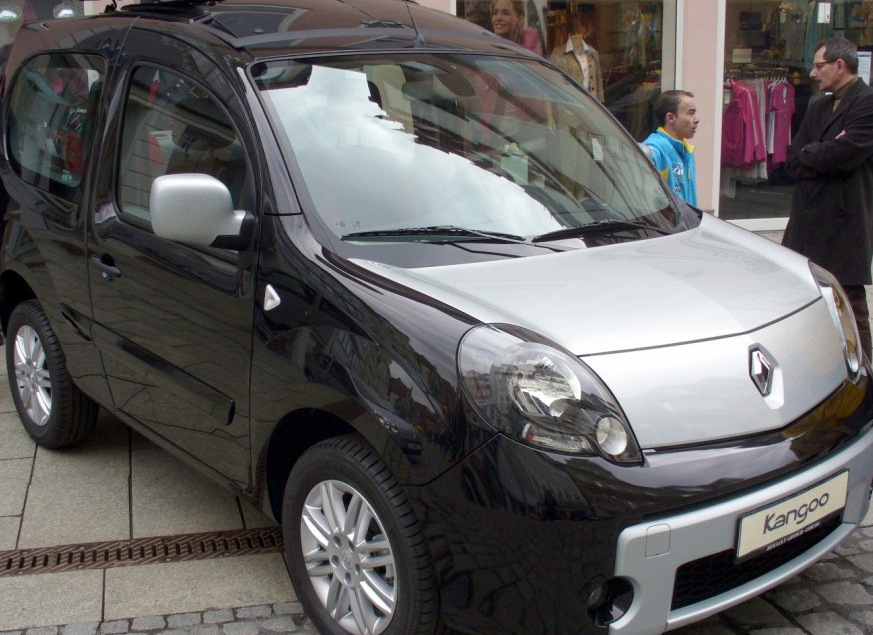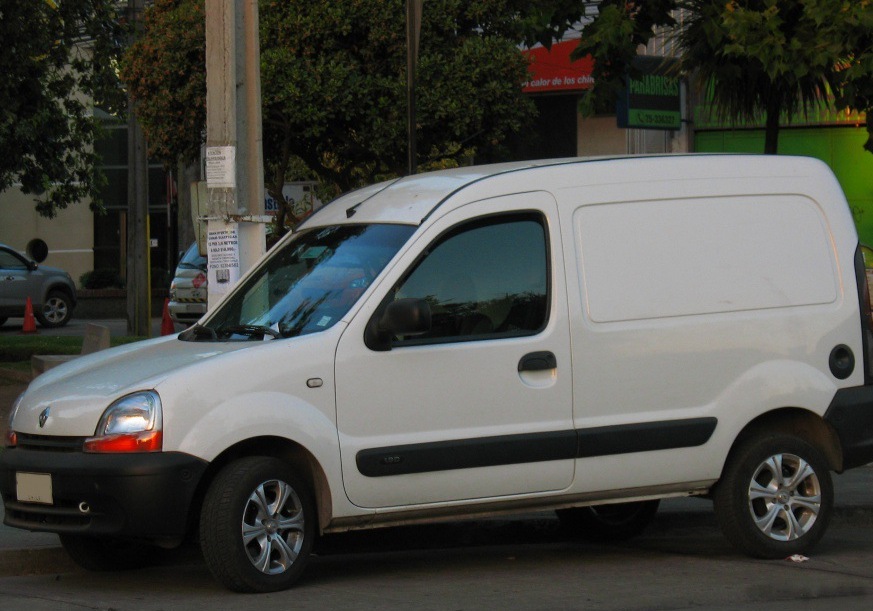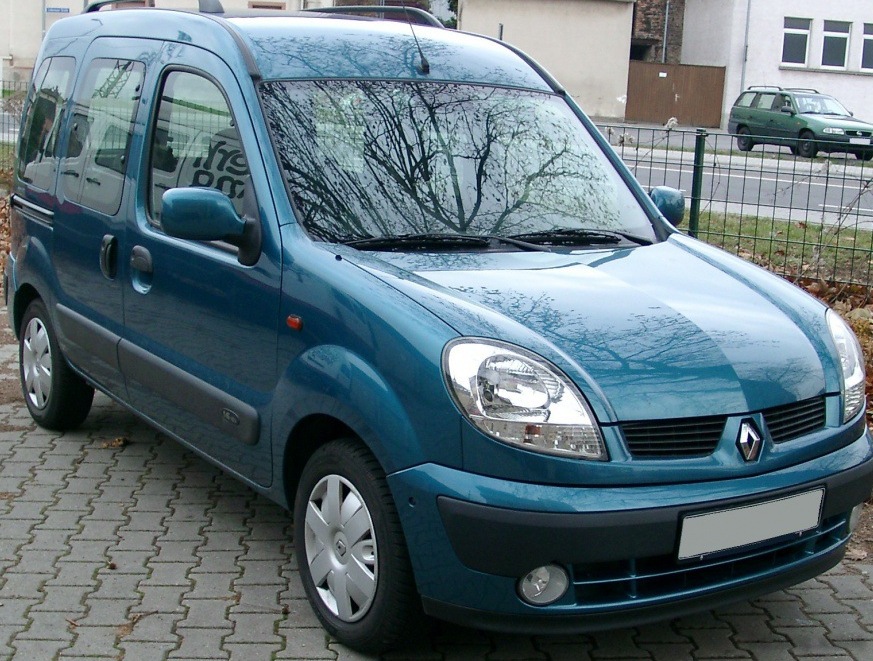
The Renault Kangoo I, specifically the 1.6 16V variant produced between 2003 and 2005, represents a significant iteration of Renault’s popular light commercial vehicle and multi-purpose vehicle (MPV). This facelifted version of the first-generation Kangoo (KC) aimed to refine the original’s practicality and appeal, offering a balance between affordability, functionality, and reasonable performance. Positioned as a mid-range offering within the Kangoo lineup, the 1.6 16V 95 hp engine provided a step up from the base 1.4-liter engine, while remaining more accessible than the diesel options. It was primarily marketed towards families and small businesses needing a versatile vehicle for both passenger and cargo transport, particularly in European markets.
Technical Specifications
| Brand | Renault |
| Model | Kangoo |
| Generation | Kangoo I (KC, facelift 2003) |
| Type (Engine) | 1.6 16V (95 Hp) |
| Start of production | 2003 |
| End of production | 2005 |
| Powertrain Architecture | Internal Combustion engine |
| Body type | Minivan |
| Seats | 5 |
| Doors | 4/5 |
| Fuel consumption (urban) | 9.8 l/100 km (24 US mpg, 28.8 UK mpg, 10.2 km/l) |
| Fuel consumption (extra urban) | 6.1 l/100 km (38.6 US mpg, 46.3 UK mpg, 16.4 km/l) |
| Fuel consumption (combined) | 7.5 l/100 km (31.4 US mpg, 37.7 UK mpg, 13.3 km/l) |
| CO2 emissions | 177 g/km |
| Fuel Type | Petrol (Gasoline) |
| Acceleration 0 – 100 km/h | 10.7 sec |
| Acceleration 0 – 62 mph | 10.7 sec |
| Acceleration 0 – 60 mph | 10.2 sec |
| Maximum speed | 160 km/h (99.42 mph) |
| Emission standard | Euro 3 |
| Weight-to-power ratio | 11.9 kg/Hp, 84.1 Hp/tonne |
| Weight-to-torque ratio | 7.6 kg/Nm, 131 Nm/tonne |
| Power | 95 Hp @ 5000 rpm |
| Power per litre | 59.4 Hp/l |
| Torque | 148 Nm @ 3750 rpm (109.16 lb.-ft. @ 3750 rpm) |
| Engine layout | Front, Transverse |
| Engine Model/Code | K4M |
| Engine displacement | 1598 cm3 (97.52 cu. in.) |
| Number of cylinders | 4 |
| Engine configuration | Inline |
| Cylinder Bore | 79.5 mm (3.13 in.) |
| Piston Stroke | 80.5 mm (3.17 in.) |
| Number of valves per cylinder | 4 |
| Fuel injection system | Multi-port manifold injection |
| Engine aspiration | Naturally aspirated engine |
| Engine oil capacity | 4.9 l (5.18 US qt | 4.31 UK qt) |
| Kerb Weight | 1130 kg (2491.22 lbs.) |
| Max. weight | 1645 kg (3626.6 lbs.) |
| Max load | 515 kg (1135.38 lbs.) |
| Trunk (boot) space – minimum | 650 l (22.95 cu. ft.) |
| Trunk (boot) space – maximum | 2600 l (91.82 cu. ft.) |
| Fuel tank capacity | 50 l (13.21 US gal | 11 UK gal) |
| Max. roof load | 100 kg (220.46 lbs.) |
| Permitted trailer load with brakes (12%) | 890 kg (1962.11 lbs.) |
| Permitted trailer load without brakes | 530 kg (1168.45 lbs.) |
| Permitted towbar download | 75 kg (165.35 lbs.) |
| Length | 4035 mm (158.86 in.) |
| Width | 1672 mm (65.83 in.) |
| Width including mirrors | 2031 mm (79.96 in.) |
| Height | 1835 mm (72.24 in.) |
| Wheelbase | 2605 mm (102.56 in.) |
| Front track | 1405 mm (55.31 in.) |
| Rear (Back) track | 1410 mm (55.51 in.) |
| Front overhang | 730 mm (28.74 in.) |
| Rear overhang | 700 mm (27.56 in.) |
| Minimum turning circle | 10.79 m (35.4 ft.) |
| Drivetrain | Front wheel drive |
| Number of gears and type of gearbox | 5 gears, manual transmission |
| Front suspension | Independent type McPherson |
| Rear suspension | Coil spring |
| Front brakes | Ventilated discs |
| Rear brakes | Disc |
| Steering type | Steering rack and pinion |
| Tires size | 175/65 R14 |
| Wheel rims size | 5.5J x 14 |
Powertrain & Engine Architecture
The heart of this Kangoo variant is the Renault K4M engine, a 1.6-liter inline-four cylinder petrol engine. This engine, widely used across various Renault and partner models, is known for its relative simplicity and durability. The ‘16V’ designation indicates a four-valve-per-cylinder configuration, enhancing breathing and contributing to the engine’s 95 horsepower output at 5000 rpm and 148 Nm (109 lb-ft) of torque at 3750 rpm. Fuel delivery is managed by a multi-point fuel injection system, providing precise fuel metering for improved efficiency and reduced emissions. The engine’s design prioritizes practicality over outright performance, making it well-suited for the Kangoo’s intended role as a versatile workhorse. The transmission is a five-speed manual gearbox, chosen for its affordability and efficiency. While an automatic transmission was available on some Kangoo models, it was less common with the 1.6 16V engine.
Driving Characteristics
The 1.6 16V Kangoo offers a comfortable, if not particularly exhilarating, driving experience. Acceleration from 0 to 100 km/h (0-62 mph) takes around 10.7 seconds, which is adequate for everyday driving but noticeably slower than the more powerful diesel or higher-output petrol versions. The five-speed manual transmission provides reasonable control, but the engine’s torque curve means that frequent gear changes are necessary to maintain momentum, especially when loaded. Compared to the 1.4-liter base engine, the 1.6 16V provides a more responsive feel, particularly when overtaking or climbing hills. However, it lacks the low-end grunt of the diesel engines, which were favored by those prioritizing fuel economy and load-carrying capacity. The suspension is tuned for comfort, absorbing bumps and imperfections in the road well, making it a pleasant vehicle for long journeys.
Equipment & Trim Levels
The 1.6 16V Kangoo typically came equipped with a reasonable level of standard features, including power steering, central locking, and an adjustable steering column. Interior upholstery was typically cloth, with a durable and practical design. Depending on the specific market and optional packages selected, features like air conditioning, electric windows, and a radio/CD player could be added. The dashboard layout is functional and straightforward, prioritizing ease of use over aesthetic flair. Higher trim levels might have included features like alloy wheels, upgraded interior trim, and additional safety equipment.
Chassis & Braking
The Kangoo I utilizes a McPherson strut front suspension and a coil spring rear suspension, providing a good balance between ride comfort and handling. The front brakes are ventilated discs, offering adequate stopping power, while the rear brakes are typically discs as well. The steering is a rack and pinion system, providing precise and responsive control. The vehicle’s relatively lightweight construction contributes to its nimble handling characteristics. Tire size is typically 175/65 R14, providing a good compromise between comfort and grip.
Market Reception & Comparison
The Renault Kangoo 1.6 16V was generally well-received by critics as a practical and versatile vehicle. It was praised for its spacious interior, comfortable ride, and reasonable fuel economy. However, some reviewers noted that its performance was somewhat underwhelming compared to the diesel alternatives. In terms of reliability, the K4M engine is generally considered to be robust and dependable, although regular maintenance is essential. Compared to the 1.4-liter version, the 1.6 16V offered a noticeable improvement in performance, making it a more appealing option for those who frequently carried passengers or cargo. The diesel models, while more expensive, were favored by those prioritizing fuel efficiency and low running costs.
Legacy
The Renault Kangoo I, including the 1.6 16V variant, established the Kangoo as a popular choice in the light commercial vehicle and MPV segments. The K4M engine’s reliability has ensured that many examples remain on the road today, often serving as affordable and practical transportation for families and small businesses. While now considered a classic, the Kangoo I 1.6 16V remains a viable option for those seeking a simple, durable, and versatile vehicle. Its affordability and readily available parts make it a relatively easy vehicle to maintain and repair, contributing to its enduring appeal in the used car market.