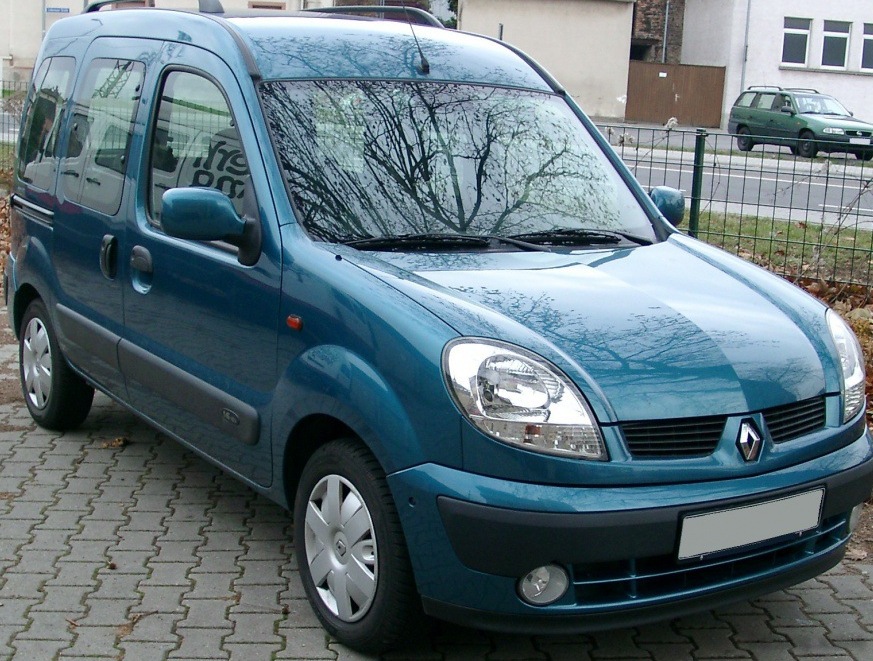
The Renault Kangoo I, specifically the KC facelift model produced between 2003 and 2005 with the 1.6 16V (95 horsepower) engine paired with an automatic transmission, represented a practical and accessible entry point into the compact minivan segment. Positioned as a mid-range offering within the Kangoo I lineup, it catered to buyers seeking convenience and ease of use over outright performance. This variant was a key part of Renault’s strategy to offer a versatile vehicle appealing to families and commercial users alike, particularly in European markets where compact vans and leisure activity vehicles were – and continue to be – highly popular. The Kangoo I itself was based on the shared Renault-Nissan ‘B’ platform, also underpinning the first generation Nissan Kubistar.
Technical Specifications
| Brand | Renault |
| Model | Kangoo |
| Generation | Kangoo I (KC, facelift 2003) |
| Type (Engine) | 1.6 16V (95 Hp) Automatic |
| Start of production | 2003 |
| End of production | 2005 |
| Powertrain Architecture | Internal Combustion engine |
| Body type | Minivan |
| Seats | 5 |
| Doors | 4/5 |
| Fuel consumption (urban) | 11 l/100 km (21.4 US mpg, 25.7 UK mpg, 9.1 km/l) |
| Fuel consumption (extra urban) | 6.3 l/100 km (37.3 US mpg, 44.8 UK mpg, 15.9 km/l) |
| Fuel consumption (combined) | 8 l/100 km (29.4 US mpg, 35.3 UK mpg, 12.5 km/l) |
| CO2 emissions | 190 g/km |
| Fuel Type | Petrol (Gasoline) |
| Acceleration 0 – 100 km/h | 12.4 sec |
| Acceleration 0 – 62 mph | 12.4 sec |
| Acceleration 0 – 60 mph | 11.8 sec |
| Maximum speed | 162 km/h (100.66 mph) |
| Emission standard | Euro 3 |
| Weight-to-power ratio | 11.2 kg/Hp, 89.2 Hp/tonne |
| Weight-to-torque ratio | 7.2 kg/Nm, 139 Nm/tonne |
| Power | 95 Hp @ 5000 rpm |
| Power per litre | 59.4 Hp/l |
| Torque | 148 Nm @ 3750 rpm (109.16 lb.-ft. @ 3750 rpm) |
| Engine layout | Front, Transverse |
| Engine Model/Code | K4M |
| Engine displacement | 1598 cm3 (97.52 cu. in.) |
| Number of cylinders | 4 |
| Engine configuration | Inline |
| Cylinder Bore | 79.5 mm (3.13 in.) |
| Piston Stroke | 80.5 mm (3.17 in.) |
| Number of valves per cylinder | 4 |
| Fuel injection system | Multi-port manifold injection |
| Engine aspiration | Naturally aspirated engine |
| Engine oil capacity | 4.9 l (5.18 US qt | 4.31 UK qt) |
| Kerb Weight | 1065 kg (2347.92 lbs.) |
| Max. weight | 1620 kg (3571.49 lbs.) |
| Max load | 555 kg (1223.57 lbs.) |
| Trunk (boot) space – minimum | 650 l (22.95 cu. ft.) |
| Trunk (boot) space – maximum | 2600 l (91.82 cu. ft.) |
| Fuel tank capacity | 50 l (13.21 US gal | 11 UK gal) |
| Max. roof load | 100 kg (220.46 lbs.) |
| Permitted trailer load with brakes (12%) | 880 kg (1940.07 lbs.) |
| Permitted trailer load without brakes | 530 kg (1168.45 lbs.) |
| Permitted towbar download | 75 kg (165.35 lbs.) |
| Length | 4035 mm (158.86 in.) |
| Width | 1672 mm (65.83 in.) |
| Width including mirrors | 2031 mm (79.96 in.) |
| Height | 1835 mm (72.24 in.) |
| Wheelbase | 2605 mm (102.56 in.) |
| Front track | 1405 mm (55.31 in.) |
| Rear (Back) track | 1410 mm (55.51 in.) |
| Front overhang | 730 mm (28.74 in.) |
| Rear overhang | 700 mm (27.56 in.) |
| Minimum turning circle | 10.79 m (35.4 ft.) |
| Drivetrain Architecture | The Internal combustion engine (ICE) drives the front wheels of the vehicle. |
| Drive wheel | Front wheel drive |
| Number of gears and type of gearbox | 4 gears, automatic transmission |
| Front suspension | Independent type McPherson |
| Rear suspension | Coil spring |
| Front brakes | Ventilated discs |
| Rear brakes | Disc |
| Steering type | Steering rack and pinion |
| Tires size | 175/65 R14 |
| Wheel rims size | 5.5J x 14 |
Powertrain & Engine Architecture
The heart of this Kangoo variant is the Renault K4M engine, a 1.6-liter inline-four cylinder gasoline engine. This engine, a mainstay in Renault’s lineup for many years, features a 16-valve dual overhead camshaft (DOHC) configuration. It utilizes multi-point fuel injection, delivering fuel directly into the intake ports. The K4M is known for its relative simplicity and durability, though it isn’t a powerhouse in terms of performance. The automatic transmission paired with this engine is a four-speed unit, designed for smooth, if not particularly rapid, gear changes. This transmission prioritizes comfort and ease of driving over sporty responsiveness. The K4M engine’s design emphasizes fuel efficiency and low emissions, aligning with European market demands at the time.
Driving Characteristics
The 1.6L 95 hp automatic Kangoo offers a comfortable, but unhurried driving experience. Acceleration from 0-60 mph takes around 11.8 seconds, and top speed is around 100 mph. The automatic transmission, while convenient, does detract from the engine’s available power, resulting in noticeable hesitation during overtaking maneuvers. Compared to the manual transmission version of the same engine, the automatic feels noticeably slower. Higher-output versions, such as those with diesel engines, offered significantly more torque and quicker acceleration. The gear ratios are tuned for economy, meaning the engine often operates at higher RPMs during acceleration, contributing to a somewhat noisy driving experience. However, for everyday commuting and urban driving, the Kangoo 1.6 Automatic provides adequate performance.
Equipment & Trim Levels
The 1.6 16V Automatic Kangoo typically came equipped with features considered standard for a mid-range vehicle in the early 2000s. These included power steering, central locking, electric front windows, and an adjustable steering column. Interior upholstery was typically cloth, with a functional, if somewhat basic, dashboard layout. Optional extras included air conditioning, alloy wheels, and a radio/CD player. Higher trim levels offered features like upgraded upholstery, rear electric windows, and a more comprehensive audio system. The Kangoo’s interior prioritized practicality and space, with a focus on durability rather than luxury.
Chassis & Braking
The Kangoo I utilizes a McPherson strut independent suspension setup at the front, providing a comfortable ride quality. The rear suspension employs a coil spring arrangement. Braking is handled by ventilated discs at the front and solid discs at the rear. The braking system is adequate for the vehicle’s weight and performance, but lacks the stopping power of more performance-oriented vehicles. The suspension is tuned for comfort and load-carrying capacity, rather than sporty handling. Stabilizer bars were fitted to reduce body roll, but the Kangoo is not designed for aggressive cornering.
Market Reception & Comparison
The Renault Kangoo 1.6 16V Automatic was generally well-received as a practical and affordable family vehicle. Critics praised its spacious interior, versatility, and relatively low running costs. However, the automatic transmission was often criticized for its sluggish performance and lack of responsiveness. Compared to the manual transmission version, the automatic offered less engaging driving experience. Diesel-powered Kangoo models were favored by those prioritizing fuel economy and torque, while the 1.6L petrol version appealed to buyers seeking a lower purchase price and smoother, quieter operation. Fuel economy figures of around 30 mpg combined were considered respectable for the time.
Legacy
The Renault Kangoo I, including the 1.6 16V Automatic variant, established the Kangoo as a popular choice in the compact minivan segment. The K4M engine, while not known for its exceptional performance, proved to be relatively reliable and durable. Today, these vehicles are often found as affordable used cars, appreciated for their practicality and low maintenance costs. However, potential buyers should be aware of potential issues with age-related wear and tear, such as corrosion and worn suspension components. The automatic transmission, while convenient, may require more frequent servicing than the manual counterpart. Overall, the Kangoo I 1.6 Automatic remains a viable option for those seeking a budget-friendly and versatile vehicle.