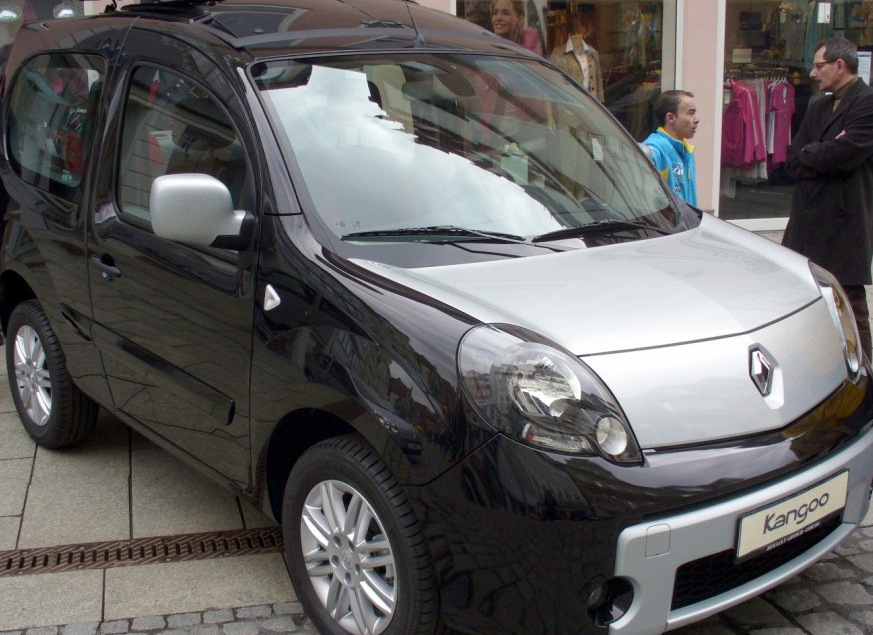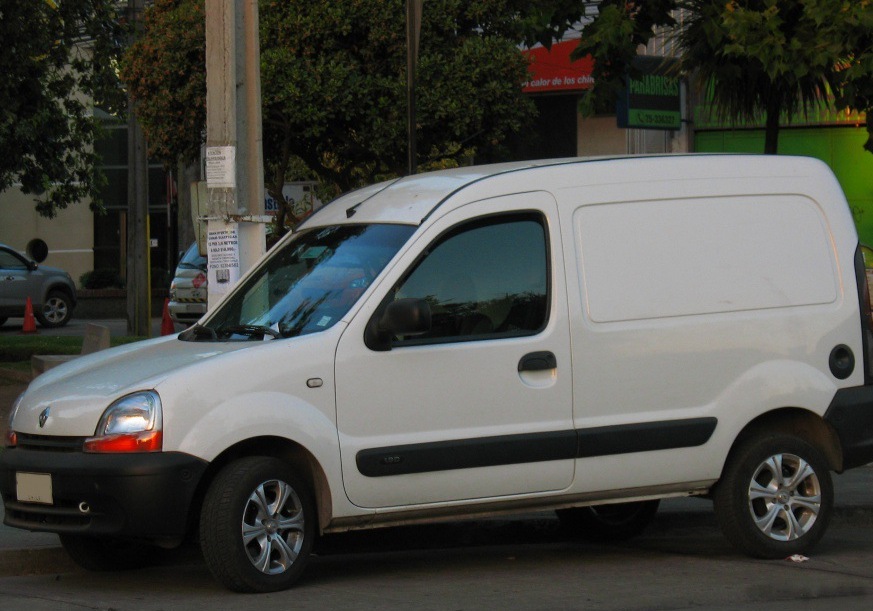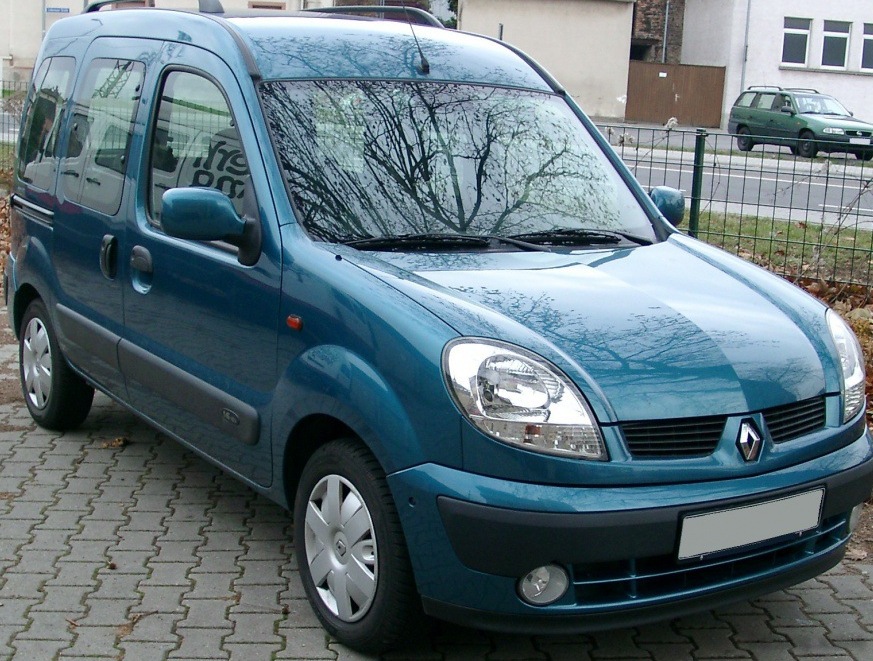
The Renault Kangoo I, specifically the 1.9 dCi 84 horsepower four-wheel drive variant produced between 2003 and 2005, represents a practical and versatile offering within the first generation (KC) Kangoo range. This facelifted model, building upon the original Kangoo introduced in 1997, aimed to provide a robust and economical solution for both commercial and family use, particularly in markets where all-wheel drive capability was valued. Positioned as a mid-range option, it bridged the gap between the base-level engines and the more powerful, though less common, variants. The Kangoo I, and this variant in particular, played a significant role in establishing Renault as a key player in the compact van/leisure activity vehicle (LAV) segment in Europe.
Technical Specifications
| Brand | Renault |
| Model | Kangoo |
| Generation | Kangoo I (KC, facelift 2003) |
| Type (Engine) | 1.9 dCi (84 Hp) 4×4 |
| Start of production | 2003 |
| End of production | 2005 |
| Powertrain Architecture | Internal Combustion engine |
| Body type | Minivan |
| Seats | 5 |
| Doors | 4/5 |
| Fuel consumption (urban) | 9.3 l/100 km (25.3 US mpg, 30.4 UK mpg, 10.8 km/l) |
| Fuel consumption (extra urban) | 6.3 l/100 km (37.3 US mpg, 44.8 UK mpg, 15.9 km/l) |
| Fuel consumption (combined) | 7.4 l/100 km (31.8 US mpg, 38.2 UK mpg, 13.5 km/l) |
| CO2 emissions | 196 g/km |
| Fuel Type | Diesel |
| Acceleration 0 – 100 km/h | 16.2 sec |
| Acceleration 0 – 62 mph | 16.2 sec |
| Acceleration 0 – 60 mph | 15.4 sec |
| Maximum speed | 146 km/h (90.72 mph) |
| Emission standard | Euro 3 |
| Weight-to-power ratio | 15.8 kg/Hp, 63.2 Hp/tonne |
| Weight-to-torque ratio | 7.4 kg/Nm, 135.3 Nm/tonne |
| Power | 84 Hp @ 4000 rpm |
| Power per litre | 44.9 Hp/l |
| Torque | 180 Nm @ 2000 rpm (132.76 lb.-ft. @ 2000 rpm) |
| Engine layout | Front, Transverse |
| Engine Model/Code | F9Q |
| Engine displacement | 1870 cm3 (114.11 cu. in.) |
| Number of cylinders | 4 |
| Engine configuration | Inline |
| Cylinder Bore | 80 mm (3.15 in.) |
| Piston Stroke | 93 mm (3.66 in.) |
| Number of valves per cylinder | 2 |
| Fuel injection system | Diesel Commonrail |
| Engine aspiration | Turbocharger, Intercooler |
| Engine oil capacity | 4.6 l (4.86 US qt | 4.05 UK qt) |
| Kerb Weight | 1330 kg (2932.15 lbs.) |
| Max. weight | 1830 kg (4034.46 lbs.) |
| Max load | 500 kg (1102.31 lbs.) |
| Trunk (boot) space – minimum | 550 l (19.42 cu. ft.) |
| Trunk (boot) space – maximum | 2500 l (88.29 cu. ft.) |
| Fuel tank capacity | 60 l (15.85 US gal | 13.2 UK gal) |
| Max. roof load | 100 kg (220.46 lbs.) |
| Permitted trailer load with brakes (12%) | 1150 kg (2535.32 lbs.) |
| Permitted towbar download | 75 kg (165.35 lbs.) |
| Length | 4035 mm (158.86 in.) |
| Width | 1672 mm (65.83 in.) |
| Width including mirrors | 2031 mm (79.96 in.) |
| Height | 1885 mm (74.21 in.) |
| Wheelbase | 2600 mm (102.36 in.) |
| Front track | 1400 mm (55.12 in.) |
| Rear (Back) track | 1415 mm (55.71 in.) |
| Front overhang | 735 mm (28.94 in.) |
| Rear overhang | 700 mm (27.56 in.) |
| Minimum turning circle | 10.95 m (35.93 ft.) |
| Drive wheel | All wheel drive (4×4) |
| Number of gears | 5 gears, manual transmission |
| Front suspension | Spring Strut |
| Rear suspension | Trailing arm |
| Front brakes | Ventilated discs |
| Rear brakes | Drum |
| Assisting systems | ABS (Anti-lock braking system) |
| Steering type | Steering rack and pinion |
| Power steering | Hydraulic Steering |
| Tires size | 175/65 R14 |
| Wheel rims size | 5.5J x 14 |
Powertrain & Engine Architecture
The heart of this Kangoo variant is the Renault F9Q engine, a 1.9-liter inline-four cylinder diesel. This engine, a mainstay of Renault’s offerings during the late 1990s and early 2000s, utilizes a common rail direct injection system. This system, a significant advancement over earlier diesel injection technologies, allows for more precise fuel delivery, resulting in improved combustion efficiency, reduced noise, and lower emissions. The F9Q is equipped with a turbocharger and intercooler, boosting power output to 84 horsepower and 180 Nm (132.76 lb-ft) of torque. The four-wheel drive system is a viscous coupling system, engaging the rear wheels when slip is detected at the front, providing enhanced traction in slippery conditions. The transmission is a five-speed manual, chosen for its robustness and fuel efficiency, though an automated manual transmission was also available on some Kangoo models.
Driving Characteristics
The 1.9 dCi 4×4 Kangoo offers a pragmatic driving experience. Acceleration is modest, taking around 16.2 seconds to reach 62 mph, reflecting the engine’s focus on fuel economy rather than outright performance. The torque, however, is readily available from low engine speeds, making it suitable for carrying loads or navigating challenging terrain. The four-wheel drive system provides noticeable improvements in grip on loose surfaces, but adds to the vehicle’s weight and slightly impacts fuel consumption. Compared to the standard front-wheel drive Kangoo or the higher-output engine options, this variant prioritizes practicality and all-weather capability over sporty driving dynamics.
Equipment & Trim Levels
The 1.9 dCi 4×4 Kangoo typically came equipped with features such as power steering, ABS brakes, and a basic audio system. Interior trim was functional and durable, with cloth upholstery and plastic dashboard components. Optional extras included air conditioning, electric windows, and a more advanced audio system. The trim level generally fell into a mid-range category, offering a balance between affordability and comfort. The focus was on providing a workhorse vehicle that could also serve as a family transport.
Chassis & Braking
The Kangoo I utilizes a relatively simple chassis design, featuring a spring strut front suspension and a trailing arm rear suspension. This setup provides a comfortable ride, though it’s not particularly sporty. The front brakes are ventilated discs, offering adequate stopping power, while the rear brakes are drums, a cost-saving measure common in this class of vehicle. The four-wheel drive system adds weight and complexity to the chassis, but the overall design is robust and reliable.
Market Reception & Comparison
The Renault Kangoo I 1.9 dCi 4×4 was generally well-received in markets where all-wheel drive was desirable, such as rural areas or regions with harsh winters. Critics praised its practicality, fuel efficiency, and robust construction. Compared to other compact vans of the time, such as the Citroën Berlingo or Peugeot Partner, the Kangoo offered a competitive package, particularly in its four-wheel drive configuration. However, some reviewers noted the engine’s lack of refinement and the somewhat basic interior. Fuel economy was a strong point, offering a good balance between performance and running costs.
Legacy
The Renault Kangoo I 1.9 dCi 4×4, while not a high-performance vehicle, has proven to be a durable and reliable workhorse. The F9Q engine, despite its age, is known for its longevity when properly maintained. Today, these vehicles are often found in the used car market, offering an affordable and practical transportation solution. The 4×4 variants are particularly sought after by those needing all-weather capability. While maintenance costs can increase with age, the Kangoo’s simple design and readily available parts make it a relatively easy vehicle to keep on the road. It remains a testament to Renault’s ability to produce practical and dependable vehicles for a wide range of users.