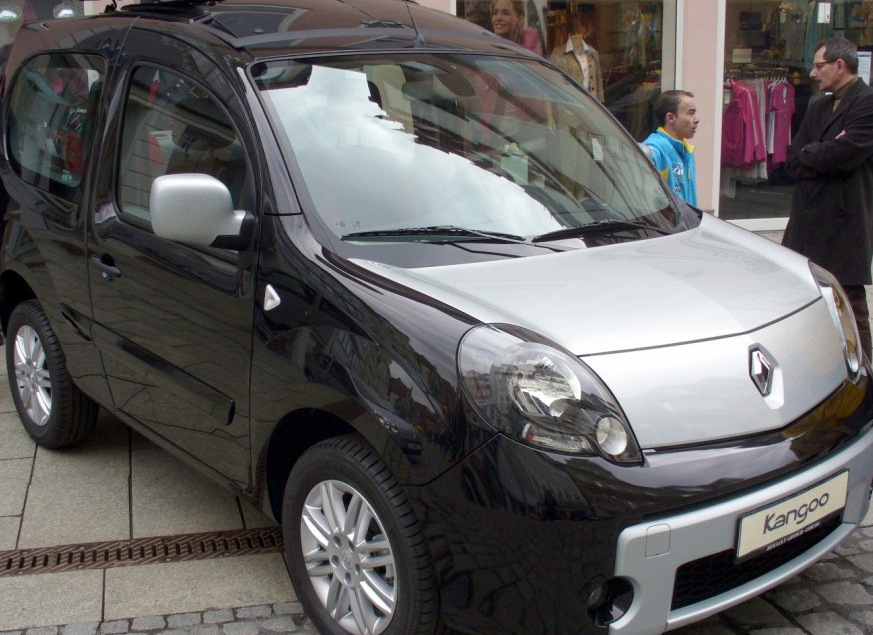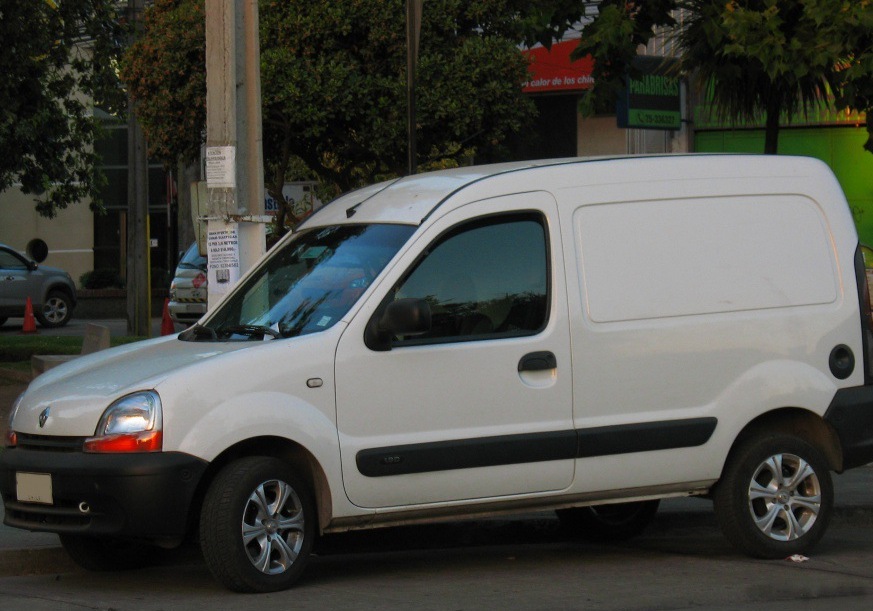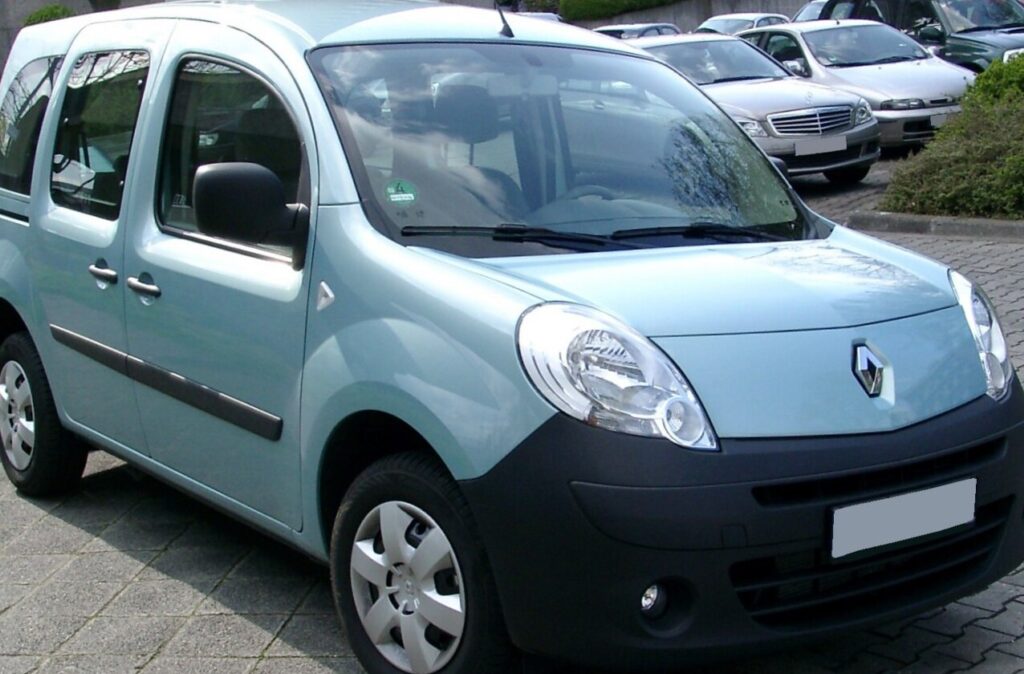
The Renault Kangoo II 1.5 dCi, producing 103 horsepower, was a popular configuration of Renault’s versatile light commercial vehicle and multi-purpose vehicle (MPV) offered between 2007 and 2013. Positioned as a mid-range option within the Kangoo II lineup, it aimed to balance affordability with reasonable performance and fuel economy. This variant played a significant role in the European market, where compact vans and MPVs were – and continue to be – in high demand for both commercial and family use. The Kangoo II itself was built upon the shared Renault-Nissan “B” platform, also known as the X98 series, and represented a substantial upgrade over its predecessor in terms of space, comfort, and safety.
Technical Specifications
| Brand | Renault |
| Model | Kangoo |
| Generation | Kangoo II |
| Type (Engine) | 1.5 dCi (103 Hp) |
| Start of production | 2007 |
| End of production | 2013 |
| Powertrain Architecture | Internal Combustion engine |
| Body type | Minivan |
| Seats | 5 |
| Doors | 5 |
| Fuel consumption (urban) | 6.4 l/100 km (36.8 US mpg, 44.1 UK mpg, 15.6 km/l) |
| Fuel consumption (extra urban) | 5.3 l/100 km (44.4 US mpg, 53.3 UK mpg, 18.9 km/l) |
| Fuel consumption (combined) | 5.7 l/100 km (41.3 US mpg, 49.6 UK mpg, 17.5 km/l) |
| CO2 emissions | 151 g/km |
| Fuel Type | Diesel |
| Acceleration 0 – 100 km/h | 13.2 sec |
| Acceleration 0 – 62 mph | 13.2 sec |
| Acceleration 0 – 60 mph | 12.5 sec |
| Maximum speed | 159 km/h (98.8 mph) |
| Emission standard | Euro 4 |
| Weight-to-power ratio | 14.6 kg/Hp, 68.4 Hp/tonne |
| Weight-to-torque ratio | 6.3 kg/Nm, 159.5 Nm/tonne |
| Power | 103 Hp @ 4000 rpm |
| Power per litre | 70.5 Hp/l |
| Torque | 240 Nm @ 2000 rpm (177.01 lb.-ft. @ 2000 rpm) |
| Engine layout | Front, Transverse |
| Engine Model/Code | K9K |
| Engine displacement | 1461 cm3 (89.16 cu. in.) |
| Number of cylinders | 4 |
| Engine configuration | Inline |
| Cylinder Bore | 76 mm (2.99 in.) |
| Piston Stroke | 80.5 mm (3.17 in.) |
| Compression ratio | 18.8:1 |
| Number of valves per cylinder | 2 |
| Fuel injection system | Diesel Commonrail |
| Engine aspiration | Turbocharger, Intercooler |
| Valvetrain | DOHC |
| Engine oil capacity | 4.5 l (4.76 US qt | 3.96 UK qt) |
| Coolant | 7.2 l (7.61 US qt | 6.34 UK qt) |
| Kerb Weight | 1505 kg (3317.96 lbs.) |
| Max. weight | 1982 kg (4369.56 lbs.) |
| Max load | 477 kg (1051.6 lbs.) |
| Trunk (boot) space – minimum | 438 l (15.47 cu. ft.) |
| Trunk (boot) space – maximum | 1977 l (69.82 cu. ft.) |
| Fuel tank capacity | 60 l (15.85 US gal | 13.2 UK gal) |
| Max. roof load | 100 kg (220.46 lbs.) |
| Permitted trailer load with brakes (12%) | 1050 kg (2314.85 lbs.) |
| Permitted trailer load without brakes | 750 kg (1653.47 lbs.) |
| Permitted towbar download | 75 kg (165.35 lbs.) |
| Length | 4213 mm (165.87 in.) |
| Width | 1829 mm (72.01 in.) |
| Width including mirrors | 2133 mm (83.98 in.) |
| Height | 1839 mm (72.4 in.) |
| Wheelbase | 2697 mm (106.18 in.) |
| Front track | 1533 mm (60.35 in.) |
| Rear (Back) track | 1521 mm (59.88 in.) |
| Front overhang | 807 mm (31.77 in.) |
| Rear overhang | 709 mm (27.91 in.) |
| Minimum turning circle | 11 m (36.09 ft.) |
| Drivetrain | Front wheel drive |
| Number of gears and type of gearbox | 6 gears, manual transmission |
| Front suspension | Independent type McPherson |
| Rear suspension | Torsion |
| Front brakes | Ventilated discs |
| Rear brakes | Disc |
| Assisting systems | ABS (Anti-lock braking system) |
| Steering type | Steering rack and pinion |
| Power steering | Electric Steering |
| Tires size | 195/65 R15 |
| Wheel rims size | 15 |
INTRODUCTION
The Renault Kangoo II 1.5 dCi 103 Hp, launched in 2007, represented a key offering in Renault’s light commercial and passenger vehicle range. It was part of the second generation Kangoo (2007-2013), which brought significant improvements in design, practicality, and safety compared to the original model. This particular engine and power output was designed to appeal to buyers seeking a balance between fuel efficiency, reasonable performance, and affordability. The Kangoo II, in general, was a popular choice in Europe, particularly among small businesses, tradespeople, and families needing a versatile and economical vehicle. The 1.5 dCi engine, a mainstay of Renault’s diesel lineup, was known for its robustness and relatively low running costs.
Powertrain & Engine Architecture
The heart of this Kangoo variant is the K9K 1.5-liter four-cylinder diesel engine. This engine, a common sight in Renault and Nissan vehicles of the period, is a turbocharged common rail direct injection (CRDI) unit. The K9K engine family is known for its oversquare design (76mm bore and 80.5mm stroke), which contributes to its relatively high-revving nature for a diesel. The 103 horsepower version utilizes a fixed-geometry turbocharger and an intercooler to boost power and torque. Fuel is delivered via Delphi-supplied common rail injection, operating at pressures up to 1600 bar. The engine features a double overhead camshaft (DOHC) valvetrain with two valves per cylinder. The engine is transversely mounted at the front of the vehicle. The transmission is a 6-speed manual gearbox, offering a good spread of ratios for both urban and highway driving. While an automated manual transmission was available on some Kangoo II models, the 103 hp version was primarily offered with the manual.
Driving Characteristics
The 1.5 dCi 103 hp Kangoo II provides adequate, though not exhilarating, performance. Acceleration from 0-60 mph takes around 12.5 seconds, and top speed is approximately 99 mph. The engine delivers its peak torque of 240 Nm (177 lb-ft) at 2000 rpm, providing reasonable pulling power for carrying loads or navigating hilly terrain. The 6-speed manual transmission helps to keep the engine in its optimal power band. Compared to the higher-output 110 hp version of the same engine, the 103 hp variant feels slightly less responsive, particularly when fully loaded. However, the difference is not dramatic. Compared to the petrol engines available in the Kangoo II range, the 1.5 dCi offers significantly better fuel economy and torque, making it a more practical choice for many users. The ride quality is generally comfortable, thanks to the MacPherson strut front suspension and torsion beam rear suspension, but it can become a little unsettled on rough surfaces when the vehicle is heavily laden.
Equipment & Trim Levels
The 1.5 dCi 103 hp Kangoo II typically came equipped with a reasonable level of standard features. These included power steering, central locking, electric front windows, and an adjustable steering column. Safety features such as ABS and driver/passenger airbags were also standard. Higher trim levels, such as the “Expression” and “Privilege” models, added features like air conditioning, a CD player, alloy wheels, and rear parking sensors. Interior upholstery was typically cloth, with a durable and practical design. Optional extras included a navigation system, metallic paint, and a glazed rear tailgate with a wiper.
Chassis & Braking
The Kangoo II utilizes a front-wheel-drive layout with independent MacPherson strut suspension at the front and a torsion beam setup at the rear. This configuration provides a good balance between ride comfort and handling. The front brakes are ventilated discs, while the rear brakes are solid discs. ABS (Anti-lock Braking System) is standard, providing enhanced braking performance in emergency situations. The steering is rack and pinion with electric power assistance, offering light and precise steering feel. The suspension is tuned to prioritize comfort and load-carrying capacity rather than sporty handling.
Market Reception & Comparison
The Renault Kangoo II 1.5 dCi 103 hp was generally well-received by critics and buyers alike. It was praised for its practicality, fuel efficiency, and affordability. Compared to other small vans and MPVs in its class, such as the Citroën Berlingo and Peugeot Partner, the Kangoo II offered a competitive package. The 1.5 dCi engine was considered to be reliable and economical, although some owners reported issues with the diesel particulate filter (DPF) on earlier models. Fuel economy figures of around 41-49 mpg (combined) were typical, making it an attractive option for those covering high mileages. The 103 hp version offered a good compromise between performance and running costs, making it a popular choice for both commercial and private buyers.
Legacy
The Renault Kangoo II 1.5 dCi 103 hp remains a relatively common sight on European roads today. The K9K engine, while not without its quirks, has proven to be reasonably durable and reliable when properly maintained. The availability of spare parts is good, and maintenance costs are generally reasonable. On the used car market, these Kangoos represent good value for money, offering a practical and economical transportation solution. However, potential buyers should be aware of the potential for DPF issues on earlier models and ensure that the vehicle has been regularly serviced. The Kangoo II, in all its variants, helped to solidify Renault’s position as a leading manufacturer of light commercial vehicles and MPVs.