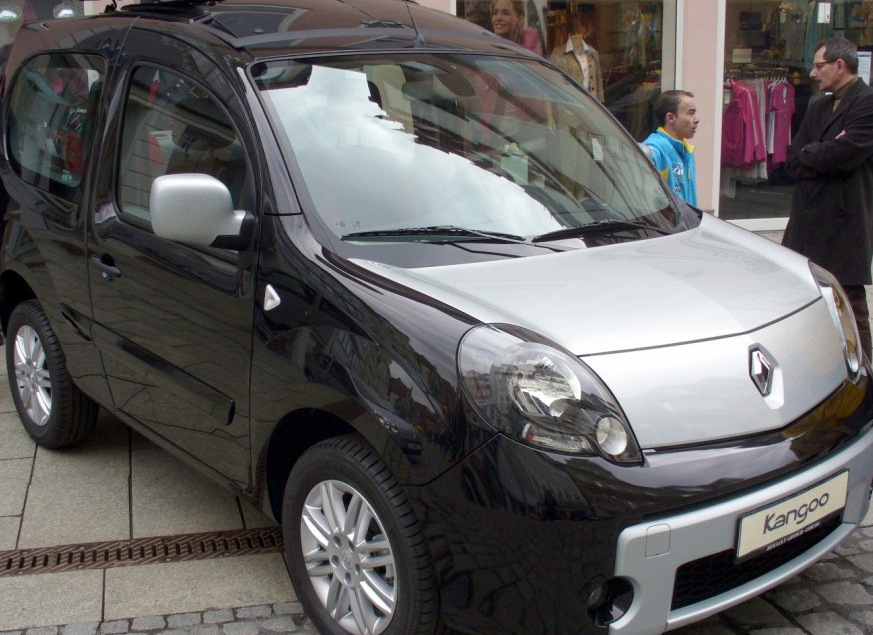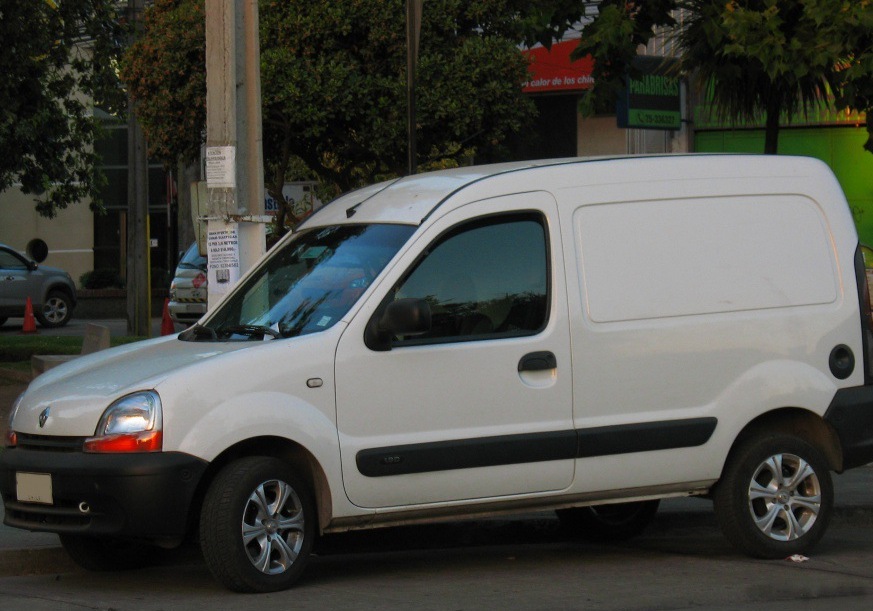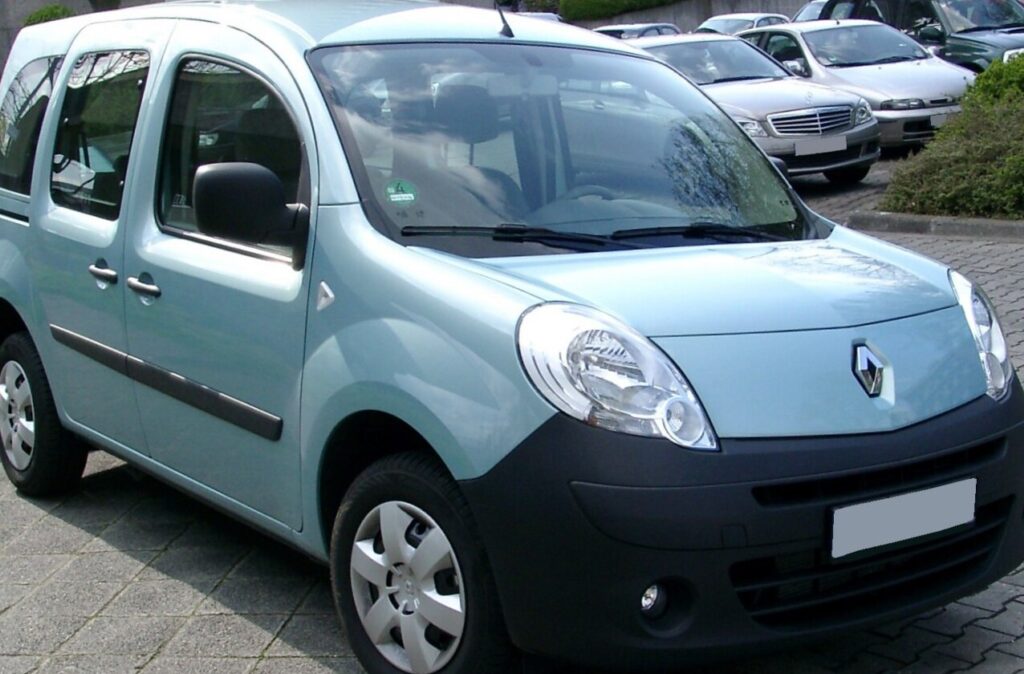
The Renault Kangoo II 1.5 dCi 68 horsepower variant was a popular entry-level offering within the Kangoo II range, produced from 2007 to 2010. Positioned as an affordable and practical light commercial vehicle and multi-purpose vehicle (MPV), it catered to buyers prioritizing fuel efficiency and functionality over outright performance. This version played a significant role in the Kangoo II’s success, particularly in European markets where compact vans and MPVs were in high demand. It was built on the X0/B91 platform, shared with the Renault Scenic and Mégane of the same era.
Technical Specifications
| Brand | Renault |
| Model | Kangoo |
| Generation | Kangoo II |
| Type (Engine) | 1.5 dCi (68 Hp) |
| Start of production | 2007 |
| End of production | 2010 |
| Powertrain Architecture | Internal Combustion engine |
| Body type | Minivan |
| Seats | 5 |
| Doors | 5 |
| Fuel consumption (urban) | 5.8 l/100 km (40.6 US mpg, 48.7 UK mpg, 17.2 km/l) |
| Fuel consumption (extra urban) | 4.9 l/100 km (48 US mpg, 57.6 UK mpg, 20.4 km/l) |
| Fuel consumption (combined) | 5.2 l/100 km (45.2 US mpg, 54.3 UK mpg, 19.2 km/l) |
| CO2 emissions | 138 g/km |
| Fuel Type | Diesel |
| Acceleration 0 – 100 km/h | 19.6 sec |
| Acceleration 0 – 62 mph | 19.6 sec |
| Acceleration 0 – 60 mph | 18.6 sec |
| Maximum speed | 146 km/h (90.72 mph) |
| Emission standard | Euro 4 |
| Weight-to-power ratio | 21.5 kg/Hp, 46.4 Hp/tonne |
| Weight-to-torque ratio | 7.9 kg/Nm, 126.4 Nm/tonne |
| Power | 68 Hp @ 4000 rpm |
| Power per litre | 46.5 Hp/l |
| Torque | 185 Nm @ 1750 rpm (136.45 lb.-ft. @ 1750 rpm) |
| Engine layout | Front, Transverse |
| Engine Model/Code | K9K |
| Engine displacement | 1461 cm3 (89.16 cu. in.) |
| Number of cylinders | 4 |
| Engine configuration | Inline |
| Cylinder Bore | 76 mm (2.99 in.) |
| Piston Stroke | 80.5 mm (3.17 in.) |
| Compression ratio | 18.8:1 |
| Number of valves per cylinder | 2 |
| Fuel injection system | Diesel Commonrail |
| Engine aspiration | Turbocharger, Intercooler |
| Valvetrain | DOHC |
| Engine oil capacity | 4.5 l (4.76 US qt | 3.96 UK qt) |
| Coolant | 7.2 l (7.61 US qt | 6.34 UK qt) |
| Kerb Weight | 1464 kg (3227.57 lbs.) |
| Max. weight | 1954 kg (4307.83 lbs.) |
| Max load | 490 kg (1080.27 lbs.) |
| Trunk (boot) space – minimum | 438 l (15.47 cu. ft.) |
| Trunk (boot) space – maximum | 1977 l (69.82 cu. ft.) |
| Fuel tank capacity | 60 l (15.85 US gal | 13.2 UK gal) |
| Max. roof load | 100 kg (220.46 lbs.) |
| Permitted trailer load with brakes (12%) | 1010 kg (2226.67 lbs.) |
| Permitted trailer load without brakes | 732 kg (1613.78 lbs.) |
| Permitted towbar download | 75 kg (165.35 lbs.) |
| Length | 4213 mm (165.87 in.) |
| Width | 1829 mm (72.01 in.) |
| Width including mirrors | 2133 mm (83.98 in.) |
| Height | 1839 mm (72.4 in.) |
| Wheelbase | 2697 mm (106.18 in.) |
| Front track | 1533 mm (60.35 in.) |
| Rear (Back) track | 1521 mm (59.88 in.) |
| Front overhang | 807 mm (31.77 in.) |
| Rear overhang | 709 mm (27.91 in.) |
| Minimum turning circle | 11 m (36.09 ft.) |
| Drivetrain | Front wheel drive |
| Number of gears | 5 |
| Gearbox type | Manual transmission |
| Front suspension | Independent type McPherson |
| Rear suspension | Torsion |
| Front brakes | Ventilated discs |
| Rear brakes | Disc |
| Assisting systems | ABS (Anti-lock braking system) |
| Steering type | Steering rack and pinion |
| Power steering | Electric |
| Tires size | 195/65 R15 |
| Wheel rims size | 15 |
INTRODUCTION
The Renault Kangoo II 1.5 dCi 68 hp, launched in 2007, represented an economical entry point into the second generation Kangoo range. Designed as a versatile vehicle, it served both commercial and family needs, offering a practical and affordable alternative to larger MPVs. This variant was particularly popular in Europe, where its compact size and fuel-efficient diesel engine were highly valued. It was a key component of Renault’s strategy to offer a broad range of Kangoo II models to cater to diverse customer requirements. The engine, a member of the K9K family, was known for its robustness and relatively low running costs.
Powertrain & Engine Architecture
At the heart of this Kangoo variant lies the K9K 704 engine, a 1.5-liter inline-four cylinder diesel engine. This engine utilizes a common rail direct injection system, delivering fuel at high pressure directly into the combustion chamber for improved efficiency and reduced emissions. The engine features a single overhead camshaft (SOHC) design operating two valves per cylinder. A turbocharger with an intercooler is employed to boost power output and improve torque delivery. The 68 horsepower output is achieved at 4000 rpm, while peak torque of 185 Nm (136.45 lb-ft) is available from 1750 rpm. The engine is transversely mounted in the front of the vehicle. The transmission is a five-speed manual gearbox, chosen for its simplicity and fuel efficiency. This gearbox was a standard offering for this trim level, providing adequate gear ratios for everyday driving.
Driving Characteristics
The 1.5 dCi 68 hp Kangoo II offered modest performance, prioritizing fuel economy over outright speed. Acceleration from 0-60 mph took approximately 18.6 seconds, and the top speed was around 90.72 mph. The engine’s torque delivery was relatively flat, providing adequate pulling power for everyday driving and light commercial use. However, overtaking maneuvers required careful planning. The five-speed manual transmission was well-matched to the engine’s characteristics, offering smooth gear changes. Compared to higher-powered Kangoo II variants, such as those with the 1.5 dCi 90 hp engine, this version felt noticeably slower, especially when fully loaded. The gear ratios were optimized for fuel efficiency, resulting in a slightly higher engine speed at highway cruising speeds.
Equipment & Trim Levels
The 68 hp Kangoo II typically came with a basic level of equipment, reflecting its position as an entry-level model. Standard features generally included power steering, central locking, and an adjustable steering column. Interior upholstery was typically cloth, and the dashboard featured a functional, if somewhat basic, design. Optional extras included air conditioning, electric windows, and a radio/CD player. Safety features such as ABS were standard. The trim level was often referred to as ‘Authentique’ or a similar designation, signifying its focus on practicality and affordability. Higher trim levels, such as ‘Expression’ or ‘Privilege’, offered more luxurious features and a higher level of equipment.
Chassis & Braking
The Kangoo II 1.5 dCi 68 hp utilized a McPherson strut independent suspension system at the front, providing a comfortable ride and good handling characteristics. The rear suspension employed a torsion beam setup, which was cost-effective and provided adequate stability. The braking system consisted of ventilated discs at the front and solid discs at the rear. ABS (Anti-lock Braking System) was standard, enhancing braking performance and safety. The vehicle’s weight-to-power ratio of 21.5 kg/Hp meant that the braking system was adequately sized for its intended use. Stabilizer bars were fitted to both the front and rear axles to reduce body roll during cornering.
Market Reception & Comparison
The Renault Kangoo II 1.5 dCi 68 hp was generally well-received by critics as a practical and economical vehicle. Its fuel efficiency was a major selling point, and its compact size made it easy to maneuver in urban environments. However, some reviewers criticized its lack of power, particularly when fully loaded or when driving on hilly terrain. Compared to the 90 hp version of the same engine, the 68 hp variant offered significantly less performance. The 1.5 dCi 90 hp provided a more refined driving experience and was better suited for long-distance journeys. However, the 68 hp version was more affordable and offered better fuel economy. Against competitors like the Citroën Berlingo and Peugeot Partner, the Kangoo II 1.5 dCi 68 hp held its own in terms of practicality and value for money.
Legacy
The K9K engine, found in the Kangoo II 1.5 dCi 68 hp, proved to be a reliable and durable unit. With proper maintenance, these engines can cover high mileages without major issues. In the used car market, this variant remains a popular choice for buyers seeking an affordable and practical light commercial vehicle or MPV. While not known for its performance, its fuel efficiency and low running costs continue to appeal to budget-conscious buyers. Common issues include turbocharger wear and potential problems with the fuel injection system, but these are generally manageable with regular servicing. The Kangoo II 1.5 dCi 68 hp remains a testament to Renault’s ability to produce a versatile and economical vehicle that meets the needs of a wide range of customers.