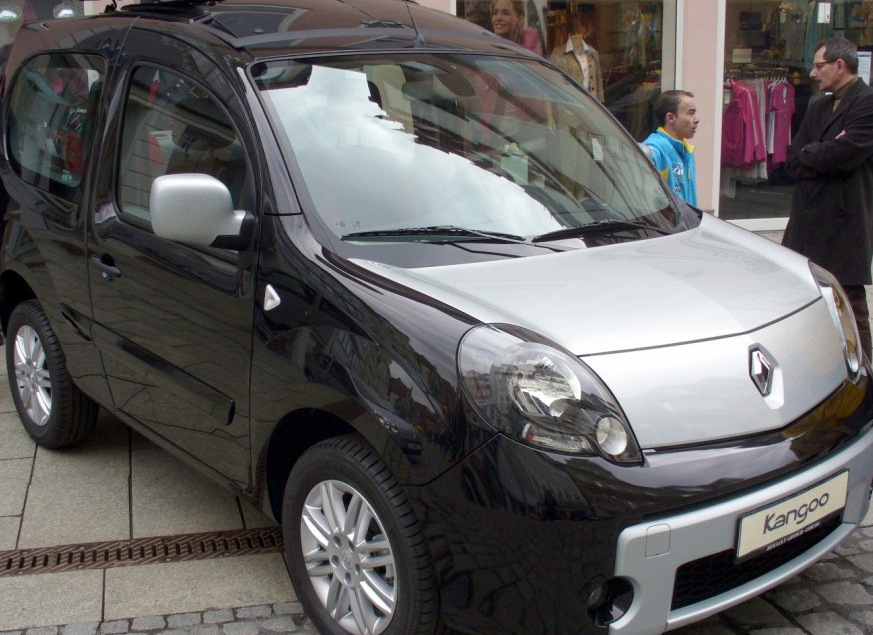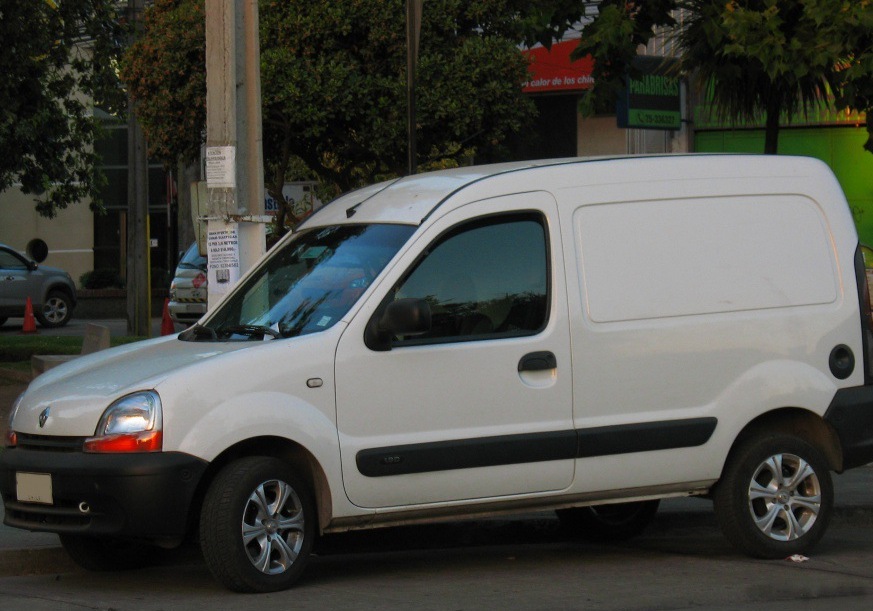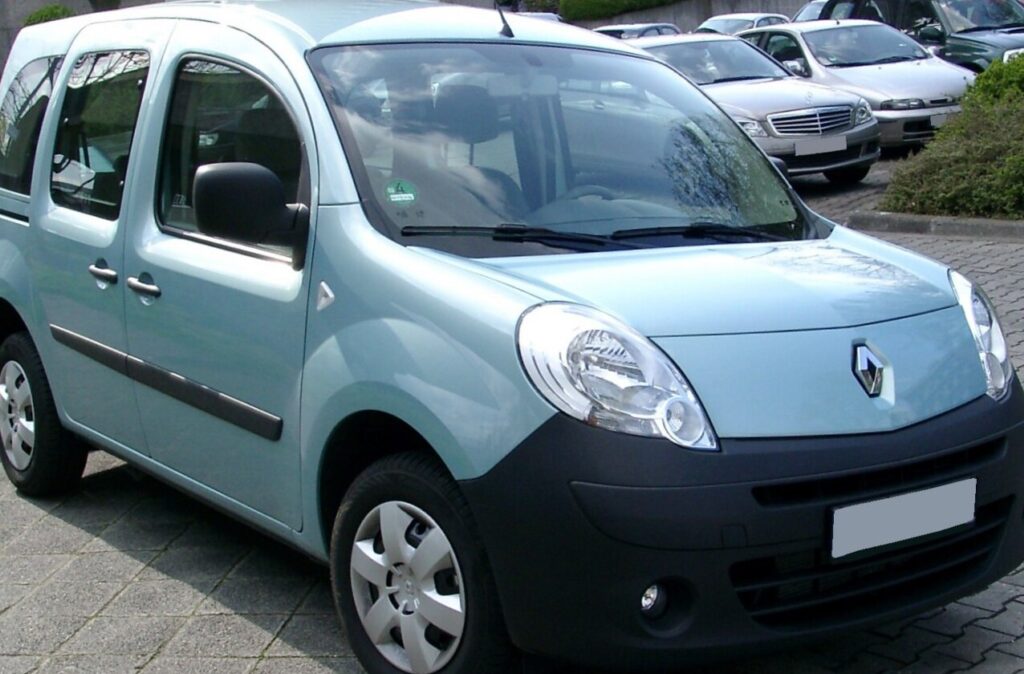
The Renault Kangoo II 1.5 dCi 75 hp, produced from 2007 to 2013, represented an entry-level offering within the second generation Kangoo range. Positioned as a practical and economical choice, this variant catered to buyers prioritizing fuel efficiency and affordability over outright performance. It was a key model in Renault’s light commercial vehicle and family transport lineup, particularly popular in Europe where compact vans and leisure activity vehicles (LAVs) held significant market share. This version of the Kangoo II utilized the K9K engine family and a five-speed manual transmission, offering a balance between usability and running costs.
Technical Specifications
| Brand | Renault |
| Model | Kangoo |
| Generation | Kangoo II |
| Type (Engine) | 1.5 dCi (75 Hp) |
| Start of production | 2007 |
| End of production | 2013 |
| Powertrain Architecture | Internal Combustion engine |
| Body type | Minivan |
| Seats | 5 |
| Doors | 5 |
| Fuel consumption (urban) | 5.9 l/100 km (39.9 US mpg, 47.9 UK mpg, 16.9 km/l) |
| Fuel consumption (extra urban) | 4.8 l/100 km (49 US mpg, 58.9 UK mpg, 20.8 km/l) |
| Fuel consumption (combined) | 5.2 l/100 km (45.2 US mpg, 54.3 UK mpg, 19.2 km/l) |
| CO2 emissions | 137 g/km |
| Fuel Type | Diesel |
| Acceleration 0 – 100 km/h | 17.5 sec |
| Acceleration 0 – 62 mph | 17.5 sec |
| Acceleration 0 – 60 mph | 16.6 sec |
| Maximum speed | 151 km/h (93.83 mph) |
| Emission standard | Euro 5 |
| Weight-to-power ratio | 18.6 kg/Hp, 53.8 Hp/tonne |
| Weight-to-torque ratio | 7.7 kg/Nm, 129.1 Nm/tonne |
| Power | 75 Hp @ 4000 rpm |
| Power per litre | 51.3 Hp/l |
| Torque | 180 Nm @ 1750 rpm (132.76 lb.-ft. @ 1750 rpm) |
| Engine layout | Front, Transverse |
| Engine Model/Code | K9K |
| Engine displacement | 1461 cm3 (89.16 cu. in.) |
| Number of cylinders | 4 |
| Engine configuration | Inline |
| Cylinder Bore | 76 mm (2.99 in.) |
| Piston Stroke | 80.5 mm (3.17 in.) |
| Compression ratio | 18.8:1 |
| Number of valves per cylinder | 2 |
| Fuel injection system | Diesel Commonrail |
| Engine aspiration | Turbocharger, Intercooler |
| Valvetrain | DOHC |
| Engine oil capacity | 4.5 l (4.76 US qt | 3.96 UK qt) |
| Coolant | 7.2 l (7.61 US qt | 6.34 UK qt) |
| Kerb Weight | 1394 kg (3073.24 lbs.) |
| Max. weight | 1954 kg (4307.83 lbs.) |
| Max load | 560 kg (1234.59 lbs.) |
| Trunk (boot) space – minimum | 438 l (15.47 cu. ft.) |
| Trunk (boot) space – maximum | 1977 l (69.82 cu. ft.) |
| Fuel tank capacity | 60 l (15.85 US gal | 13.2 UK gal) |
| Max. roof load | 100 kg (220.46 lbs.) |
| Permitted trailer load with brakes (12%) | 1050 kg (2314.85 lbs.) |
| Permitted trailer load without brakes | 560 kg (1234.59 lbs.) |
| Permitted towbar download | 75 kg (165.35 lbs.) |
| Length | 4213 mm (165.87 in.) |
| Width | 1829 mm (72.01 in.) |
| Width including mirrors | 2133 mm (83.98 in.) |
| Height | 1839 mm (72.4 in.) |
| Wheelbase | 2697 mm (106.18 in.) |
| Front track | 1533 mm (60.35 in.) |
| Rear (Back) track | 1521 mm (59.88 in.) |
| Front overhang | 807 mm (31.77 in.) |
| Rear overhang | 709 mm (27.91 in.) |
| Minimum turning circle | 11 m (36.09 ft.) |
| Drivetrain | Front wheel drive |
| Number of gears | 5 |
| Gearbox type | Manual transmission |
| Front suspension | Independent type McPherson |
| Rear suspension | Torsion |
| Front brakes | Ventilated discs |
| Rear brakes | Disc |
| Assisting systems | ABS (Anti-lock braking system) |
| Steering type | Steering rack and pinion |
| Power steering | Electric Steering |
| Tires size | 195/65 R15 |
| Wheel rims size | 15 |
INTRODUCTION
The Renault Kangoo II, launched in 2007, built upon the success of its predecessor, offering a more refined and versatile package. The 1.5 dCi 75 hp variant served as the entry point to the range, appealing to budget-conscious buyers and those prioritizing fuel economy. This model was a common sight in European cities and rural areas, utilized as both a commercial vehicle for small businesses and a family vehicle due to its spacious interior and practical design. It was built on the 1HX0/A3 platform, shared with other Renault and Nissan models.
Powertrain & Engine Architecture
The heart of the Kangoo II 1.5 dCi 75 hp is the K9K engine, a member of Renault’s widely used diesel engine family. This 1.5-liter, inline-four cylinder engine utilizes a common rail direct injection system, delivering fuel directly into the combustion chamber at high pressure. The engine features a single overhead camshaft (SOHC) design operating two valves per cylinder. A turbocharger with an intercooler is employed to boost power and improve efficiency. The 75 horsepower output is achieved at 4000 rpm, while peak torque of 180 Nm (132.76 lb.-ft.) is available from 1750 rpm. This configuration provides adequate low-end torque for everyday driving. The engine is paired with a five-speed manual transmission, chosen for its simplicity and fuel efficiency. The transmission’s gear ratios are geared towards maximizing fuel economy rather than providing sporty acceleration.
Driving Characteristics
The Kangoo II 1.5 dCi 75 hp offers a utilitarian driving experience. Acceleration is modest, with a 0-60 mph time of around 16.6 seconds. The engine feels strained when pushed hard, particularly when fully loaded. However, for typical urban and suburban driving, the engine provides sufficient power. The five-speed manual transmission is smooth and easy to operate, but the long gearing contributes to the leisurely pace. The focus is clearly on fuel efficiency and practicality rather than performance. Compared to higher-output versions of the Kangoo II, such as those with the 1.5 dCi 90 hp or 1.5 dCi 110 hp engines, this variant feels noticeably slower and less refined. The manual transmission also provides a more engaging driving experience than the optional automated manual transmission available on some models.
Equipment & Trim Levels
The 1.5 dCi 75 hp Kangoo II typically came with a basic level of equipment. Standard features generally included power steering, central locking, an adjustable steering column, and a basic audio system. Interior upholstery was typically cloth, and the dashboard featured a functional but unadorned design. Optional extras included air conditioning, electric windows, and a CD player. Higher trim levels offered additional features such as alloy wheels, upgraded upholstery, and a more comprehensive audio system. The Kangoo II’s interior is designed with practicality in mind, offering ample storage space and a comfortable driving position.
Chassis & Braking
The Kangoo II utilizes a McPherson strut front suspension and a torsion beam rear suspension. This setup provides a comfortable ride quality, although it’s not particularly sporty. The front brakes are ventilated discs, while the rear brakes are discs. Anti-lock Braking System (ABS) is standard, providing enhanced braking performance and stability. The suspension is tuned for comfort and load-carrying capacity, rather than dynamic handling. The relatively soft suspension settings contribute to a comfortable ride, even on uneven road surfaces.
Market Reception & Comparison
The Renault Kangoo II 1.5 dCi 75 hp was generally well-received by critics as a practical and economical choice. Its fuel efficiency was a major selling point, and its spacious interior made it a versatile vehicle for both commercial and family use. Compared to other trims in the Kangoo II lineup, this variant offered the most affordable entry point. However, its lack of power and refinement were noted by some reviewers. Against competitors such as the Citroën Berlingo and Peugeot Partner, the Kangoo II 1.5 dCi 75 hp offered a comparable level of practicality and fuel economy.
Legacy
The K9K engine, found in the Kangoo II 1.5 dCi 75 hp, has proven to be a relatively reliable unit, although it’s not without its potential issues. Common problems include turbocharger failure and issues with the fuel injection system. However, with regular maintenance, these engines can provide many years of reliable service. In the used car market, the Kangoo II 1.5 dCi 75 hp remains a popular choice for budget-conscious buyers seeking a practical and economical vehicle. Its affordability and fuel efficiency continue to make it an attractive option, despite its age and relatively low power output.