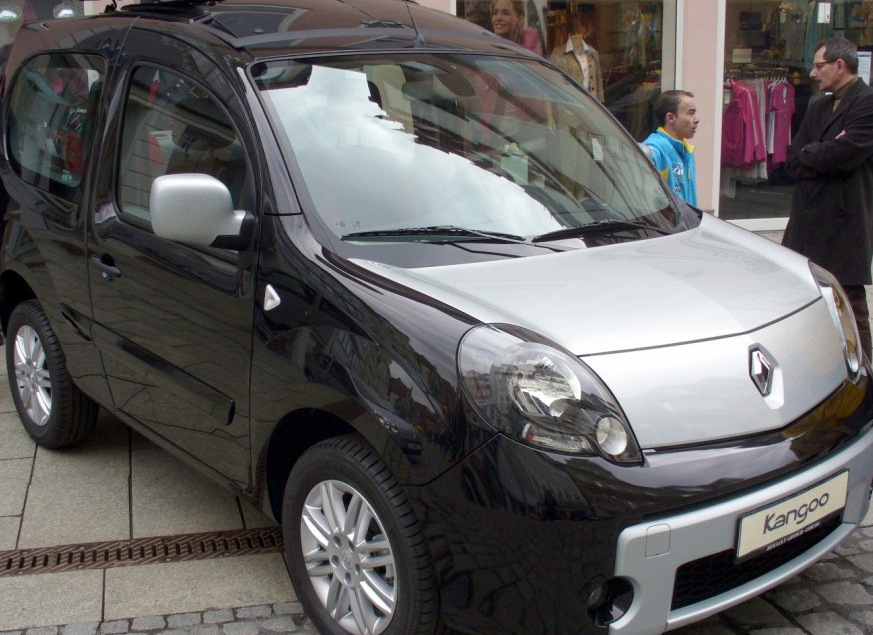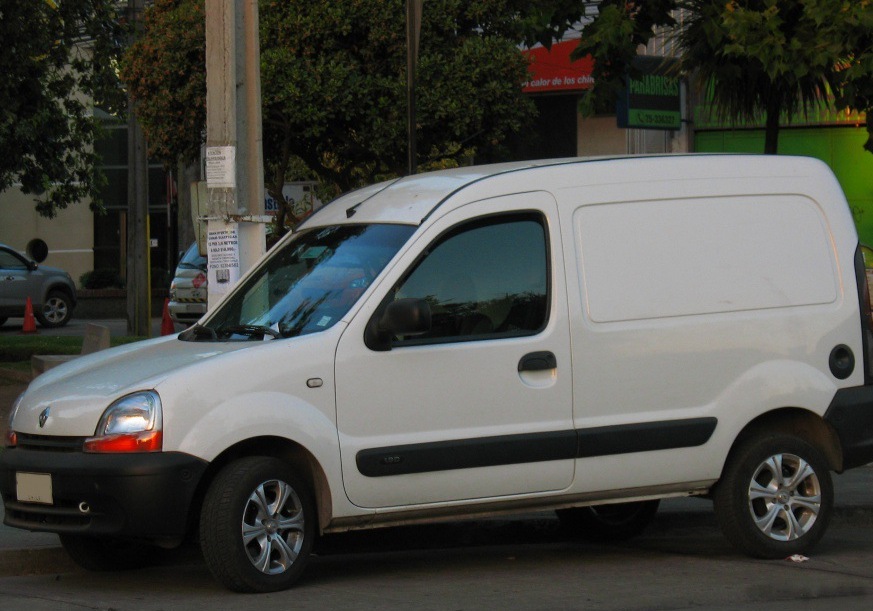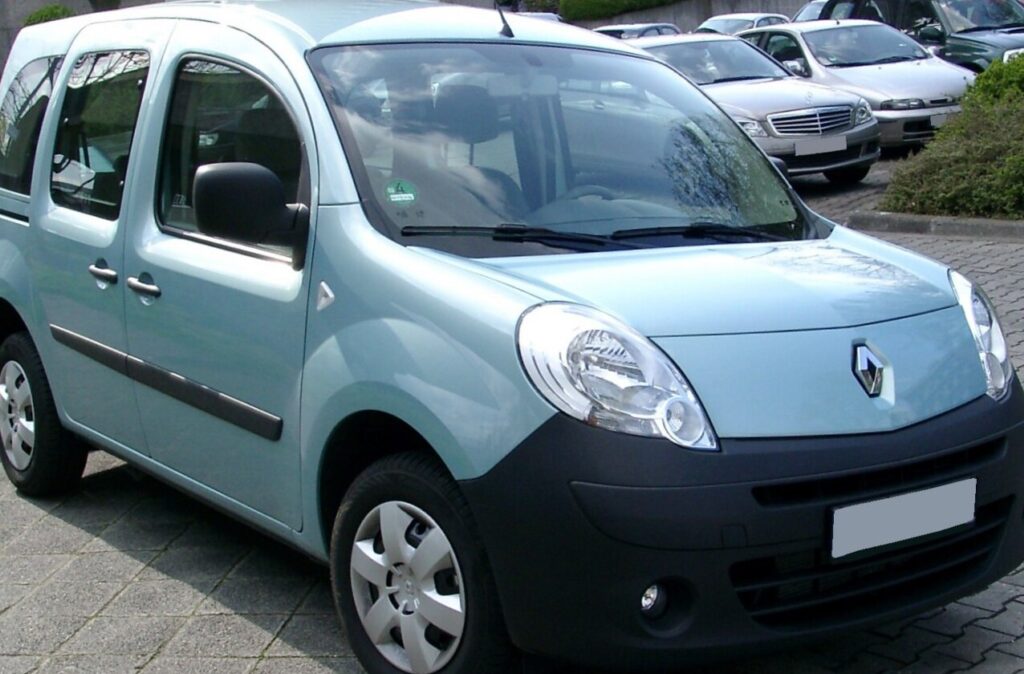
The Renault Kangoo II 1.6 16V, producing 106 horsepower, was a popular configuration of Renault’s versatile compact van, sold from 2007 to 2013. Positioned as a mid-range offering within the Kangoo II lineup, it aimed to balance affordability with reasonable performance and practicality. This variant played a significant role in the Kangoo’s success, particularly in European markets where compact vans are highly valued for both commercial and family use. It represented a step up from the base 1.2L engine, offering more power for highway driving and carrying heavier loads, while remaining more accessible than the diesel options.
Technical Specifications
| Brand | Renault |
| Model | Kangoo |
| Generation | Kangoo II |
| Type (Engine) | 1.6 16V (106 Hp) |
| Start of production | 2007 |
| End of production | 2013 |
| Powertrain Architecture | Internal Combustion engine |
| Body type | Minivan |
| Seats | 5 |
| Doors | 5 |
| Fuel consumption (urban) | 9.7 l/100 km (24.2 US mpg, 29.1 UK mpg, 10.3 km/l) |
| Fuel consumption (extra urban) | 6.5 l/100 km (36.2 US mpg, 43.5 UK mpg, 15.4 km/l) |
| Fuel consumption (combined) | 7.7 l/100 km (30.5 US mpg, 36.7 UK mpg, 13 km/l) |
| CO2 emissions | 180 g/km |
| Fuel Type | Petrol (Gasoline) |
| Acceleration 0 – 100 km/h | 13 sec |
| Acceleration 0 – 62 mph | 13 sec |
| Acceleration 0 – 60 mph | 12.4 sec |
| Maximum speed | 170 km/h (105.63 mph) |
| Emission standard | Euro 5 |
| Weight-to-power ratio | 13.2 kg/Hp, 76 Hp/tonne |
| Weight-to-torque ratio | 9.4 kg/Nm, 106.2 Nm/tonne |
| Power | 106 Hp @ 5750 rpm |
| Power per litre | 66.3 Hp/l |
| Torque | 148 Nm @ 3750 rpm (109.16 lb.-ft. @ 3750 rpm) |
| Engine layout | Front, Transverse |
| Engine Model/Code | K4M |
| Engine displacement | 1598 cm3 (97.52 cu. in.) |
| Number of cylinders | 4 |
| Engine configuration | Inline |
| Cylinder Bore | 79.5 mm (3.13 in.) |
| Piston Stroke | 80.5 mm (3.17 in.) |
| Compression ratio | 9.7:1 |
| Number of valves per cylinder | 4 |
| Fuel injection system | Multi-port manifold injection |
| Engine aspiration | Naturally aspirated engine |
| Engine oil capacity | 4.8 l (5.07 US qt | 4.22 UK qt) |
| Coolant | 5 l (5.28 US qt | 4.4 UK qt) |
| Kerb Weight | 1394 kg (3073.24 lbs.) |
| Max. weight | 1924 kg (4241.69 lbs.) |
| Max load | 530 kg (1168.45 lbs.) |
| Trunk (boot) space – minimum | 438 l (15.47 cu. ft.) |
| Trunk (boot) space – maximum | 1977 l (69.82 cu. ft.) |
| Fuel tank capacity | 60 l (15.85 US gal | 13.2 UK gal) |
| Max. roof load | 100 kg (220.46 lbs.) |
| Permitted trailer load with brakes (12%) | 1350 kg (2976.24 lbs.) |
| Permitted trailer load without brakes | 697 kg (1536.62 lbs.) |
| Permitted towbar download | 75 kg (165.35 lbs.) |
| Length | 4213 mm (165.87 in.) |
| Width | 1829 mm (72.01 in.) |
| Width including mirrors | 2133 mm (83.98 in.) |
| Height | 1839 mm (72.4 in.) |
| Wheelbase | 2697 mm (106.18 in.) |
| Front track | 1533 mm (60.35 in.) |
| Rear (Back) track | 1521 mm (59.88 in.) |
| Front overhang | 807 mm (31.77 in.) |
| Rear overhang | 709 mm (27.91 in.) |
| Minimum turning circle | 11 m (36.09 ft.) |
| Drivetrain Architecture | The Internal combustion engine (ICE) drives the front wheels of the vehicle. |
| Drive wheel | Front wheel drive |
| Number of gears and type of gearbox | 5 gears, manual transmission |
| Front suspension | Independent type McPherson |
| Rear suspension | Torsion |
| Front brakes | Ventilated discs |
| Rear brakes | Disc |
| Assisting systems | ABS (Anti-lock braking system) |
| Steering type | Steering rack and pinion |
| Power steering | Electric Steering |
| Tires size | 195/65 R15 |
| Wheel rims size | 15 |
INTRODUCTION
The Renault Kangoo II, launched in 2007, represented a significant evolution of Renault’s popular light commercial and passenger vehicle. The 1.6 16V variant, producing 106 horsepower, was introduced as a key engine option within the range. Built on the 1HX0/A3 platform, shared with the Renault Mégane II and Scenic II, the Kangoo II offered a more refined driving experience and increased practicality compared to its predecessor. This particular engine and trim level aimed to provide a balance between fuel efficiency, performance, and affordability, making it a popular choice for families and small businesses alike.
Powertrain & Engine Architecture
The heart of the Kangoo II 1.6 16V is the K4M engine, a 1.6-liter inline-four cylinder petrol engine. This engine utilizes a multi-point fuel injection system, delivering fuel directly into the intake ports. The 16-valve configuration (four valves per cylinder) enhances breathing and contributes to the engine’s power output. The K4M engine is known for its relative simplicity and robustness. The 106 hp version featured a slightly revised engine management system compared to earlier iterations. The engine is transversely mounted, driving the front wheels. The transmission paired with this engine was typically a five-speed manual gearbox, although a four-speed automatic transmission was also available, albeit less common. The automatic transmission, while offering convenience, generally resulted in slightly lower fuel economy and a less engaging driving experience.
Driving Characteristics
The Kangoo II 1.6 16V offered adequate performance for everyday driving. Acceleration from 0-60 mph took around 12.4 seconds, and the top speed was approximately 105 mph. While not particularly sporty, the engine provided sufficient power for overtaking and maintaining highway speeds, even when carrying a moderate load. The five-speed manual transmission allowed for precise control and efficient gear changes. The automatic transmission, while smooth, felt somewhat sluggish in comparison, with noticeable delays during downshifts. The Kangoo’s high roof and relatively narrow track contributed to a noticeable amount of body roll in corners, but the suspension provided a comfortable ride on most road surfaces.
Equipment & Trim Levels
The 1.6 16V Kangoo II typically came equipped with features such as power steering, central locking, electric front windows, and an adjustable steering column. Higher trim levels added features like air conditioning, a CD player, and alloy wheels. Interior upholstery was generally cloth, with a durable and practical design. Optional extras included rear parking sensors, a trip computer, and upgraded audio systems. Safety features included ABS brakes and driver and passenger airbags. The Kangoo II’s interior was designed with practicality in mind, offering ample storage space and a flexible seating arrangement.
Chassis & Braking
The Kangoo II utilized a McPherson strut independent suspension at the front and a torsion beam suspension at the rear. This setup provided a good balance between ride comfort and handling. The front brakes were ventilated discs, while the rear brakes were solid discs. ABS (Anti-lock Braking System) was standard, enhancing braking performance and stability. The Kangoo II’s chassis was designed to handle a variety of loads, making it suitable for both commercial and family use. The steering was rack and pinion, providing precise and responsive control.
Market Reception & Comparison
The Renault Kangoo II 1.6 16V was generally well-received by critics and consumers alike. It was praised for its practicality, versatility, and comfortable ride. Compared to the base 1.2L engine, the 1.6L offered a noticeable improvement in performance, making it a more suitable choice for drivers who frequently carried passengers or cargo. However, the diesel variants (particularly the 1.5 dCi) offered superior fuel economy and torque, making them popular among those who prioritized efficiency. The 1.6L version was often seen as a good compromise between cost and performance. Fuel economy was respectable, averaging around 30.5 US mpg in combined driving.
Legacy
The Renault Kangoo II 1.6 16V has proven to be a reliable and durable vehicle. The K4M engine is known for its longevity, and with regular maintenance, it can provide many years of trouble-free service. In the used car market, these Kangoos are generally affordable and represent good value for money. Common issues include wear and tear on suspension components and occasional problems with the electrical system. However, these are typically relatively inexpensive to repair. The Kangoo II 1.6 16V remains a popular choice for those seeking a practical, versatile, and affordable compact van.