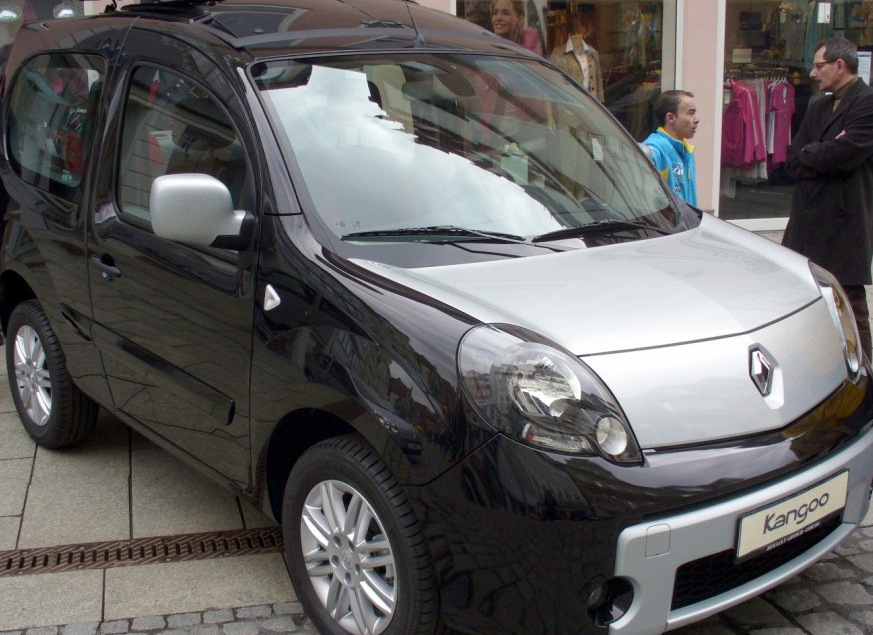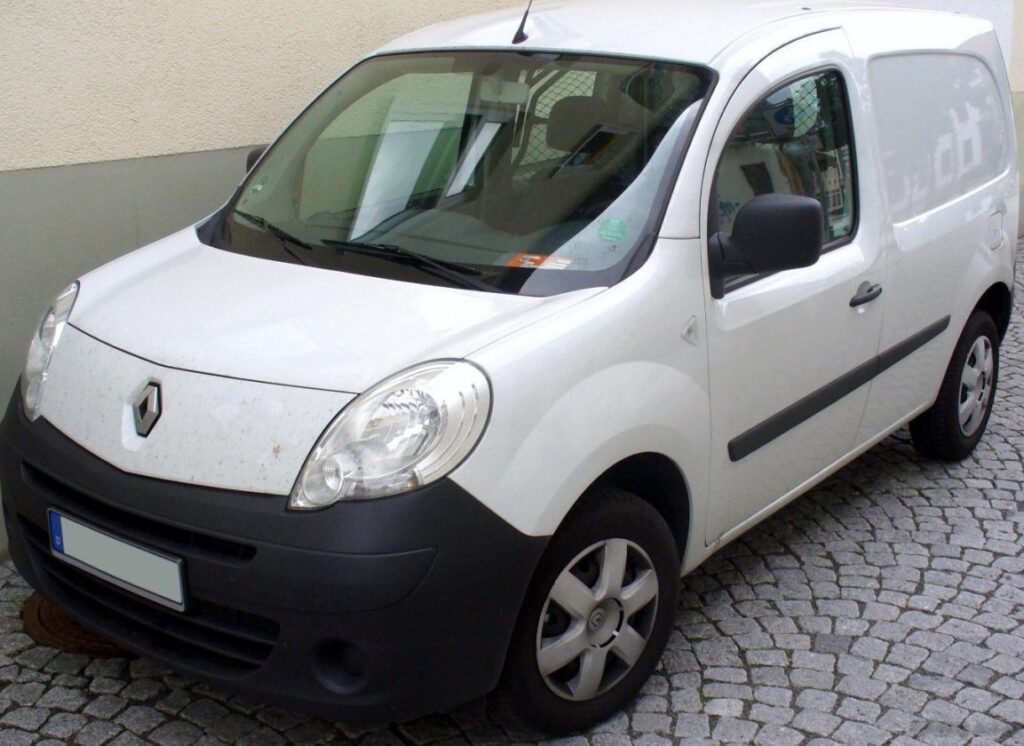
The Renault Kangoo II Express 1.5 dCi (110 hp) FAP represents a practical and efficient commercial vehicle offering from the French manufacturer, produced between August 2010 and March 2013. Positioned as a mid-range option within the Kangoo II Express lineup, it catered to businesses and tradespeople requiring a compact, versatile van with reasonable performance and fuel economy. This variant was primarily sold in Europe, where compact vans are highly popular for urban delivery and service applications. It built upon the success of the Kangoo II platform (introduced in 2008), offering a diesel engine option with a particulate filter (FAP) to meet increasingly stringent emissions regulations.
Technical Specifications
| Brand | Renault |
| Model | Kangoo |
| Generation | Kangoo II Express |
| Type (Engine) | 1.5 dCi (110 Hp) FAP |
| Start of production | August, 2010 |
| End of production | March, 2013 |
| Powertrain Architecture | Internal Combustion engine |
| Body type | Minivan |
| Seats | 2 |
| Doors | 3 |
| CO2 emissions (WLTP) | 146 g/km |
| Fuel consumption (urban) | 6.0 l/100 km (39.2 US mpg, 47.1 UK mpg, 16.7 km/l) |
| Fuel consumption (extra urban) | 4.8 l/100 km (49 US mpg, 58.9 UK mpg, 20.8 km/l) |
| Fuel consumption (combined) | 5.2 l/100 km (45.2 US mpg, 54.3 UK mpg, 19.2 km/l) |
| CO2 emissions (NEDC) | 137 g/km |
| Fuel Type | Diesel |
| Acceleration 0 – 100 km/h | 12.3 sec |
| Acceleration 0 – 62 mph | 12.3 sec |
| Acceleration 0 – 60 mph | 11.7 sec |
| Maximum speed | 170 km/h (105.63 mph) |
| Weight-to-power ratio | 11.6 kg/Hp, 86.1 Hp/tonne |
| Weight-to-torque ratio | 5.3 kg/Nm, 187.8 Nm/tonne |
| Power | 110 Hp @ 4000 rpm |
| Power per litre | 75.3 Hp/l |
| Torque | 240 Nm @ 1750 rpm (177.01 lb.-ft. @ 1750 rpm) |
| Engine layout | Front, Transverse |
| Engine Model/Code | K9K |
| Engine displacement | 1461 cm3 (89.16 cu. in.) |
| Number of cylinders | 4 |
| Engine configuration | Inline |
| Number of valves per cylinder | 2 |
| Fuel injection system | Diesel Commonrail |
| Engine aspiration | Turbocharger, Intercooler |
| Engine oil capacity | 4.5 l (4.76 US qt | 3.96 UK qt) |
| Coolant capacity | 7.2 l (7.61 US qt | 6.34 UK qt) |
| Kerb Weight | 1278 kg (2817.51 lbs) |
| Max. weight | 1962 kg (4325.47 lbs) |
| Max load | 684 kg (1507.96 lbs) |
| Trunk (boot) space – maximum | 3000 l (105.94 cu. ft) |
| Fuel tank capacity | 60 l (15.85 US gal | 13.2 UK gal) |
| Max. roof load | 100 kg (220.46 lbs) |
| Permitted trailer load (braked) | 1050 kg (2314.85 lbs) |
| Permitted trailer load (unbraked) | 630 kg (1388.91 lbs) |
| Permitted towbar download | 75 kg (165.35 lbs) |
| Length | 4213 mm (165.87 in) |
| Width | 1829 mm (72.01 in) |
| Width including mirrors | 2133 mm (83.98 in) |
| Height | 1844 mm (72.6 in) |
| Wheelbase | 2697 mm (106.18 in) |
| Ride height (ground clearance) | 184 mm (7.24 in) |
| Minimum turning circle | 10.5 m (34.45 ft) |
| Drivetrain Architecture | Front wheel drive |
| Number of gears | 6 |
| Gearbox type | Manual transmission |
| Front brakes | Disc |
| Rear brakes | Disc |
| Assisting systems | ABS (Anti-lock braking system) |
| Tires size | 195/65 R15 |
| Wheel rims size | 15 |
Powertrain & Engine Architecture
The Kangoo II Express 1.5 dCi (110 hp) is powered by the Renault K9K engine, a member of the well-established K-series diesel engine family. This engine is a 1.5-liter, inline-four cylinder unit featuring a single overhead camshaft and two valves per cylinder. The ‘dCi’ designation signifies direct common rail injection, a technology that delivers fuel directly into the combustion chamber at very high pressure, improving efficiency and reducing emissions. The K9K engine in this configuration utilizes a turbocharger with an intercooler to boost power output. The particulate filter (FAP) is a crucial component, trapping soot particles from the exhaust to comply with Euro 5 emission standards. The 110 hp version of the K9K engine produces 240 Nm (177 lb-ft) of torque at 1750 rpm, providing a good balance of power and fuel efficiency. The engine is transversely mounted at the front of the vehicle. The six-speed manual transmission was the standard offering for this variant, providing a good spread of gears for both urban and highway driving.
Driving Characteristics
The 110 hp 1.5 dCi engine, paired with the six-speed manual gearbox, offered a reasonably sprightly driving experience for a compact van. While not designed for outright speed, it provided sufficient power for loaded operation and highway cruising. Acceleration from 0-60 mph took around 11.7 seconds, and the top speed was approximately 105 mph. The engine’s torque peak at 1750 rpm meant that strong pulling power was available from low engine speeds, making it easy to navigate city streets and tackle inclines. Compared to the lower-powered 90 hp version of the same engine, the 110 hp variant offered noticeably improved performance, particularly when carrying a load. However, it didn’t match the responsiveness of higher-performance petrol engines available in other Kangoo II models. The gear ratios in the six-speed transmission were well-chosen, allowing for comfortable cruising at highway speeds while still providing ample torque for lower-speed maneuvers.
Equipment & Trim Levels
The Kangoo II Express 1.5 dCi (110 hp) FAP typically came equipped with a functional, no-frills interior focused on practicality. Standard features included a driver’s airbag, central locking, electric front windows, and a basic audio system. The cabin was designed for durability and ease of cleaning, with hard-wearing plastics and vinyl upholstery. The driver’s seat was adjustable for height and lumbar support. Optional extras included air conditioning, a passenger airbag, rear parking sensors, and upgraded audio systems. The trim level was generally considered a mid-range offering, bridging the gap between the basic ‘Authentique’ trim and the more luxurious ‘Privilege’ trim.
Chassis & Braking
The Kangoo II Express utilized a MacPherson strut front suspension and a torsion beam rear suspension. This setup provided a good compromise between ride comfort and handling. The front brakes were ventilated discs, while the rear brakes were also discs, offering adequate stopping power for the vehicle’s weight. Anti-lock Braking System (ABS) was standard. The steering was power-assisted, making it easy to maneuver in tight spaces. The suspension was tuned to prioritize load-carrying capability, resulting in a slightly firmer ride compared to passenger cars.
Market Reception & Comparison
The Renault Kangoo II Express 1.5 dCi (110 hp) FAP was well-received by critics and customers alike. It was praised for its fuel efficiency, practicality, and reliability. Compared to the 90 hp version, the 110 hp model offered a significant performance improvement, making it a more appealing option for those who frequently carried heavy loads or drove on highways. Fuel economy was a strong point, with combined fuel consumption figures around 54.3 mpg (UK) or 45.2 mpg (US). The FAP particulate filter added to the cost but was essential for meeting emissions regulations. Competitors included the Citroën Berlingo, Peugeot Partner, and Volkswagen Caddy, all of which offered similar levels of practicality and efficiency.
Legacy
The Renault Kangoo II Express 1.5 dCi (110 hp) FAP remains a popular choice in the used commercial vehicle market. The K9K engine is known for its durability and relatively low maintenance costs, although the FAP system can require occasional maintenance or replacement. These vans are still commonly seen in use today, testament to their robust construction and practicality. The Kangoo II platform proved to be a successful one for Renault, and the 1.5 dCi engine became a mainstay in their commercial vehicle lineup. The combination of fuel efficiency, practicality, and reliability has ensured that the Kangoo II Express 1.5 dCi (110 hp) FAP continues to be a valuable asset for businesses and tradespeople.