Technical Specifications
| Brand | Renault |
| Model | Kangoo |
| Generation | Kangoo II Express |
| Type (Engine) | 1.6 16V (105 Hp) |
| Start of production | 2008 |
| End of production | March, 2013 |
| Powertrain Architecture | Internal Combustion engine |
| Body type | Minivan |
| Seats | 2 |
| Doors | 3 |
| CO2 emissions (WLTP) | 143 g/km |
| Fuel consumption (urban) | 9.7 l/100 km (24.2 US mpg, 29.1 UK mpg, 10.3 km/l) |
| Fuel consumption (extra urban) | 6.5 l/100 km (36.2 US mpg, 43.5 UK mpg, 15.4 km/l) |
| Fuel consumption (combined) | 7.7 l/100 km (30.5 US mpg, 36.7 UK mpg, 13 km/l) |
| CO2 emissions (NEDC) | 180 g/km |
| Fuel Type | Petrol (Gasoline) |
| Acceleration 0 – 100 km/h | 13.0 sec |
| Acceleration 0 – 62 mph | 13.0 sec |
| Acceleration 0 – 60 mph | 12.4 sec |
| Maximum speed | 170 km/h (105.63 mph) |
| Weight-to-power ratio | 11.7 kg/Hp, 85.6 Hp/tonne |
| Weight-to-torque ratio | 8.3 kg/Nm, 120.6 Nm/tonne |
| Power | 105 Hp @ 5750 rpm |
| Power per litre | 65.7 Hp/l |
| Torque | 148 Nm @ 3750 rpm (109.16 lb.-ft. @ 3750 rpm) |
| Engine layout | Front, Transverse |
| Engine Model/Code | K7M |
| Engine displacement | 1598 cm3 (97.52 cu. in.) |
| Number of cylinders | 4 |
| Engine configuration | Inline |
| Number of valves per cylinder | 4 |
| Engine aspiration | Naturally aspirated |
| Engine oil capacity | 3.4 l (3.59 US qt | 2.99 UK qt) |
| Coolant capacity | 5 l (5.28 US qt | 4.4 UK qt) |
| Kerb Weight | 1227 kg (2705.07 lbs.) |
| Max. weight | 1917 kg (4226.26 lbs.) |
| Max load | 690 kg (1521.19 lbs.) |
| Trunk (boot) space – maximum | 3000 l (105.94 cu. ft.) |
| Fuel tank capacity | 56 l (14.79 US gal | 12.32 UK gal) |
| Max. roof load | 100 kg (220.46 lbs.) |
| Permitted trailer load (braked) | 1050 kg (2314.85 lbs.) |
| Permitted trailer load (unbraked) | 610 kg (1344.82 lbs.) |
| Permitted towbar download | 75 kg (165.35 lbs.) |
| Length | 4213 mm (165.87 in.) |
| Width | 1829 mm (72.01 in.) |
| Width including mirrors | 2133 mm (83.98 in.) |
| Height | 1844 mm (72.6 in.) |
| Wheelbase | 2697 mm (106.18 in.) |
| Ride height (ground clearance) | 184 mm (7.24 in.) |
| Minimum turning circle | 10.5 m (34.45 ft.) |
| Drivetrain Architecture | Front wheel drive |
| Number of gears | 5 |
| Gearbox type | Manual transmission |
| Front brakes | Disc |
| Rear brakes | Disc |
| Assisting systems | ABS (Anti-lock braking system) |
| Tires size | 195/65 R15 |
| Wheel rims size | 15 |
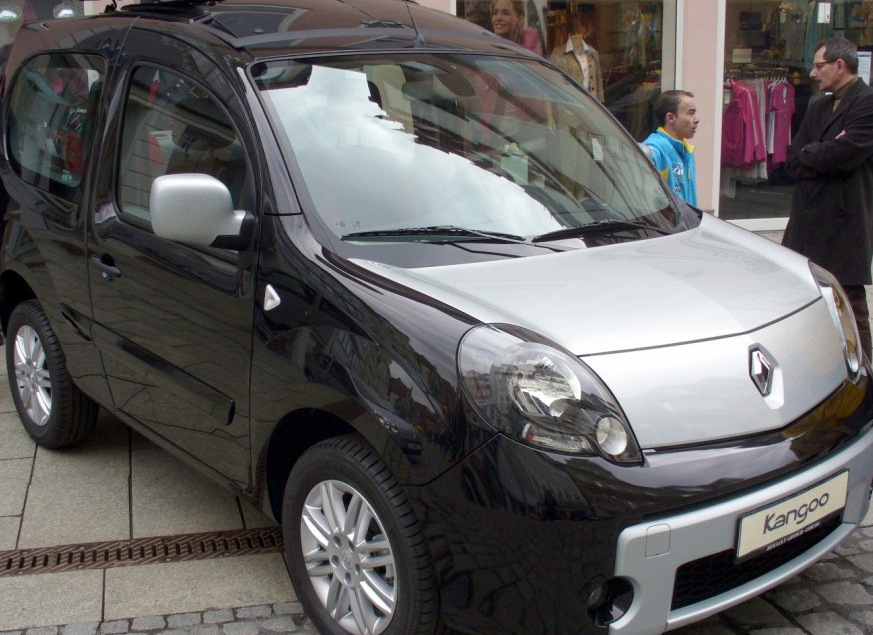
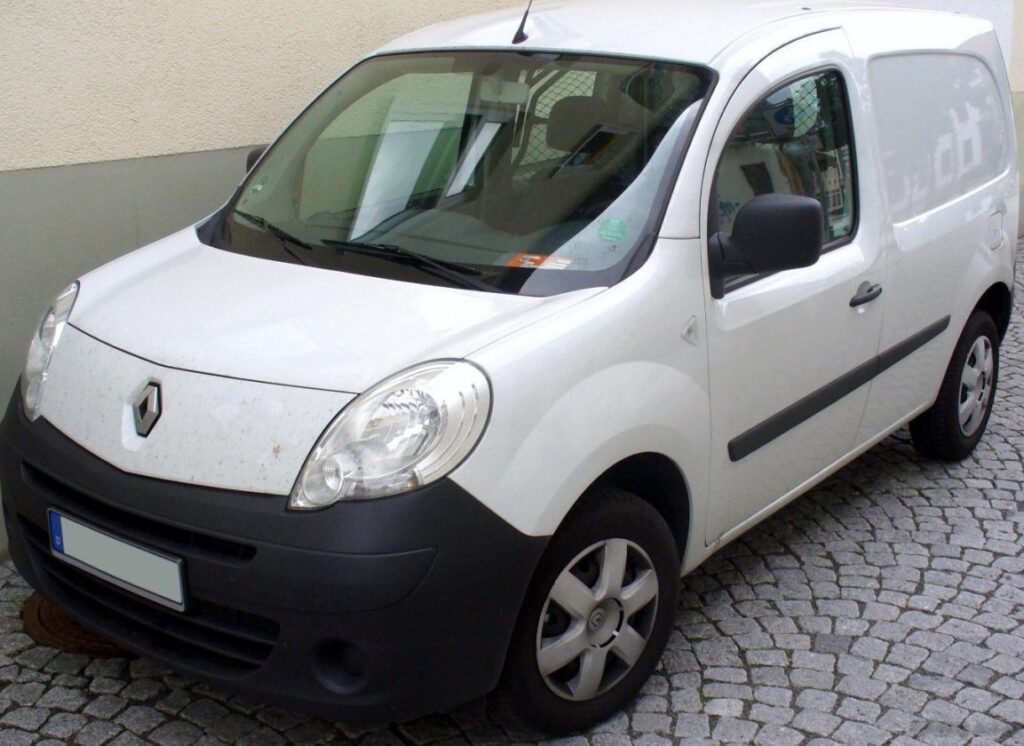
The Renault Kangoo II Express 1.6 16V, launched in 2008, was a cornerstone of Renault’s light commercial vehicle offerings in Europe. This van, built on the X0/B9 platform, represented a significant evolution of the Kangoo line, prioritizing practicality and efficiency for commercial users. The “Express” designation clearly identified it as the panel van variant, distinct from the passenger-focused Kangoo Leisure. Equipped with a 1.6-liter 16-valve petrol engine and a five-speed manual transmission, this configuration occupied a mid-range position within the Kangoo II Express lineup, appealing to businesses seeking a balance between cost-effectiveness and operational capability. While not widely available in the United States, the Kangoo II Express embodies the European preference for compact, fuel-efficient commercial vehicles designed for urban environments.
Powertrain & Engine Architecture
The Renault Kangoo II Express 1.6 16V is powered by the K7M engine, a 1.6-liter (1598 cc) inline-four cylinder petrol engine. This engine is naturally aspirated, relying on atmospheric pressure for intake rather than forced induction. It utilizes a single overhead camshaft (SOHC) operating four valves per cylinder, a configuration that contributes to a reasonable power output and relatively simple maintenance. The K7M engine employs a multi-point sequential fuel injection system, delivering fuel directly to each intake valve for optimized combustion. This system, common for its time, helped to improve fuel efficiency and reduce emissions. The five-speed manual transmission is a conventional design, offering a straightforward gear selection experience. The gear ratios are tuned to provide a balance between acceleration and fuel economy, with a focus on usability for commercial applications. The engine’s relatively simple design and robust construction contribute to its reputation for reliability.
Driving Characteristics
Producing 105 horsepower and 148 Nm (109 lb-ft) of torque, the 1.6 16V engine delivers adequate performance for typical commercial duties. Acceleration from 0 to 60 mph takes approximately 12.4 seconds, and the van has a top speed of around 105 mph. In everyday driving, the Kangoo II Express feels most comfortable in urban and suburban settings. Its compact size and responsive steering make it easy to maneuver in tight spaces. The manual transmission allows for precise control over the engine’s power delivery, but drivers may find themselves downshifting frequently when carrying heavy loads or navigating hilly terrain. Compared to the diesel-powered Kangoo II Express models, the 1.6 16V offers a smoother and quieter driving experience, but it lacks the low-end torque and fuel efficiency of its diesel counterparts. Higher-output petrol engines were available, but they often came at a premium price and didn’t offer a substantial performance advantage for most commercial users.
Equipment & Trim Levels
The Renault Kangoo II Express 1.6 16V was typically equipped with a functional, rather than luxurious, set of standard features. These generally included power steering, a driver’s airbag, and a basic AM/FM radio. The interior was designed for durability and ease of cleaning, with hard-wearing plastic trim and simple seat upholstery. Optional extras included air conditioning, electric front windows, and a passenger airbag. Trim levels were relatively limited, with most variations focusing on adding optional equipment packages. The emphasis was on providing a cost-effective and practical work vehicle, prioritizing functionality over comfort and aesthetics. Features like a basic tool storage system and reinforced flooring were often available as optional upgrades.
Chassis & Braking
The Kangoo II Express utilizes a front-wheel-drive layout, providing good traction and handling in most conditions. The suspension consists of a MacPherson strut setup at the front and a torsion beam arrangement at the rear. This combination offers a reasonable balance between ride comfort and load-carrying capacity. Braking is provided by disc brakes on all four wheels, enhanced by an Anti-lock Braking System (ABS) to improve stopping power and stability, particularly on slippery surfaces. The suspension is tuned to prioritize practicality and durability, rather than sporty handling. The torsion beam rear suspension is a cost-effective and reliable solution for a light commercial vehicle, capable of handling significant loads without compromising ride quality.
Market Reception & Comparison
The Renault Kangoo II Express 1.6 16V was generally well-regarded by automotive critics as a practical and affordable light commercial vehicle. Its fuel economy, while not exceptional, was considered acceptable for a petrol-powered van. Reliability was also a positive point, with the K7M engine proving to be a durable and dependable powerplant. Compared to the diesel versions, the 1.6 16V was often criticized for its lower fuel efficiency and reduced torque, but it was praised for its smoother operation and potentially lower maintenance costs. In comparison to competitors such as the Citroën Berlingo and Peugeot Partner, the Kangoo II Express offered a competitive package in terms of price, practicality, and overall value.
Legacy
The Renault Kangoo II Express 1.6 16V remains a common sight on European roads today, a testament to its durability and practicality. The K7M engine is known for its longevity, and parts availability remains relatively good, making maintenance and repairs straightforward. In the used car market, these vans continue to represent an affordable and reliable option for small businesses and tradespeople. While not a particularly exciting vehicle, the Kangoo II Express 1.6 16V played a significant role in the light commercial vehicle segment, providing a practical and cost-effective solution for a wide range of transportation needs. Its enduring presence is a reflection of its well-engineered design and robust construction.