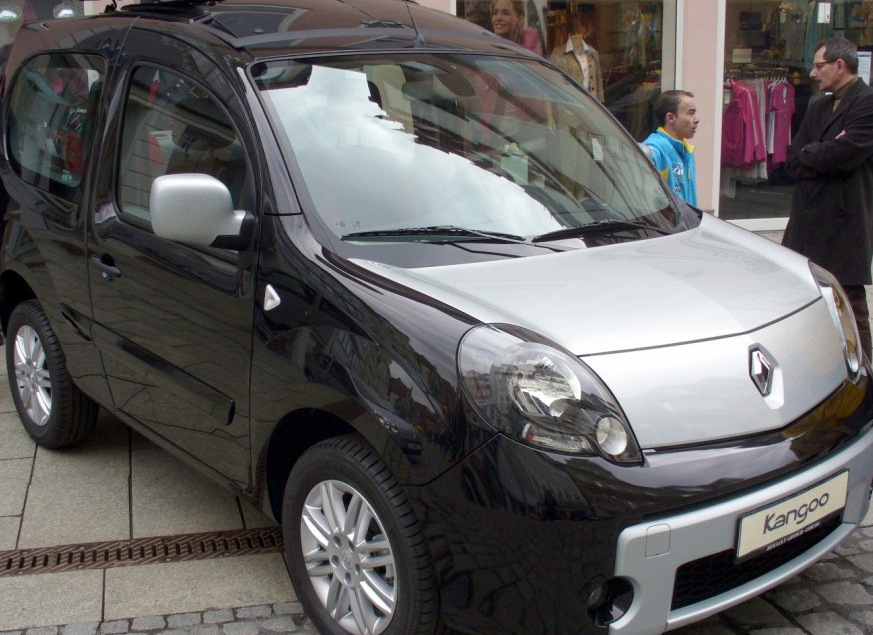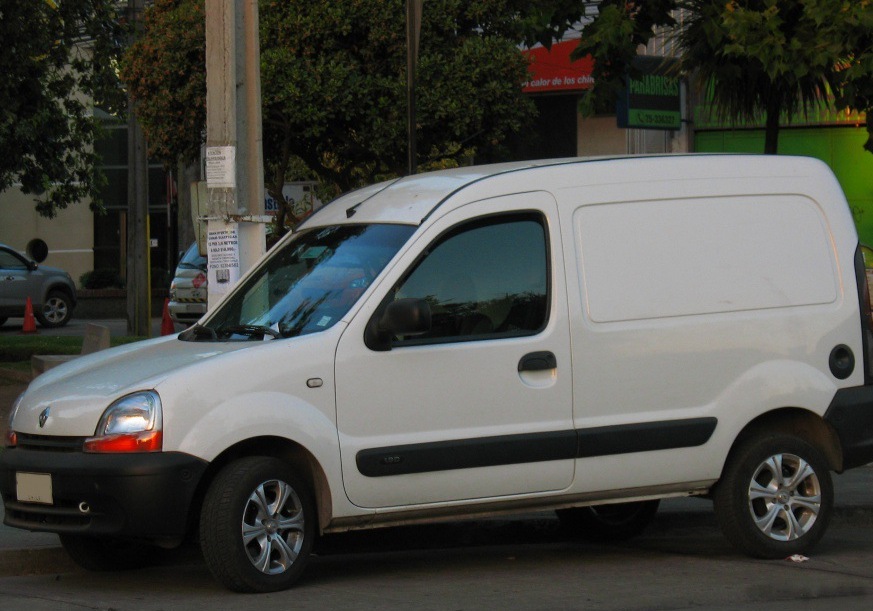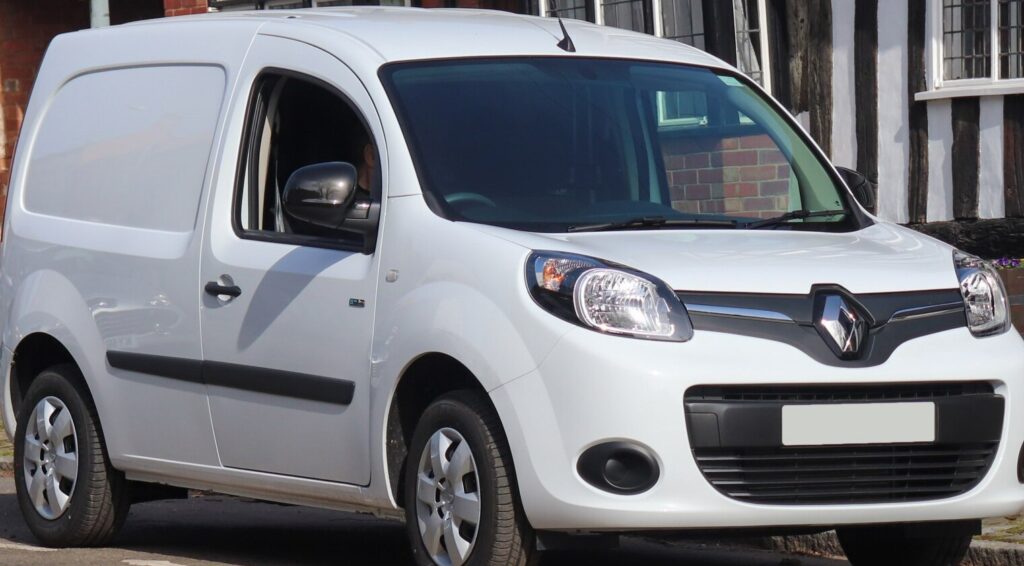
The Renault Kangoo II Express, particularly the facelifted version introduced in 2013, represented a significant evolution of Renault’s popular compact van. This variant, equipped with the 1.5 Energy dCi engine producing 110 horsepower, and featuring Stop&Start technology, was a mainstay in the European commercial vehicle market. Positioned as a mid-range offering, it bridged the gap between the base-level engines and the more powerful options, appealing to businesses and tradespeople needing a practical and relatively fuel-efficient vehicle. Production of this specific configuration ran from 2013 to 2018, building upon the foundation of the Kangoo II platform (codenamed K9K) which debuted in 2008.
Technical Specifications
| Brand | Renault |
| Model | Kangoo |
| Generation | Kangoo II Express (facelift 2013) |
| Type (Engine) | 1.5 Energy dCi (110 Hp) Stop&Start |
| Start of production | 2013 |
| End of production | 2018 |
| Powertrain Architecture | Internal Combustion engine |
| Body type | Minivan |
| Seats | 2 |
| Doors | 3 |
| Fuel consumption (combined) | 4.3-4.5 l/100 km (54.7 – 52.3 US mpg, 65.7 – 62.8 UK mpg, 23.3 – 22.2 km/l) |
| CO2 emissions | 115-119 g/km |
| Fuel Type | Diesel |
| Acceleration 0 – 100 km/h | 12.3 sec |
| Acceleration 0 – 62 mph | 12.3 sec |
| Acceleration 0 – 60 mph | 11.7 sec |
| Maximum speed | 170 km/h (105.63 mph) |
| Emission standard | Euro 5 |
| Weight-to-power ratio | 11.7 kg/Hp, 85.3 Hp/tonne |
| Weight-to-torque ratio | 5 kg/Nm, 201.6 Nm/tonne |
| Power | 110 Hp @ 4000 rpm |
| Power per litre | 75.3 Hp/l |
| Torque | 260 Nm @ 1750 rpm (191.77 lb.-ft. @ 1750 rpm) |
| Engine layout | Front, Transverse |
| Engine Model/Code | K9K |
| Engine displacement | 1461 cm3 (89.16 cu. in.) |
| Number of cylinders | 4 |
| Engine configuration | Inline |
| Number of valves per cylinder | 2 |
| Fuel injection system | Diesel Commonrail |
| Engine aspiration | Turbocharger, Intercooler |
| Engine oil capacity | 4.5 l (4.76 US qt | 3.96 UK qt) |
| Coolant | 7.2 l (7.61 US qt | 6.34 UK qt) |
| Kerb Weight | 1290-1430 kg (2843.96 – 3152.61 lbs.) |
| Max. weight | 2200 kg (4850.17 lbs.) |
| Max load | 770-910 kg (1697.56 – 2006.21 lbs.) |
| Trunk (boot) space – minimum | 3000 l (105.94 cu. ft.) |
| Trunk (boot) space – maximum | 3500 l (123.6 cu. ft.) |
| Fuel tank capacity | 60 l (15.85 US gal | 13.2 UK gal) |
| Permitted trailer load with brakes (12%) | 1050 kg (2314.85 lbs.) |
| Permitted trailer load without brakes | 750 kg (1653.47 lbs.) |
| Length | 4282 mm (168.58 in.) |
| Width | 1829 mm (72.01 in.) |
| Width including mirrors | 2138 mm (84.17 in.) |
| Height | 1805 mm (71.06 in.) |
| Wheelbase | 2697 mm (106.18 in.) |
| Front track | 1521 mm (59.88 in.) |
| Rear (Back) track | 1533 mm (60.35 in.) |
| Front overhang | 875 mm (34.45 in.) |
| Rear overhang | 710 mm (27.95 in.) |
| Minimum turning circle | 10.7 m (35.1 ft.) |
| Drivetrain Architecture | Front wheel drive |
| Drive wheel | Front wheel drive |
| Number of gears and type of gearbox | 6 gears, manual transmission |
| Front suspension | Independent type McPherson |
| Rear suspension | Torsion |
| Front brakes | Ventilated discs |
| Rear brakes | Drum |
| Assisting systems | ABS (Anti-lock braking system) |
| Steering type | Steering rack and pinion |
| Power steering | Electric Steering |
| Tires size | 195/65 R15 91 T |
| Wheel rims size | 15 |
Powertrain & Engine Architecture
The heart of this Kangoo Express variant is the Renault K9K engine, a 1.5-liter inline-four diesel. This engine family has been a staple of Renault and its alliance partners (Nissan) for decades, known for its robustness and fuel efficiency. The ‘Energy dCi’ designation signifies Renault’s efforts to improve fuel economy and reduce emissions. The 110 horsepower output was achieved through a turbocharger with an intercooler, optimizing air intake for increased power. The engine utilizes a diesel commonrail direct injection system, delivering fuel directly into the cylinders at high pressure for efficient combustion. The K9K engine features two valves per cylinder and a single overhead camshaft. The Stop&Start system, a key feature of this version, automatically shuts off the engine when the vehicle is stationary (at traffic lights, for example) and restarts it instantly when the clutch is depressed, further enhancing fuel economy. The engine is transversely mounted at the front of the vehicle, driving the front wheels. The 6-speed manual transmission was the standard offering for this trim level, providing a balance between fuel efficiency and drivability.
Driving Characteristics
The 110 hp K9K engine in the Kangoo II Express provided adequate, though not exhilarating, performance. Acceleration from 0-62 mph took around 12.3 seconds, making it suitable for urban and suburban driving, but less ideal for frequent highway use with a full load. The engine’s 260 Nm (191.77 lb-ft) of torque, available from 1750 rpm, provided good low-end grunt, making it easy to maneuver in city traffic and handle moderate inclines. Compared to the lower-powered 90 hp version, the 110 hp model offered a noticeable improvement in responsiveness, particularly when overtaking. However, it didn’t possess the outright performance of the more expensive and less common higher-output diesel options. The 6-speed manual transmission was well-matched to the engine, offering smooth gear changes and helping to keep the engine in its optimal power band. The gear ratios were geared towards fuel efficiency rather than outright speed.
Equipment & Trim Levels
The 1.5 Energy dCi 110 Stop&Start variant of the Kangoo II Express typically came equipped with practical features geared towards commercial use. Standard equipment included power steering, ABS, a driver’s airbag, and a basic audio system. The interior was functional and durable, with hard-wearing plastics and cloth upholstery. The dashboard layout was straightforward and easy to use. Optional extras included air conditioning, a passenger airbag, electric windows, and a rear parking sensor. The Kangoo Express prioritized practicality over luxury, focusing on providing a robust and reliable workhorse.
Chassis & Braking
The Kangoo II Express utilized a McPherson strut independent suspension at the front and a torsion beam suspension at the rear. This setup provided a reasonable balance between ride comfort and handling. The front brakes were ventilated discs, offering good stopping power, while the rear brakes were drums, a cost-saving measure common in commercial vehicles of this class. The electric power steering provided light and easy steering, making it convenient for maneuvering in tight spaces. The suspension was tuned to prioritize load-carrying capacity and stability over sporty handling.
Market Reception & Comparison
The Renault Kangoo II Express 1.5 Energy dCi 110 Stop&Start was generally well-received by critics and commercial vehicle operators. It was praised for its fuel efficiency, practicality, and reliability. Compared to the 90 hp version, the 110 hp model offered a worthwhile performance upgrade without a significant increase in fuel consumption. It was often seen as a good value proposition, offering a solid balance of features and performance for the price. Compared to competitors like the Volkswagen Caddy and Citroën Berlingo, the Kangoo offered a competitive level of equipment and a spacious cargo area.
Legacy
The K9K engine, in its various iterations, has proven to be a remarkably durable and reliable powertrain. The 1.5 Energy dCi 110 Stop&Start version of the Kangoo II Express continues to be a popular choice in the used commercial vehicle market. While the Stop&Start system has been known to occasionally require maintenance, the engine itself is generally considered robust. The Kangoo II Express, as a whole, established Renault as a major player in the compact van segment, and this particular variant remains a practical and affordable option for businesses and tradespeople seeking a reliable work vehicle.