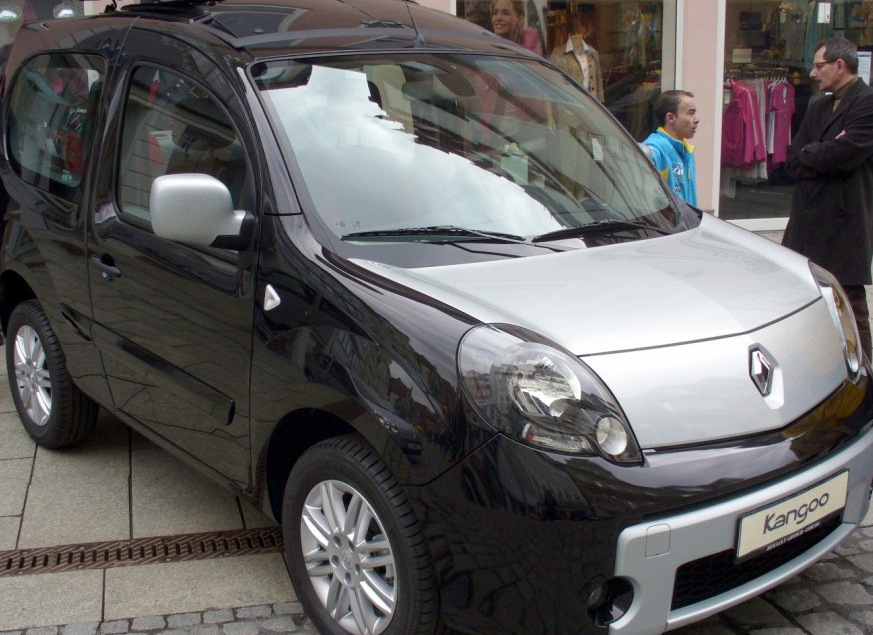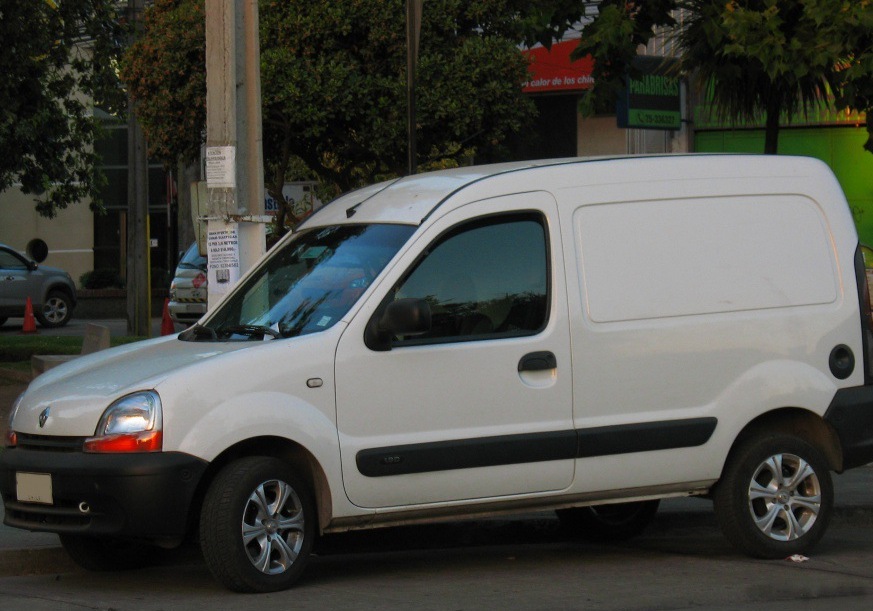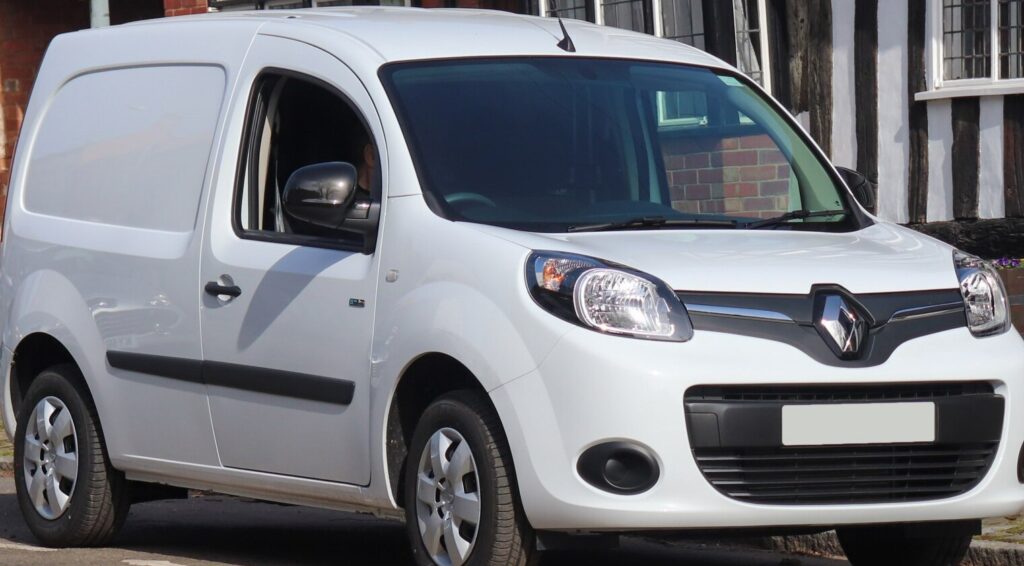
The Renault Kangoo II Express Z.E. 22 kWh, produced from 2013 to 2017, represents Renault’s initial foray into the electric light commercial vehicle (LCV) market. This variant, powered by a 60 horsepower electric motor, was specifically designed for urban delivery and service applications where low running costs and zero emissions were prioritized. Positioned as the entry-level electric offering within the Kangoo II Express range, it catered to businesses and tradespeople seeking a practical and environmentally conscious vehicle. The “Z.E.” designation signifies Renault’s commitment to zero-emission mobility, and the Kangoo II Express Z.E. played a crucial role in establishing the brand’s presence in the burgeoning electric LCV segment in Europe.
Technical Specifications
| Brand | Renault |
| Model | Kangoo |
| Generation | Kangoo II Express (facelift 2013) |
| Type (Engine) | Z.E. 22 kWh (60 Hp) |
| Start of production | 2013 |
| End of production | 2017 |
| Powertrain Architecture | BEV (Electric Vehicle) |
| Body type | Minivan |
| Seats | 2 |
| Doors | 3 |
| Fuel Type | Electricity |
| Acceleration 0 – 100 km/h | 20.3 sec |
| Acceleration 0 – 62 mph | 20.3 sec |
| Acceleration 0 – 60 mph | 19.3 sec |
| Maximum speed | 130 km/h (80.78 mph) |
| Weight-to-power ratio | 23.8 kg/Hp, 42.1 Hp/tonne |
| Weight-to-torque ratio | 6.3 kg/Nm, 158.5 Nm/tonne |
| Gross battery capacity | 22 kWh |
| Net (usable) battery capacity | 20 kWh |
| Battery voltage | 400 V |
| Battery technology | Lithium-ion (Li-Ion) |
| Battery weight | 260 kg (573.2 lbs) |
| Battery location | Below the floor |
| All-electric range (NEDC) | 170 km (105.63 mi) |
| Average Energy consumption (NEDC) | 15.5 kWh/100 km (24.94 kWh/100 mi) |
| MPGe | 135 |
| km/kWh | 6.5 |
| mi/kWh | 4 |
| Electric motor power | 60 Hp |
| Electric motor Torque | 226 Nm (166.69 lb.-ft.) |
| Maximum revolutions of the electric motor | 10500 rpm |
| Electric motor location | Front axle, Transverse |
| System power | 60 Hp |
| System torque | 226 Nm (166.69 lb.-ft.) |
| Kerb Weight | 1426 kg (3143.79 lbs) |
| Max. weight | 2126 kg (4687.03 lbs) |
| Max load | 700 kg (1543.24 lbs) |
| Trunk (boot) space – minimum | 3000 l (105.94 cu. ft.) |
| Trunk (boot) space – maximum | 3500 l (123.6 cu. ft.) |
| Permitted trailer load with brakes (12%) | 374 kg (824.53 lbs) |
| Length | 4282 mm (168.58 in) |
| Width | 1829 mm (72.01 in) |
| Width including mirrors | 2138 mm (84.17 in) |
| Height | 1844 mm (72.6 in) |
| Wheelbase | 2697 mm (106.18 in) |
| Front track | 1521 mm (59.88 in) |
| Rear (Back) track | 1533 mm (60.35 in) |
| Front overhang | 875 mm (34.45 in) |
| Rear overhang | 710 mm (27.95 in) |
| Ride height (ground clearance) | 184 mm (7.24 in) |
| Minimum turning circle | 10.7 m (35.1 ft) |
| Drivetrain Architecture | One electric motor drives the front wheels |
| Drive wheel | Front wheel drive |
| Number of gears and type of gearbox | 1 gears, automatic transmission |
| Front suspension | Independent type McPherson |
| Rear suspension | Torsion |
| Front brakes | Ventilated discs, 280×24 mm |
| Rear brakes | Disc, 274×11 mm |
| Assisting systems | ABS (Anti-lock braking system) |
| Steering type | Steering rack and pinion |
| Power steering | Electric Steering |
| Tires size | 195/65 R15 |
| Wheel rims size | 6J x 15 |
Powertrain & Engine Architecture
The Kangoo II Express Z.E. utilizes a fully electric powertrain, foregoing the internal combustion engine entirely. The heart of the system is a synchronous electric motor producing 60 horsepower and 226 Nm (166.69 lb-ft) of torque. This motor is mounted transversely at the front of the vehicle, driving the front wheels. Power is delivered through a single-speed automatic transmission, providing seamless acceleration. The 22 kWh lithium-ion battery pack is located under the vehicle floor, contributing to a lower center of gravity and maximizing cargo space. The battery pack operates at 400 volts. The charging port location was dependent on market, but generally allowed for both standard AC charging and optional DC fast charging capabilities. The motor’s peak torque is available almost instantly, a characteristic of electric motors, providing brisk acceleration at lower speeds, despite the relatively modest horsepower figure.
Driving Characteristics
The 60 hp and 226 Nm of torque, combined with the single-speed transmission, result in a driving experience geared towards practicality rather than performance. Acceleration is adequate for urban environments, but highway merging and overtaking require careful planning. The immediate torque delivery makes navigating city traffic effortless, and the lack of engine noise contributes to a quieter and more comfortable driving experience. The single-speed transmission simplifies operation, but also means there’s no gear shifting to optimize power delivery. Compared to the petrol or diesel Kangoo II Express variants, the Z.E. offers a different driving profile – prioritizing smooth, linear acceleration over outright speed. The regenerative braking system helps to recapture energy during deceleration, extending the vehicle’s range.
Equipment & Trim Levels
The Kangoo II Express Z.E. was typically offered with a utilitarian trim level, reflecting its commercial focus. Standard equipment generally included air conditioning, a driver’s airbag, power steering, and basic audio system. The interior was designed for durability and ease of cleaning, with hard-wearing plastics and vinyl upholstery. Optional extras included a passenger airbag, rear parking sensors, and a navigation system. The emphasis was on providing a functional and reliable vehicle for commercial use, rather than luxurious appointments. The van’s spacious cargo area, with a minimum capacity of 3000 liters, was a key selling point.
Chassis & Braking
The Kangoo II Express Z.E. utilizes a McPherson strut independent suspension at the front and a torsion beam suspension at the rear. This setup provides a reasonable balance between ride comfort and handling. The front brakes are ventilated discs measuring 280x24mm, while the rear brakes are solid discs measuring 274x11mm. Anti-lock Braking System (ABS) is standard. The suspension was tuned to accommodate the added weight of the battery pack, ensuring stable handling and predictable braking performance. The electric power steering provides light and precise steering feel.
Market Reception & Comparison
The Kangoo II Express Z.E. was generally well-received by critics as a viable electric LCV option. Its primary strengths were its zero emissions, low running costs, and practical cargo capacity. However, its limited range (170 km / 105.63 miles NEDC) and relatively slow acceleration were noted as drawbacks. Compared to the petrol and diesel Kangoo II Express models, the Z.E. offered significantly lower fuel costs but a higher initial purchase price. The Z.E. was often compared to other early electric LCVs, such as the Citroën Berlingo Electric and Peugeot Partner Electric, all of which faced similar challenges in terms of range and performance.
Legacy
The Renault Kangoo II Express Z.E. paved the way for Renault’s broader expansion into the electric LCV market. While early examples may exhibit some battery degradation over time, the powertrain has proven to be relatively reliable. On the used car market, these vans represent an affordable entry point into electric commercial vehicle ownership. The Kangoo II Express Z.E. demonstrated the feasibility of electric propulsion for light commercial applications and helped to accelerate the adoption of electric vehicles in the delivery and service sectors. It served as a crucial stepping stone towards the development of more advanced and capable electric vans.