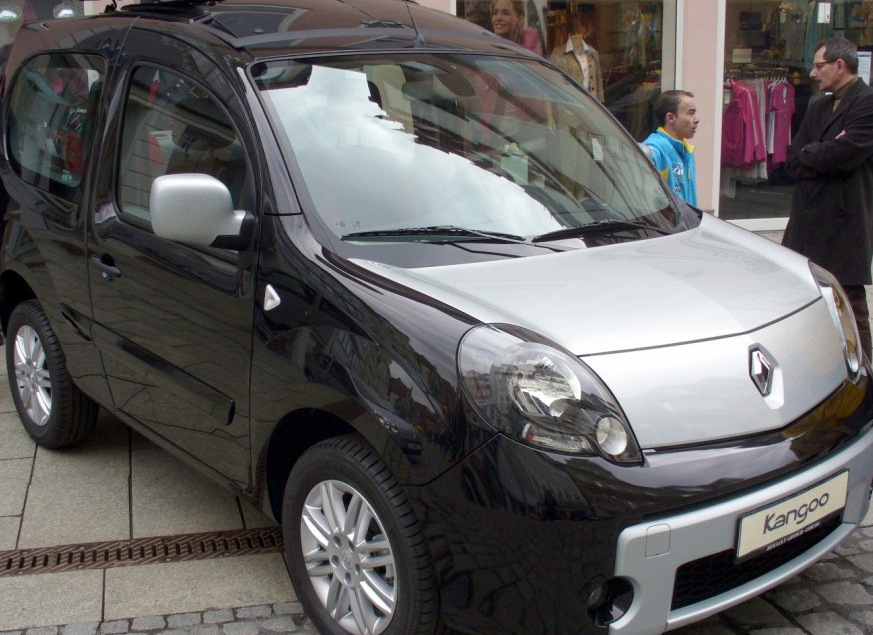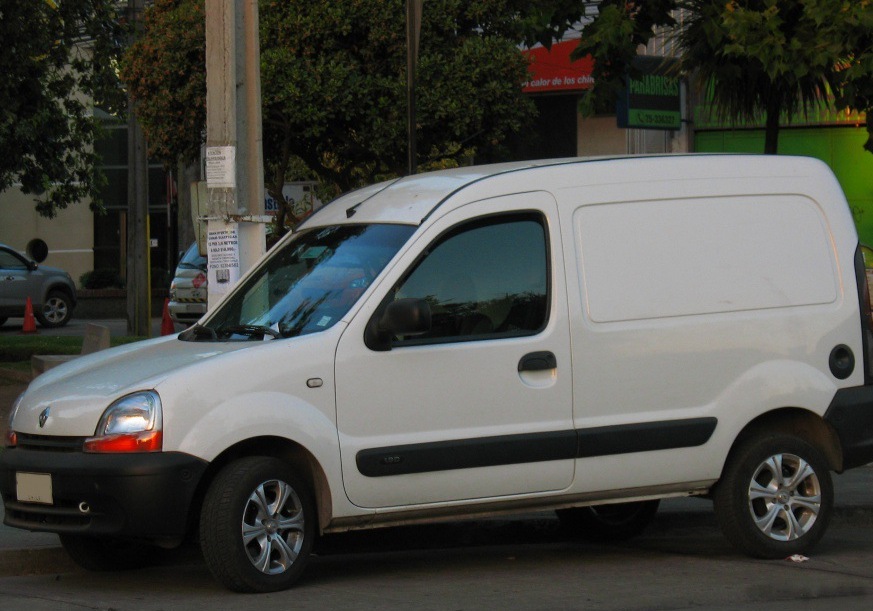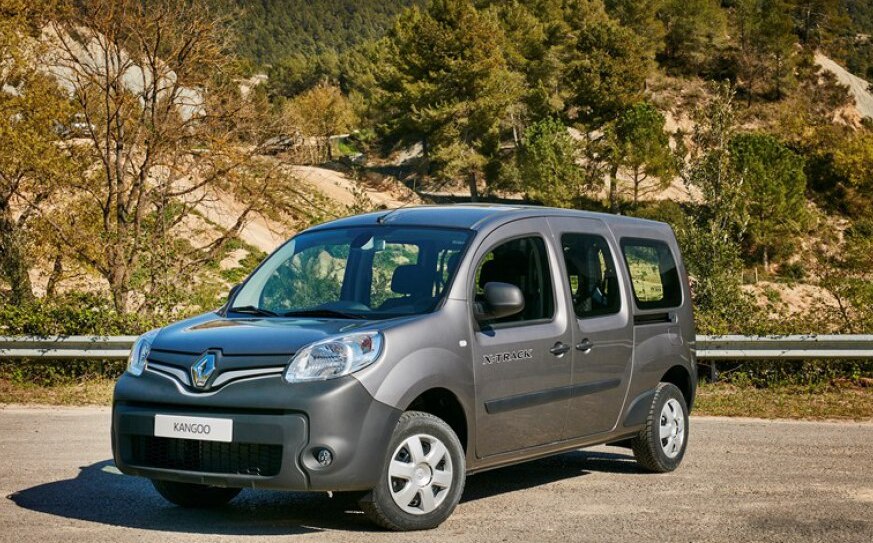
The Renault Kangoo II Express Maxi Z.E. 22 kWh, produced from 2013 to 2017, represents Renault’s early foray into the commercial electric vehicle market. This variant, a facelift of the Kangoo II, was specifically designed for urban delivery and light commercial applications, offering a zero-emission alternative to traditional gasoline or diesel vans. Positioned as a practical and environmentally conscious option, the Z.E. version of the Kangoo Maxi catered to businesses and individuals seeking a compact, versatile vehicle for short-to-medium range transport. It built upon the established Kangoo II platform (also known as the K9K series) and was a key component of Renault’s “Z.E.” (Zero Emission) initiative.
Technical Specifications
| Brand | Renault |
| Model | Kangoo |
| Generation | Kangoo II Express Maxi (facelift 2013) |
| Type (Engine) | Z.E. 22 kWh (60 Hp) |
| Start of production | 2013 |
| End of production | 2017 |
| Powertrain Architecture | BEV (Electric Vehicle) |
| Body type | Minivan |
| Seats | 5 |
| Doors | 5 |
| Fuel Type | Electricity |
| Acceleration 0 – 100 km/h | 22.4 sec |
| Acceleration 0 – 62 mph | 22.4 sec |
| Acceleration 0 – 60 mph | 21.3 sec |
| Maximum speed | 130 km/h (80.78 mph) |
| Weight-to-power ratio | 25.9 kg/Hp |
| Weight-to-torque ratio | 6.9 kg/Nm |
| Gross battery capacity | 22 kWh |
| Net (usable) battery capacity | 20 kWh |
| Battery voltage | 400 V |
| Battery technology | Lithium-ion (Li-Ion) |
| Battery weight | 260 kg (573.2 lbs) |
| Battery location | Below the floor |
| All-electric range (NEDC) | 170 km (105.63 mi) |
| Average Energy consumption (NEDC) | 15.5 kWh/100 km (24.94 kWh/100 mi) |
| Average Energy consumption (MPGe) | 135 MPGe |
| Average Energy consumption (km/kWh) | 6.5 km/kWh |
| Average Energy consumption (mi/kWh) | 4 mi/kWh |
| Electric motor power | 60 Hp |
| Electric motor Torque | 226 Nm (166.69 lb.-ft.) |
| Electric motor location | Front axle, Transverse |
| System power | 60 Hp |
| System torque | 226 Nm (166.69 lb.-ft.) |
| Kerb Weight | 1553 kg (3423.78 lbs) |
| Max. weight | 2260 kg (4982.45 lbs) |
| Max load | 707 kg (1558.67 lbs) |
| Trunk (boot) space – minimum | 1300 l (45.91 cu. ft.) |
| Trunk (boot) space – maximum | 3400 l (120.07 cu. ft.) |
| Length | 4666 mm (183.7 in) |
| Width | 1829 mm (72.01 in) |
| Width including mirrors | 2138 mm (84.17 in) |
| Height | 1826 mm (71.89 in) |
| Wheelbase | 3081 mm (121.3 in) |
| Front track | 1521 mm (59.88 in) |
| Rear (Back) track | 1533 mm (60.35 in) |
| Front overhang | 875 mm (34.45 in) |
| Rear overhang | 710 mm (27.95 in) |
| Ride height (ground clearance) | 185 mm (7.28 in) |
| Minimum turning circle | 11.9 m (39.04 ft) |
| Drivetrain Architecture | One electric motor drives the front wheels. |
| Drive wheel | Front wheel drive |
| Number of gears and type of gearbox | 1 gears, automatic transmission |
| Front suspension | Independent type McPherson |
| Rear suspension | Torsion |
| Front brakes | Ventilated discs, 280×24 mm |
| Rear brakes | Disc, 274×11 mm |
| Assisting systems | ABS (Anti-lock braking system) |
| Steering type | Steering rack and pinion |
| Power steering | Electric Steering |
| Tires size | 195/65 R15 |
| Wheel rims size | 6J x 15 |
Powertrain & Engine Architecture
The Kangoo Z.E. is powered by a 60 horsepower electric motor producing 226 Nm (166.69 lb-ft) of torque. This motor is transversely mounted at the front of the vehicle and drives the front wheels. The heart of the system is a 22 kWh lithium-ion battery pack, providing a usable capacity of 20 kWh. This battery pack is located under the floor of the vehicle, contributing to a lower center of gravity and maximizing interior space. The powertrain utilizes a single-speed automatic transmission, simplifying operation and delivering instant torque characteristic of electric motors. The charging port is located where the fuel filler would be on a conventional vehicle. The electric motor itself is a synchronous reluctance motor, chosen for its efficiency and relatively simple construction.
Driving Characteristics
The 60 hp output and single-speed automatic transmission of the Kangoo Z.E. prioritize efficiency and usability over outright performance. Acceleration is modest, with a 0-60 mph time of around 21.3 seconds. However, the instant torque delivery of the electric motor provides adequate responsiveness for urban driving and light commercial duties. The single gear ratio is optimized for efficiency and smooth acceleration at lower speeds. Compared to the gasoline or diesel versions of the Kangoo, the Z.E. offers a quieter and smoother driving experience. The regenerative braking system helps to recapture energy during deceleration, extending the vehicle’s range. While not designed for high-speed highway travel (top speed is limited to 80.78 mph), the Kangoo Z.E. excels in stop-and-go city environments.
Equipment & Trim Levels
The Kangoo II Express Maxi Z.E. was typically equipped with a functional, utilitarian interior. Standard features included air conditioning, a basic audio system, and power windows. Safety features such as ABS and driver/passenger airbags were also standard. The trim level was relatively basic, reflecting the vehicle’s commercial focus. Optional extras included a navigation system, rear parking sensors, and upgraded upholstery. The interior was designed for durability and ease of cleaning, with hard-wearing plastics and wipeable surfaces. The spacious cabin and flexible seating arrangements allowed for a variety of cargo configurations.
Chassis & Braking
The Kangoo Z.E. utilizes a McPherson strut independent suspension at the front and a torsion beam suspension at the rear. This setup provides a comfortable ride quality and adequate handling for its intended purpose. The front brakes are ventilated discs measuring 280×24 mm, while the rear brakes are solid discs measuring 274×11 mm. The ABS (Anti-lock Braking System) provides enhanced braking control in emergency situations. The electric power steering offers light and precise steering feel. The vehicle’s relatively low center of gravity, due to the underfloor battery pack, contributes to improved stability.
Market Reception & Comparison
The Renault Kangoo Z.E. was generally well-received by critics as a practical and cost-effective electric van. Its limited range (170 km/105.63 miles NEDC) was a common criticism, but it was considered sufficient for many urban delivery applications. Compared to the gasoline and diesel versions of the Kangoo, the Z.E. offered lower running costs due to the elimination of fuel expenses and reduced maintenance requirements. However, the initial purchase price was higher. The Kangoo Z.E. competed with other early electric vans, such as the Citroën Berlingo Electric and the Peugeot Partner Electric, all of which offered similar capabilities and limitations.
Legacy
The Renault Kangoo Z.E. played a significant role in establishing Renault as a leader in the electric vehicle market. While early electric vehicle technology had limitations, the Kangoo Z.E. demonstrated the viability of electric vans for commercial applications. The powertrain proved to be relatively reliable, with the primary concerns revolving around battery degradation over time. Today, used Kangoo Z.E. models represent an affordable entry point into the electric van market, particularly for businesses operating in urban areas with access to charging infrastructure. The Kangoo Z.E. paved the way for subsequent generations of Renault electric vans, incorporating advancements in battery technology and range.