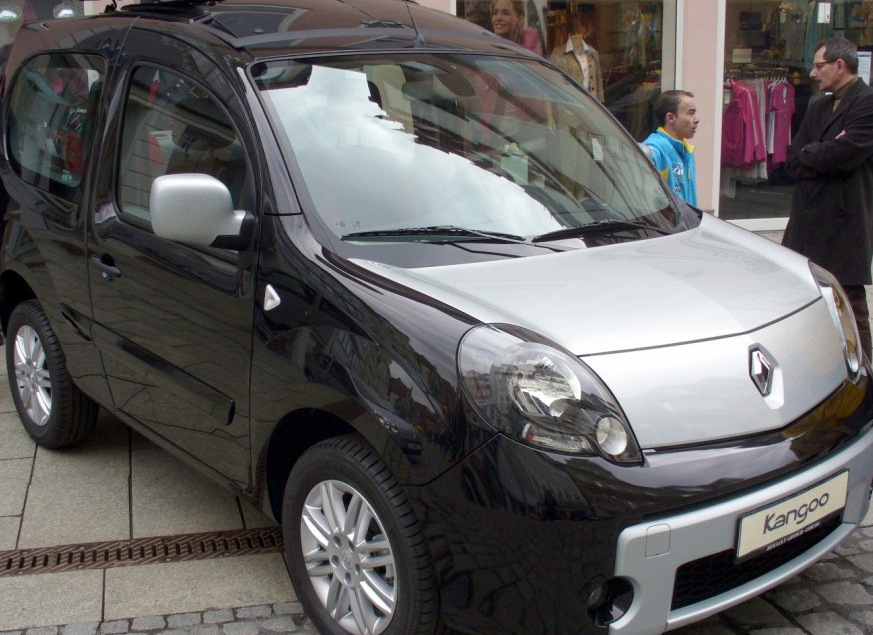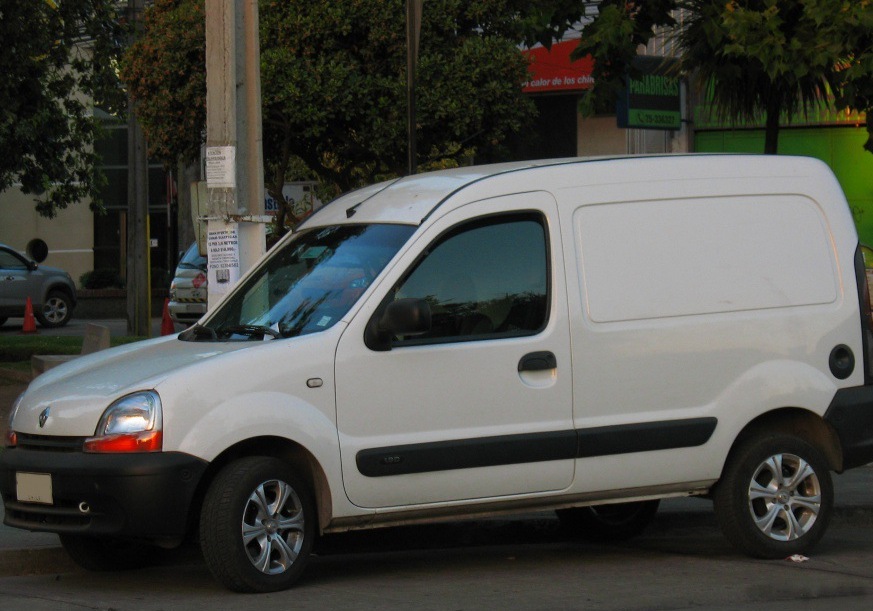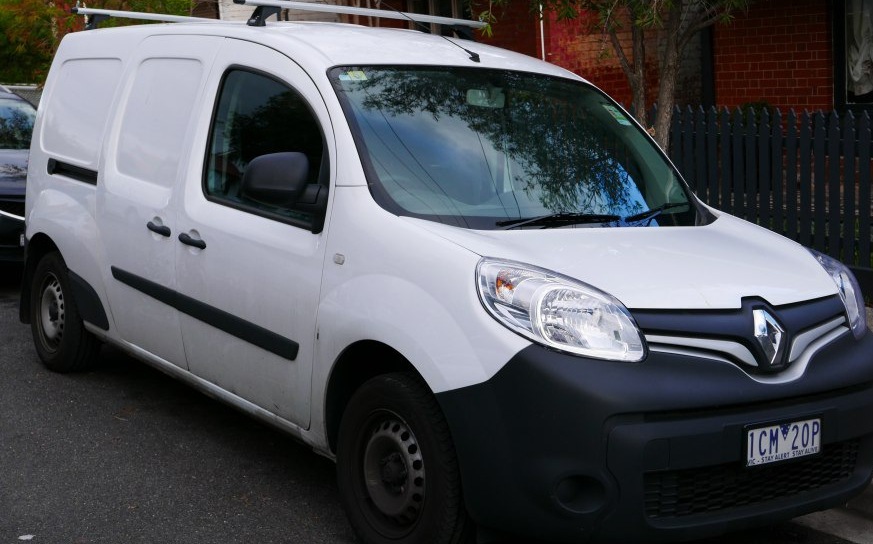
The Renault Kangoo II Express Maxi Grand Volume, specifically the facelifted version produced from 2013 to 2018, represented a significant iteration of Renault’s popular light commercial vehicle and passenger vehicle blend. This variant, equipped with the 1.5 dCi engine producing 110 horsepower and paired with a six-speed Efficient Dual Clutch (EDC) automatic transmission, was positioned as a versatile option for businesses and families alike. The Kangoo II, built on the X0/B9 platform, aimed to balance practicality, fuel efficiency, and a degree of driving comfort not always found in the van segment. The “Maxi” designation indicates an extended wheelbase, providing increased cargo capacity, while the “Grand Volume” refers to the higher roofline, maximizing interior space. This particular configuration was primarily sold in European markets, where compact vans are a popular choice for urban delivery and family transport.
Technical Specifications
| Brand | Renault |
| Model | Kangoo |
| Generation | Kangoo II Express Maxi Grand Volume (facelift 2013) |
| Type (Engine) | 1.5 dCi (110 Hp) EDC |
| Start of production | 2013 |
| End of production | 2018 |
| Powertrain Architecture | Internal Combustion engine |
| Body type | Minivan |
| Seats | 2 |
| Doors | 3 |
| Fuel consumption (combined) | 5.2 l/100 km (45.2 US mpg, 54.3 UK mpg, 19.2 km/l) |
| CO2 emissions | 136 g/km |
| Fuel Type | Diesel |
| Acceleration 0 – 100 km/h | 12.7 sec |
| Acceleration 0 – 62 mph | 12.7 sec |
| Acceleration 0 – 60 mph | 12.1 sec |
| Maximum speed | 170 km/h (105.63 mph) |
| Emission standard | Euro 5 |
| Weight-to-power ratio | 12.7 kg/Hp, 78.9 Hp/tonne |
| Weight-to-torque ratio | 5.6 kg/Nm, 179.2 Nm/tonne |
| Power | 110 Hp @ 4000 rpm |
| Power per litre | 75.3 Hp/l |
| Torque | 250 Nm @ 1750 rpm (184.39 lb.-ft. @ 1750 rpm) |
| Engine layout | Front, Transverse |
| Engine Model/Code | K9K |
| Engine displacement | 1461 cm3 (89.16 cu. in.) |
| Number of cylinders | 4 |
| Engine configuration | Inline |
| Number of valves per cylinder | 2 |
| Fuel injection system | Diesel Commonrail |
| Engine aspiration | Turbocharger, Intercooler |
| Engine oil capacity | 4.5 l (4.76 US qt | 3.96 UK qt) |
| Coolant capacity | 7.2 l (7.61 US qt | 6.34 UK qt) |
| Kerb Weight | 1395-1540 kg (3075.45 – 3395.12 lbs.) |
| Max. weight | 2200 kg (4850.17 lbs.) |
| Max load | 660-805 kg (1455.05 – 1774.72 lbs.) |
| Trunk (boot) space – minimum | 4000 l (141.26 cu. ft.) |
| Trunk (boot) space – maximum | 4600 l (162.45 cu. ft.) |
| Fuel tank capacity | 60 l (15.85 US gal | 13.2 UK gal) |
| Permitted trailer load with brakes (12%) | 1050 kg (2314.85 lbs.) |
| Permitted trailer load without brakes | 750 kg (1653.47 lbs.) |
| Length | 4666 mm (183.7 in.) |
| Width | 1829 mm (72.01 in.) |
| Width including mirrors | 2138 mm (84.17 in.) |
| Height | 1810 mm (71.26 in.) |
| Wheelbase | 3081 mm (121.3 in.) |
| Front track | 1521 mm (59.88 in.) |
| Rear track | 1533 mm (60.35 in.) |
| Front overhang | 875 mm (34.45 in.) |
| Rear overhang | 710 mm (27.95 in.) |
| Minimum turning circle | 11.9 m (39.04 ft.) |
| Drivetrain Architecture | Front wheel drive |
| Number of gears and type of gearbox | 6 gears, automatic transmission EDC |
| Front suspension | Independent type McPherson |
| Rear suspension | Torsion |
| Front brakes | Ventilated discs |
| Rear brakes | Drum |
| Assisting systems | ABS (Anti-lock braking system) |
| Steering type | Steering rack and pinion |
| Power steering | Electric Steering |
| Tires size | 195/65 R15 91 T |
| Wheel rims size | 15 |
Powertrain & Engine Architecture
The heart of this Kangoo variant is the Renault K9K engine, a 1.5-liter inline-four cylinder diesel. This engine, a mainstay in Renault’s lineup for many years, is known for its relatively simple design and durability. The 110 horsepower version utilizes a turbocharger with an intercooler to boost power output, and benefits from a common rail direct fuel injection system. This system allows for precise fuel delivery, optimizing combustion and contributing to both power and fuel efficiency. The K9K engine features two valves per cylinder and is known for its robust bottom end. The EDC (Efficient Dual Clutch) automatic transmission is a six-speed unit that provides smoother and faster gear changes compared to a traditional torque converter automatic. It operates by utilizing two separate clutches, one for odd gears and one for even gears, allowing for pre-selection of the next gear and minimizing interruption in power delivery.
Driving Characteristics
The 1.5 dCi 110 EDC Kangoo offers a reasonable balance between performance and economy. While not a particularly sporty vehicle, the 110 horsepower output provides adequate power for everyday driving and light commercial duties. Acceleration from 0-60 mph takes around 12.1 seconds, and the top speed is approximately 105 mph. The EDC transmission contributes to a more refined driving experience than a manual gearbox, particularly in urban environments. The gear ratios are tuned for fuel efficiency, meaning the engine doesn’t rev excessively at highway speeds. Compared to the lower-powered 90 hp version, the 110 hp model offers noticeably improved performance, especially when fully loaded. However, it doesn’t match the responsiveness of higher-performance variants, such as those equipped with more powerful diesel engines.
Equipment & Trim Levels
The Kangoo II Express Maxi Grand Volume 1.5 dCi 110 EDC typically came with a fairly comprehensive standard equipment list, reflecting its position as a mid-range offering. Standard features included air conditioning, power windows, central locking, and an adjustable steering wheel. Safety features such as ABS, driver and passenger airbags, and electronic stability control were also standard. Interior upholstery was typically cloth, with durable and practical materials used throughout the cabin. Optional extras included features like a navigation system, rear parking sensors, and upgraded audio systems. The “Grand Volume” trim specifically offered the increased roof height, providing significantly more cargo space.
Chassis & Braking
The Kangoo II utilizes a McPherson strut independent suspension setup at the front, providing a comfortable ride and decent handling. The rear suspension employs a torsion beam, which is a simpler and more cost-effective design. The front brakes are ventilated discs, offering good stopping power, while the rear brakes are drums. This configuration was typical for vehicles in this weight class. Electric power steering provides light and easy steering, making it maneuverable in tight spaces. The chassis is designed to prioritize practicality and load-carrying capacity over outright sporty handling.
Market Reception & Comparison
The Renault Kangoo II Express Maxi Grand Volume 1.5 dCi 110 EDC was generally well-received by critics and buyers alike. It was praised for its practicality, fuel efficiency, and comfortable ride. The EDC transmission was seen as a significant improvement over traditional automatic gearboxes. Compared to other vans in its class, such as the Citroën Berlingo and Peugeot Partner, the Kangoo offered a competitive package in terms of space, fuel economy, and price. The 110 hp engine provided a good balance between performance and efficiency, making it a popular choice for both commercial and private buyers. However, some critics noted that the interior materials were not as refined as those found in some of its competitors.
Legacy
The Renault Kangoo II, and specifically the 1.5 dCi 110 EDC variant, has proven to be a reliable and durable vehicle. The K9K engine is known for its longevity, and the EDC transmission, while more complex than a traditional automatic, has generally proven to be reliable with regular maintenance. On the used car market, these Kangoos represent a good value proposition, offering a lot of space and practicality for a relatively affordable price. They remain a popular choice for small businesses, tradespeople, and families who need a versatile and economical vehicle.