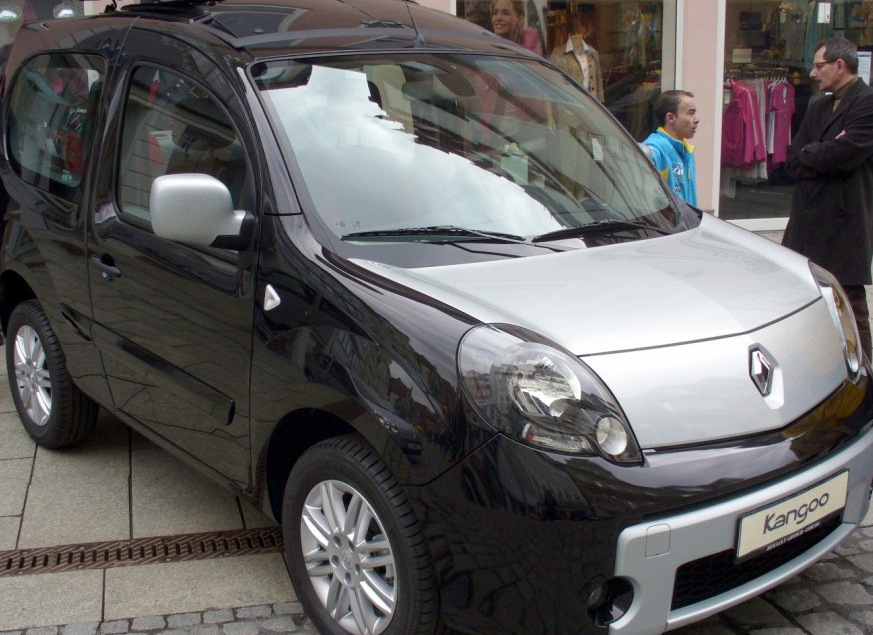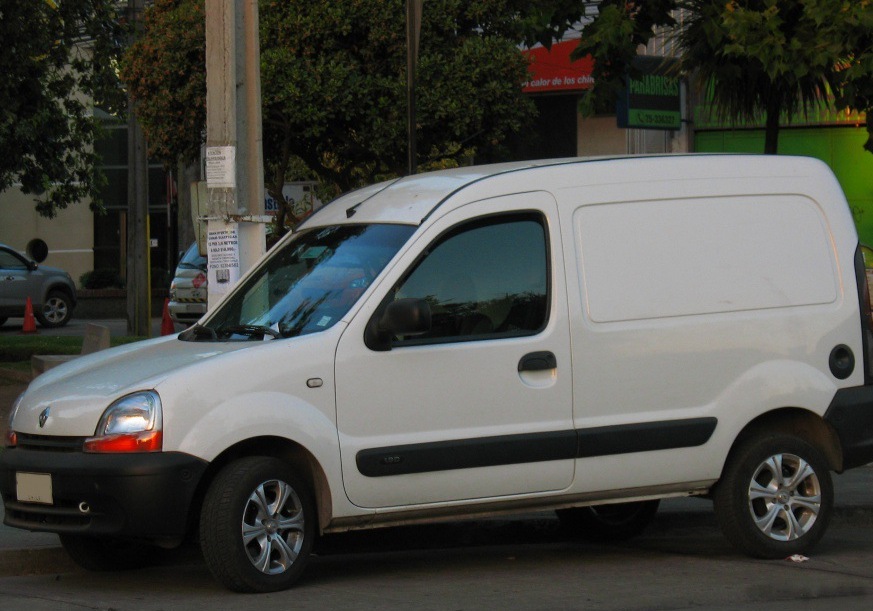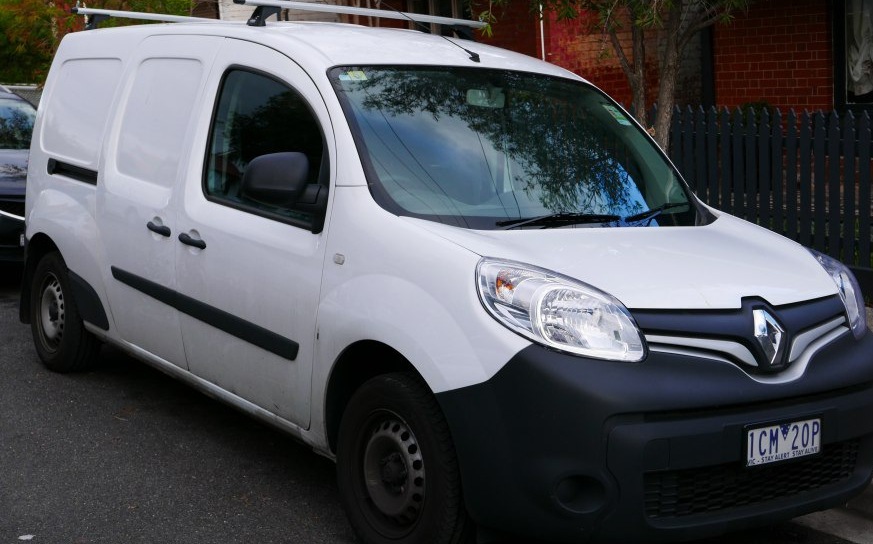
The Renault Kangoo II Express Maxi Grand Volume, specifically the facelifted version introduced in 2013, represented a significant iteration of Renault’s popular light commercial vehicle and passenger vehicle (depending on configuration). This variant, powered by the 1.5 Energy dCi engine producing 110 horsepower, was a mainstay in the European market from 2013 to 2018. Positioned as a mid-range offering within the Kangoo II lineup, it catered to businesses and individuals needing a practical, fuel-efficient, and spacious vehicle for both cargo and passenger transport. The “Maxi” designation indicates an extended wheelbase, providing a larger cargo area compared to the standard Kangoo II.
Technical Specifications
| Brand | Renault |
| Model | Kangoo |
| Generation | Kangoo II Express Maxi Grand Volume (facelift 2013) |
| Type (Engine) | 1.5 Energy dCi (110 Hp) Stop&Start |
| Start of production | 2013 |
| End of production | 2018 |
| Powertrain Architecture | Internal Combustion engine |
| Body type | Minivan |
| Seats | 2 |
| Doors | 3 |
| Fuel consumption (combined) | 4.5 l/100 km (52.3 US mpg, 62.8 UK mpg, 22.2 km/l) |
| CO2 emissions | 119 g/km |
| Fuel Type | Diesel |
| Acceleration 0 – 100 km/h | 12.3 sec |
| Acceleration 0 – 62 mph | 12.3 sec |
| Acceleration 0 – 60 mph | 11.7 sec |
| Maximum speed | 170 km/h (105.63 mph) |
| Emission standard | Euro 5 |
| Weight-to-power ratio | 12.5 kg/Hp, 80.1 Hp/tonne |
| Weight-to-torque ratio | 5.3 kg/Nm, 189.4 Nm/tonne |
| Power | 110 Hp @ 4000 rpm |
| Power per litre | 75.3 Hp/l |
| Torque | 260 Nm @ 1750 rpm (191.77 lb.-ft. @ 1750 rpm) |
| Engine layout | Front, Transverse |
| Engine Model/Code | K9K |
| Engine displacement | 1461 cm3 (89.16 cu. in.) |
| Number of cylinders | 4 |
| Engine configuration | Inline |
| Number of valves per cylinder | 2 |
| Fuel injection system | Diesel Commonrail |
| Engine aspiration | Turbocharger, Intercooler |
| Engine oil capacity | 4.5 l (4.76 US qt | 3.96 UK qt) |
| Coolant capacity | 7.2 l (7.61 US qt | 6.34 UK qt) |
| Kerb Weight | 1373-1540 kg (3026.95 – 3395.12 lbs.) |
| Max. weight | 2200 kg (4850.17 lbs.) |
| Max load | 660-827 kg (1455.05 – 1823.22 lbs.) |
| Trunk (boot) space – minimum | 4000 l (141.26 cu. ft.) |
| Trunk (boot) space – maximum | 4600 l (162.45 cu. ft.) |
| Fuel tank capacity | 60 l (15.85 US gal | 13.2 UK gal) |
| Permitted trailer load with brakes (12%) | 1050 kg (2314.85 lbs.) |
| Permitted trailer load without brakes | 800 kg (1763.7 lbs.) |
| Length | 4666 mm (183.7 in.) |
| Width | 1829 mm (72.01 in.) |
| Width including mirrors | 2138 mm (84.17 in.) |
| Height | 1810 mm (71.26 in.) |
| Wheelbase | 3081 mm (121.3 in.) |
| Front track | 1521 mm (59.88 in.) |
| Rear track | 1533 mm (60.35 in.) |
| Front overhang | 875 mm (34.45 in.) |
| Rear overhang | 710 mm (27.95 in.) |
| Minimum turning circle | 11.9 m (39.04 ft.) |
| Drivetrain Architecture | Front wheel drive |
| Number of gears and type of gearbox | 6 gears, manual transmission |
| Front suspension | Independent type McPherson |
| Rear suspension | Torsion |
| Front brakes | Ventilated discs |
| Rear brakes | Drum |
| Assisting systems | ABS (Anti-lock braking system) |
| Steering type | Steering rack and pinion |
| Power steering | Electric Steering |
| Tires size | 195/65 R15 91 T |
| Wheel rims size | 15 |
Powertrain & Engine Architecture
The heart of this Kangoo variant is the Renault K9K engine, a 1.5-liter inline-four cylinder diesel. This engine family has been a staple in Renault and Nissan vehicles for years, known for its robustness and fuel efficiency. The ‘Energy dCi’ designation signifies Renault’s efforts to improve fuel economy and reduce emissions. The 110 horsepower output was achieved through a turbocharger with an intercooler, optimizing air intake for increased power. The engine utilizes a diesel commonrail direct injection system, delivering fuel directly into the combustion chamber at high pressure for improved combustion efficiency and reduced noise. The K9K engine features two valves per cylinder and a single overhead camshaft. The 6-speed manual transmission was the standard offering, providing a good balance between fuel economy and drivability. The Stop&Start system, a key feature of this variant, automatically shuts off the engine when the vehicle is stationary (e.g., at traffic lights) and restarts it instantly when the clutch is depressed, further enhancing fuel efficiency.
Driving Characteristics
The 110 hp K9K engine in the Kangoo II Maxi offered adequate, though not exhilarating, performance. Acceleration from 0-60 mph took around 11.7 seconds, and top speed was approximately 105 mph. The engine’s 260 Nm (191.77 lb-ft) of torque, available from 1750 rpm, provided sufficient pulling power for carrying loads or navigating hilly terrain. Compared to the lower-powered 90 hp version, the 110 hp model offered a noticeable improvement in responsiveness, particularly when fully loaded. However, it didn’t match the performance of larger-engined vans or those with more advanced turbocharging systems. The 6-speed manual transmission was well-matched to the engine, offering smooth gear changes and allowing the driver to keep the engine in its optimal torque band. The gear ratios were geared towards fuel efficiency rather than outright acceleration.
Equipment & Trim Levels
The Kangoo II Express Maxi Grand Volume 1.5 dCi 110 Stop&Start typically came with a practical, work-focused interior. Standard equipment included a driver’s airbag, ABS brakes, power steering, and a basic audio system. The cabin was designed for durability and ease of cleaning, with hard-wearing plastics and vinyl upholstery. Higher trim levels offered options such as air conditioning, a passenger airbag, electric windows, and a more sophisticated audio system with Bluetooth connectivity. The “Grand Volume” designation meant a particularly large cargo area, with a minimum capacity of 4000 liters (141.26 cu. ft.) and a maximum of 4600 liters (162.45 cu. ft.) with the rear seats folded. The van also featured numerous tie-down points and load securing options.
Chassis & Braking
The Kangoo II Maxi utilized a front-wheel-drive layout with an independent McPherson strut suspension at the front and a torsion beam suspension at the rear. This setup provided a reasonable balance between ride comfort and handling. The front brakes were ventilated discs, offering good stopping power, while the rear brakes were drums, a cost-saving measure common in light commercial vehicles. The electric power steering provided light and precise steering feel. The suspension was tuned to prioritize comfort and load-carrying capacity over sporty handling.
Market Reception & Comparison
The Renault Kangoo II Maxi 1.5 dCi 110 Stop&Start was generally well-received by critics and customers alike. It was praised for its fuel efficiency, spacious interior, and practicality. Compared to the 90 hp version, the 110 hp model was considered a worthwhile upgrade for those who frequently carried heavy loads or drove on hilly roads. However, some reviewers noted that the engine could be somewhat noisy and lacked the refinement of some competitors. In terms of fuel economy, the Kangoo II Maxi 1.5 dCi 110 Stop&Start consistently achieved impressive figures, making it a cost-effective choice for businesses and individuals. Reliability was generally good, although some owners reported issues with the diesel particulate filter (DPF) and the electronic systems.
Legacy
The Renault Kangoo II, and specifically the 1.5 dCi 110 Stop&Start variant, has proven to be a durable and reliable workhorse. On the used car market, these vans continue to be popular due to their affordability, practicality, and fuel efficiency. While older examples may require maintenance on components like the DPF and turbocharger, the K9K engine is generally known for its longevity. The Kangoo II’s success paved the way for the current generation Kangoo, which continues to build on its predecessor’s strengths.