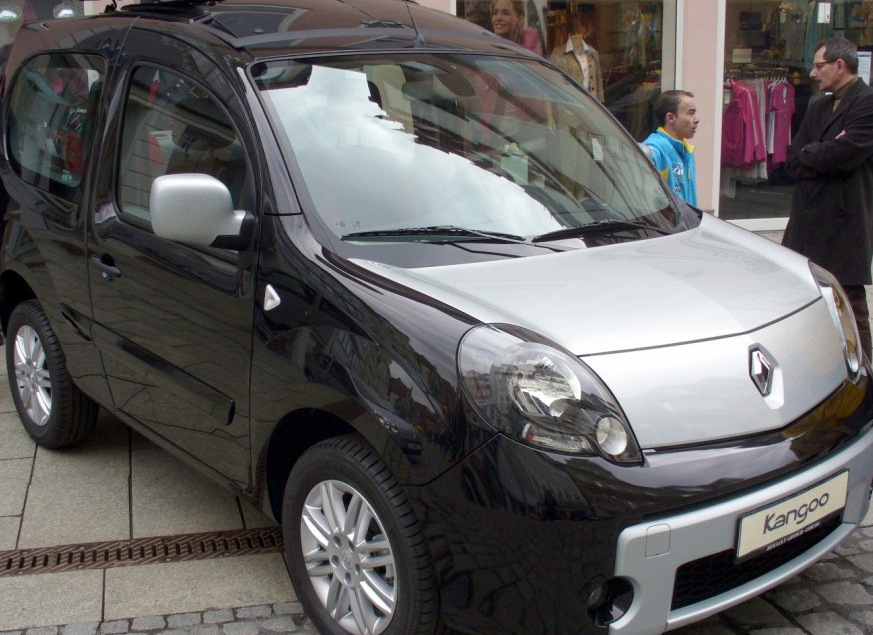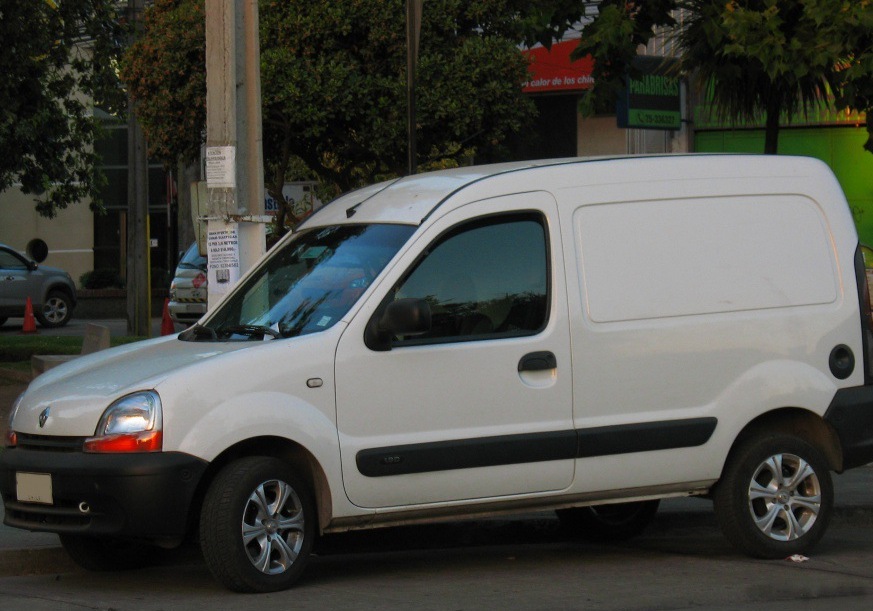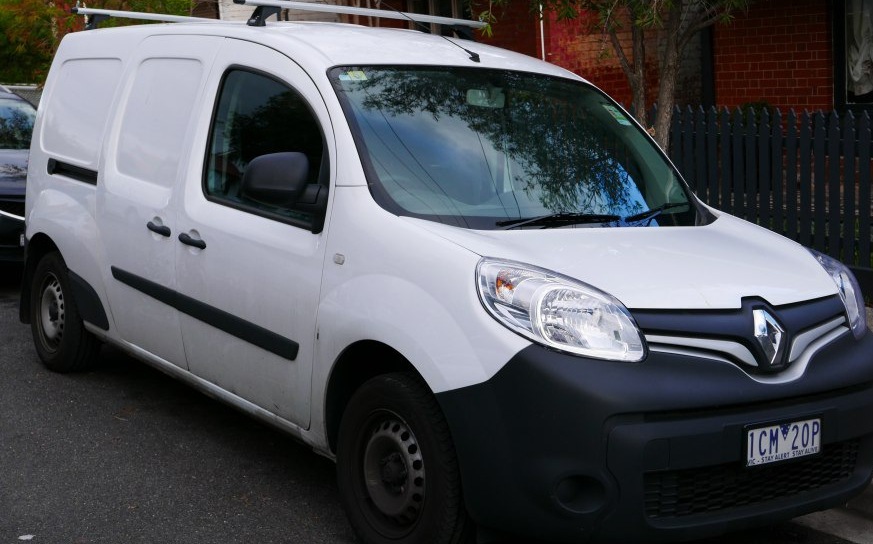
The Renault Kangoo II Express Maxi Grand Volume, specifically the facelifted version introduced in 2013, represented a significant iteration of Renault’s popular light commercial vehicle and passenger vehicle (depending on configuration). Production of this particular variant, equipped with the 1.5 Energy dCi engine producing 95 horsepower, ran from March 2019 to 2021. This version occupied a middle ground within the Kangoo II range, offering a balance between affordability, fuel efficiency, and practicality for businesses and individuals needing a versatile, spacious vehicle. The Kangoo II, built on the X0/B9 platform, was a mainstay in the European market, known for its robust construction and adaptable interior.
Technical Specifications
| Brand | Renault |
| Model | Kangoo |
| Generation | Kangoo II Express Maxi Grand Volume (facelift 2013) |
| Type (Engine) | 1.5 Energy dCi (95 Hp) |
| Start of production | March, 2019 |
| End of production | 2021 |
| Powertrain Architecture | Internal Combustion engine |
| Body type | Minivan |
| Seats | 2 |
| Doors | 3 |
| Combined fuel consumption (WLTP) | 6.3 l/100 km (37.3 US mpg, 44.8 UK mpg, 15.9 km/l) |
| CO2 emissions (WLTP) | 166 g/km |
| Fuel Type | Diesel |
| Maximum speed | 163 km/h (101.28 mph) |
| Emission standard | Euro 6 Dt |
| Weight-to-power ratio | 15.6 kg/Hp, 64.1 Hp/tonne |
| Weight-to-torque ratio | 6.4 kg/Nm, 155.1 Nm/tonne |
| Power | 95 Hp @ 3750 rpm |
| Power per litre | 65 Hp/l |
| Torque | 230 Nm @ 1750 rpm (169.64 lb.-ft. @ 1750 rpm) |
| Engine layout | Front, Transverse |
| Engine Model/Code | K9K |
| Engine displacement | 1461 cm3 (89.16 cu. in.) |
| Number of cylinders | 4 |
| Engine configuration | Inline |
| Number of valves per cylinder | 2 |
| Fuel injection system | Diesel Commonrail |
| Engine aspiration | Turbocharger, Intercooler |
| Engine oil capacity | 5.7 l (6.02 US qt | 5.02 UK qt) |
| Kerb Weight | 1483 kg (3269.46 lbs.) |
| Max. weight | 2200 kg (4850.17 lbs.) |
| Max load | 717 kg (1580.71 lbs.) |
| Trunk (boot) space – minimum | 4000 l (141.26 cu. ft.) |
| Trunk (boot) space – maximum | 4600 l (162.45 cu. ft.) |
| Fuel tank capacity | 60 l (15.85 US gal | 13.2 UK gal) |
| AdBlue tank | 17.4 l (4.6 US gal | 3.83 UK gal) |
| Max. roof load | 100 kg (220.46 lbs.) |
| Permitted trailer load with brakes (12%) | 1050 kg (2314.85 lbs.) |
| Permitted trailer load without brakes | 740 kg (1631.42 lbs.) |
| Length | 4666 mm (183.7 in.) |
| Width | 1829 mm (72.01 in.) |
| Width including mirrors | 2138 mm (84.17 in.) |
| Height | 1810-1836 mm (71.26 – 72.28 in.) |
| Wheelbase | 3081 mm (121.3 in.) |
| Front track | 1521 mm (59.88 in.) |
| Rear (Back) track | 1533 mm (60.35 in.) |
| Front overhang | 875 mm (34.45 in.) |
| Rear overhang | 710 mm (27.95 in.) |
| Ride height (ground clearance) | 145-212 mm (5.71 – 8.35 in.) |
| Minimum turning circle (turning diameter) | 11.9 m (39.04 ft.) |
| Drivetrain Architecture | The Internal combustion engine (ICE) drives the front wheels of the vehicle. |
| Drive wheel | Front wheel drive |
| Number of gears and type of gearbox | 6 gears, manual transmission |
| Front suspension | Independent type McPherson |
| Rear suspension | Torsion |
| Front brakes | Ventilated discs, 280 mm |
| Rear brakes | Drum, 274 mm |
| Assisting systems | ABS (Anti-lock braking system) |
| Steering type | Steering rack and pinion |
| Power steering | Electric Steering |
| Tires size | 195/65 R15 |
| Wheel rims size | 15 |
INTRODUCTION
The Renault Kangoo II Express Maxi Grand Volume 1.5 Energy dCi (95 Hp) is a panel van/minivan designed for commercial and light-duty passenger use. Introduced as part of the Kangoo II series’ facelift in 2013, and specifically produced from 2019-2021, this variant offered a longer wheelbase (“Maxi”) and increased cargo volume (“Grand Volume”) compared to standard Kangoo II models. The 95 horsepower diesel engine, coupled with a manual transmission, positioned this trim as a practical and economical choice for businesses and individuals prioritizing fuel efficiency and load capacity over outright performance. It was a popular choice in Europe, where compact vans are highly valued for their maneuverability in urban environments and their versatility.
Powertrain & Engine Architecture
At the heart of this Kangoo variant lies the Renault K9K 1.5-liter four-cylinder diesel engine. This engine, a member of the Energy dCi family, utilizes a common-rail direct fuel injection system, delivering fuel at high pressure for improved combustion efficiency and reduced emissions. The engine features a single overhead camshaft (SOHC) valvetrain with two valves per cylinder. A turbocharger with an intercooler is employed to boost power output and improve torque across a wider rev range. The 95 horsepower output is achieved at 3750 rpm, while peak torque of 230 Nm (169.64 lb.-ft.) is available from 1750 rpm. This configuration prioritizes low-end grunt, making it well-suited for carrying loads. The engine is transversely mounted at the front of the vehicle. The 6-speed manual transmission provides a good balance between fuel economy and drivability, with gear ratios optimized for both urban and highway driving.
Driving Characteristics
The 1.5 dCi 95 hp engine, paired with the manual gearbox, delivers adequate performance for everyday use. Acceleration is not brisk, but sufficient for merging onto highways and maintaining cruising speeds. The engine’s strong low-end torque makes it easy to navigate city streets and handle moderate loads. Compared to higher-output versions of the Kangoo II, such as those with more powerful diesel engines, this variant feels less responsive. However, the trade-off is significantly improved fuel economy. The 6-speed gearbox allows for comfortable highway cruising, while the relatively long gear ratios help to maximize fuel efficiency. The steering is light and precise, making the Kangoo easy to maneuver in tight spaces. The suspension, tuned for comfort and load-carrying capacity, provides a reasonably smooth ride, even when the vehicle is fully loaded.
Equipment & Trim Levels
The Kangoo II Express Maxi Grand Volume 1.5 dCi (95 Hp) typically came equipped with a practical, no-frills interior focused on functionality. Standard features included a driver’s airbag, power steering, central locking, and an adjustable steering column. The cabin typically featured durable, easy-to-clean upholstery. Depending on the specific market and optional packages, additional features could include air conditioning, a radio with CD player, electric windows, and rear parking sensors. The “Express” designation indicates a more basic trim level, geared towards commercial users. The “Grand Volume” refers to the extended cargo area. Optional extras often included upgraded audio systems, navigation systems, and various storage solutions for the cargo area.
Chassis & Braking
The Kangoo II utilizes an independent McPherson strut suspension at the front, providing good handling and ride comfort. The rear suspension employs a torsion beam setup, which is simple, robust, and cost-effective. This configuration is well-suited for carrying loads without compromising ride quality. The braking system consists of ventilated discs at the front and drum brakes at the rear. Anti-lock Braking System (ABS) is standard, enhancing safety during emergency braking situations. The steering is a rack and pinion system with electric power assistance, providing light and precise steering feel. The vehicle rides on 15-inch wheels with 195/65 R15 tires, offering a good balance between comfort and grip.
Market Reception & Comparison
The Renault Kangoo II Express Maxi Grand Volume 1.5 dCi (95 Hp) was generally well-received by critics and customers alike. It was praised for its practicality, fuel efficiency, and spacious interior. Compared to other light commercial vehicles in its class, the Kangoo offered a compelling combination of features and value. The 95 hp engine was considered adequate for most tasks, but some reviewers noted that it could feel underpowered when fully loaded or driving uphill. Compared to the higher-powered diesel variants, this version offered significantly better fuel economy, making it a popular choice for businesses looking to minimize operating costs. The manual transmission was also favored by many drivers for its simplicity and control.
Legacy
The Renault Kangoo II, and specifically this 1.5 dCi 95 hp variant, has proven to be a reliable and durable vehicle. The K9K engine is known for its longevity, provided it is properly maintained. In the used car market, these Kangoos are still sought after for their practicality and affordability. Common maintenance issues include wear and tear on suspension components, brake pads, and clutch components. The diesel particulate filter (DPF) can also require attention, particularly on vehicles that have spent a lot of time driving in urban environments. Overall, the Kangoo II Express Maxi Grand Volume 1.5 dCi (95 Hp) remains a popular and practical choice for businesses and individuals needing a versatile and economical light commercial vehicle.