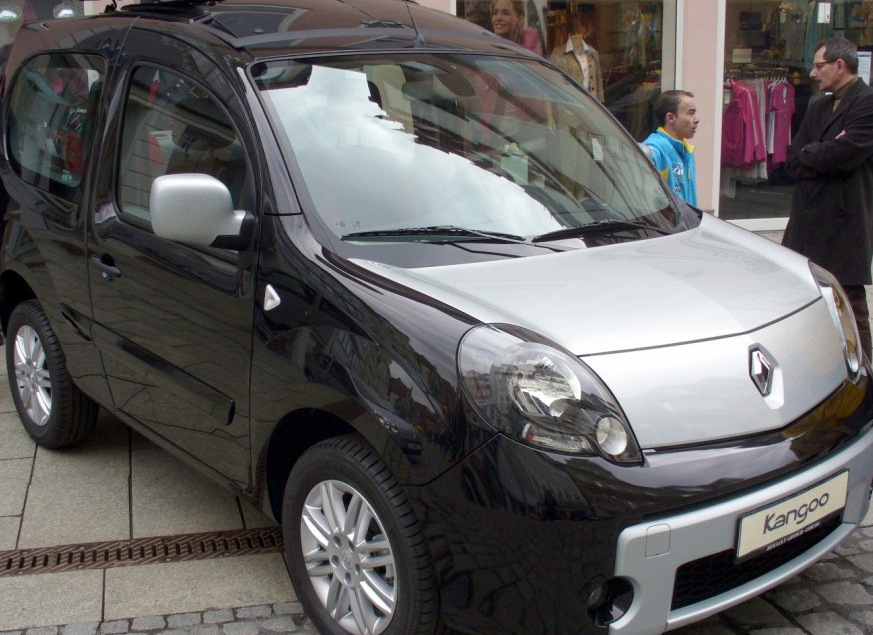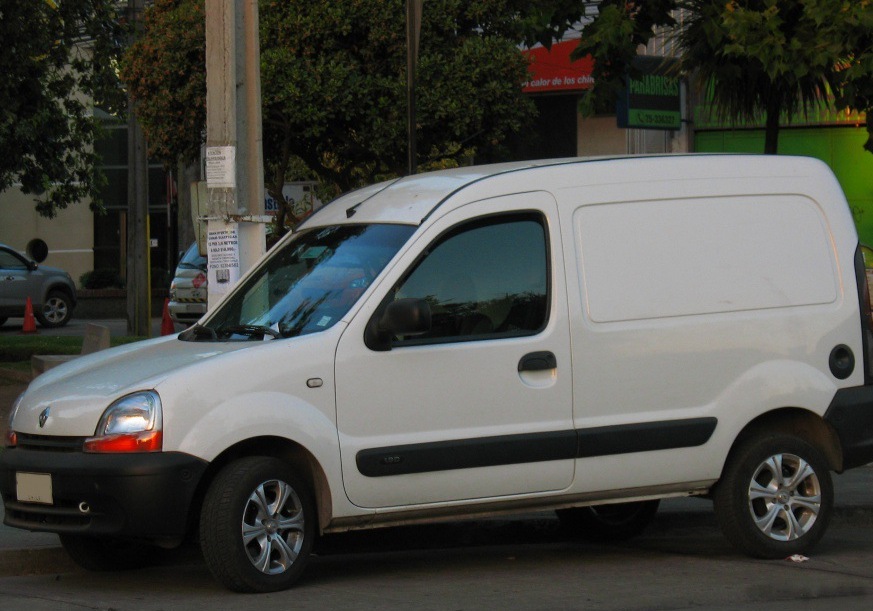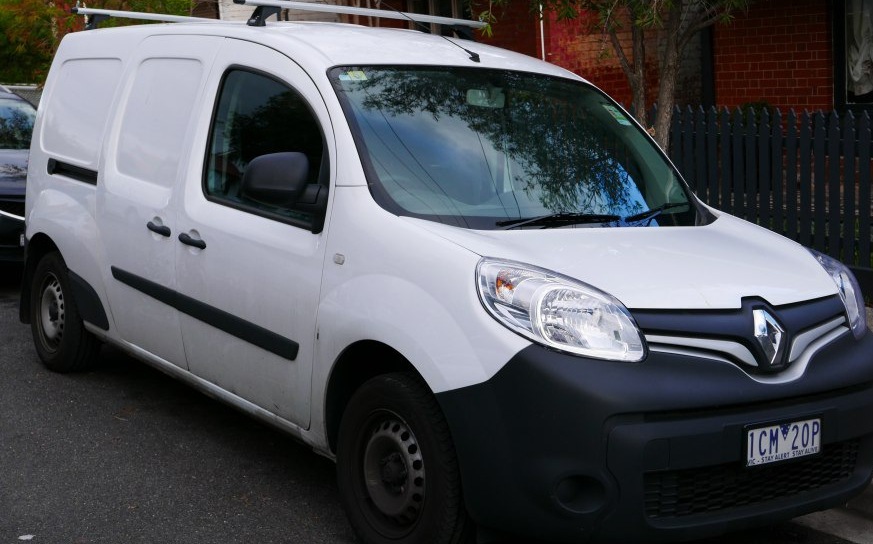
The Renault Kangoo II Express Maxi Grand Volume Z.E. 22 kWh, produced from 2013 to 2017, represents Renault’s initial venture into the commercial electric vehicle market. This variant, equipped with a 60 horsepower electric motor, was specifically engineered for urban delivery and commercial applications, prioritizing cargo volume and reduced operating expenses over outright performance. It’s a refreshed version of the Kangoo II, incorporating updates to the exterior styling and interior features. The “Maxi” designation signifies an extended wheelbase, providing a substantially larger cargo area compared to the standard Kangoo II. This model played a vital role in establishing Renault as a pioneer in electric light commercial vehicles in Europe.
Technical Specifications
| Brand | Renault |
| Model | Kangoo |
| Generation | Kangoo II Express Maxi Grand Volume (facelift 2013) |
| Type (Engine) | Z.E. 22 kWh (60 Hp) |
| Start of production | 2013 |
| End of production | 2017 |
| Powertrain Architecture | BEV (Electric Vehicle) |
| Body type | Minivan |
| Seats | 2 |
| Doors | 3 |
| Fuel Type | Electricity |
| Acceleration 0 – 100 km/h | 22.4 sec |
| Acceleration 0 – 62 mph | 22.4 sec |
| Acceleration 0 – 60 mph | 21.3 sec |
| Maximum speed | 130 km/h (80.78 mph) |
| Weight-to-power ratio | 25.1 kg/Hp, 39.9 Hp/tonne |
| Weight-to-torque ratio | 6.7 kg/Nm, 150.2 Nm/tonne |
| Gross battery capacity | 22 kWh |
| Net (usable) battery capacity | 20 kWh |
| Battery voltage | 400 V |
| Battery technology | Lithium-ion (Li-Ion) |
| Battery weight | 260 kg (573.2 lbs) |
| Battery location | Below the floor |
| All-electric range (NEDC) | 170 km (105.63 mi) |
| Average Energy consumption (NEDC) | 15.5 kWh/100 km (24.94 kWh/100 mi) |
| Kerb Weight | 1505 kg (3317.96 lbs) |
| Max. weight | 2175 kg (4795.05 lbs) |
| Max load | 670 kg (1477.1 lbs) |
| Trunk (boot) space – minimum | 4000 l (141.26 cu. ft.) |
| Trunk (boot) space – maximum | 4600 l (162.45 cu. ft.) |
| Permitted trailer load with brakes (12%) | 322 kg (709.89 lbs) |
| Permitted trailer load without brakes | 322 kg (709.89 lbs) |
| Length | 4666 mm (183.7 in) |
| Width | 1829 mm (72.01 in) |
| Width including mirrors | 2138 mm (84.17 in) |
| Height | 1836 mm (72.28 in) |
| Wheelbase | 3081 mm (121.3 in) |
| Front track | 1521 mm (59.88 in) |
| Rear (Back) track | 1533 mm (60.35 in) |
| Front overhang | 875 mm (34.45 in) |
| Rear overhang | 710 mm (27.95 in) |
| Ride height (ground clearance) | 187 mm (7.36 in) |
| Minimum turning circle | 11.9 m (39.04 ft) |
| Drivetrain Architecture | One electric motor drives the front wheels. |
| Drive wheel | Front wheel drive |
| Number of gears and type of gearbox | 1 gears, automatic transmission |
| Front suspension | Independent type McPherson |
| Rear suspension | Torsion |
| Front brakes | Ventilated discs, 280×24 mm |
| Rear brakes | Disc, 274×11 mm |
| Assisting systems | ABS (Anti-lock braking system) |
| Steering type | Steering rack and pinion |
| Power steering | Electric Steering |
| Tires size | 195/65 R15 |
| Wheel rims size | 6J x 15 |
Powertrain & Engine Architecture
The Kangoo Z.E. employs a fully electric powertrain, eliminating the need for a conventional internal combustion engine. The core of the system is a 60 horsepower (44 kW) electric motor, generating 226 Nm (166.69 lb-ft) of torque. This motor is mounted transversely at the front of the vehicle, powering the front wheels. Power is transmitted through a single-speed automatic transmission, streamlining operation and maximizing efficiency. The 22 kWh lithium-ion battery pack is positioned beneath the vehicle floor, contributing to a lower center of gravity and preserving cargo space. The battery pack operates at 400 volts. While the exact charging port location varied, these early EVs typically utilized a Type 2 connector in Europe. The electric motor is a synchronous motor with rotor excitation, selected for its efficiency and dependability.
Driving Characteristics
The 60 hp and 226 Nm of instantaneous torque deliver sufficient, though not particularly spirited, performance for city driving. Acceleration from 0-100 km/h requires approximately 22.4 seconds, and the top speed is capped at 130 km/h (80.78 mph). The single-speed transmission ensures seamless and linear acceleration, devoid of gear changes. In comparison to the gasoline or diesel Kangoo II models, the Z.E. prioritizes quiet, smooth operation and strong low-end torque. While the petrol and diesel versions offered quicker acceleration and higher top speeds, the Z.E. excelled in stop-and-go traffic, providing a more relaxed driving experience. The battery pack’s weight (260 kg / 573.2 lbs) does affect handling, making it feel slightly less nimble than its conventionally powered counterparts.
Equipment & Trim Levels
The Kangoo II Express Maxi Grand Volume Z.E. was generally offered with a basic trim level, reflecting its commercial intent. Standard features included essential elements such as power steering, ABS brakes, a driver’s airbag, and a rudimentary audio system. The interior prioritized durability and practicality, featuring robust plastics and easily cleaned surfaces. Optional extras encompassed air conditioning, a passenger airbag, and upgraded audio systems. The focus was on providing a functional and economical vehicle for businesses, rather than emphasizing luxury or comfort.
Chassis & Braking
The Kangoo Z.E. features an independent McPherson strut suspension at the front and a torsion beam suspension at the rear. This configuration strikes a reasonable balance between ride comfort and handling, considering the vehicle’s commercial purpose. The front brakes are ventilated discs measuring 280×24 mm, while the rear brakes are solid discs measuring 274×11 mm. ABS (Anti-lock Braking System) is standard. The suspension was calibrated to accommodate the added weight of the battery pack, ensuring stable and predictable handling. The steering system is a rack and pinion setup with electric power assistance.
Market Reception & Comparison
The Kangoo Z.E. was generally well-received by reviewers as a practical electric option for commercial users. Its key advantages were its low running costs, zero emissions, and substantial cargo capacity. However, its limited range (170 km / 105.63 mi NEDC) and relatively slow charging times were frequently mentioned as drawbacks. Compared to the petrol and diesel Kangoo II models, the Z.E. offered significantly lower fuel costs but a higher initial purchase price. Fuel efficiency, expressed as 15.5 kWh/100 km (24.94 kWh/100 mi) or 135 MPGe, was a major selling point. Reliability was generally good, with the electric powertrain proving to be relatively dependable.
Legacy
The Renault Kangoo Z.E. marked a significant advancement in the adoption of electric commercial vehicles. While earlier models may now exhibit some battery degradation, the powertrain has demonstrated reasonable durability. In the used car market, these vehicles represent an affordable entry point into electric vehicle ownership, particularly for businesses seeking a cost-effective delivery solution. The Kangoo Z.E. laid the groundwork for Renault’s continued development of electric vans and solidified their position as a leader in the electric light commercial vehicle sector. The insights gained from this early model informed the design and engineering of subsequent generations of electric Kangoos and other Renault electric vehicles.