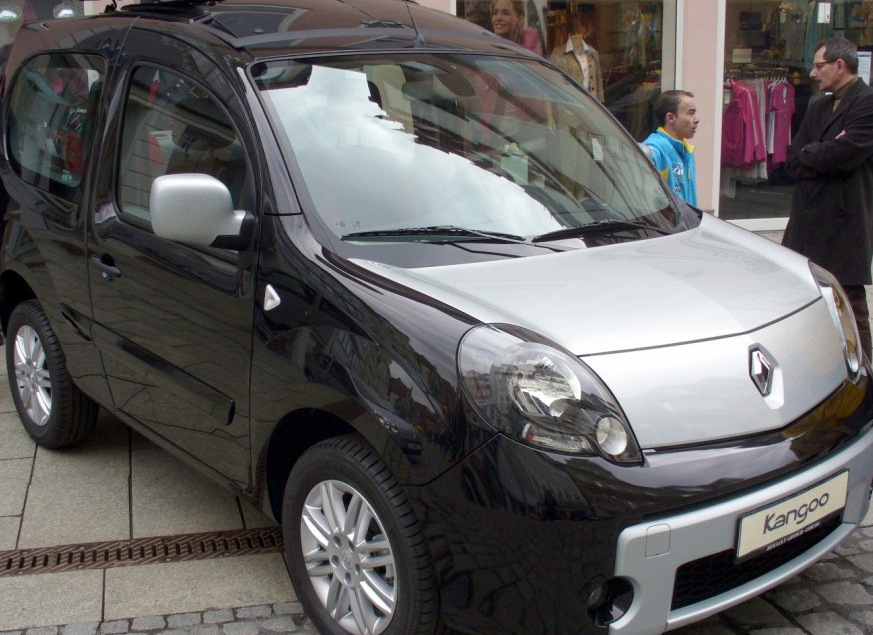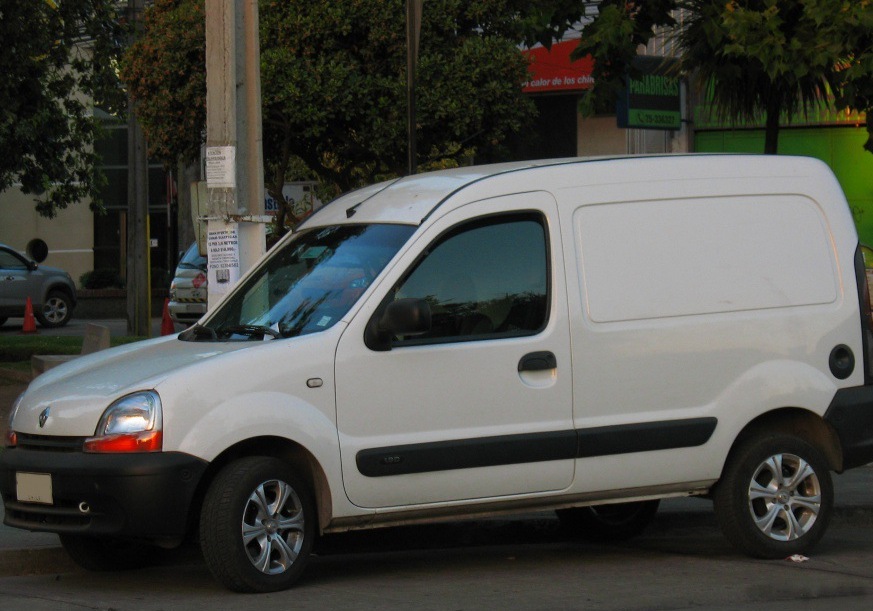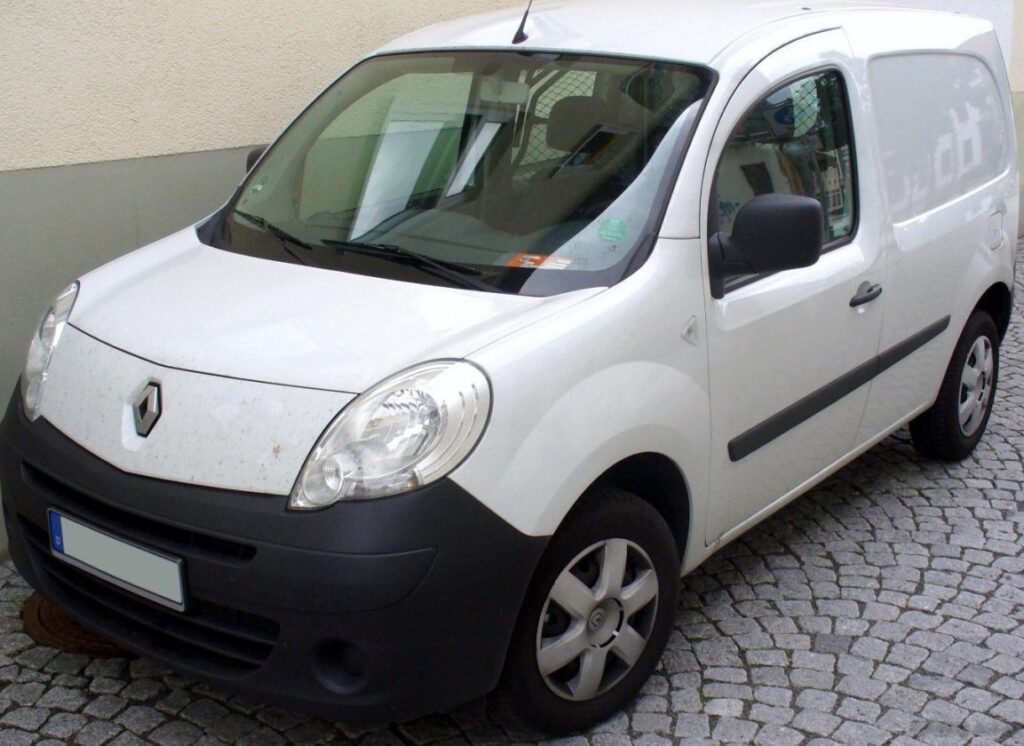
The Renault Kangoo II Express Z.E. 22 kWh, a fully electric variant of the popular Kangoo commercial vehicle, was introduced in December 2011 and remained in production through 2013. Positioned as an eco-friendly solution for urban delivery and service applications, the Z.E. (Zero Emissions) version represented Renault’s early foray into the electric light commercial vehicle segment. It was built on the Kangoo II platform (K9K), sharing its basic structure with gasoline and diesel-powered counterparts, but distinguished by its all-electric powertrain. This particular 60 horsepower version was generally considered an entry-level offering within the Kangoo Z.E. range, prioritizing affordability and practicality over outright performance.
Technical Specifications
| Brand | Renault |
| Model | Kangoo |
| Generation | Kangoo II Express |
| Type (Engine) | Z.E. 22 kWh (60 Hp) |
| Start of production | December, 2011 |
| End of production | 2013 |
| Powertrain Architecture | BEV (Electric Vehicle) |
| Body type | Minivan |
| Seats | 2 |
| Doors | 3 |
| Fuel Type | Electricity |
| Acceleration 0 – 100 km/h | 20.3 sec |
| Acceleration 0 – 62 mph | 20.3 sec |
| Acceleration 0 – 60 mph | 19.3 sec |
| Maximum speed | 130 km/h (80.78 mph) |
| Weight-to-power ratio | 23.5 kg/Hp, 42.6 Hp/tonne |
| Weight-to-torque ratio | 6.2 kg/Nm, 160.5 Nm/tonne |
| Gross battery capacity | 22 kWh |
| Net (usable) battery capacity | 20 kWh |
| Battery voltage | 400 V |
| Battery technology | Lithium-ion (Li-Ion) |
| Battery weight | 260 kg (573.2 lbs) |
| Battery location | Below the floor |
| All-electric range (NEDC) | 170 km (105.63 mi) |
| Average Energy consumption (NEDC) | 15.5 kWh/100 km (24.94 kWh/100 mi) |
| MPGe | 135 |
| km/kWh | 6.5 |
| mi/kWh | 4 |
| Electric motor power | 60 Hp |
| Electric motor Torque | 226 Nm (166.69 lb.-ft.) |
| Maximum revolutions of the electric motor | 10500 rpm |
| Electric motor location | Front axle, Transverse |
| System power | 60 Hp |
| System torque | 226 Nm (166.69 lb.-ft.) |
| Kerb Weight | 1408 kg (3104.11 lbs) |
| Max. weight | 2078 kg (4581.21 lbs) |
| Max load | 670 kg (1477.1 lbs) |
| Trunk (boot) space – minimum | 3000 l (105.94 cu. ft.) |
| Trunk (boot) space – maximum | 3500 l (123.6 cu. ft.) |
| Max. roof load | 100 kg (220.46 lbs) |
| Permitted trailer load with brakes (12%) | 374 kg (824.53 lbs) |
| Permitted trailer load without brakes | 374 kg (824.53 lbs) |
| Permitted towbar download | 75 kg (165.35 lbs) |
| Length | 4213 mm (165.87 in) |
| Width | 1829 mm (72.01 in) |
| Width including mirrors | 2133 mm (83.98 in) |
| Height | 1844 mm (72.6 in) |
| Wheelbase | 2697 mm (106.18 in) |
| Front track | 1521 mm (59.88 in) |
| Rear (Back) track | 1533 mm (60.35 in) |
| Front overhang | 807 mm (31.77 in) |
| Rear overhang | 709 mm (27.91 in) |
| Ride height (ground clearance) | 184 mm (7.24 in) |
| Minimum turning circle (turning diameter) | 10.7 m (35.1 ft) |
| Drivetrain Architecture | One electric motor drives the front wheels. |
| Drive wheel | Front wheel drive |
| Number of gears and type of gearbox | 1 gears, automatic transmission |
| Front suspension | Independent type McPherson |
| Rear suspension | Torsion |
| Front brakes | Ventilated discs, 280 mm |
| Rear brakes | Disc, 274 mm |
| Assisting systems | ABS (Anti-lock braking system) |
| Steering type | Steering rack and pinion |
| Power steering | Electric Steering |
| Tires size | 195/65 R15 |
| Wheel rims size | 6J x 15 |
Powertrain & Engine Architecture
The Kangoo II Express Z.E. utilizes a fully electric powertrain, foregoing the internal combustion engine entirely. The heart of the system is a 22 kWh lithium-ion battery pack located under the vehicle floor, contributing to a lowered center of gravity. This battery powers an electric motor producing 60 horsepower and 226 Nm (166.69 lb-ft) of torque. The motor is transversely mounted at the front axle, driving the front wheels. The single-speed automatic transmission simplifies operation, delivering instant torque characteristic of electric motors. The electric motor spins up to a maximum of 10,500 rpm. The vehicle employs a 400V electrical architecture. The charging port location was not widely publicized, and varied based on market.
Driving Characteristics
With only 60 horsepower, the Kangoo II Express Z.E. was not designed for rapid acceleration. The 0-100 km/h (0-62 mph) time of 20.3 seconds reflects this. However, the instant torque delivery of the electric motor provided adequate performance for urban driving and light-duty commercial tasks. The single-speed automatic transmission offered seamless acceleration, although it lacked the gear ratios for optimizing efficiency at higher speeds. The vehicle’s maximum speed was limited to 130 km/h (80.78 mph). Compared to the gasoline and diesel versions of the Kangoo II, the Z.E. prioritized smooth, quiet operation over outright speed. The weight of the battery pack (260 kg / 573.2 lbs) did impact handling, making it feel slightly less nimble than its conventionally powered siblings.
Equipment & Trim Levels
The Kangoo II Express Z.E. was primarily marketed as a commercial vehicle, so standard equipment focused on practicality. Features typically included power steering, ABS brakes, a driver’s airbag, and a basic audio system. The interior was functional and durable, with hard-wearing upholstery. Trim levels were relatively limited, with options generally revolving around upgrades to the audio system, the addition of air conditioning, and various cargo area configurations. The focus was on providing a cost-effective and reliable electric van for businesses.
Chassis & Braking
The Kangoo II Express Z.E. retained the MacPherson strut independent front suspension and torsion beam rear suspension of the standard Kangoo II. However, the added weight of the battery pack necessitated some adjustments to the suspension tuning to maintain ride quality and handling. The braking system consisted of ventilated discs at the front and solid discs at the rear. ABS (Anti-lock Braking System) was standard. The tires were typically 195/65 R15, mounted on 6J x 15 steel wheels.
Market Reception & Comparison
The Kangoo II Express Z.E. was generally well-received as an early example of a practical electric commercial vehicle. Critics praised its zero-emission operation and low running costs, but noted its limited range (170 km / 105.63 mi NEDC) and relatively slow acceleration. Compared to the diesel-powered Kangoo II, the Z.E. offered significantly lower fuel costs but a higher initial purchase price. The gasoline-powered versions provided a compromise between cost and performance. The Z.E.’s range was a key limitation, making it best suited for short-distance urban deliveries.
Legacy
The Renault Kangoo II Express Z.E. played a significant role in establishing Renault as a pioneer in the electric light commercial vehicle market. While the 22 kWh battery capacity is modest by today’s standards, it represented a viable solution for many urban delivery fleets at the time. The powertrain proved to be relatively reliable, with the electric motor and battery pack demonstrating good longevity. On the used market, these early Kangoo Z.E. models are becoming increasingly sought after by environmentally conscious buyers and those seeking a unique and practical electric vehicle. However, potential buyers should be aware of the limited range and the age of the battery pack, which may have experienced some degradation over time.