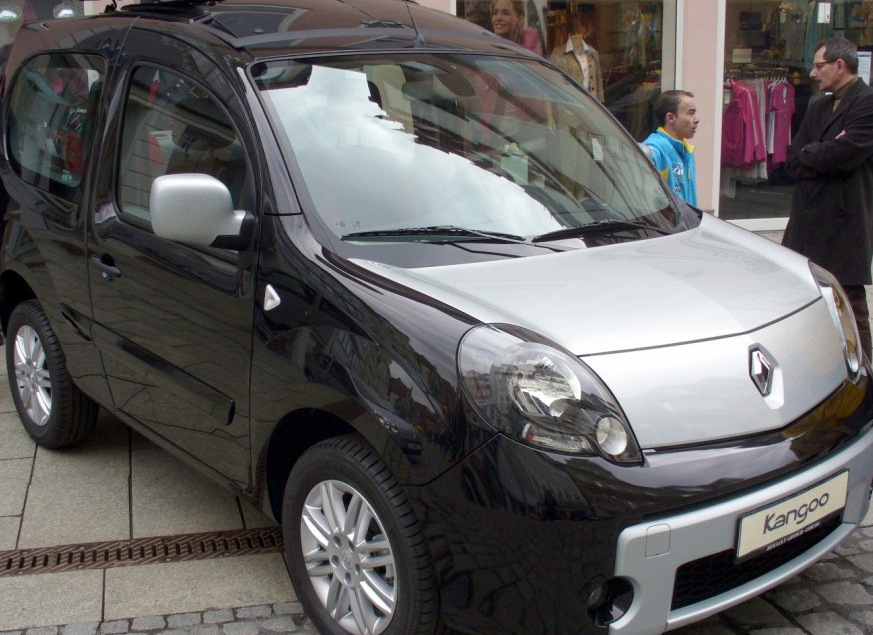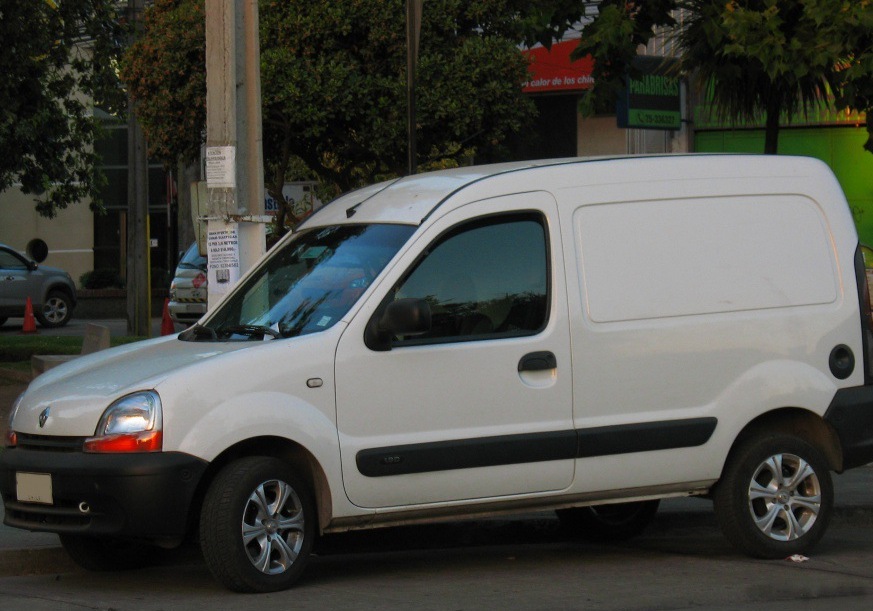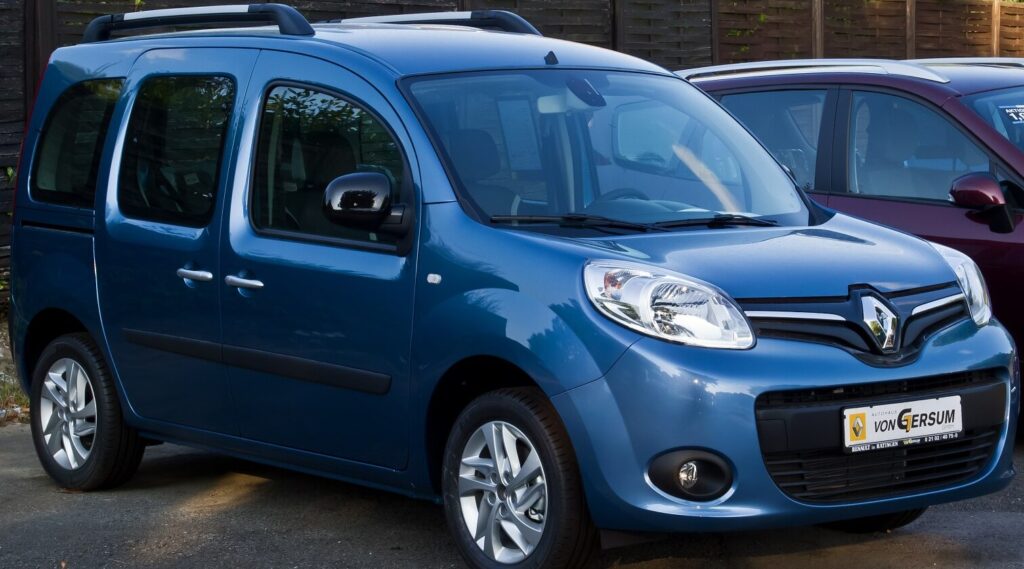
The Renault Kangoo II, particularly the facelifted version introduced in 2013, represented a significant evolution of Renault’s popular light commercial vehicle and passenger car blend. The 1.5 Blue dCi (80 hp) S&S variant, produced from March 2019 through 2021, occupied an entry-level position within the Kangoo II range, aimed at buyers prioritizing fuel efficiency and practicality over outright performance. This version was primarily marketed in Europe, where compact vans and leisure activity vehicles (LAVs) are highly popular, offering a versatile solution for both commercial and family needs. The “S&S” designation indicates the inclusion of Renault’s Start & Stop system, further enhancing fuel economy.
Technical Specifications
| Brand | Renault |
| Model | Kangoo |
| Generation | Kangoo II (facelift 2013) |
| Type (Engine) | 1.5 Blue dCi (80 Hp) S&S |
| Start of production | March, 2019 |
| End of production | 2021 |
| Powertrain Architecture | Internal Combustion engine |
| Body type | Minivan |
| Seats | 5 |
| Doors | 5 |
| Fuel consumption (combined) | 5.6 l/100 km (42 US mpg, 50.4 UK mpg, 17.9 km/l) |
| CO2 emissions | 143 g/km |
| Fuel Type | Diesel |
| Acceleration 0 – 100 km/h | 16.8 sec |
| Acceleration 0 – 62 mph | 16.8 sec |
| Acceleration 0 – 60 mph | 16 sec |
| Maximum speed | 152 km/h (94.45 mph) |
| Emission standard | Euro 6d-Temp |
| Weight-to-power ratio | 16.7 kg/Hp, 60 Hp/tonne |
| Weight-to-torque ratio | 6.4 kg/Nm, 157.4 Nm/tonne |
| Power | 80 Hp @ 3750 rpm |
| Power per litre | 54.8 Hp/l |
| Torque | 210 Nm @ 1750 rpm (154.89 lb.-ft. @ 1750 rpm) |
| Engine layout | Front, Transverse |
| Engine Model/Code | K9K |
| Engine displacement | 1461 cm3 (89.16 cu. in.) |
| Number of cylinders | 4 |
| Engine configuration | Inline |
| Number of valves per cylinder | 2 |
| Fuel injection system | Diesel Commonrail |
| Engine aspiration | Turbocharger, Intercooler |
| Engine oil capacity | 4.5 l (4.76 US qt | 3.96 UK qt) |
| Coolant | 7.2 l (7.61 US qt | 6.34 UK qt) |
| Kerb Weight | 1334 kg (2940.97 lbs.) |
| Max. weight | 2010 kg (4431.29 lbs.) |
| Max load | 676 kg (1490.32 lbs.) |
| Trunk (boot) space – minimum | 660 l (23.31 cu. ft.) |
| Trunk (boot) space – maximum | 2600 l (91.82 cu. ft.) |
| Fuel tank capacity | 60 l (15.85 US gal | 13.2 UK gal) |
| AdBlue tank | 17.4 l (4.6 US gal | 3.83 UK gal) |
| Permitted trailer load with brakes (12%) | 1350 kg (2976.24 lbs.) |
| Permitted trailer load without brakes | 740 kg (1631.42 lbs.) |
| Permitted towbar download | 75 kg (165.35 lbs.) |
| Length | 4282 mm (168.58 in.) |
| Width | 1829 mm (72.01 in.) |
| Width including mirrors | 2138 mm (84.17 in.) |
| Height | 1839 mm (72.4 in.) |
| Wheelbase | 2697 mm (106.18 in.) |
| Front track | 1521 mm (59.88 in.) |
| Rear (Back) track | 1533 mm (60.35 in.) |
| Front overhang | 875 mm (34.45 in.) |
| Rear overhang | 710 mm (27.95 in.) |
| Ride height (ground clearance) | 158-211 mm (6.22 – 8.31 in.) |
| Minimum turning circle (turning diameter) | 10.7 m (35.1 ft.) |
| Drivetrain Architecture | The Internal combustion engine (ICE) drives the front wheels of the vehicle. |
| Drive wheel | Front wheel drive |
| Number of gears and type of gearbox | 6 gears, manual transmission |
| Front suspension | Independent type McPherson |
| Rear suspension | Torsion |
| Front brakes | Disc |
| Rear brakes | Disc |
| Assisting systems | ABS (Anti-lock braking system) |
| Steering type | Steering rack and pinion |
| Power steering | Electric Steering |
| Tires size | 195/65 R15; 205/55 R16 |
| Wheel rims size | 15; 16 |
Powertrain & Engine Architecture
The heart of this Kangoo variant is the Renault K9K engine, a 1.5-liter inline-four cylinder diesel. This engine family has been a mainstay of Renault and Nissan vehicles for many years, known for its robustness and fuel efficiency. The “Blue dCi” designation signifies the inclusion of Renault’s Diesel Particulate Filter (DPF) and other emissions control technologies to meet stringent Euro 6d-Temp standards. The engine utilizes a common rail direct injection system, delivering fuel at high pressure for optimized combustion. A turbocharger with an intercooler further enhances power output. The 80 horsepower output is achieved at 3750 rpm, while peak torque of 210 Nm (154.89 lb.-ft.) is available from 1750 rpm, providing reasonable low-end grunt for everyday driving. The engine is paired with a six-speed manual transmission, chosen for its efficiency and lower cost compared to an automatic option.
Driving Characteristics
The 1.5 Blue dCi 80 hp powertrain delivers adequate, but not exhilarating, performance. Acceleration from 0-100 km/h (0-62 mph) takes approximately 16.8 seconds, and top speed is limited to 152 km/h (94.45 mph). The focus is on usability rather than speed. The six-speed manual transmission helps to keep the engine within its optimal torque band, making it relatively easy to maintain momentum in everyday traffic. Compared to higher-output versions of the Kangoo II, such as those with the 1.5 dCi 90 hp or 110 hp engines, this variant feels noticeably slower, particularly when fully loaded or climbing hills. However, the lower power output contributes to improved fuel economy. The gear ratios are tuned for efficiency, prioritizing fuel savings over rapid acceleration.
Equipment & Trim Levels
The 80 hp Blue dCi variant typically represented the base trim level for the Kangoo II. Standard equipment generally included power steering, electric front windows, a basic audio system with USB connectivity, and ABS brakes. Safety features such as driver and passenger airbags were also standard. Interior upholstery was typically cloth, and the dashboard featured a functional, if somewhat basic, design. Optional extras included air conditioning, rear parking sensors, a trip computer, and upgraded audio systems. Higher trim levels added features like alloy wheels, fog lights, and more premium interior materials.
Chassis & Braking
The Kangoo II utilizes a McPherson strut front suspension and a torsion beam rear suspension. This setup provides a comfortable ride quality, suitable for both urban and highway driving. The front brakes are discs, while the rear brakes are also discs, providing adequate stopping power for the vehicle’s weight. ABS (Anti-lock Braking System) is standard. The suspension is tuned for a balance between comfort and stability, prioritizing ride quality over sporty handling. Stabilizer bars are present to reduce body roll during cornering.
Market Reception & Comparison
The 1.5 Blue dCi 80 hp variant of the Kangoo II was generally well-received by critics as a practical and economical choice. Its fuel efficiency was a major selling point, making it attractive to both commercial users and families looking for a low-cost-to-operate vehicle. Compared to the more powerful Kangoo II variants, it offered a lower purchase price but sacrificed performance. Against competitors like the Citroën Berlingo and Peugeot Partner, the Kangoo II 1.5 dCi 80 hp held its own in terms of fuel economy and practicality, though some rivals offered more refined interiors or a wider range of available features.
Legacy
The K9K engine, in its various iterations, has proven to be a durable and reliable powertrain. While the DPF system can be a potential source of issues if not properly maintained (requiring regular regeneration cycles), the engine itself is generally robust. In the used car market, the 1.5 Blue dCi 80 hp Kangoo II represents a relatively affordable and economical option. Its simplicity and fuel efficiency continue to appeal to buyers seeking a practical and reliable light commercial vehicle or family transport. However, potential buyers should be aware of the importance of maintaining the DPF system and checking for signs of wear and tear on the turbocharger.