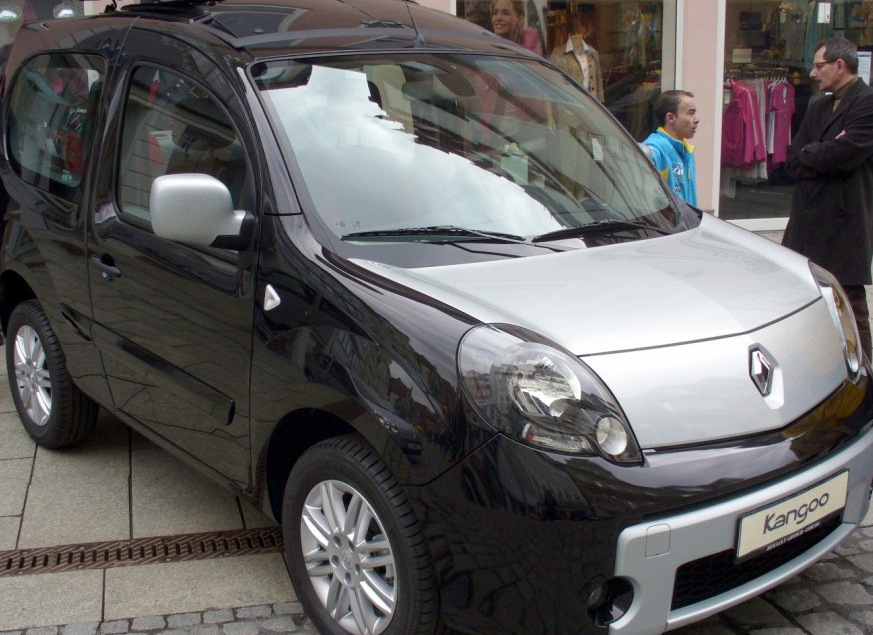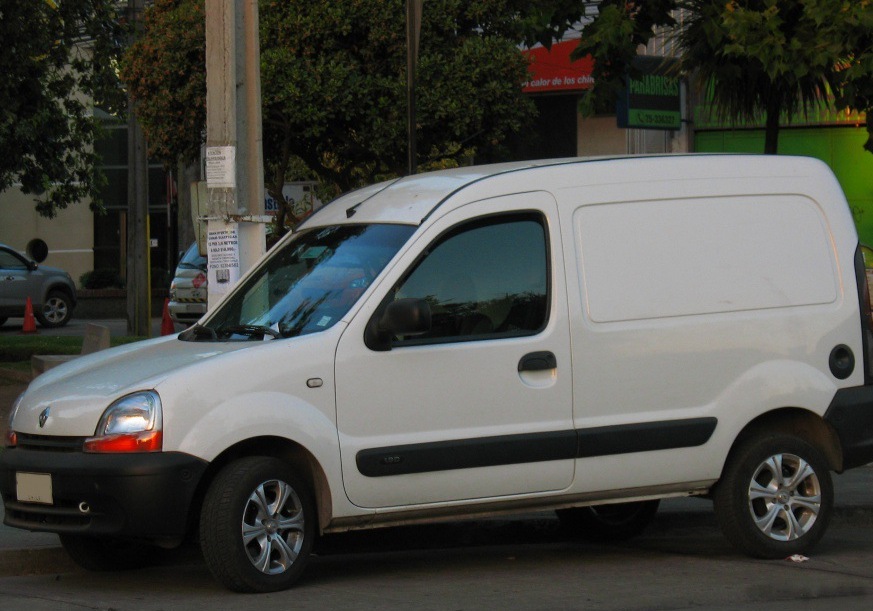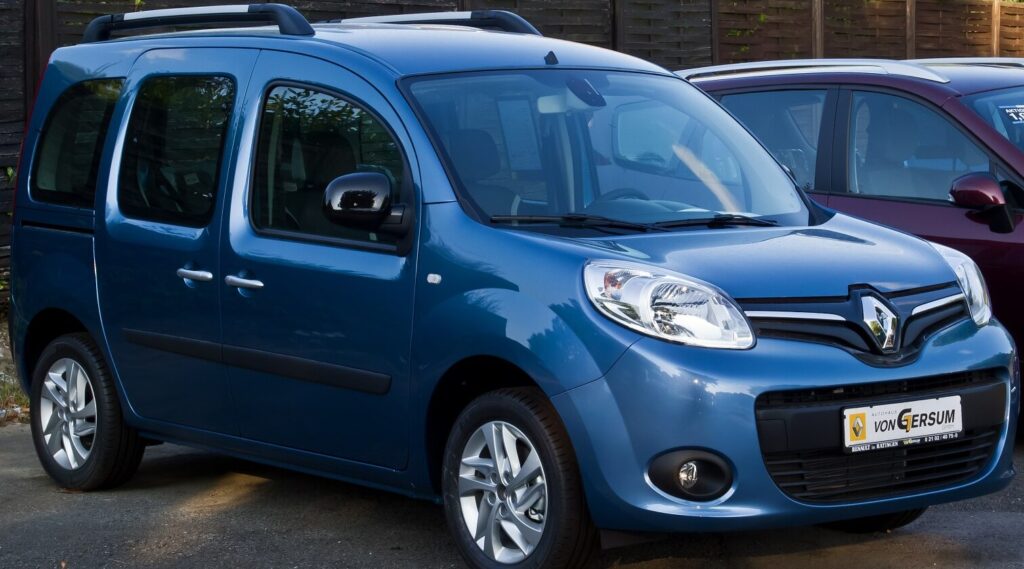
The Renault Kangoo II, particularly the facelifted version introduced in 2013, represented a significant evolution of Renault’s popular compact van. The 1.5 Blue dCi (95 hp) S&S variant, produced from March 2019 to 2021, occupied a key position in the Kangoo lineup as an efficient and practical option for both commercial and family use. This version, built on the X0/B9 platform, aimed to balance affordability with reasonable performance and fuel economy, making it a popular choice in European markets. The “S&S” designation indicates the inclusion of Renault’s Start & Stop system, further enhancing its fuel-saving credentials.
Technical Specifications
| Brand | Renault |
| Model | Kangoo |
| Generation | Kangoo II (facelift 2013) |
| Type (Engine) | 1.5 Blue dCi (95 Hp) S&S |
| Start of production | March, 2019 |
| End of production | 2021 |
| Powertrain Architecture | Internal Combustion engine |
| Body type | Minivan |
| Seats | 5 |
| Doors | 5 |
| Fuel consumption (combined) | 5.6 l/100 km (42 US mpg, 50.4 UK mpg, 17.9 km/l) |
| CO2 emissions | 143 g/km |
| Fuel Type | Diesel |
| Acceleration 0 – 100 km/h | 13.8 sec |
| Acceleration 0 – 62 mph | 13.8 sec |
| Acceleration 0 – 60 mph | 13.1 sec |
| Maximum speed | 161 km/h (100.04 mph) |
| Emission standard | Euro 6d-Temp |
| Weight-to-power ratio | 14 kg/Hp, 71.2 Hp/tonne |
| Weight-to-torque ratio | 5.8 kg/Nm, 172.4 Nm/tonne |
| Power | 95 Hp @ 3750 rpm |
| Power per litre | 65 Hp/l |
| Torque | 230 Nm @ 1750 rpm (169.64 lb.-ft. @ 1750 rpm) |
| Engine layout | Front, Transverse |
| Engine Model/Code | K9K |
| Engine displacement | 1461 cm3 (89.16 cu. in.) |
| Number of cylinders | 4 |
| Engine configuration | Inline |
| Number of valves per cylinder | 2 |
| Fuel injection system | Diesel Commonrail |
| Engine aspiration | Turbocharger, Intercooler |
| Engine oil capacity | 5.7 l (6.02 US qt | 5.02 UK qt) |
| Kerb Weight | 1334 kg (2940.97 lbs.) |
| Max. weight | 2010 kg (4431.29 lbs.) |
| Max load | 676 kg (1490.32 lbs.) |
| Trunk (boot) space – minimum | 660 l (23.31 cu. ft.) |
| Trunk (boot) space – maximum | 2600 l (91.82 cu. ft.) |
| Fuel tank capacity | 60 l (15.85 US gal | 13.2 UK gal) |
| AdBlue tank | 17.4 l (4.6 US gal | 3.83 UK gal) |
| Permitted trailer load with brakes (12%) | 1350 kg (2976.24 lbs.) |
| Permitted trailer load without brakes | 740 kg (1631.42 lbs.) |
| Permitted towbar download | 75 kg (165.35 lbs.) |
| Length | 4282 mm (168.58 in.) |
| Width | 1829 mm (72.01 in.) |
| Width including mirrors | 2138 mm (84.17 in.) |
| Height | 1839 mm (72.4 in.) |
| Wheelbase | 2697 mm (106.18 in.) |
| Front track | 1521 mm (59.88 in.) |
| Rear (Back) track | 1533 mm (60.35 in.) |
| Front overhang | 875 mm (34.45 in.) |
| Rear overhang | 710 mm (27.95 in.) |
| Ride height (ground clearance) | 158-211 mm (6.22 – 8.31 in.) |
| Minimum turning circle | 10.7 m (35.1 ft.) |
| Drivetrain Architecture | The Internal combustion engine (ICE) drives the front wheels of the vehicle. |
| Drive wheel | Front wheel drive |
| Number of gears and type of gearbox | 6 gears, manual transmission |
| Front suspension | Independent type McPherson |
| Rear suspension | Torsion |
| Front brakes | Disc |
| Rear brakes | Disc |
| Assisting systems | ABS (Anti-lock braking system) |
| Steering type | Steering rack and pinion |
| Power steering | Electric Steering |
| Tires size | 195/65 R15; 205/55 R16 |
| Wheel rims size | 15; 16 |
INTRODUCTION
The Renault Kangoo II, launched in 2008, quickly became a mainstay in the European light commercial vehicle and family transport segments. The 2013 facelift brought updated styling, improved interior materials, and crucially, the introduction of Renault’s newer ‘Blue dCi’ diesel engines. The 1.5 Blue dCi 95 hp variant, with its Start & Stop system, was positioned as a fuel-efficient and practical choice for buyers prioritizing economy over outright performance. It served as a stepping stone within the Kangoo range, offering a balance between the base engine options and the more powerful, and often more expensive, higher-output diesels.
Powertrain & Engine Architecture
The heart of this Kangoo variant is the K9K 1.5-liter inline-four cylinder diesel engine. This engine, part of Renault’s Blue dCi family, utilizes a common-rail direct injection system, delivering fuel at extremely high pressure for improved combustion efficiency and reduced emissions. The engine features a single overhead camshaft (SOHC) operating two valves per cylinder. A turbocharger with an intercooler is employed to boost power and torque, providing a noticeable improvement over naturally aspirated engines. The 95 horsepower output is achieved at 3750 rpm, while peak torque of 230 Nm (169.64 lb.-ft.) is available from 1750 rpm. This relatively low-end torque delivery is characteristic of diesel engines and contributes to the Kangoo’s usability in everyday driving. The engine is paired with a six-speed manual transmission, chosen for its efficiency and cost-effectiveness. While an automated manual transmission (AMT) was available on some Kangoo models, it was not typically offered with this specific engine and power output.
Driving Characteristics
The 1.5 Blue dCi 95 hp engine, coupled with the six-speed manual gearbox, provides adequate, though not exhilarating, performance. Acceleration from 0-100 km/h (0-62 mph) takes around 13.8 seconds, and top speed is limited to 161 km/h (100 mph). The gear ratios are tuned for fuel efficiency, with taller gearing in the upper gears to reduce engine speed at highway cruising speeds. This results in a relatively quiet and comfortable ride on the open road. However, the engine can feel strained when fully loaded or when climbing steep hills, requiring frequent downshifts to maintain speed. Compared to the more powerful 1.5 dCi 110 hp or the 1.5 dCi 130 hp variants, the 95 hp model offers less outright performance, but it compensates with improved fuel economy and a lower purchase price. The manual transmission provides a more engaging driving experience than an automatic, allowing the driver to better control the engine’s power delivery.
Equipment & Trim Levels
The 1.5 Blue dCi 95 hp S&S variant typically came equipped with a reasonable level of standard features. These included power steering, electric front windows, central locking, and an adjustable steering column. Safety features such as ABS, electronic brake-force distribution (EBD), and driver and passenger airbags were also standard. Higher trim levels added features like air conditioning, a radio with USB connectivity, and alloy wheels. Optional extras included rear parking sensors, a navigation system, and upgraded upholstery. The interior was generally functional and durable, with hard-wearing plastics designed to withstand the rigors of commercial use. The Kangoo’s modular interior, with its folding rear seats and configurable cargo area, was a key selling point, offering exceptional versatility.
Chassis & Braking
The Kangoo II utilizes a McPherson strut front suspension and a torsion beam rear suspension. This setup provides a good balance between ride comfort and handling. The torsion beam rear suspension is a cost-effective solution that minimizes complexity and weight. The front brakes are ventilated discs, while the rear brakes are typically solid discs, providing adequate stopping power for the vehicle’s weight and performance. Electric power steering is standard, offering light and precise steering feel. The Kangoo’s relatively narrow track width contributes to its maneuverability in tight urban environments.
Market Reception & Comparison
The Renault Kangoo II 1.5 Blue dCi 95 hp S&S was generally well-received by critics and buyers alike. It was praised for its fuel efficiency, practicality, and affordability. However, some reviewers noted that the engine could feel underpowered when fully loaded or when driving on hilly terrain. Compared to other vans and MPVs in its class, the Kangoo offered a competitive combination of features and price. Its fuel economy was particularly impressive, making it a popular choice for businesses and individuals looking to minimize running costs. The 95 hp variant often represented the sweet spot in the lineup, offering a good balance between performance and economy.
Legacy
The 1.5 Blue dCi engine proved to be a reliable and durable unit, and many examples of the Kangoo II with this engine are still on the road today. While diesel engines have faced increased scrutiny in recent years due to emissions concerns, the Blue dCi engines generally meet Euro 6 emission standards. The Kangoo II remains a popular choice in the used car market, particularly for those seeking a practical and affordable van or MPV. The 1.5 Blue dCi 95 hp variant, while not the most powerful option, offers a compelling combination of fuel efficiency, reliability, and versatility, making it a sensible choice for a wide range of buyers.