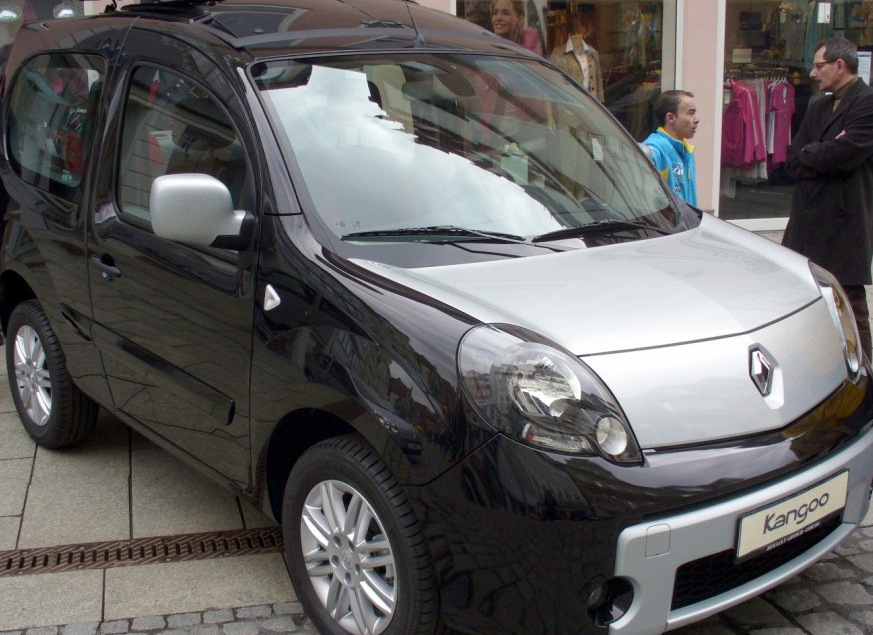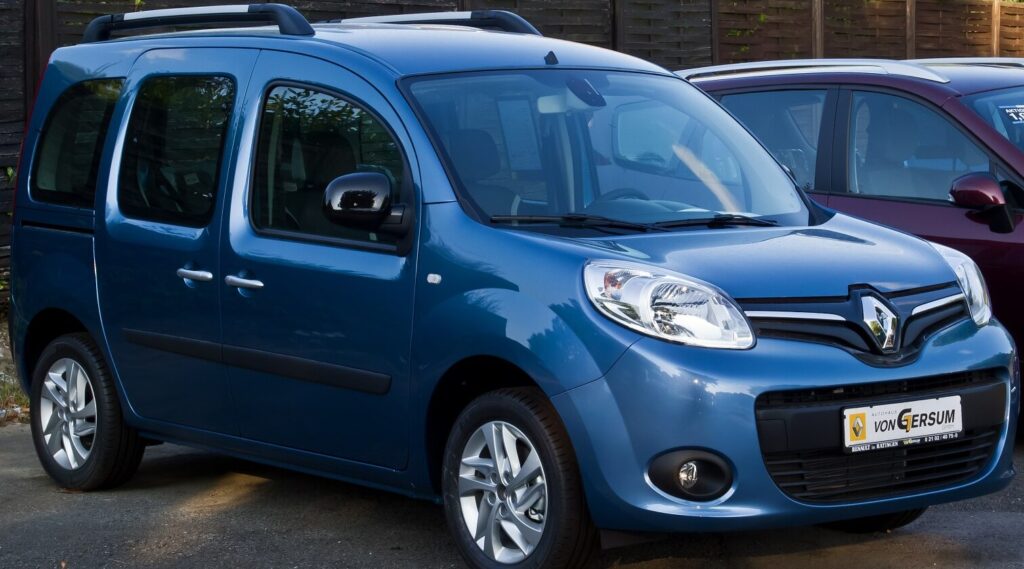
The Renault Kangoo II, particularly the facelifted version introduced in 2013, represented a significant evolution of Renault’s popular compact van. This iteration, offered between 2013 and 2014, featured a range of engine options, including the 1.6-liter 16V engine producing 107 horsepower. This specific variant occupied a middle ground in the Kangoo II lineup, offering a balance between affordability, fuel economy, and practicality for families and commercial users alike. It was positioned below the more powerful diesel options and above the base-level engine, appealing to buyers who prioritized a smooth, gasoline-powered driving experience over outright performance.
Technical Specifications
| Brand | Renault |
| Model | Kangoo |
| Generation | Kangoo II (facelift 2013) |
| Type (Engine) | 1.6 16V (107 Hp) |
| Start of production | 2013 |
| End of production | 2014 |
| Powertrain Architecture | Internal Combustion engine |
| Body type | Minivan |
| Seats | 5 |
| Doors | 5 |
| Fuel consumption (urban) | 9.7 l/100 km (24.2 US mpg, 29.1 UK mpg, 10.3 km/l) |
| Fuel consumption (extra urban) | 6.5 l/100 km (36.2 US mpg, 43.5 UK mpg, 15.4 km/l) |
| Fuel consumption (combined) | 7.7 l/100 km (30.5 US mpg, 36.7 UK mpg, 13 km/l) |
| CO2 emissions | 180 g/km |
| Fuel Type | Petrol (Gasoline) |
| Acceleration 0 – 100 km/h | 14 sec |
| Acceleration 0 – 62 mph | 14 sec |
| Acceleration 0 – 60 mph | 13.3 sec |
| Maximum speed | 170 km/h (105.63 mph) |
| Emission standard | Euro 5 |
| Weight-to-power ratio | 12.3 kg/Hp, 81.1 Hp/tonne |
| Weight-to-torque ratio | 8.9 kg/Nm, 112.1 Nm/tonne |
| Power | 107 Hp @ 5750 rpm |
| Power per litre | 67 Hp/l |
| Torque | 148 Nm @ 3750 rpm (109.16 lb.-ft. @ 3750 rpm) |
| Engine layout | Front, Transverse |
| Engine Model/Code | K4M |
| Engine displacement | 1598 cm3 (97.52 cu. in.) |
| Number of cylinders | 4 |
| Engine configuration | Inline |
| Number of valves per cylinder | 4 |
| Fuel injection system | Multi-port manifold injection |
| Engine aspiration | Naturally aspirated engine |
| Engine oil capacity | 4.8 l (5.07 US qt | 4.22 UK qt) |
| Coolant capacity | 5 l (5.28 US qt | 4.4 UK qt) |
| Kerb Weight | 1320 kg (2910.1 lbs.) |
| Max. weight | 1924 kg (4241.69 lbs.) |
| Max load | 604 kg (1331.59 lbs.) |
| Trunk (boot) space – minimum | 660 l (23.31 cu. ft.) |
| Trunk (boot) space – maximum | 2600 l (91.82 cu. ft.) |
| Fuel tank capacity | 56 l (14.79 US gal | 12.32 UK gal) |
| Permitted trailer load with brakes (12%) | 1050 kg (2314.85 lbs.) |
| Permitted trailer load without brakes | 698 kg (1538.83 lbs.) |
| Length | 4282 mm (168.58 in.) |
| Width | 1805 mm (71.06 in.) |
| Width including mirrors | 2138 mm (84.17 in.) |
| Height | 1839 mm (72.4 in.) |
| Wheelbase | 2697 mm (106.18 in.) |
| Front track | 1521 mm (59.88 in.) |
| Rear track | 1533 mm (60.35 in.) |
| Front overhang | 875 mm (34.45 in.) |
| Rear overhang | 710 mm (27.95 in.) |
| Ride height (ground clearance) | 211-158 mm (8.31 – 6.22 in.) |
| Minimum turning circle | 10.7 m (35.1 ft.) |
| Drivetrain Architecture | Front wheel drive |
| Drive wheel | Front wheel drive |
| Number of gears and type of gearbox | 5 gears, manual transmission |
| Front suspension | Independent type McPherson |
| Rear suspension | Torsion |
| Front brakes | Ventilated discs |
| Rear brakes | Disc |
| Assisting systems | ABS (Anti-lock braking system) |
| Steering type | Steering rack and pinion |
| Power steering | Electric Steering |
| Tires size | 195/65 R15 |
| Wheel rims size | 15 |
Powertrain & Engine Architecture
The heart of this Kangoo variant is the Renault K4M engine, a 1.6-liter inline-four cylinder gasoline engine. This engine, widely used across the Renault range during the early 2000s and 2010s, is known for its relative simplicity and durability. The 16-valve configuration (four valves per cylinder) contributes to improved breathing and higher power output compared to earlier 8-valve versions. Fuel delivery is managed by a multi-port fuel injection system, providing precise fuel metering for optimal combustion. The K4M engine is naturally aspirated, meaning it doesn’t rely on a turbocharger or supercharger for forced induction. This results in a more linear power delivery, albeit with less peak horsepower than turbocharged alternatives. The engine is transversely mounted at the front of the vehicle, driving the front wheels. The 5-speed manual transmission provides a reasonable spread of gears for both urban and highway driving.
Driving Characteristics
The 107 horsepower and 148 Nm (109 lb-ft) of torque offered by this powertrain configuration provide adequate, but not exhilarating, performance. Acceleration from 0 to 60 mph takes around 13.3 seconds, and the top speed is approximately 105 mph. In real-world driving, the Kangoo II 1.6 16V feels best suited to relaxed cruising and city driving. The engine is reasonably responsive at lower RPMs, making it easy to navigate traffic. However, when fully loaded or tackling steep inclines, the engine can feel strained, requiring frequent downshifts. Compared to the diesel variants, the 1.6L gasoline engine offers a smoother and quieter driving experience, but at the expense of fuel economy and low-end torque. The manual transmission, while not particularly sporty, is precise and easy to operate.
Equipment & Trim Levels
The 1.6 16V Kangoo II typically came equipped with a reasonable level of standard features. These included power steering, central locking, electric front windows, and an adjustable steering column. Safety features such as ABS and driver/passenger airbags were also standard. Interior upholstery was typically cloth, with a durable and practical design. Higher trim levels offered options such as air conditioning, a CD player, and alloy wheels. The Kangoo II was designed with practicality in mind, offering a spacious interior and a versatile cargo area. The rear seats could be folded or removed to create a larger loading space.
Chassis & Braking
The Kangoo II utilizes a McPherson strut independent suspension at the front and a torsion beam suspension at the rear. This setup provides a comfortable ride quality, absorbing bumps and imperfections in the road surface effectively. The front brakes are ventilated discs, providing good stopping power, while the rear brakes are discs. The electric power steering offers light and easy steering, making it maneuverable in tight spaces. The vehicle’s relatively high center of gravity and soft suspension setup mean that it’s not particularly sporty to drive, but it prioritizes comfort and practicality.
Market Reception & Comparison
The Renault Kangoo II 1.6 16V was generally well-received by critics as a practical and affordable compact van. It was praised for its spacious interior, comfortable ride, and reasonable fuel economy. However, some reviewers noted that the engine lacked power, particularly when fully loaded. Compared to the diesel variants, the 1.6L gasoline engine offered lower fuel economy but a smoother and quieter driving experience. The diesel models were favored by those who prioritized fuel efficiency and low-end torque for commercial use.
Legacy
The Renault K4M engine, found in this Kangoo variant, has proven to be a relatively reliable powertrain. While not without its potential issues (such as occasional oil leaks and timing chain wear), it is generally considered durable and long-lasting with proper maintenance. In the used car market, the Kangoo II 1.6 16V represents a good value proposition for buyers seeking a practical and affordable compact van. Its simplicity and relatively low running costs make it an attractive option for families and small businesses. However, potential buyers should be aware of the engine’s limitations in terms of power and fuel economy compared to more modern alternatives.