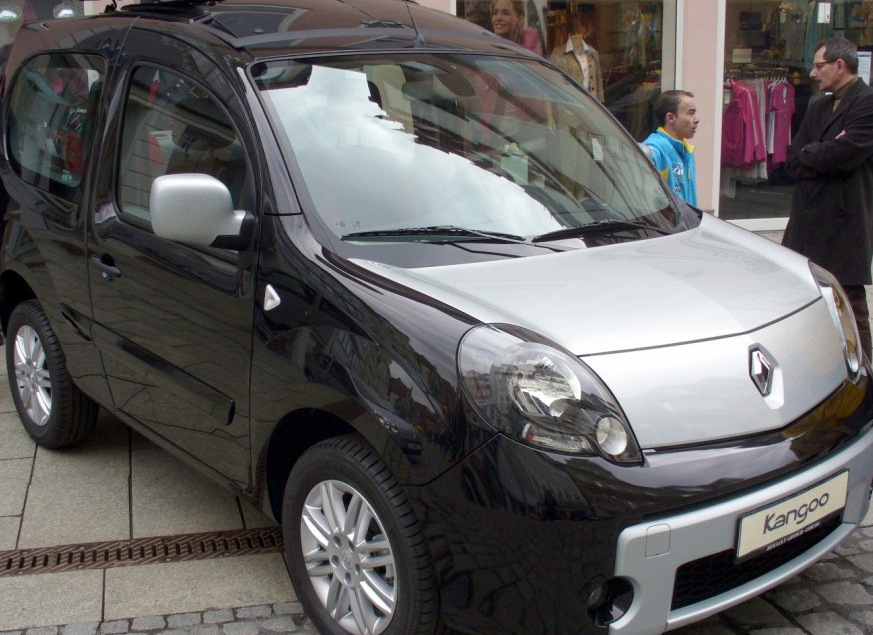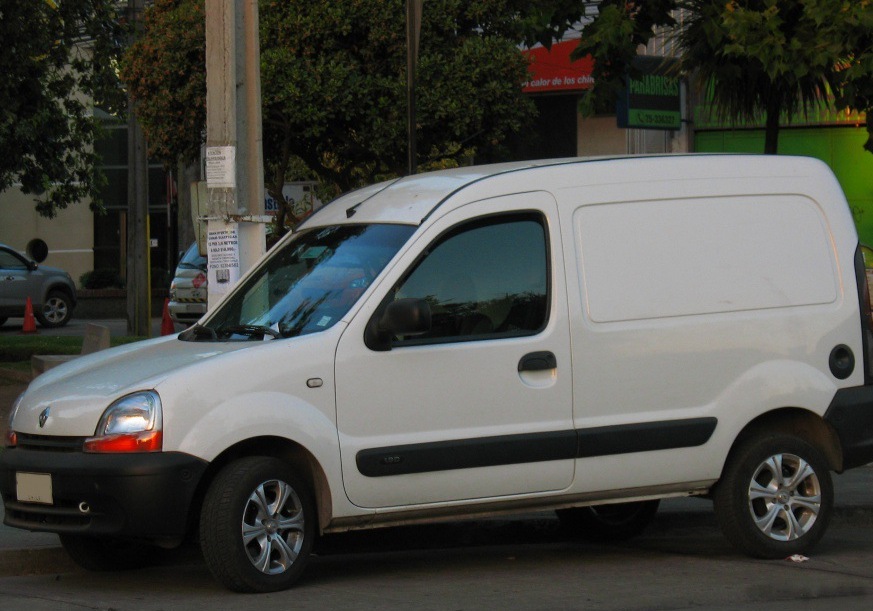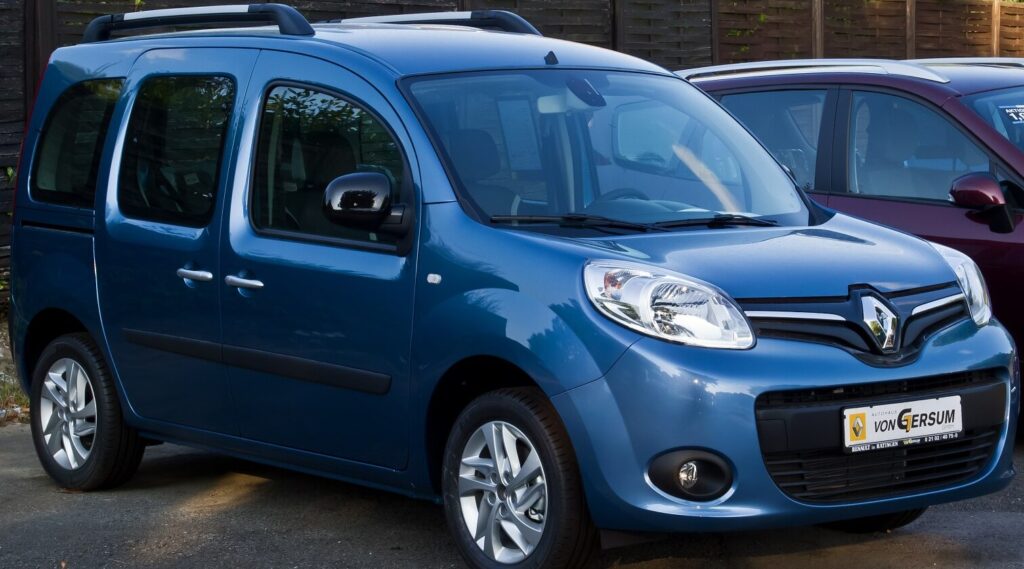
The Renault Kangoo II, particularly the facelifted version introduced in 2013, represented a significant evolution of Renault’s popular compact van. The 1.6 16V (107 horsepower) automatic variant, produced from 2013 to 2014, occupied a middle ground within the Kangoo II lineup, offering a balance between affordability, practicality, and ease of use. This version was aimed at buyers prioritizing convenience and comfortable driving over outright performance, making it a popular choice for families and commercial users alike. It was built on the X0/B91 platform, shared with the Renault Scenic and Mégane of the era.
Technical Specifications
| Brand | Renault |
| Model | Kangoo |
| Generation | Kangoo II (facelift 2013) |
| Type (Engine) | 1.6 16V (107 Hp) Automatic |
| Start of production | 2013 |
| End of production | 2014 |
| Powertrain Architecture | Internal Combustion engine |
| Body type | Minivan |
| Seats | 5 |
| Doors | 5 |
| Fuel consumption (urban) | 10.8 l/100 km (21.8 US mpg, 26.2 UK mpg, 9.3 km/l) |
| Fuel consumption (extra urban) | 6.7 l/100 km (35.1 US mpg, 42.2 UK mpg, 14.9 km/l) |
| Fuel consumption (combined) | 8.2 l/100 km (28.7 US mpg, 34.4 UK mpg, 12.2 km/l) |
| CO2 emissions | 190 g/km |
| Fuel Type | Petrol (Gasoline) |
| Acceleration 0 – 100 km/h | 13.6 sec |
| Acceleration 0 – 62 mph | 13.6 sec |
| Acceleration 0 – 60 mph | 12.9 sec |
| Maximum speed | 155 km/h (96.31 mph) |
| Emission standard | Euro 5 |
| Weight-to-power ratio | 12.3 kg/Hp, 81.1 Hp/tonne |
| Weight-to-torque ratio | 8.9 kg/Nm, 112.1 Nm/tonne |
| Power | 107 Hp @ 5750 rpm |
| Power per litre | 67 Hp/l |
| Torque | 148 Nm @ 3750 rpm (109.16 lb.-ft. @ 3750 rpm) |
| Engine layout | Front, Transverse |
| Engine Model/Code | K4M |
| Engine displacement | 1598 cm3 (97.52 cu. in.) |
| Number of cylinders | 4 |
| Engine configuration | Inline |
| Number of valves per cylinder | 4 |
| Fuel injection system | Multi-port manifold injection |
| Engine aspiration | Naturally aspirated engine |
| Engine oil capacity | 4.8 l (5.07 US qt | 4.22 UK qt) |
| Coolant capacity | 5 l (5.28 US qt | 4.4 UK qt) |
| Kerb Weight | 1320 kg (2910.1 lbs.) |
| Max. weight | 1953 kg (4305.63 lbs.) |
| Max load | 633 kg (1395.53 lbs.) |
| Trunk (boot) space – minimum | 660 l (23.31 cu. ft.) |
| Trunk (boot) space – maximum | 2600 l (91.82 cu. ft.) |
| Fuel tank capacity | 56 l (14.79 US gal | 12.32 UK gal) |
| Permitted trailer load with brakes (12%) | 1050 kg (2314.85 lbs.) |
| Permitted trailer load without brakes | 698 kg (1538.83 lbs.) |
| Length | 4282 mm (168.58 in.) |
| Width | 1805 mm (71.06 in.) |
| Width including mirrors | 2138 mm (84.17 in.) |
| Height | 1839 mm (72.4 in.) |
| Wheelbase | 2697 mm (106.18 in.) |
| Front track | 1521 mm (59.88 in.) |
| Rear track | 1533 mm (60.35 in.) |
| Front overhang | 875 mm (34.45 in.) |
| Rear overhang | 710 mm (27.95 in.) |
| Ride height (ground clearance) | 211-158 mm (8.31 – 6.22 in.) |
| Minimum turning circle | 10.7 m (35.1 ft.) |
| Drivetrain Architecture | Front wheel drive |
| Number of gears and type of gearbox | 4 gears, automatic transmission |
| Front suspension | Independent type McPherson |
| Rear suspension | Torsion |
| Front brakes | Ventilated discs |
| Rear brakes | Disc |
| Assisting systems | ABS (Anti-lock braking system) |
| Steering type | Steering rack and pinion |
| Power steering | Electric Steering |
| Tires size | 195/65 R15 |
| Wheel rims size | 15 |
Powertrain & Engine Architecture
The heart of this Kangoo variant is the Renault K4M engine, a 1.6-liter inline-four cylinder petrol engine. This engine, a mainstay in Renault’s lineup for many years, features a double overhead camshaft (DOHC) design with four valves per cylinder, contributing to its relatively efficient breathing. Fuel delivery is managed by a multi-point fuel injection system. The K4M is known for its robustness and relatively simple design, making it easier to maintain compared to more complex engines. The engine produces 107 horsepower at 5750 rpm and 148 Nm (109 lb-ft) of torque at 3750 rpm. Paired with this engine is a four-speed automatic transmission, which, while not offering the efficiency of modern multi-gear automatics, provided smooth and convenient shifting for everyday driving.
Driving Characteristics
The 1.6L automatic Kangoo II offers a comfortable, if not particularly exhilarating, driving experience. Acceleration is modest, taking around 13.6 seconds to reach 62 mph (100 km/h). The four-speed automatic transmission contributes to this, with relatively wide gear ratios. Compared to the manual transmission versions of the same engine, the automatic suffers a slight performance penalty due to the transmission’s inherent inefficiencies. However, it excels in urban environments, providing a relaxed and easy driving experience. The power delivery is linear, making it predictable and easy to modulate. It’s not a vehicle designed for spirited driving, but rather for practicality and ease of use.
Equipment & Trim Levels
The 1.6 16V Automatic Kangoo II typically came equipped with features such as power steering, central locking, electric front windows, and an air conditioning system. Safety features included ABS brakes and driver/passenger airbags. Interior upholstery was typically cloth, with a functional and durable design. Optional extras included alloy wheels, a CD player with radio, and rear parking sensors. The trim level generally sat in the mid-range of the Kangoo II lineup, offering a good balance of features for the price.
Chassis & Braking
The Kangoo II utilizes a McPherson strut independent suspension setup at the front, providing a comfortable ride and decent handling. The rear suspension employs a torsion beam, a cost-effective and space-saving solution. Braking duties are handled by ventilated discs at the front and solid discs at the rear. The ABS system provides enhanced braking control, particularly on slippery surfaces. The suspension tuning is geared towards comfort rather than sporty handling, prioritizing a smooth ride over sharp cornering.
Market Reception & Comparison
The 1.6 16V Automatic Kangoo II was generally well-received by critics as a practical and affordable family vehicle. While the performance wasn’t groundbreaking, the convenience of the automatic transmission and the spacious interior were highly praised. Compared to the diesel-powered Kangoo variants (like the 1.5 dCi), the 1.6L petrol offered a smoother and quieter driving experience, but at the cost of fuel economy. The petrol version also typically commanded a lower price point. Against competitors like the Citroën Berlingo and Fiat Doblo, the Kangoo II offered a competitive package in terms of space, practicality, and value.
Legacy
The Renault Kangoo II 1.6 16V Automatic has proven to be a relatively reliable vehicle, with the K4M engine being known for its durability. Common issues are typically related to age and mileage, such as wear and tear on suspension components and potential oil leaks. In the used car market, these Kangoos represent a good value proposition for buyers seeking a practical and affordable van. The simplicity of the engine and transmission makes them relatively easy and inexpensive to maintain, contributing to their continued popularity as a workhorse vehicle.