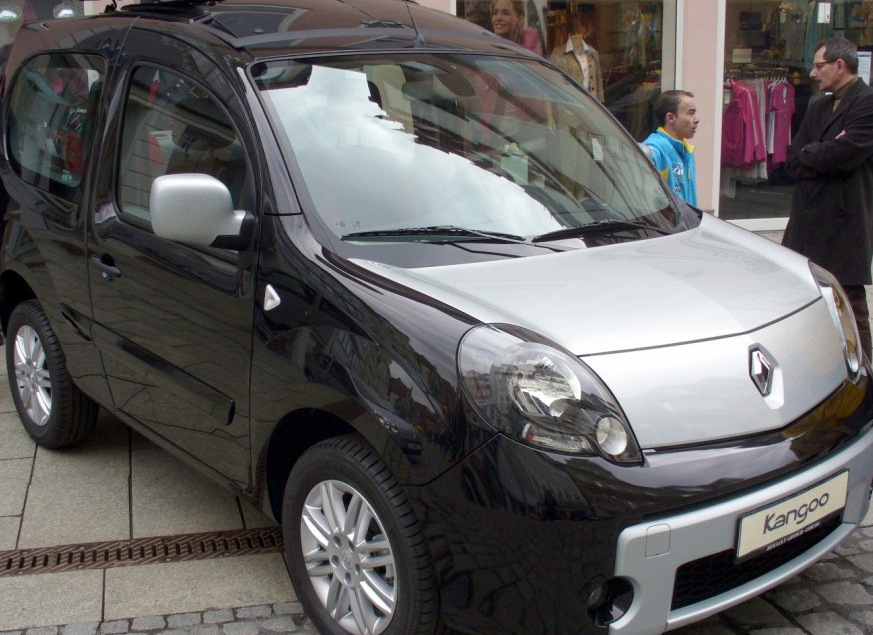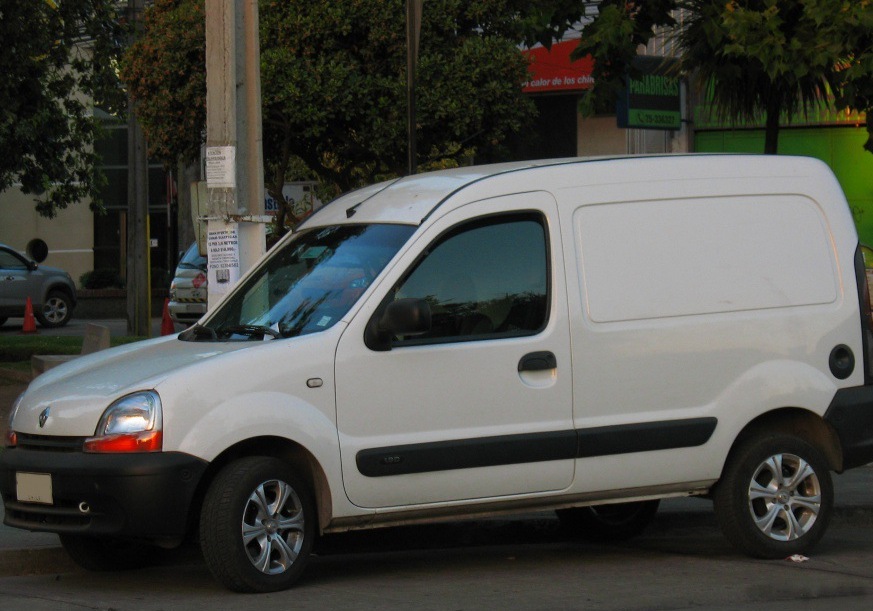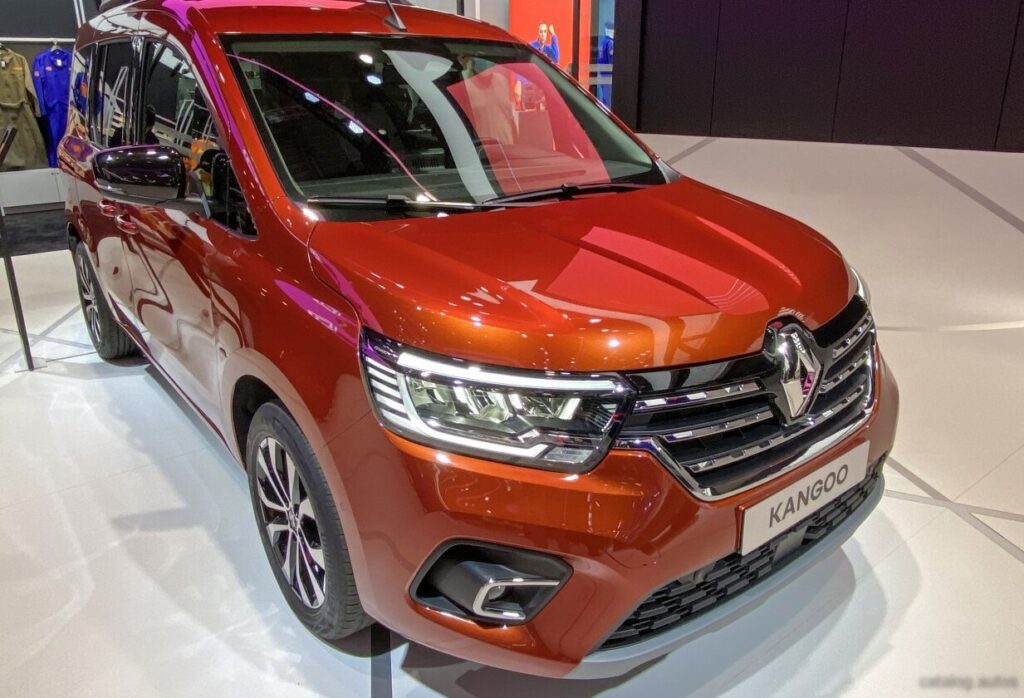
The Renault Kangoo III 1.3 TCe (130 hp) is a front-wheel-drive, five-door minivan that represents a significant evolution in the Kangoo lineage. Introduced in 2021 as part of the Kangoo III generation (launched in 2013, with a major refresh in 2021), this variant aimed to balance practicality with improved fuel efficiency and a more modern driving experience. Positioned as a mid-range offering within the Kangoo III lineup, it slotted between the base 1.3 TCe (95 hp) and the more utilitarian diesel options. The Kangoo, historically a popular choice in Europe for both commercial and family use, underwent a substantial redesign with the III generation, focusing on increased interior space, improved safety features, and a more car-like driving experience. This 130 hp version was primarily marketed towards families and individuals needing a versatile vehicle for both work and leisure.
Technical Specifications
| Brand | Renault |
| Model | Kangoo |
| Generation | Kangoo III |
| Type (Engine) | 1.3 TCe (130 Hp) |
| Start of production | 2021 |
| Powertrain Architecture | Internal Combustion engine |
| Body type | Minivan |
| Seats | 5 |
| Doors | 5 |
| Combined fuel consumption (WLTP) | 6.7-6.9 l/100 km (35.1 – 34.1 US mpg, 42.2 – 40.9 UK mpg, 14.9 – 14.5 km/l) |
| CO2 emissions (WLTP) | 152-156 g/km |
| Fuel Type | Petrol (Gasoline) |
| Acceleration 0 – 100 km/h | 12.8 sec |
| Acceleration 0 – 62 mph | 12.8 sec |
| Acceleration 0 – 60 mph | 12.2 sec |
| Maximum speed | 183 km/h (113.71 mph) |
| Emission standard | Euro 6D Full |
| Weight-to-power ratio | 10.8 kg/Hp, 92.9 Hp/tonne |
| Weight-to-torque ratio | 5.8 kg/Nm, 171.4 Nm/tonne |
| Power | 130 Hp @ 4500 rpm |
| Power per litre | 97.5 Hp/l |
| Torque | 240 Nm @ 1500 rpm (177.01 lb.-ft. @ 1500 rpm) |
| Engine layout | Front, Transverse |
| Engine Model/Code | H5H |
| Engine displacement | 1333 cm3 (81.34 cu. in.) |
| Number of cylinders | 4 |
| Engine configuration | Inline |
| Cylinder Bore | 72.2 mm (2.84 in.) |
| Piston Stroke | 81.3 mm (3.2 in.) |
| Number of valves per cylinder | 4 |
| Fuel injection system | Direct injection |
| Engine aspiration | Turbocharger, Intercooler |
| Valvetrain | DOHC |
| Engine oil capacity | 5.4 l (5.71 US qt | 4.75 UK qt) |
| Kerb Weight | 1400-1541 kg (3086.47 – 3397.32 lbs.) |
| Max. weight | 2071 kg (4565.77 lbs.) |
| Max load | 530-671 kg (1168.45 – 1479.3 lbs.) |
| Trunk (boot) space – minimum | 775 l (27.37 cu. ft.) |
| Trunk (boot) space – maximum | 3500 l (123.6 cu. ft.) |
| Fuel tank capacity | 54 l (14.27 US gal | 11.88 UK gal) |
| Max. roof load | 80 kg (176.37 lbs.) |
| Permitted trailer load with brakes (12%) | 1500 kg (3306.93 lbs.) |
| Permitted trailer load without brakes | 750 kg (1653.47 lbs.) |
| Length | 4486 mm (176.61 in.) |
| Width | 1919 mm (75.55 in.) |
| Width including mirrors | 2159 mm (85 in.) |
| Height | 1838 mm (72.36 in.) |
| Wheelbase | 2716 mm (106.93 in.) |
| Front track | 1584 mm (62.36 in.) |
| Rear (Back) track | 1596 mm (62.83 in.) |
| Front overhang | 960 mm (37.8 in.) |
| Rear overhang | 810 mm (31.89 in.) |
| Ride height (ground clearance) | 164 mm (6.46 in.) |
| Minimum turning circle (turning diameter) | 11.75 m (38.55 ft.) |
| Drivetrain Architecture | The Internal combustion engine (ICE) drives the front wheels of the vehicle. |
| Drive wheel | Front wheel drive |
| Number of gears and type of gearbox | 6 gears, manual transmission |
| Front suspension | Independent type McPherson |
| Rear suspension | Torsion |
| Front brakes | Ventilated discs, 280×24 mm |
| Rear brakes | Drum, 228.6 mm |
| Assisting systems | ABS (Anti-lock braking system) |
| Steering type | Steering rack and pinion |
| Power steering | Electric Steering |
| Tires size | 195/65 R15 |
| Wheel rims size | 15 |
Powertrain & Engine Architecture
The heart of the Kangoo III 1.3 TCe (130 hp) is the Renault H5H engine, a 1.3-liter turbocharged inline-four cylinder petrol engine. This engine is part of the Alliance’s (Renault-Nissan-Mitsubishi) modular engine family. It utilizes direct fuel injection, a technology that improves fuel efficiency and reduces emissions by injecting fuel directly into the combustion chamber. The engine also features a turbocharger with an intercooler, which forces more air into the cylinders, boosting power output. The double overhead camshaft (DOHC) valvetrain optimizes engine breathing for improved performance across the rev range. The 6-speed manual transmission was the standard offering, providing a balance between fuel economy and driver control. The engine’s design prioritizes low-end torque, making it suitable for everyday driving and hauling loads. The H5H engine is known for its relatively compact size, contributing to the Kangoo’s efficient packaging.
Driving Characteristics
The 130 hp 1.3 TCe engine provides adequate performance for the Kangoo III, though it’s not a particularly sporty vehicle. Acceleration from 0-60 mph takes around 12.2 seconds, and the top speed is 113.71 mph. The turbocharger provides a noticeable boost in power at lower RPMs, offering good responsiveness for overtaking and merging onto highways. The 6-speed manual transmission allows drivers to keep the engine in its optimal power band. Compared to the base 95 hp version, the 130 hp model offers a more relaxed driving experience, especially when fully loaded or traveling uphill. However, it doesn’t match the performance of the diesel variants, which offer significantly more torque. The gear ratios are tuned for fuel efficiency, meaning the engine can feel slightly strained at higher speeds. Overall, the driving experience is comfortable and practical, prioritizing usability over outright performance.
Equipment & Trim Levels
The Kangoo III 1.3 TCe (130 hp) typically came equipped with a reasonable level of standard features. These included air conditioning, power windows, central locking, and a basic audio system with USB connectivity. Safety features such as ABS, electronic stability control, and multiple airbags were also standard. Higher trim levels offered additional features like a touchscreen infotainment system with navigation, rear parking sensors, cruise control, and automatic headlights and wipers. Interior upholstery was typically cloth, with options for upgraded materials on higher trims. Optional extras included a panoramic sunroof, alloy wheels, and a more advanced driver-assistance package. The Kangoo’s interior is designed with practicality in mind, featuring durable materials and ample storage space.
Chassis & Braking
The Kangoo III utilizes a McPherson strut independent suspension at the front and a torsion beam suspension at the rear. This setup provides a comfortable ride quality, absorbing bumps and imperfections in the road effectively. The front brakes are ventilated discs, providing good stopping power, while the rear brakes are drums. This configuration is typical for vehicles in this weight class and price range. The electric power steering offers light and precise steering feel. The chassis is designed to prioritize stability and load-carrying capacity, rather than sporty handling. Stabilizer bars are included to reduce body roll during cornering, but the Kangoo is not intended for aggressive driving.
Market Reception & Comparison
The Renault Kangoo III 1.3 TCe (130 hp) was generally well-received by critics as a practical and versatile vehicle. It was praised for its spacious interior, comfortable ride, and improved fuel efficiency compared to older models. However, some reviewers noted that the engine could feel strained when fully loaded or traveling at high speeds. Compared to the diesel variants, the 1.3 TCe offered a quieter and smoother driving experience, but lacked the same level of low-end torque. Fuel economy was competitive with other petrol-powered vans in its class, averaging around 35-34 mpg. Reliability reports suggest that the H5H engine is generally reliable, but regular maintenance is essential to prevent issues.
Legacy
The Renault Kangoo III 1.3 TCe (130 hp) represents a solid all-around package for buyers seeking a practical and efficient minivan. The H5H engine, while not without its limitations, has proven to be a relatively durable powertrain. On the used car market, these models offer good value for money, providing a spacious and versatile vehicle at an affordable price. Regular maintenance, including oil changes and timing belt replacements, is crucial to ensure long-term reliability. The Kangoo III continues to be a popular choice for families and businesses alike, thanks to its practicality, versatility, and relatively low running costs.