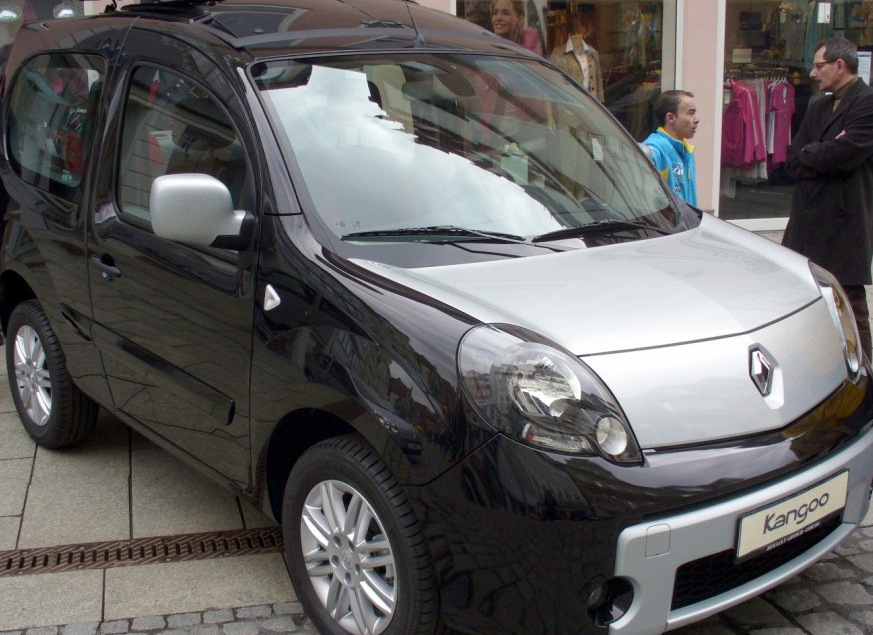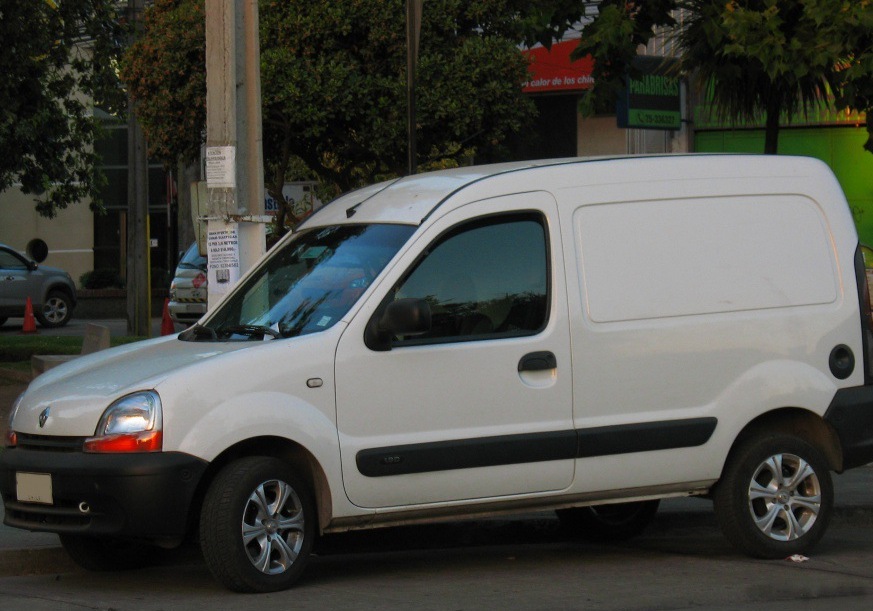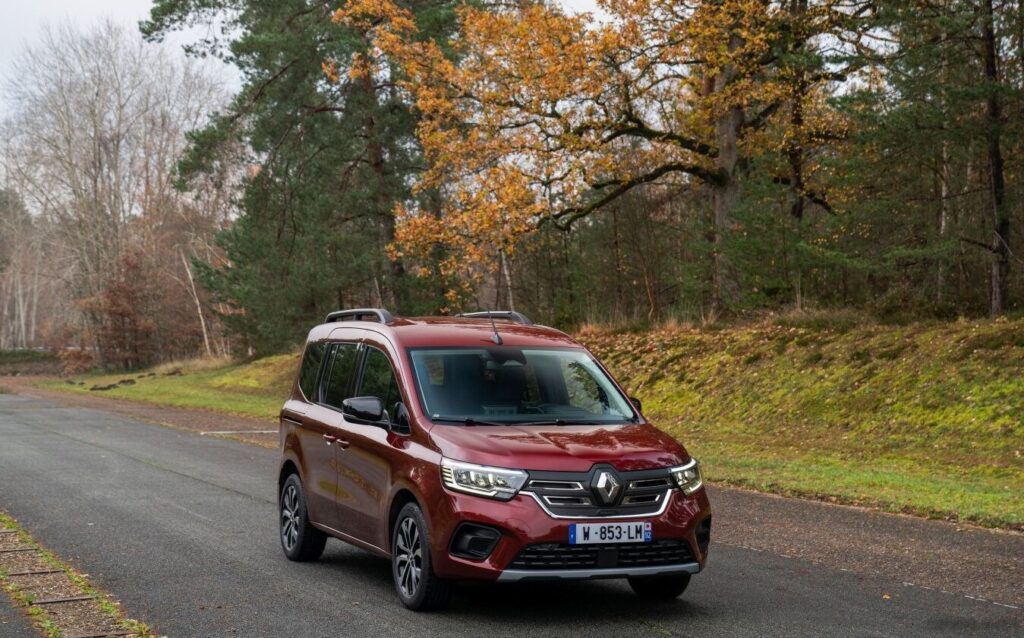
The Renault Kangoo III 45 kWh E-Tech Electric, launched in July 2022, represents Renault’s entry into the all-electric small commercial vehicle and passenger vehicle segment with the third generation Kangoo. Positioned as a practical and eco-friendly alternative to traditional internal combustion engine vans and MPVs, the E-Tech Electric variant offers a compelling blend of utility, range, and zero-emission driving. This specific 45 kWh battery configuration, producing 122 horsepower, serves as the standard powertrain option for the Kangoo E-Tech, targeting urban delivery services, families, and individuals seeking a versatile and sustainable vehicle. It builds upon the Kangoo’s established reputation for practicality and affordability, while embracing the growing demand for electric mobility.
Technical Specifications
| Brand | Renault |
| Model | Kangoo |
| Generation | Kangoo III |
| Type (Engine) | 45 kWh E-Tech (122 Hp) Electric |
| Start of production | July, 2022 |
| Powertrain Architecture | BEV (Electric Vehicle) |
| Body type | Minivan |
| Seats | 5 |
| Doors | 5 |
| Fuel Type | Electricity |
| Acceleration 0 – 100 km/h | 12.6 sec |
| Acceleration 0 – 62 mph | 12.6 sec |
| Acceleration 0 – 60 mph | 12 sec |
| Maximum speed | 132 km/h (82.02 mph) |
| Weight-to-power ratio | 14.7 kg/Hp, 68 Hp/tonne |
| Weight-to-torque ratio | 7.3 kg/Nm, 136.5 Nm/tonne |
| Gross battery capacity | 45 kWh |
| Battery technology | Lithium-ion (Li-Ion) |
| Battery weight | 320 kg (705.48 lbs) |
| Battery location | Below the floor |
| All-electric range (WLTP) | 285 km (177.09 mi) |
| Average Energy consumption (WLTP) | 19.2 kWh/100 km (30.9 kWh/100 mi, 109 MPGe, 5.2 km/kWh, 3.2 mi/kWh) |
| Electric motor power | 122 Hp |
| Electric motor Torque | 245 Nm (180.7 lb.-ft.) |
| Electric motor model/code | 5AQ 60 |
| Electric motor location | Front axle, Transverse |
| Electric motor type | Synchronous |
| System power | 122 Hp |
| System torque | 245 Nm (180.7 lb.-ft.) |
| Kerb Weight | 1795 kg (3957.3 lbs) |
| Max. weight | 2370 kg (5224.96 lbs) |
| Max load | 575 kg (1267.66 lbs) |
| Trunk (boot) space – minimum | 542 l (19.14 cu. ft.) |
| Trunk (boot) space – maximum | 1730 l (61.09 cu. ft.) |
| Max. roof load | 80 kg (176.37 lbs) |
| Permitted trailer load with brakes (12%) | 1500 kg (3306.93 lbs) |
| Permitted trailer load without brakes | 750 kg (1653.47 lbs) |
| Permitted towbar download | 75 kg (165.35 lbs) |
| Length | 4486 mm (176.61 in) |
| Width | 1919 mm (75.55 in) |
| Width including mirrors | 2159 mm (85 in) |
| Height | 1838 mm (72.36 in) |
| Wheelbase | 2716 mm (106.93 in) |
| Ride height (ground clearance) | 164 mm (6.46 in) |
| Minimum turning circle | 11.3 m (37.07 ft) |
| Drive wheel | Front wheel drive |
| Number of gears | 1 gears, automatic transmission |
| Front brakes | Ventilated discs |
| Rear brakes | Disc |
| Tires size | 205/60 R16; 205/55 R17 |
| Wheel rims size | 16; 17 |
Powertrain & Engine Architecture
The Kangoo E-Tech Electric utilizes a fully electric powertrain, foregoing the internal combustion engine entirely. The heart of the system is a 45 kWh lithium-ion battery pack positioned under the vehicle floor, contributing to a low center of gravity and maximizing interior space. This battery powers a synchronous electric motor, designated model 5AQ 60, producing 122 horsepower and 245 Nm (180.7 lb-ft) of torque. The motor is transversely mounted at the front axle, driving the front wheels. The single-speed automatic transmission simplifies operation, delivering smooth and linear acceleration. The charging port location is not publicly available. The vehicle supports both AC and DC fast charging, allowing for flexible charging options at home, work, or public charging stations.
Driving Characteristics
The 122 hp electric motor provides adequate performance for urban and suburban driving. Acceleration from 0 to 100 km/h (0-62 mph) takes approximately 12.6 seconds, which is comparable to entry-level gasoline-powered vans. While not designed for outright speed, the instant torque delivery of the electric motor provides responsive acceleration at lower speeds, making it well-suited for city traffic. The single-speed transmission ensures seamless power delivery, and the regenerative braking system helps to recapture energy and extend the vehicle’s range. Compared to potential higher-powered variants (if offered in the future), this configuration prioritizes efficiency and affordability over outright performance.
Equipment & Trim Levels
The Kangoo E-Tech Electric typically comes well-equipped, reflecting its modern design and focus on practicality. Standard features generally include air conditioning, a touchscreen infotainment system with smartphone integration (Apple CarPlay and Android Auto), and a suite of safety features such as ABS, electronic stability control, and multiple airbags. Higher trim levels may add features like a larger touchscreen, navigation system, parking sensors, and a rearview camera. Interior upholstery is typically cloth, with options for upgraded materials. The Kangoo’s modular interior design allows for flexible seating configurations and ample cargo space, making it suitable for both passenger and commercial use.
Chassis & Braking
The Kangoo E-Tech Electric utilizes a conventional MacPherson strut front suspension and a torsion beam rear suspension. The suspension is tuned to provide a comfortable ride while maintaining good handling characteristics. Ventilated disc brakes are used at the front, while solid discs are employed at the rear. Electric power steering provides light and precise steering feel. The vehicle’s relatively low center of gravity, thanks to the underfloor battery pack, contributes to improved stability and handling. Tire sizes typically range from 205/60 R16 to 205/55 R17, depending on the trim level.
Market Reception & Comparison
The Renault Kangoo E-Tech Electric has been generally well-received by critics and consumers alike. Its practical design, zero-emission driving, and competitive pricing have made it a popular choice in the electric van and MPV segment. Compared to gasoline-powered Kangoo models, the E-Tech Electric offers significantly lower running costs due to the reduced price of electricity compared to fuel and lower maintenance requirements. Its range of 285 km (177 miles) on the WLTP cycle is sufficient for many urban and suburban driving needs, although it may be limiting for longer journeys. Competitors include the Citroen e-Berlingo, Peugeot e-Partner, and Nissan e-NV200, all of which offer similar levels of practicality and range.
Legacy
The Renault Kangoo E-Tech Electric represents a significant step forward in Renault’s commitment to electric mobility. The 45 kWh powertrain, while not the most powerful or longest-range option available, provides a compelling balance of performance, affordability, and practicality. The long-term reliability of the electric powertrain is expected to be high, as electric motors have fewer moving parts than internal combustion engines. As the used car market matures, the Kangoo E-Tech Electric is likely to become an increasingly attractive option for buyers seeking a sustainable and versatile vehicle. The vehicle’s impact lies in normalizing electric vans and MPVs for everyday use, paving the way for wider adoption of electric vehicles in the commercial and personal transportation sectors.