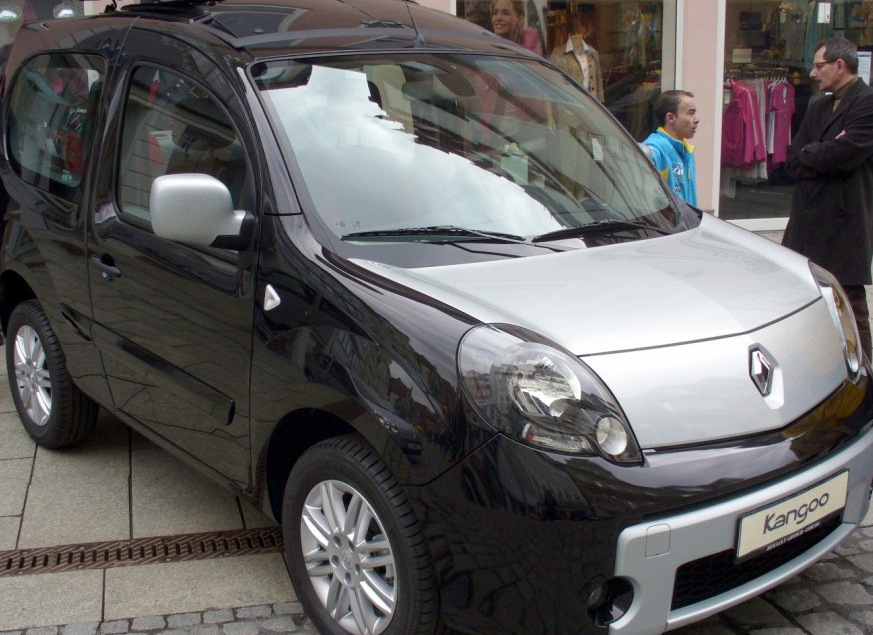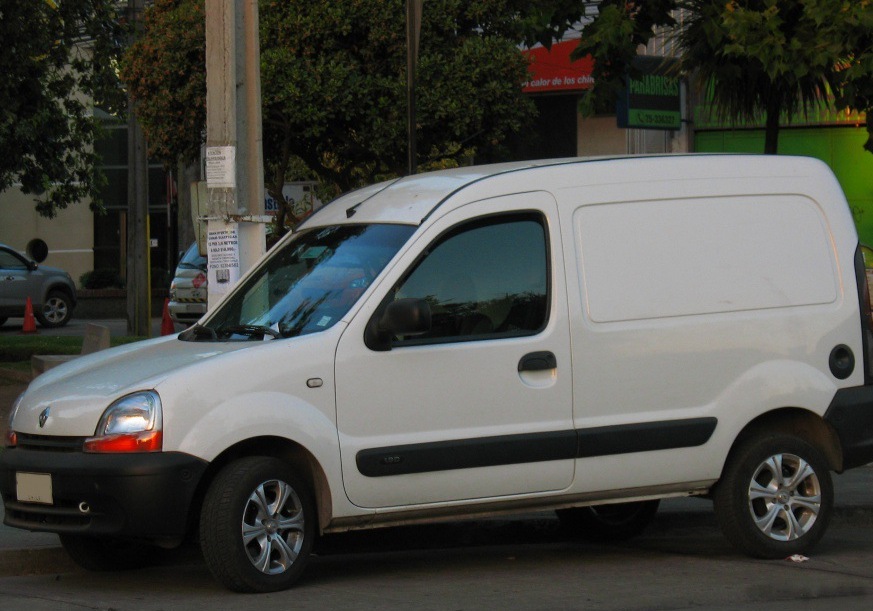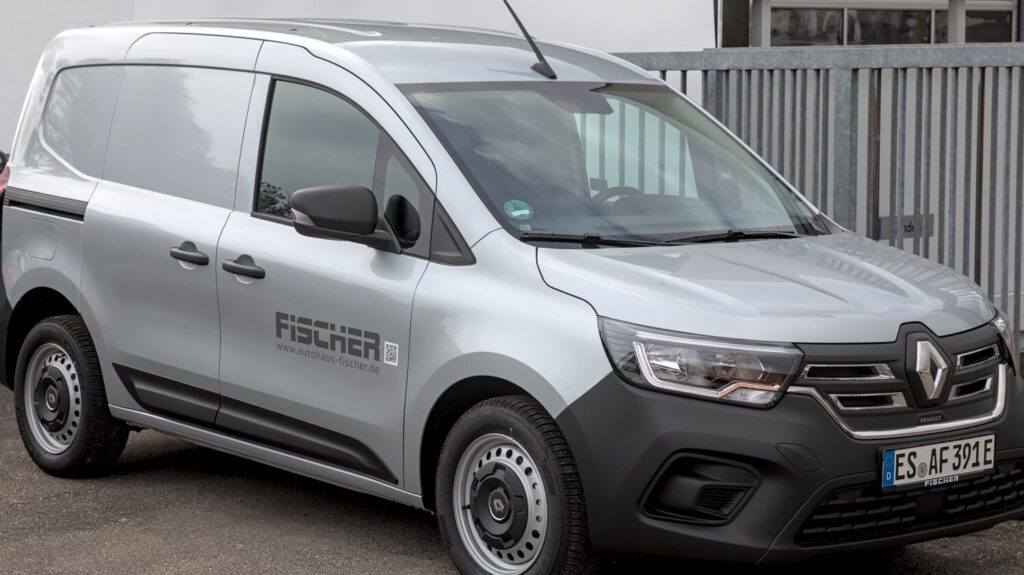
The Renault Kangoo III Rapid 45 kWh E-Tech, launched in July 2022, represents Renault’s entry into the all-electric light commercial vehicle (LCV) segment with a focus on practicality and zero-emission operation. Positioned as a versatile panel van and passenger vehicle (depending on configuration), the Kangoo E-Tech is built upon the Kangoo III platform (also known as the H44 generation) and aims to provide a compelling alternative to traditional internal combustion engine vans for urban delivery and commercial use. This specific 45 kWh battery variant offers a balance between range and affordability within the Kangoo E-Tech lineup.
Technical Specifications
| Brand | Renault |
| Model | Kangoo |
| Generation | Kangoo III Rapid |
| Type (Engine) | 45 kWh E-Tech (122 Hp) Electric |
| Start of production | July, 2022 |
| Powertrain Architecture | BEV (Electric Vehicle) |
| Body type | Minivan |
| Seats | 2 |
| Doors | 4 |
| Fuel Type | Electricity |
| Acceleration 0 – 100 km/h | 11.6 sec |
| Acceleration 0 – 62 mph | 11.6 sec |
| Acceleration 0 – 60 mph | 11 sec |
| Maximum speed | 132 km/h (82.02 mph) |
| Weight-to-power ratio | 13.2 kg/Hp, 75.9 Hp/tonne |
| Weight-to-torque ratio | 6.6 kg/Nm, 152.4 Nm/tonne |
| Gross battery capacity | 45 kWh |
| Battery voltage | 240 V |
| Battery technology | Lithium-ion (Li-Ion) |
| Battery weight | 320 kg (705.48 lbs) |
| Battery location | Below the floor |
| All-electric range (WLTP) | 287-293 km (178.33 – 182.06 mi) |
| Average Energy consumption (WLTP) | 18.4-18.7 kWh/100 km (29.61 – 30.09 kWh/100 mi) |
| MPGe | 114 – 112 |
| km/kWh | 5.4 – 5.3 |
| mi/kWh | 3.4 – 3.3 |
| Electric motor power | 122 Hp |
| Electric motor Torque | 245 Nm (180.7 lb.-ft.) |
| Electric motor model/code | 5AQ 60 |
| Electric motor location | Front axle, Transverse |
| Electric motor type | Synchronous |
| System power | 122 Hp |
| System torque | 245 Nm (180.7 lb.-ft.) |
| Kerb Weight | 1608-1645 kg (3545.03 – 3626.6 lbs) |
| Max. weight | 2230 kg (4916.31 lbs) |
| Max load | 585-622 kg (1289.7 – 1371.28 lbs) |
| Trunk (boot) space – minimum | 3300 l (116.54 cu. ft.) |
| Trunk (boot) space – maximum | 3900 l (137.73 cu. ft.) |
| Permitted trailer load with brakes (12%) | 1500 kg (3306.93 lbs) |
| Permitted trailer load without brakes | 750 kg (1653.47 lbs) |
| Length | 4486 mm (176.61 in) |
| Width | 1860 mm (73.23 in) |
| Width including mirrors | 2159 mm (85 in) |
| Height | 1864 mm (73.39 in) |
| Wheelbase | 2716 mm (106.93 in) |
| Front track | 1584 mm (62.36 in) |
| Rear (Back) track | 1596 mm (62.83 in) |
| Front overhang | 960 mm (37.8 in) |
| Rear overhang | 810 mm (31.89 in) |
| Ride height (ground clearance) | 169 mm (6.65 in) |
| Minimum turning circle (turning diameter) | 10.9 m (35.76 ft) |
| Drivetrain Architecture | One electric motor drives the front wheels. |
| Drive wheel | Front wheel drive |
| Number of gears and type of gearbox | 1 gears, automatic transmission |
| Front brakes | Disc, 280 mm |
| Rear brakes | Disc, 274 mm |
| Assisting systems | ABS (Anti-lock braking system) |
| Steering type | Steering rack and pinion |
| Power steering | Electric Steering |
| Tires size | 195/65 R15 95H; 205/60 R16 96H |
| Wheel rims size | 15; 16 |
Powertrain & Engine Architecture
The Kangoo E-Tech utilizes a fully electric powertrain, centered around a 45 kWh lithium-ion battery pack. This battery is positioned under the vehicle floor, contributing to a lower center of gravity and maximizing interior space. The electric motor, designated 5AQ 60, is a synchronous motor producing 122 horsepower (90 kW) and 245 Nm (180.7 lb-ft) of torque. The motor is transversely mounted at the front axle, driving the front wheels. The single-speed automatic transmission simplifies operation, providing seamless acceleration. The charging port location varies depending on the specific configuration, but supports both AC and DC fast charging capabilities. The vehicle’s onboard charger handles AC charging, while DC fast charging allows for quicker replenishment of the battery at compatible charging stations.
Driving Characteristics
The 45 kWh Kangoo E-Tech offers a smooth and quiet driving experience, typical of electric vehicles. Acceleration is adequate for urban and suburban driving, achieving 0-62 mph (0-100 km/h) in approximately 11.6 seconds. The immediate torque delivery of the electric motor provides responsive acceleration at lower speeds. Compared to potential higher-powered variants (if offered in the future), this version prioritizes efficiency and affordability over outright performance. The single-speed transmission simplifies driving, but lacks the gear ratios found in traditional automatic transmissions, potentially impacting efficiency at higher speeds. The regenerative braking system helps to recapture energy during deceleration, extending the vehicle’s range.
Equipment & Trim Levels
The Kangoo E-Tech Rapid typically comes standard with features such as air conditioning, a touchscreen infotainment system with smartphone integration (Apple CarPlay and Android Auto), and a suite of safety features including ABS, electronic stability control, and multiple airbags. Interior upholstery is generally durable and practical, designed for commercial use. Optional extras can include features like a rearview camera, parking sensors, upgraded infotainment systems, and various cargo area configurations. Trim levels may vary by market, but generally offer increasing levels of comfort and convenience features.
Chassis & Braking
The Kangoo E-Tech utilizes a conventional MacPherson strut front suspension and a torsion beam rear suspension. The suspension is tuned to provide a comfortable ride while maintaining adequate load-carrying capacity. Braking is handled by disc brakes on all four wheels, with ABS (Anti-lock Braking System) as standard. The vehicle’s weight distribution, influenced by the battery pack’s location, contributes to stable handling. Steering is electrically assisted, providing light and precise control.
Market Reception & Comparison
The Renault Kangoo E-Tech has been generally well-received by critics as a practical and efficient electric van. Its range, while not class-leading, is sufficient for many urban delivery routes. Compared to internal combustion engine versions of the Kangoo, the E-Tech offers lower running costs due to reduced fuel and maintenance expenses. Compared to competitors like the Peugeot e-Partner and Citroën ë-Berlingo, the Kangoo E-Tech offers a competitive combination of range, payload capacity, and price. Fuel economy, expressed as kWh/100km, is a key metric for electric vehicles, and the Kangoo E-Tech achieves a respectable 18.4-18.7 kWh/100km on the WLTP cycle.
Legacy
The Renault Kangoo E-Tech represents a significant step towards electrification in the light commercial vehicle segment. The 45 kWh battery pack offers a good balance between range and cost, making it an attractive option for businesses transitioning to electric fleets. The long-term reliability of the electric powertrain remains to be fully assessed, but Renault’s experience in electric vehicle technology suggests a reasonable expectation of durability. On the used car market, the Kangoo E-Tech is likely to hold its value well, particularly as demand for electric vans continues to grow. The vehicle’s robust construction and practical design should ensure its continued relevance for years to come.