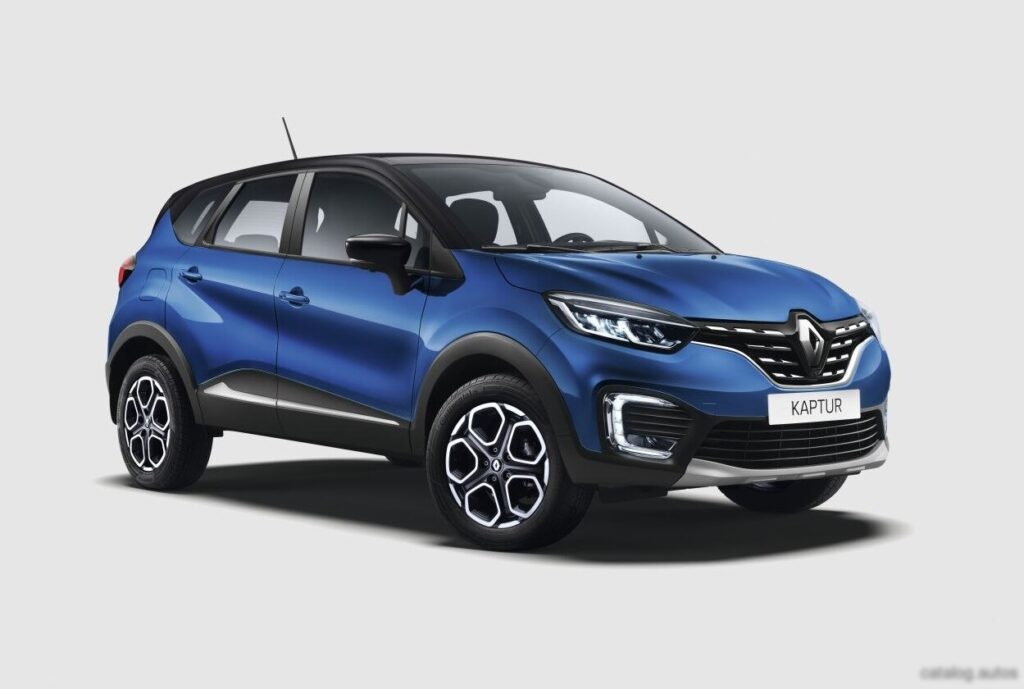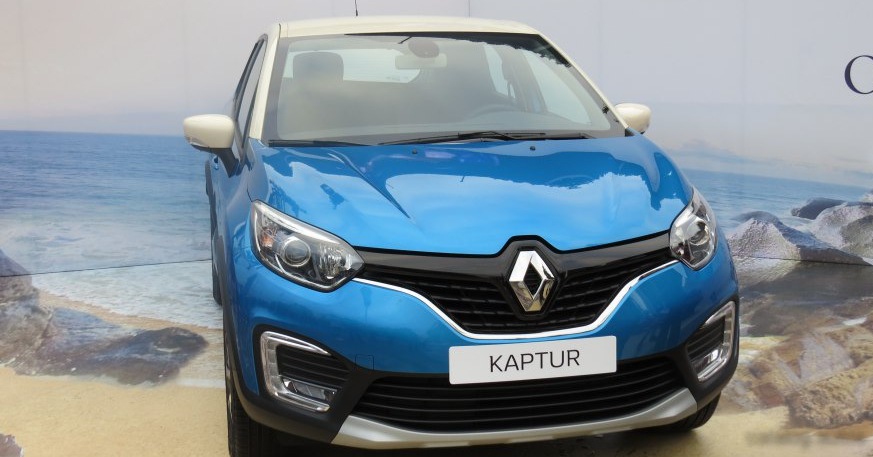
The Renault Kaptur 1.6, producing 114 horsepower, was a crossover SUV manufactured by Renault between April 2016 and May 2020. Primarily aimed at the Russian and Eastern European markets, the Kaptur represented Renault’s entry into the growing compact SUV segment in those regions. It was based on the B0 platform, shared with other Renault and Nissan models, and positioned as a more affordable and practical alternative to larger, more expensive crossovers. This specific 1.6-liter variant served as a core offering within the Kaptur lineup, balancing fuel efficiency with adequate performance for everyday driving.
Technical Specifications
| Brand | Renault |
| Model | Kaptur |
| Generation | Kaptur |
| Type (Engine) | 1.6 (114 Hp) |
| Start of production | April, 2016 |
| End of production | May, 2020 |
| Powertrain Architecture | Internal Combustion engine |
| Body type | Crossover |
| Seats | 5 |
| Doors | 5 |
| Fuel consumption (urban) | 9.3 l/100 km (25.3 US mpg) |
| Fuel consumption (extra urban) | 6.3 l/100 km (37.3 US mpg) |
| Fuel consumption (combined) | 7.4 l/100 km (31.8 US mpg) |
| CO2 emissions | 171 g/km |
| Fuel Type | Petrol (Gasoline) |
| Acceleration 0 – 100 km/h | 12.5 sec |
| Acceleration 0 – 62 mph | 12.5 sec |
| Acceleration 0 – 60 mph | 11.9 sec |
| Maximum speed | 171 km/h (106.25 mph) |
| Emission standard | Euro 5 |
| Weight-to-power ratio | 11.1 kg/Hp |
| Weight-to-torque ratio | 8.1 kg/Nm |
| Power | 114 Hp @ 5500 rpm |
| Torque | 156 Nm @ 4000 rpm (115.06 lb.-ft. @ 4000 rpm) |
| Engine layout | Front, Transverse |
| Engine Model/Code | H4M |
| Engine displacement | 1598 cm3 (97.52 cu. in.) |
| Number of cylinders | 4 |
| Engine configuration | Inline |
| Cylinder Bore | 78 mm (3.07 in.) |
| Piston Stroke | 83.6 mm (3.29 in.) |
| Compression ratio | 10.7:1 |
| Number of valves per cylinder | 4 |
| Fuel injection system | Multi-port manifold injection |
| Engine aspiration | Naturally aspirated engine |
| Engine oil capacity | 4.2 l (4.44 US qt | 3.7 UK qt) |
| Coolant | 4.5 l (4.76 US qt | 3.96 UK qt) |
| Kerb Weight | 1262-1290 kg (2782.23 – 2843.96 lbs.) |
| Max. weight | 1738 kg (3831.63 lbs.) |
| Max load | 448-476 kg (987.67 – 1049.4 lbs.) |
| Trunk (boot) space – minimum | 387 l (13.67 cu. ft.) |
| Trunk (boot) space – maximum | 1200 l (42.38 cu. ft.) |
| Fuel tank capacity | 52 l (13.74 US gal | 11.44 UK gal) |
| Permitted trailer load with brakes (12%) | 1200 kg (2645.55 lbs.) |
| Permitted trailer load without brakes | 665 kg (1466.07 lbs.) |
| Length | 4333 mm (170.59 in.) |
| Width | 1813 mm (71.38 in.) |
| Height | 1613 mm (63.5 in.) |
| Wheelbase | 2673 mm (105.24 in.) |
| Front track | 1564 mm (61.57 in.) |
| Rear (Back) track | 1570 mm (61.81 in.) |
| Ride height (ground clearance) | 204 mm (8.03 in.) |
| Drag coefficient (Cd) | 0.30 |
| Minimum turning circle (turning diameter) | 11 m (36.09 ft.) |
| Approach angle | 20° |
| Departure angle | 31° |
| Drivetrain Architecture | The Internal combustion engine (ICE) drives the front wheels of the vehicle. |
| Drive wheel | Front wheel drive |
| Number of gears and type of gearbox | 5 gears, manual transmission |
| Front suspension | Independent, type McPherson with coil spring and anti-roll bar |
| Rear suspension | Semi-independent, coil spring |
| Front brakes | Ventilated discs |
| Rear brakes | Drum |
| Assisting systems | ABS (Anti-lock braking system) |
| Steering type | Steering rack and pinion |
| Power steering | Electric Steering |
| Tires size | 215/65 R16; 215/60 R17 |
| Wheel rims size | 16; 17 |
INTRODUCTION
The Renault Kaptur 1.6, launched in April 2016, was a significant model for Renault, specifically tailored for the Russian market and surrounding regions. Built upon the B0 platform, also used for models like the Renault Logan and Sandero, the Kaptur aimed to provide a stylish and practical crossover option at a competitive price point. The 1.6-liter, 114 horsepower engine variant was a mainstay of the Kaptur range, offering a balance between affordability and usability. Production continued until May 2020, with the Kaptur becoming a popular choice for families and individuals seeking a versatile vehicle for both urban and rural environments.
Powertrain & Engine Architecture
The Kaptur 1.6 was powered by the Renault H4M engine, a 1.6-liter inline-four cylinder gasoline engine. This engine, a common sight in Renault’s global lineup, featured multi-point fuel injection and a naturally aspirated design. The H4M engine is known for its relative simplicity and durability. It utilizes a single overhead camshaft (SOHC) valvetrain with four valves per cylinder. The engine produced 114 horsepower at 5500 rpm and 156 Nm (115.06 lb-ft) of torque at 4000 rpm. The engine was paired with a five-speed manual transmission as standard, delivering power to the front wheels. While an automatic transmission was offered on other Kaptur variants, the 1.6-liter engine was primarily sold with the manual gearbox in most markets.
Driving Characteristics
The Kaptur 1.6 with the five-speed manual transmission offered a reasonably engaging driving experience, though it wasn’t designed for outright performance. Acceleration from 0 to 100 km/h (0-62 mph) took around 12.5 seconds. The engine felt adequate for everyday driving, providing sufficient power for merging onto highways and overtaking slower vehicles. The five-speed gearbox was well-matched to the engine’s characteristics, offering smooth shifts and a usable spread of ratios. Compared to higher-powered Kaptur variants, the 1.6-liter model felt less strained during acceleration, but also lacked the same level of responsiveness. The manual transmission allowed for greater driver control and contributed to slightly better fuel economy compared to the automatic options available on other trims.
Equipment & Trim Levels
The Kaptur 1.6 typically came with a base level of equipment, focusing on practicality and value. Standard features generally included air conditioning, power windows, central locking, and an audio system with USB connectivity. Safety features such as ABS (Anti-lock Braking System) and front airbags were also standard. Higher trim levels offered additional features like alloy wheels, fog lights, a more advanced audio system, and a rear parking sensor. Interior upholstery was typically cloth, with a functional and durable design. Optional extras included a navigation system and a rearview camera.
Chassis & Braking
The Kaptur 1.6 utilized a McPherson strut front suspension and a semi-independent coil spring rear suspension. This setup provided a comfortable ride quality, well-suited for the often-challenging road conditions found in its target markets. The front brakes were ventilated discs, offering good stopping power, while the rear brakes were drums. The steering was a rack and pinion system with electric power assistance, providing light and easy steering feel. The Kaptur’s ride height of 204 mm (8.03 inches) provided good ground clearance for navigating rough terrain and snow-covered roads.
Market Reception & Comparison
The Renault Kaptur 1.6 was generally well-received in its target markets, praised for its affordability, practicality, and stylish design. Critics noted that the 1.6-liter engine, while adequate, wasn’t the most powerful option available. However, its fuel economy and relatively low running costs made it an attractive choice for budget-conscious buyers. Compared to other Kaptur trims, such as those equipped with the more powerful 1.6-liter turbocharged engine, the 1.6-liter naturally aspirated version offered a more economical and less complex ownership experience. It competed with other compact crossovers in the Russian market, such as the Hyundai Creta and Kia Soul.
Legacy
The Renault Kaptur 1.6 has established a reputation for reliability and affordability in the used car market. The H4M engine is known for its durability, and with regular maintenance, it can provide many years of reliable service. The Kaptur’s simple mechanical design makes it relatively easy and inexpensive to repair. As a result, the Kaptur 1.6 remains a popular choice for buyers seeking a practical and affordable crossover SUV. Its blend of style, functionality, and value has ensured its continued presence on roads throughout Russia and Eastern Europe.