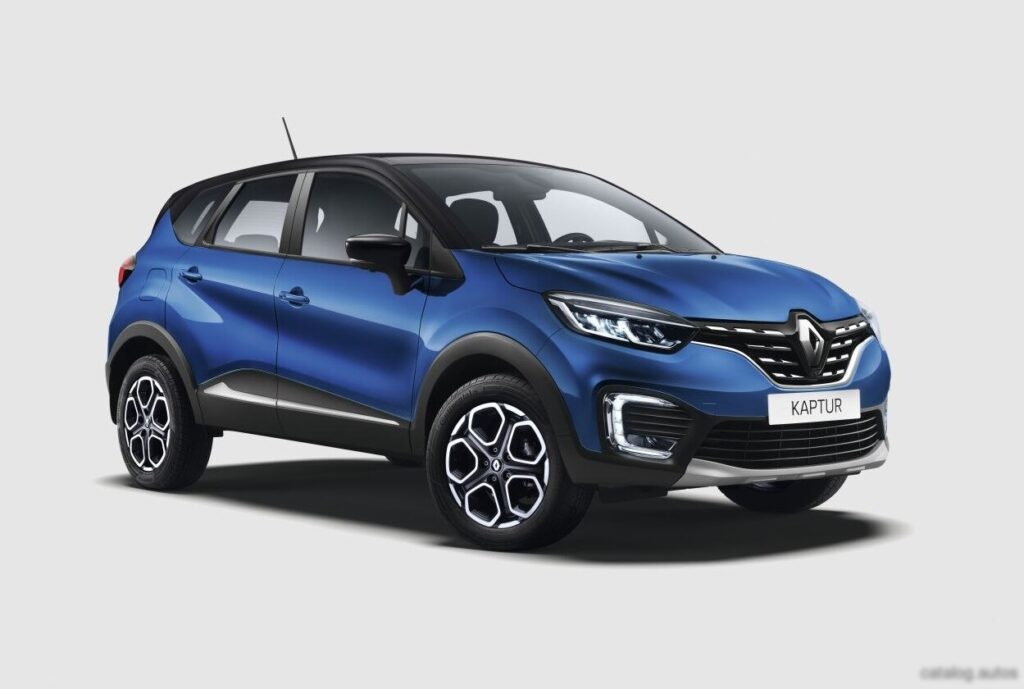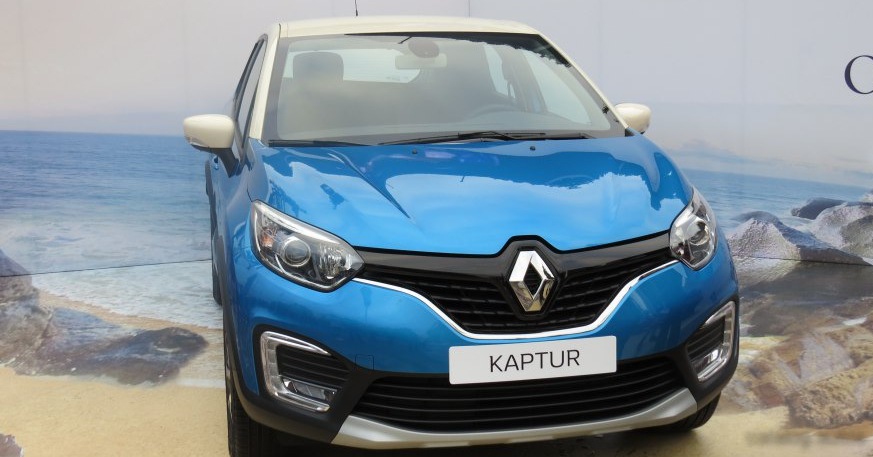
The Renault Kaptur 1.6 (114 hp) CVT X-Tronic was a front-wheel-drive crossover produced by Renault from April 2016 to May 2020. Positioned as a mid-range offering within the Kaptur lineup, it aimed to provide a balance of affordability, practicality, and ease of use, particularly appealing to buyers seeking an automatic transmission in the compact crossover segment. The Kaptur, specifically designed for markets like Russia and surrounding regions, represented Renault’s entry into a growing segment, offering a more stylish and feature-rich alternative to traditional small hatchbacks. It was built on the B0 platform, shared with other Renault and Nissan models.
Technical Specifications
| Brand | Renault |
| Model | Kaptur |
| Generation | Kaptur |
| Type (Engine) | 1.6 (114 Hp) CVT X-Tronic |
| Start of production | April, 2016 |
| End of production | May, 2020 |
| Powertrain Architecture | Internal Combustion engine |
| Body type | Crossover |
| Seats | 5 |
| Doors | 5 |
| Fuel consumption (urban) | 8.6 l/100 km (27.4 US mpg) |
| Fuel consumption (extra urban) | 6 l/100 km (39.2 US mpg) |
| Fuel consumption (combined) | 6.9 l/100 km (34.1 US mpg) |
| CO2 emissions | 160 g/km |
| Fuel Type | Petrol (Gasoline) |
| Acceleration 0 – 100 km/h | 12.9 sec |
| Acceleration 0 – 62 mph | 12.9 sec |
| Acceleration 0 – 60 mph | 12.3 sec |
| Maximum speed | 166 km/h (103.15 mph) |
| Emission standard | Euro 5 |
| Weight-to-power ratio | 11.3 kg/Hp |
| Weight-to-torque ratio | 8.3 kg/Nm |
| Power | 114 Hp @ 5500 rpm |
| Torque | 156 Nm @ 4000 rpm (115.06 lb.-ft. @ 4000 rpm) |
| Engine layout | Front, Transverse |
| Engine Model/Code | H4M |
| Engine displacement | 1598 cm3 (97.52 cu. in.) |
| Number of cylinders | 4 |
| Engine configuration | Inline |
| Cylinder Bore | 78 mm (3.07 in.) |
| Piston Stroke | 83.6 mm (3.29 in.) |
| Compression ratio | 10.7:1 |
| Number of valves per cylinder | 4 |
| Fuel injection system | Multi-port manifold injection |
| Engine aspiration | Naturally aspirated engine |
| Engine oil capacity | 4.2 l (4.44 US qt | 3.7 UK qt) |
| Coolant | 4.5 l (4.76 US qt | 3.96 UK qt) |
| Kerb Weight | 1290-1320 kg (2843.96 – 2910.1 lbs.) |
| Max. weight | 1768 kg (3897.77 lbs.) |
| Max load | 448-478 kg (987.67 – 1053.81 lbs.) |
| Trunk (boot) space – minimum | 387 l (13.67 cu. ft.) |
| Trunk (boot) space – maximum | 1200 l (42.38 cu. ft.) |
| Fuel tank capacity | 52 l (13.74 US gal | 11.44 UK gal) |
| Permitted trailer load with brakes (12%) | 1200 kg (2645.55 lbs.) |
| Permitted trailer load without brakes | 680 kg (1499.14 lbs.) |
| Length | 4333 mm (170.59 in.) |
| Width | 1813 mm (71.38 in.) |
| Height | 1613 mm (63.5 in.) |
| Wheelbase | 2673 mm (105.24 in.) |
| Front track | 1564 mm (61.57 in.) |
| Rear (Back) track | 1570 mm (61.81 in.) |
| Ride height (ground clearance) | 204 mm (8.03 in.) |
| Drag coefficient (Cd) | 0.30 |
| Minimum turning circle (turning diameter) | 11 m (36.09 ft.) |
| Approach angle | 20° |
| Departure angle | 31° |
| Drivetrain Architecture | The Internal combustion engine (ICE) drives the front wheels of the vehicle. |
| Drive wheel | Front wheel drive |
| Number of gears and type of gearbox | automatic transmission CVT X-Tronic |
| Front suspension | Independent, type McPherson with coil spring and anti-roll bar |
| Rear suspension | Semi-independent, coil spring |
| Front brakes | Ventilated discs |
| Rear brakes | Drum |
| Assisting systems | ABS (Anti-lock braking system) |
| Steering type | Steering rack and pinion |
| Power steering | Electric Steering |
| Tires size | 215/65 R16; 215/60 R17 |
| Wheel rims size | 16; 17 |
Powertrain & Engine Architecture
The Renault Kaptur 1.6 CVT X-Tronic utilized the H4M engine, a 1.6-liter inline-four cylinder gasoline engine. This engine, a mainstay in Renault’s lineup, featured multi-point fuel injection and a naturally aspirated design. The H4M engine produced 114 horsepower at 5500 rpm and 156 Nm (115 lb-ft) of torque at 4000 rpm. The engine’s design prioritized fuel efficiency and reliability over outright performance. The engine’s block was constructed from cast iron, while the cylinder head was made of aluminum. The valve train employed two overhead camshafts (DOHC) and four valves per cylinder. The CVT X-Tronic transmission, a continuously variable transmission, was sourced from Jatco, a well-known CVT manufacturer. This transmission offered seamless gear changes and contributed to improved fuel economy compared to traditional automatic transmissions. It featured a steel belt and a pulley system to provide a virtually infinite number of gear ratios.
Driving Characteristics
The 1.6-liter engine paired with the CVT transmission delivered adequate, but not exhilarating, performance. Acceleration from 0 to 60 mph took approximately 12.3 seconds, and the top speed was limited to 103.15 mph. The CVT transmission aimed to keep the engine in its optimal power band, resulting in smooth acceleration. However, it could sometimes feel ‘slushy’ or exhibit a ‘rubber band’ effect, where engine revs would rise without a corresponding increase in speed. Compared to manual transmission versions of the Kaptur, the CVT offered less driver engagement but greater convenience, especially in urban driving conditions. The CVT prioritized fuel efficiency, and the vehicle felt most comfortable during relaxed cruising rather than aggressive driving.
Equipment & Trim Levels
The Kaptur 1.6 CVT X-Tronic typically came equipped with features such as air conditioning, power windows, power door locks, and a basic audio system with USB connectivity. Higher trim levels added features like alloy wheels, fog lights, a touchscreen infotainment system with navigation, and rear parking sensors. Interior upholstery was typically cloth, with options for upgraded materials on higher trims. Safety features included ABS, front airbags, and seatbelt pretensioners. Optional extras included a rearview camera, cruise control, and a panoramic sunroof.
Chassis & Braking
The Kaptur featured a McPherson strut front suspension and a semi-independent coil spring rear suspension. This setup provided a comfortable ride quality, suitable for varied road conditions. The front brakes were ventilated discs, while the rear brakes were drums. This configuration was typical for vehicles in this weight class and price range. The electric power steering offered light and easy steering, making it convenient for maneuvering in tight spaces. The Kaptur’s ride height of 204 mm (8.03 inches) provided good ground clearance for navigating rough roads and obstacles.
Market Reception & Comparison
The Renault Kaptur 1.6 CVT X-Tronic was generally well-received in its target markets. Critics praised its stylish design, comfortable ride, and practical interior space. However, some reviewers noted the engine’s lack of power and the CVT transmission’s sometimes uninspiring driving experience. Compared to other trims in the Kaptur lineup, the 1.6L CVT offered a balance between affordability and convenience. The more powerful engine options provided better performance, while the base models were more economical. Fuel economy was a strong point for the 1.6L CVT, achieving around 34.1 US mpg in combined driving.
Legacy
The Renault Kaptur, including the 1.6L CVT variant, has proven to be a relatively reliable vehicle. The H4M engine is known for its durability, and the Jatco CVT transmission, while requiring regular fluid changes, is generally dependable. In the used car market, the Kaptur 1.6 CVT X-Tronic represents a good value proposition for buyers seeking an affordable and practical crossover. Its combination of comfort, fuel efficiency, and ease of use continues to make it a popular choice, particularly in regions where it was originally sold.