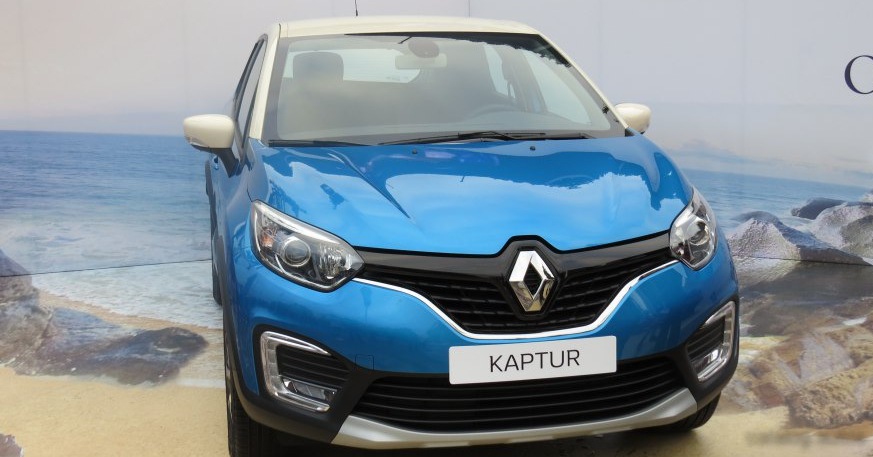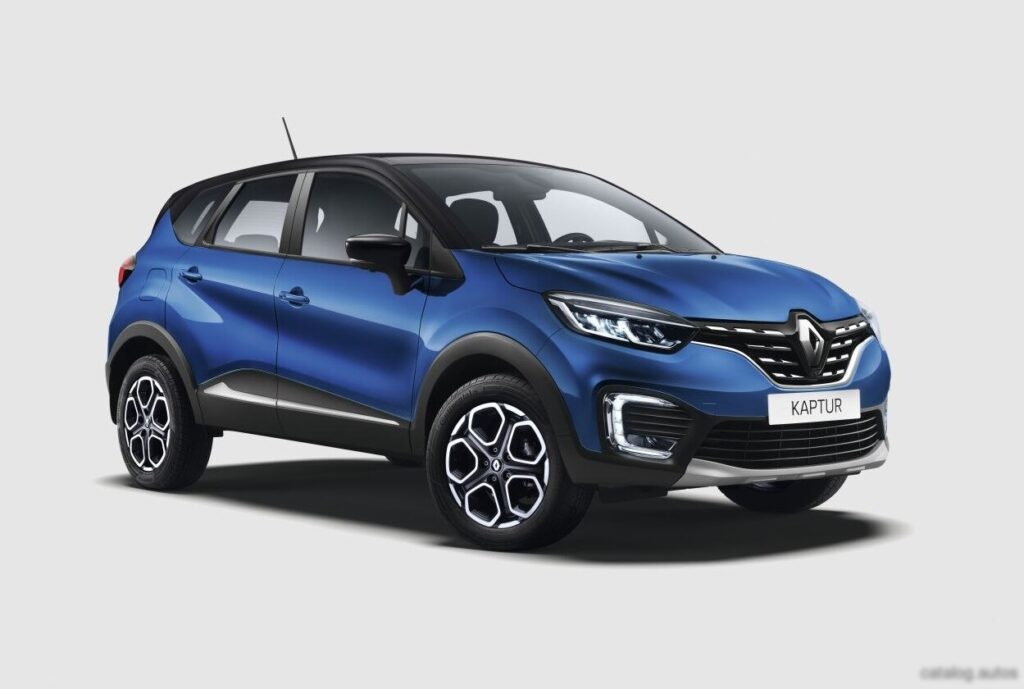
The Renault Kaptur, a subcompact crossover SUV, first appeared in 2016, primarily aimed at the Russian and Eastern European markets. The model underwent a significant facelift in May 2020, introducing updated styling, improved technology, and revised powertrain options. This article focuses on the 2020 facelifted Kaptur equipped with the 1.3 TCe (150 hp) engine paired with a CVT X-Tronic automatic transmission. This configuration represented a mid-range offering within the Kaptur lineup, balancing performance with fuel efficiency and ease of driving. It was positioned above the base engine options and below the more powerful, though less commonly available, variants.
Technical Specifications
| Brand | Renault |
| Model | Kaptur |
| Generation | Kaptur (facelift 2020) |
| Type (Engine) | 1.3 TCe (150 Hp) CVT X-Tronic |
| Start of production | May, 2020 |
| Powertrain Architecture | Internal Combustion engine |
| Body type | Crossover |
| Seats | 5 |
| Doors | 5 |
| Fuel consumption (urban) | 8.9 l/100 km (26.4 US mpg, 31.7 UK mpg, 11.2 km/l) |
| Fuel consumption (extra urban) | 6.1 l/100 km (38.6 US mpg, 46.3 UK mpg, 16.4 km/l) |
| Fuel consumption (combined) | 7.1 l/100 km (33.1 US mpg, 39.8 UK mpg, 14.1 km/l) |
| CO2 emissions | 165 g/km |
| Fuel Type | Petrol (Gasoline) |
| Acceleration 0 – 100 km/h | 10.1 sec |
| Acceleration 0 – 62 mph | 10.1 sec |
| Acceleration 0 – 60 mph | 9.6 sec |
| Maximum speed | 188 km/h (116.82 mph) |
| Emission standard | Euro 5 |
| Weight-to-power ratio | 9 kg/Hp, 110.9 Hp/tonne |
| Weight-to-torque ratio | 5.4 kg/Nm, 184.8 Nm/tonne |
| Power | 150 Hp @ 5250 rpm |
| Power per litre | 112.6 Hp/l |
| Torque | 250 Nm @ 1700 rpm (184.39 lb.-ft. @ 1700 rpm) |
| Engine layout | Front, Transverse |
| Engine Model/Code | H5H |
| Engine displacement | 1332 cm3 (81.28 cu. in.) |
| Number of cylinders | 4 |
| Engine configuration | Inline |
| Cylinder Bore | 72.21 mm (2.84 in.) |
| Piston Stroke | 81.41 mm (3.21 in.) |
| Compression ratio | 10.5:1 |
| Number of valves per cylinder | 4 |
| Fuel injection system | Direct injection |
| Engine aspiration | Turbocharger, Intercooler |
| Kerb Weight | 1353-1372 kg (2982.85 – 3024.74 lbs.) |
| Max. weight | 1820 kg (4012.41 lbs.) |
| Max load | 448-467 kg (987.67 – 1029.56 lbs.) |
| Trunk (boot) space – minimum | 387 l (13.67 cu. ft.) |
| Trunk (boot) space – maximum | 1200 l (42.38 cu. ft.) |
| Fuel tank capacity | 50 l (13.21 US gal | 11 UK gal) |
| Permitted trailer load with brakes (12%) | 1200 kg (2645.55 lbs.) |
| Permitted trailer load without brakes | 710 kg (1565.28 lbs.) |
| Length | 4333 mm (170.59 in.) |
| Width | 1813 mm (71.38 in.) |
| Height | 1613 mm (63.5 in.) |
| Wheelbase | 2673 mm (105.24 in.) |
| Front track | 1564 mm (61.57 in.) |
| Rear (Back) track | 1570 mm (61.81 in.) |
| Front overhang | 850 mm (33.46 in.) |
| Rear overhang | 808 mm (31.81 in.) |
| Ride height (ground clearance) | 205 mm (8.07 in.) |
| Drag coefficient (Cd) | 0.30 |
| Minimum turning circle (turning diameter) | 10.9 m (35.76 ft.) |
| Approach angle | 20° |
| Departure angle | 31° |
| Drivetrain Architecture | The Internal combustion engine (ICE) drives the front wheels of the vehicle. |
| Drive wheel | Front wheel drive |
| Number of gears and type of gearbox | 7 gears, automatic transmission CVT X-Tronic |
| Front suspension | Independent, type McPherson with coil spring and anti-roll bar |
| Rear suspension | Hydraulic elements, Semi-dependent beam with stabilizer lateral stability |
| Front brakes | Ventilated discs, 269×22 mm |
| Rear brakes | Drum, 229 mm |
| Assisting systems | ABS (Anti-lock braking system) |
| Steering type | Steering rack and pinion |
| Power steering | Electric Steering |
| Tires size | 215/65 R16; 215/60 R17 |
| Wheel rims size | 16; 17 |
INTRODUCTION
The 2020 Renault Kaptur facelift represented a significant update to the model, enhancing its appeal in the competitive subcompact crossover segment. The 1.3 TCe 150 hp CVT X-Tronic variant was a key part of this refresh, offering a balance of performance and efficiency. Built on the B0 platform, the Kaptur aimed to provide a practical and affordable option for families and individuals seeking a versatile vehicle. This particular engine and transmission combination was designed to appeal to buyers prioritizing comfort and ease of use over outright performance.
Powertrain & Engine Architecture
The heart of this Kaptur variant is the Renault H5H 1.3 TCe engine, a turbocharged, direct-injection four-cylinder gasoline engine. This engine utilizes a single-scroll turbocharger and intercooler to boost power and efficiency. The engine produces 150 horsepower at 5250 rpm and 250 Nm (184 lb-ft) of torque at 1700 rpm. The direct injection system ensures precise fuel delivery, contributing to improved combustion and reduced emissions. The engine features a timing chain for durability. Paired with this engine is the CVT X-Tronic automatic transmission, a continuously variable transmission known for its smooth operation and fuel efficiency. This CVT simulates gear changes through a wide range of ratios, optimizing engine speed for the driving conditions. Unlike traditional automatic transmissions with fixed gear ratios, the CVT provides a seamless power delivery.
Driving Characteristics
The 1.3 TCe 150 hp CVT Kaptur delivers adequate performance for everyday driving. Acceleration from 0-60 mph takes approximately 9.6 seconds, and the top speed is 116.82 mph. The CVT transmission prioritizes smooth acceleration and fuel economy over sporty responsiveness. While it doesn’t offer the immediate kick of a traditional automatic or a manual gearbox, it provides a comfortable and predictable driving experience. The CVT’s programming is tuned to mimic traditional gear shifts, reducing the “rubber band” feel sometimes associated with CVTs. Compared to the lower-powered engine options, the 1.3 TCe provides noticeably more punch, especially when merging onto highways or overtaking. However, it doesn’t match the performance of any potential higher-output variants that may have been offered in select markets.
Equipment & Trim Levels
The 1.3 TCe CVT Kaptur typically came equipped with a reasonable level of standard features. These included air conditioning, power windows and mirrors, a basic audio system with USB connectivity, and ABS brakes. Higher trim levels added features such as alloy wheels, a touchscreen infotainment system with navigation, rear parking sensors, and a rearview camera. Interior upholstery was typically cloth, with options for leatherette available on higher trims. The dashboard layout was functional and straightforward, with a focus on usability. Optional extras included a panoramic sunroof, automatic climate control, and advanced driver-assistance systems.
Chassis & Braking
The Kaptur’s chassis features a McPherson strut front suspension and a semi-independent torsion beam rear suspension. This setup provides a comfortable ride quality, absorbing bumps and imperfections in the road. The front suspension incorporates a stabilizer bar to reduce body roll during cornering. Braking duties are handled by ventilated discs at the front and drum brakes at the rear. ABS (Anti-lock Braking System) is standard, enhancing safety during emergency braking situations. The Kaptur’s ride height of 205 mm (8.07 inches) provides adequate ground clearance for navigating rough roads and uneven surfaces.
Market Reception & Comparison
The Renault Kaptur, and specifically the 1.3 TCe CVT variant, was generally well-received in its target markets. Critics praised its comfortable ride, spacious interior, and reasonable fuel economy. The CVT transmission was noted for its smoothness, although some reviewers found it lacking in responsiveness. Compared to other subcompact crossovers, the Kaptur offered a competitive price point and a good level of equipment. Fuel economy figures of around 33.1 US mpg combined were considered respectable for its class. Reliability reports were generally positive, with few major issues reported with the 1.3 TCe engine and CVT transmission.
Legacy
The Renault Kaptur, particularly the 1.3 TCe CVT version, has established itself as a reliable and practical choice in the used car market. The H5H engine has proven to be relatively durable, and the CVT transmission, while requiring regular fluid changes, has generally held up well over time. The Kaptur’s affordability and versatility continue to make it an attractive option for buyers seeking a budget-friendly crossover. Its simple mechanical design and readily available parts contribute to relatively low maintenance costs. As a result, the 2020 facelifted Kaptur with the 1.3 TCe engine remains a popular and well-regarded vehicle in the used car segment.