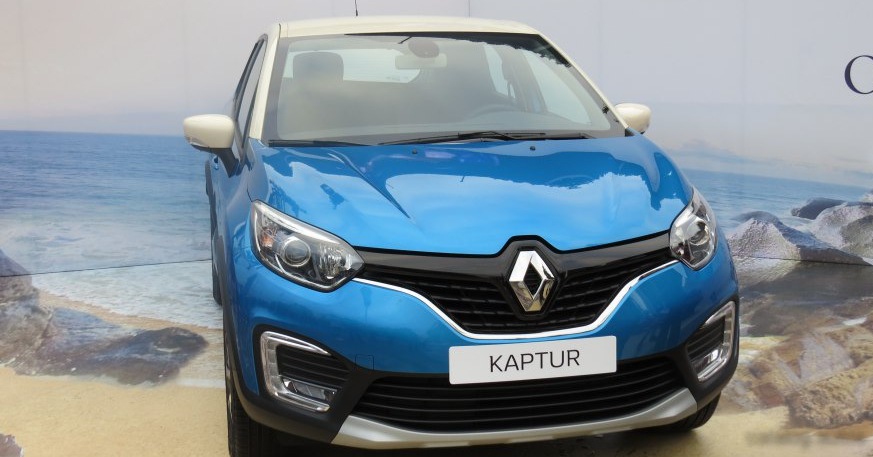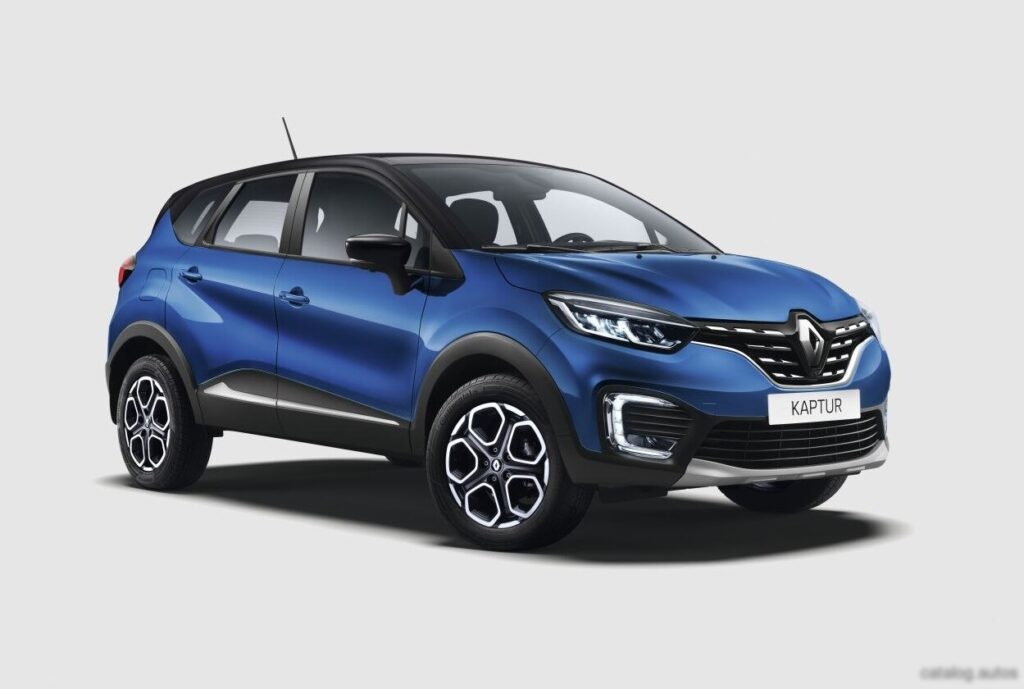
The Renault Kaptur, a subcompact crossover SUV, first appeared in 2016, primarily aimed at the Russian and Eastern European markets. The model underwent a significant facelift in May 2020, bringing updated styling and revised powertrain options. This article focuses on the 2020 facelifted Kaptur equipped with the 1.6-liter gasoline engine producing 114 horsepower, paired with a continuously variable transmission (CVT) marketed as X-Tronic. This configuration represented a mid-range offering within the Kaptur lineup, positioned between the base engine options and potentially more powerful, though less commonly available, variants. The Kaptur, while not officially sold in the United States, exemplifies Renault’s approach to the growing global demand for affordable and practical crossovers.
Technical Specifications
| Brand | Renault |
| Model | Kaptur |
| Generation | Kaptur (facelift 2020) |
| Type (Engine) | 1.6 (114 Hp) CVT X-Tronic |
| Start of production | May, 2020 |
| Powertrain Architecture | Internal Combustion engine |
| Body type | Crossover |
| Seats | 5 |
| Doors | 5 |
| Fuel consumption (urban) | 9.3 l/100 km (25.3 US mpg) |
| Fuel consumption (extra urban) | 6.2 l/100 km (37.9 US mpg) |
| Fuel consumption (combined) | 7.1 l/100 km (33.1 US mpg) |
| CO2 emissions | 168 g/km |
| Fuel Type | Petrol (Gasoline) |
| Acceleration 0 – 100 km/h | 12.9 sec |
| Acceleration 0 – 62 mph | 12.9 sec |
| Acceleration 0 – 60 mph | 12.3 sec |
| Maximum speed | 170 km/h (105.63 mph) |
| Emission standard | Euro 5 |
| Weight-to-power ratio | 11.3 kg/Hp |
| Weight-to-torque ratio | 8.3 kg/Nm |
| Power | 114 Hp @ 5500 rpm |
| Torque | 156 Nm @ 4000 rpm (115.06 lb.-ft. @ 4000 rpm) |
| Engine layout | Front, Transverse |
| Engine Model/Code | H4M |
| Engine displacement | 1598 cm3 (97.52 cu. in.) |
| Number of cylinders | 4 |
| Engine configuration | Inline |
| Cylinder Bore | 78 mm (3.07 in.) |
| Piston Stroke | 83.6 mm (3.29 in.) |
| Compression ratio | 10.5:1 |
| Number of valves per cylinder | 4 |
| Fuel injection system | Multi-port manifold injection |
| Engine aspiration | Naturally aspirated engine |
| Kerb Weight | 1291-1314 kg (2846.17 – 2896.87 lbs.) |
| Max. weight | 1762 kg (3884.55 lbs.) |
| Max load | 448-471 kg (987.67 – 1038.38 lbs.) |
| Trunk (boot) space – minimum | 387 l (13.67 cu. ft.) |
| Trunk (boot) space – maximum | 1200 l (42.38 cu. ft.) |
| Fuel tank capacity | 50 l (13.21 US gal | 11 UK gal) |
| Permitted trailer load with brakes (12%) | 1200 kg (2645.55 lbs.) |
| Permitted trailer load without brakes | 680 kg (1499.14 lbs.) |
| Length | 4333 mm (170.59 in.) |
| Width | 1813 mm (71.38 in.) |
| Height | 1613 mm (63.5 in.) |
| Wheelbase | 2673 mm (105.24 in.) |
| Front track | 1564 mm (61.57 in.) |
| Rear (Back) track | 1570 mm (61.81 in.) |
| Front overhang | 850 mm (33.46 in.) |
| Rear overhang | 808 mm (31.81 in.) |
| Ride height (ground clearance) | 205 mm (8.07 in.) |
| Drag coefficient (Cd) | 0.30 |
| Minimum turning circle (turning diameter) | 10.9 m (35.76 ft.) |
| Front suspension | Independent, type McPherson with coil spring and anti-roll bar |
| Rear suspension | Hydraulic elements, Semi-dependent beam with stabilizer lateral stability |
| Front brakes | Ventilated discs, 269×22 mm |
| Rear brakes | Drum, 229 mm |
| Drive wheel | Front wheel drive |
| Number of gears and type of gearbox | 6 gears, automatic transmission CVT X-Tronic |
| Tires size | 215/65 R16; 215/60 R17 |
| Wheel rims size | 16; 17 |
INTRODUCTION
The 2020 Renault Kaptur 1.6 CVT X-Tronic represents a key offering in Renault’s crossover range, specifically tailored for markets where compact, affordable SUVs are in high demand. The facelift brought a more modern aesthetic and refined interior, building upon the original Kaptur’s foundation which shared its platform (B0) with models like the Dacia/Renault Logan and Sandero. This version aimed to provide a comfortable and practical driving experience, prioritizing fuel efficiency and ease of use over outright performance. The CVT transmission was a significant feature, appealing to buyers seeking a smooth and effortless driving experience, particularly in urban environments.
Powertrain & Engine Architecture
At the heart of this Kaptur variant lies the Renault H4M 1.6-liter inline-four cylinder gasoline engine. This engine is a naturally aspirated unit, meaning it doesn’t utilize turbocharging or supercharging. It employs multi-point fuel injection, delivering fuel directly into the intake ports. The H4M engine is known for its relative simplicity and durability, making it a cost-effective choice for Renault. The engine produces 114 horsepower at 5500 rpm and 156 Nm (115 lb-ft) of torque at 4000 rpm. Paired with this engine is the X-Tronic CVT, a continuously variable transmission. Unlike traditional automatic transmissions with fixed gear ratios, a CVT uses a belt and pulley system to provide a virtually infinite number of gear ratios, optimizing engine efficiency and smoothness. The CVT is designed to keep the engine operating within its most efficient range, contributing to improved fuel economy.
Driving Characteristics
The 1.6-liter engine and CVT combination in the Kaptur delivers a comfortable, if not particularly exhilarating, driving experience. Acceleration from 0-60 mph takes around 12.3 seconds, and the top speed is limited to 170 km/h (105.63 mph). The CVT transmission contributes to smooth acceleration, avoiding the noticeable gear shifts of a traditional automatic. However, it can sometimes exhibit a “rubber band” effect, where engine revs rise quickly under hard acceleration without a corresponding increase in speed. The Kaptur’s suspension is tuned for comfort, absorbing bumps and imperfections in the road well. Compared to potential higher-output engine options (if available in certain markets), this 1.6L/CVT setup prioritizes fuel economy and ease of driving over sporty performance. Manual transmission versions, if offered, would likely provide a more engaging driving experience but at the expense of some convenience.
Equipment & Trim Levels
The 2020 Kaptur 1.6 CVT X-Tronic typically came equipped with a reasonable level of standard features. These generally included air conditioning, power windows, power door locks, and a basic audio system with USB connectivity. Higher trim levels, available as options, could add features such as alloy wheels, a touchscreen infotainment system with navigation, rear parking sensors, and a rearview camera. Interior upholstery was typically cloth, with the option of leatherette in higher trims. The dashboard layout was functional and straightforward, prioritizing usability over luxury. Safety features generally included ABS brakes, front airbags, and seatbelt pretensioners.
Chassis & Braking
The Kaptur utilizes a front-wheel-drive layout. The front suspension consists of an independent McPherson strut setup with coil springs and an anti-roll bar, providing a good balance of comfort and handling. The rear suspension employs a semi-independent torsion beam setup, which is a cost-effective solution for compact crossovers. Braking duties are handled by ventilated discs at the front and drum brakes at the rear. While adequate for everyday driving, the drum brakes at the rear are a cost-saving measure and don’t offer the same stopping power as disc brakes. The Kaptur’s steering is electrically assisted, providing light and easy steering feel.
Market Reception & Comparison
The Renault Kaptur, particularly the 1.6L CVT variant, was generally well-received in its target markets. Critics praised its comfortable ride, practical interior space, and fuel efficiency. However, some reviewers noted the engine’s lack of outright power and the CVT’s tendency to exhibit the “rubber band” effect. Compared to other subcompact crossovers available in those markets, the Kaptur offered a competitive combination of price, features, and fuel economy. The CVT transmission was a key selling point for buyers prioritizing convenience and smoothness. Reliability reports suggest the H4M engine is generally durable, but the CVT transmission, like all CVTs, requires regular fluid changes to ensure longevity.
Legacy
The Renault Kaptur, and specifically the 1.6L CVT variant, has established itself as a reliable and affordable crossover option in the used car market. The H4M engine is known for its relative simplicity, making it relatively easy and inexpensive to maintain. While the CVT transmission requires diligent maintenance, it generally proves reliable when properly cared for. The Kaptur’s practical interior space and comfortable ride continue to appeal to buyers seeking a versatile and economical vehicle. As a representative of Renault’s global crossover strategy, the Kaptur demonstrates the brand’s ability to deliver value and practicality to a wide range of customers.