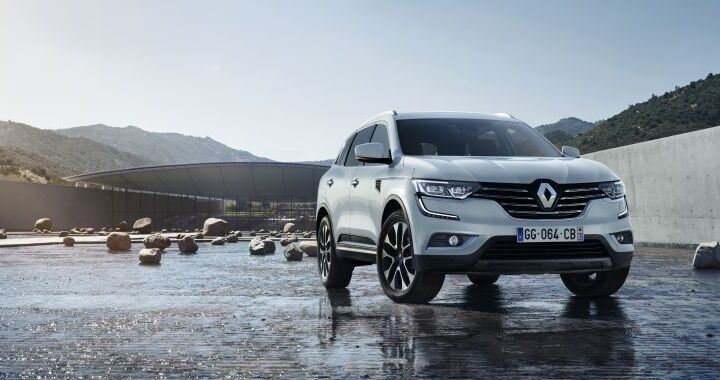
The Renault Koleos II 2.0 dCi 4×4, produced from July 2018 through 2019, represents a mid-cycle offering within the Koleos II generation (introduced in 2017). Positioned as a capable and practical SUV, it aimed to provide a blend of comfort, space, and all-wheel-drive capability within the European and international markets. This variant, powered by the 1.995-liter M9R diesel engine producing 175 horsepower, served as a popular choice for buyers seeking a balance between fuel efficiency and performance in a family-oriented vehicle. It sat in the mid-range of the Koleos II lineup, offering more power and capability than the base diesel options, but remaining more accessible than the higher-specification trims.
Technical Specifications
| Brand | Renault |
| Model | Koleos |
| Generation | Koleos II |
| Type (Engine) | 2.0 dCi (175 Hp) 4×4 |
| Start of production | July, 2018 |
| End of production | 2019 |
| Powertrain Architecture | Internal Combustion engine |
| Body type | SUV |
| Seats | 5 |
| Doors | 5 |
| Fuel consumption (urban) | 6 l/100 km (39.2 US mpg, 47.1 UK mpg, 16.7 km/l) |
| Fuel consumption (extra urban) | 4.9 l/100 km (48 US mpg, 57.6 UK mpg, 20.4 km/l) |
| Fuel consumption (combined) | 5.3 l/100 km (44.4 US mpg, 53.3 UK mpg, 18.9 km/l) |
| CO2 emissions | 140-148 g/km |
| Fuel Type | Diesel |
| Acceleration 0 – 100 km/h | 10.7 sec |
| Acceleration 0 – 62 mph | 10.7 sec |
| Acceleration 0 – 60 mph | 10.2 sec |
| Maximum speed | 202 km/h (125.52 mph) |
| Emission standard | Euro 6b |
| Weight-to-power ratio | 9.9 kg/Hp, 100.9 Hp/tonne |
| Weight-to-torque ratio | 4.6 kg/Nm, 219 Nm/tonne |
| Power | 175 Hp @ 3750 rpm |
| Power per litre | 87.7 Hp/l |
| Torque | 380 Nm @ 2000 rpm (280.27 lb.-ft. @ 2000 rpm) |
| Engine layout | Front, Transverse |
| Engine Model/Code | M9R |
| Engine displacement | 1995 cm3 (121.74 cu. in.) |
| Number of cylinders | 4 |
| Engine configuration | Inline |
| Number of valves per cylinder | 4 |
| Fuel injection system | Diesel Commonrail |
| Engine aspiration | Turbocharger, Intercooler |
| Engine oil capacity | 7.4 l (7.82 US qt | 6.51 UK qt) |
| Coolant | 7.9 l (8.35 US qt | 6.95 UK qt) |
| Kerb Weight | 1735 kg (3825.02 lbs.) |
| Max. weight | 2250 kg (4960.4 lbs.) |
| Max load | 515 kg (1135.38 lbs.) |
| Trunk (boot) space – minimum | 530 l (18.72 cu. ft.) |
| Trunk (boot) space – maximum | 1677 l (59.22 cu. ft.) |
| Fuel tank capacity | 60 l (15.85 US gal | 13.2 UK gal) |
| Max. roof load | 80 kg (176.37 lbs.) |
| Permitted trailer load with brakes (12%) | 2000 kg (4409.25 lbs.) |
| Permitted trailer load without brakes | 750 kg (1653.47 lbs.) |
| Permitted towbar download | 75 kg (165.35 lbs.) |
| Length | 4673 mm (183.98 in.) |
| Width | 1843 mm (72.56 in.) |
| Width with mirrors folded | 1864 mm (73.39 in.) |
| Width including mirrors | 2063 mm (81.22 in.) |
| Height | 1673 mm (65.87 in.) |
| Wheelbase | 2705 mm (106.5 in.) |
| Front track | 1591 mm (62.64 in.) |
| Rear (Back) track | 1586 mm (62.44 in.) |
| Front overhang | 930 mm (36.61 in.) |
| Rear overhang | 1038 mm (40.87 in.) |
| Ride height (ground clearance) | 210 mm (8.27 in.) |
| Minimum turning circle (turning diameter) | 11.4 m (37.4 ft.) |
| Drive wheel | All wheel drive (4×4) |
| Number of gears and type of gearbox | 6 gears, manual transmission |
| Front brakes | Ventilated discs |
| Rear brakes | Ventilated discs |
| Assisting systems | ABS (Anti-lock braking system) |
| Steering type | Steering rack and pinion |
| Tires size | 225/65 R17; 225/60 R18 |
| Wheel rims size | 17; 18 |
INTRODUCTION
The Renault Koleos II 2.0 dCi 4×4, launched in 2018, is a five-seater SUV built on the Common Module Family (CMF) platform, jointly developed by Renault-Nissan-Mitsubishi. This platform underpins several vehicles across the alliance, providing a foundation for a versatile and cost-effective vehicle architecture. The Koleos II represented a significant step up in terms of design, technology, and overall refinement compared to its predecessor. The 2.0 dCi 4×4 variant specifically targeted buyers who needed the added traction of all-wheel drive for varied weather conditions or occasional off-road use, while still prioritizing fuel economy and comfortable on-road driving.
Powertrain & Engine Architecture
At the heart of the Koleos II 2.0 dCi 4×4 lies the M9R engine, a 1.995-liter inline-four cylinder diesel engine. This engine is a common sight in Renault and Nissan vehicles, known for its robust construction and relatively good fuel efficiency. The M9R utilizes a common rail direct injection system, delivering fuel directly into the combustion chamber at extremely high pressure for optimized combustion. A turbocharger with an intercooler further enhances performance by forcing more air into the engine. The engine produces 175 horsepower at 3750 rpm and 380 Nm (280.27 lb.-ft.) of torque at 2000 rpm. This torque output provides good low-end grunt, making it suitable for towing and tackling varied terrain. The 4×4 system is typically an on-demand system, automatically engaging all-wheel drive when wheel slip is detected. The transmission is a 6-speed manual gearbox, offering precise shifts and driver control.
Driving Characteristics
The Koleos II 2.0 dCi 4×4 offers a comfortable and composed driving experience. While not a performance-oriented SUV, the 175 horsepower and 380 Nm of torque provide adequate acceleration for everyday driving and highway cruising. The 0-100 km/h (0-62 mph) time of 10.7 seconds is respectable for a vehicle of this size and weight. The manual transmission allows for greater driver engagement, but the gear ratios are tuned for fuel efficiency rather than outright speed. Compared to higher-output versions of the Koleos II, this variant feels less eager to accelerate, but it compensates with improved fuel economy. The all-wheel-drive system provides enhanced stability and traction, particularly on slippery surfaces. The suspension is tuned for comfort, absorbing bumps and imperfections in the road effectively.
Equipment & Trim Levels
The Koleos II 2.0 dCi 4×4 typically came equipped with a reasonable level of standard features. These included air conditioning, power windows, power mirrors, a touchscreen infotainment system with Bluetooth connectivity, and alloy wheels. Higher trim levels added features such as leather upholstery, heated front seats, a panoramic sunroof, a reversing camera, and advanced driver-assistance systems like automatic emergency braking and lane departure warning. Interior upholstery was typically cloth on the base models, with leather options available on higher trims. The dashboard layout is modern and functional, with a focus on ease of use.
Chassis & Braking
The Koleos II utilizes a MacPherson strut front suspension and a multi-link rear suspension, providing a good balance between ride comfort and handling. The all-wheel-drive system adds to the vehicle’s stability and control. Braking duties are handled by ventilated discs on all four wheels, providing ample stopping power. The Koleos II is equipped with ABS (Anti-lock Braking System) and electronic stability control as standard safety features. The steering is a rack and pinion system, offering precise and responsive steering feel.
Market Reception & Comparison
The Renault Koleos II 2.0 dCi 4×4 was generally well-received by automotive critics. It was praised for its spacious interior, comfortable ride, and capable all-wheel-drive system. However, some critics noted that the engine could feel underpowered at times, particularly when fully loaded. Compared to other SUVs in its class, such as the Nissan X-Trail and Peugeot 5008, the Koleos II offered a competitive level of equipment and value for money. Fuel economy was a strong point, with the 2.0 dCi engine achieving combined fuel consumption figures of around 5.3 l/100 km (44.4 US mpg). Reliability was generally good, although some owners reported minor issues with the infotainment system.
Legacy
The Renault Koleos II 2.0 dCi 4×4 remains a practical and affordable SUV in the used car market. The M9R diesel engine is known for its durability, although regular maintenance is essential to ensure long-term reliability. Common issues include diesel particulate filter (DPF) clogging and potential problems with the turbocharger. However, with proper care, this powertrain can provide many years of reliable service. The Koleos II 2.0 dCi 4×4 continues to appeal to buyers seeking a spacious, comfortable, and capable SUV at a reasonable price point.