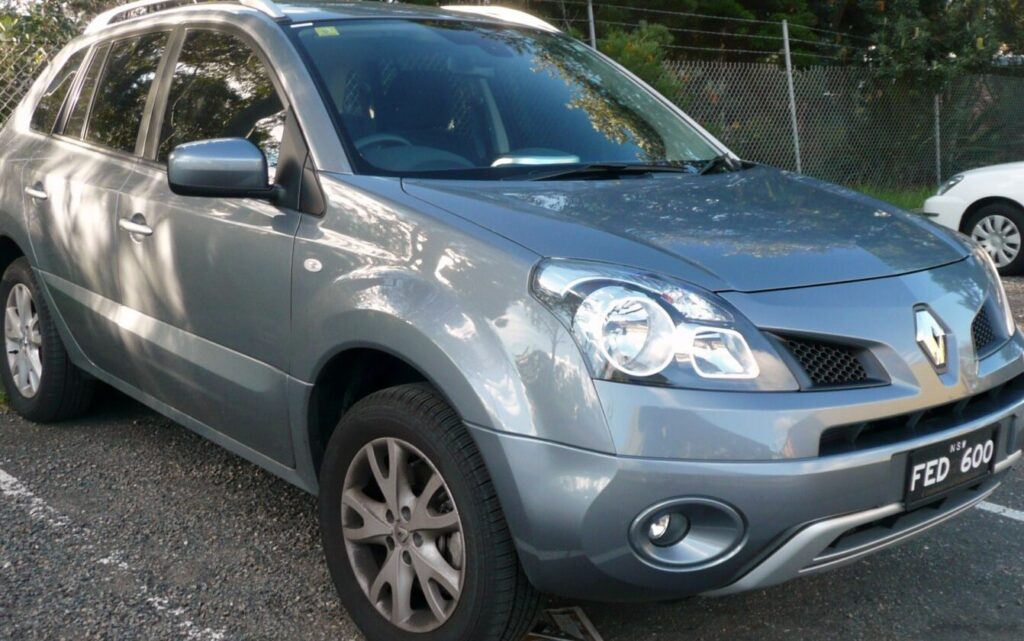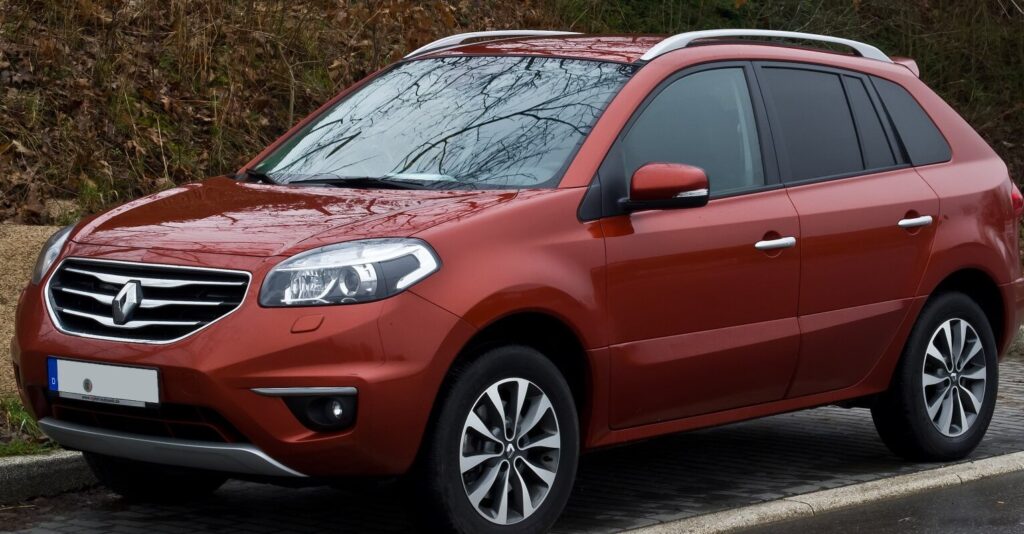
The Renault Koleos Phase II 2.0 (150 hp) 4×4, produced between 2011 and 2013, represented a significant update to Renault’s entry into the compact SUV segment. Positioned as a mid-range offering within the Koleos lineup, this variant aimed to balance fuel efficiency, all-weather capability, and a reasonable price point. It was primarily marketed in Europe and other international markets, offering a more affordable alternative to premium SUV brands. The Phase II updates brought styling revisions, improved interior materials, and refinements to the powertrain, building upon the foundation of the initial Koleos launched in 2008, which was co-developed with Nissan.
Technical Specifications
| Brand | Renault |
| Model | Koleos |
| Generation | Koleos (Phase II) |
| Type (Engine) | 2.0 (150 Hp) 4×4 |
| Start of production | 2011 |
| End of production | 2013 |
| Powertrain Architecture | Internal Combustion engine |
| Body type | SUV |
| Seats | 5 |
| Doors | 5 |
| Fuel consumption (urban) | 7.5 l/100 km (31.4 US mpg) |
| Fuel consumption (extra urban) | 5.7 l/100 km (41.3 US mpg) |
| Fuel consumption (combined) | 6.4 l/100 km (36.8 US mpg) |
| CO2 emissions | 166 g/km |
| Fuel Type | Diesel |
| Acceleration 0 – 100 km/h | 10.4 sec |
| Acceleration 0 – 62 mph | 10.4 sec |
| Acceleration 0 – 60 mph | 9.9 sec |
| Maximum speed | 182 km/h (113.09 mph) |
| Emission standard | Euro 5 |
| Weight-to-power ratio | 11 kg/Hp |
| Weight-to-torque ratio | 5.2 kg/Nm |
| Power | 150 Hp @ 4000 rpm |
| Torque | 320 Nm @ 2000 rpm (236.02 lb.-ft. @ 2000 rpm) |
| Engine layout | Front, Transverse |
| Engine Model/Code | M9R |
| Engine displacement | 1995 cm3 (121.74 cu. in.) |
| Number of cylinders | 4 |
| Engine configuration | Inline |
| Cylinder Bore | 84 mm (3.31 in.) |
| Piston Stroke | 90 mm (3.54 in.) |
| Compression ratio | 15.7:1 |
| Number of valves per cylinder | 4 |
| Fuel injection system | Diesel Commonrail |
| Engine aspiration | Turbocharger, Intercooler |
| Engine oil capacity | 7.4 l (7.82 US qt | 6.51 UK qt) |
| Coolant capacity | 8 l (8.45 US qt | 7.04 UK qt) |
| Kerb Weight | 1655 kg (3648.65 lbs.) |
| Max. weight | 2300 kg (5070.63 lbs.) |
| Max load | 645 kg (1421.98 lbs.) |
| Fuel tank capacity | 65 l (17.17 US gal | 14.3 UK gal) |
| Length | 4520 mm (177.95 in.) |
| Width | 1855 mm (73.03 in.) |
| Height | 1695 mm (66.73 in.) |
| Wheelbase | 2690 mm (105.91 in.) |
| Front track | 1545 mm (60.83 in.) |
| Rear track | 1550 mm (61.02 in.) |
| Minimum turning circle | 11.6 m (38.06 ft.) |
| Drive wheel | All wheel drive (4×4) |
| Number of gears | 6 |
| Gearbox type | Manual transmission |
| Front suspension | Independent, McPherson with coil spring and anti-roll bar |
| Rear suspension | Independent multi-link suspension |
| Front brakes | Ventilated discs |
| Rear brakes | Ventilated discs |
| Assisting systems | ABS (Anti-lock braking system) |
| Steering type | Steering rack and pinion |
| Tires size | 225/60 R17 99H |
| Wheel rims size | 6.5J x 17 |
Powertrain & Engine Architecture
The heart of the Koleos 2.0 4×4 is the Renault M9R engine, a 2.0-liter inline-four cylinder diesel. This engine utilizes a common rail direct injection system, delivering fuel at extremely high pressure for optimized combustion. A turbocharger with an intercooler is employed to boost power and torque, mitigating turbo lag and improving responsiveness. The M9R engine is known for its robust construction and relatively simple design, contributing to its longevity. The 150 horsepower output is achieved at 4000 rpm, while the substantial 320 Nm (236 lb-ft) of torque is available from just 2000 rpm, providing ample pulling power for everyday driving and towing. This variant was paired with a six-speed manual transmission, chosen for its efficiency and driver engagement. While an automatic transmission was offered on other Koleos trims, the 2.0 4×4 primarily came with the manual, appealing to drivers who preferred more control.
Driving Characteristics
The Koleos 2.0 4×4 with the manual transmission offers a reasonably engaging driving experience, particularly when compared to some of its automatic counterparts. The six-speed gearbox is well-matched to the engine’s torque curve, allowing for comfortable cruising on the highway and sufficient acceleration for overtaking maneuvers. The 0-60 mph time of around 9.9 seconds is respectable for a vehicle of this size and weight. The all-wheel-drive system provides enhanced traction in slippery conditions, making it a capable vehicle for inclement weather or light off-road use. However, it’s not designed for serious off-roading. Compared to the higher-output 2.5-liter petrol engine available in some markets, the 2.0 diesel prioritizes fuel economy and low-end torque over outright performance. The manual transmission also provides a more connected feel than the automatic, appealing to drivers who enjoy a more involved driving experience.
Equipment & Trim Levels
The Koleos 2.0 4×4 typically came equipped with a solid array of standard features. These included air conditioning, power windows and mirrors, a CD/radio system with auxiliary input, and alloy wheels. Safety features such as ABS, electronic brakeforce distribution, and front airbags were also standard. Higher trim levels, often denoted by names like “Expression” or “Dynamique,” added features such as automatic climate control, rain-sensing wipers, a sunroof, leather upholstery, and a more advanced audio system with navigation. Optional extras included parking sensors, a rear-view camera, and a panoramic sunroof.
Chassis & Braking
The Koleos Phase II utilizes an independent suspension setup at all four corners. The front suspension employs McPherson struts with a coil spring and anti-roll bar, while the rear features a multi-link suspension. This configuration provides a comfortable ride quality and good handling characteristics. Braking duties are handled by ventilated discs on all four wheels, providing ample stopping power. The ABS system helps to prevent wheel lockup during hard braking, enhancing safety. The steering is a rack and pinion system, offering precise and responsive control.
Market Reception & Comparison
The Renault Koleos 2.0 4×4 was generally well-received by automotive critics as a practical and capable SUV. It was praised for its comfortable ride, spacious interior, and fuel-efficient diesel engine. However, some critics noted that the interior design was somewhat bland and that the handling wasn’t as sporty as some of its competitors. Compared to other trims in the Koleos lineup, the 2.0 4×4 offered a good balance of performance and economy. The petrol versions provided more power but were less fuel-efficient, while the lower-powered diesel variants were more affordable but lacked the same level of performance. Against competitors like the Nissan Qashqai, Hyundai ix35, and Kia Sportage, the Koleos offered a compelling package, particularly for buyers seeking a diesel-powered SUV with all-wheel drive.
Legacy
The Renault Koleos 2.0 4×4 has proven to be a relatively reliable vehicle in the used car market. The M9R diesel engine is known for its durability, provided it has been properly maintained. Common issues include diesel particulate filter (DPF) problems, particularly on vehicles that have primarily been used for short journeys. Regular servicing and the use of high-quality diesel fuel are essential for maintaining the health of the DPF. Overall, the Koleos 2.0 4×4 remains a viable option for buyers seeking an affordable and capable SUV with all-wheel drive, offering a good blend of practicality, fuel efficiency, and reliability.