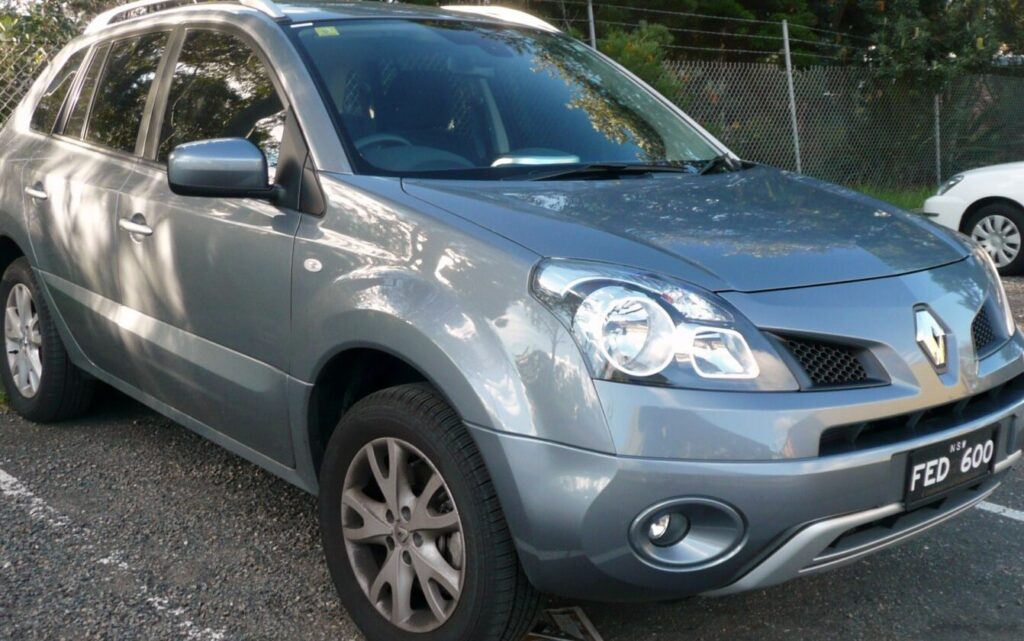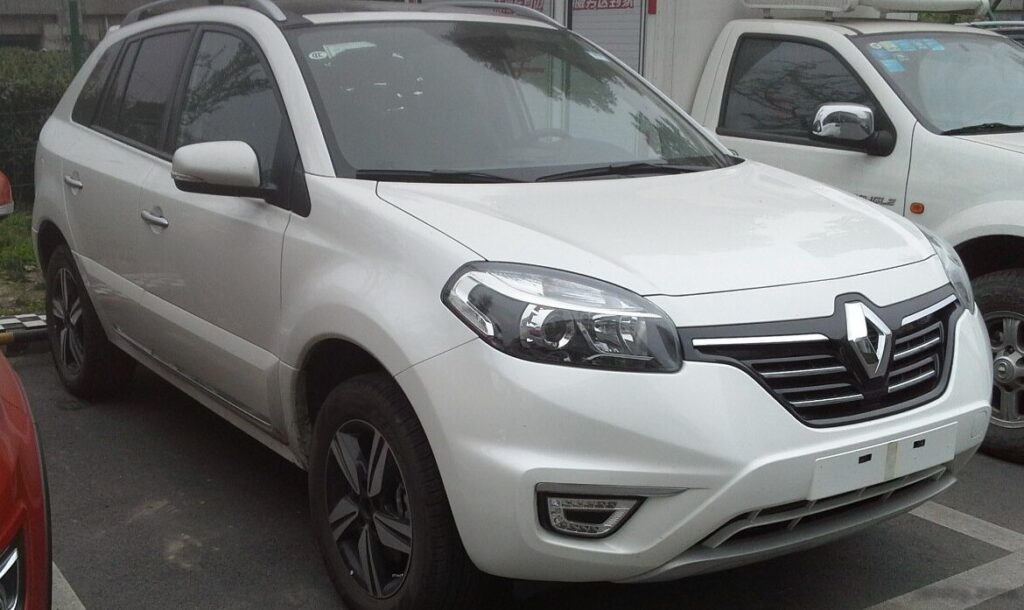
The Renault Koleos Phase III, produced from 2013 to 2016, represented a significant update to Renault’s mid-size SUV offering. Positioned as a more premium alternative to the Kadjar, the Koleos aimed to compete with established players like the Nissan X-Trail and Hyundai Santa Fe. The 2.0 dCi 173 horsepower, four-wheel-drive variant occupied a mid-to-high position within the Koleos lineup, offering a balance of performance, capability, and refinement. It was primarily marketed in Europe and other international markets, offering a compelling package for families seeking a spacious and capable SUV.
Technical Specifications
| Brand | Renault |
| Model | Koleos |
| Generation | Koleos (Phase III) |
| Type (Engine) | 2.0 dCi (173 Hp) 4×4 |
| Start of production | 2013 |
| End of production | 2016 |
| Powertrain Architecture | Internal Combustion engine |
| Body type | SUV |
| Seats | 5 |
| Doors | 5 |
| Fuel consumption (urban) | 7.5 l/100 km (31.4 US mpg) |
| Fuel consumption (extra urban) | 5.7 l/100 km (41.3 US mpg) |
| Fuel consumption (combined) | 6.4 l/100 km (36.8 US mpg) |
| CO2 emissions | 166 g/km |
| Fuel Type | Diesel |
| Acceleration 0 – 100 km/h | 9.9 sec |
| Acceleration 0 – 62 mph | 9.9 sec |
| Acceleration 0 – 60 mph | 9.4 sec |
| Maximum speed | 191 km/h (118.68 mph) |
| Emission standard | Euro 5 |
| Weight-to-power ratio | 10 kg/Hp |
| Power | 173 Hp |
| Power per litre | 86.7 Hp/l |
| Engine layout | Front, Transverse |
| Engine Model/Code | M9R |
| Engine displacement | 1995 cm3 (121.74 cu. in.) |
| Engine configuration | Inline |
| Fuel injection system | Diesel Commonrail |
| Engine aspiration | Turbocharger, Intercooler |
| Engine oil capacity | 7.4 l (7.82 US qt | 6.51 UK qt) |
| Coolant capacity | 7.5 l (7.93 US qt | 6.6 UK qt) |
| Kerb Weight | 1730 kg (3814 lbs.) |
| Max. weight | 2250 kg (4960.4 lbs.) |
| Max load | 520 kg (1146.4 lbs.) |
| Trunk (boot) space – minimum | 450 l (15.89 cu. ft.) |
| Trunk (boot) space – maximum | 1380 l (48.73 cu. ft.) |
| Fuel tank capacity | 65 l (17.17 US gal | 14.3 UK gal) |
| Length | 4520 mm (177.95 in.) |
| Width | 1855 mm (73.03 in.) |
| Minimum turning circle | 11.6 m (38.06 ft.) |
| Drive wheel | All wheel drive (4×4) |
| Number of gears | 6 |
| Gearbox type | Manual transmission |
| Front brakes | Ventilated discs |
| Rear brakes | Disc |
| Assisting systems | ABS (Anti-lock braking system) |
| Steering type | Steering rack and pinion |
| Tires size | 225/55 R18 |
| Wheel rims size | 18 |
Powertrain & Engine Architecture
The heart of the Koleos 2.0 dCi 173 was the M9R engine, a 2.0-liter inline-four diesel. This engine was a mainstay in the Renault-Nissan alliance, known for its robust construction and relatively good refinement. The M9R featured a common-rail direct injection system, delivering fuel at extremely high pressures for optimized combustion. A turbocharger with an intercooler further enhanced performance, boosting power output to 173 horsepower and 258 lb-ft of torque. The six-speed manual transmission was the standard offering for this variant, providing drivers with full control over gear selection. The engine’s layout was transverse, meaning it was mounted sideways in the engine bay, a common configuration for front-wheel-drive and all-wheel-drive vehicles. The M9R engine was known for its durability, but like many modern diesels, it could be susceptible to issues with the diesel particulate filter (DPF) if not properly maintained with regular long journeys.
Driving Characteristics
The 2.0 dCi 173 hp engine, paired with the six-speed manual transmission, provided a reasonably engaging driving experience. Acceleration from 0 to 60 mph took around 9.4 seconds, which was competitive for the segment but not particularly sporty. The engine delivered a good amount of low-end torque, making it easy to navigate city streets and tackle inclines. On the highway, the Koleos felt stable and comfortable, with the all-wheel-drive system providing enhanced grip and confidence in adverse weather conditions. Compared to the lower-powered 1.6 dCi variants, the 2.0 dCi offered noticeably more punch, while remaining more economical than the higher-output versions. The manual transmission allowed for precise gear changes, although the shift action could feel a bit notchy at times. The gear ratios were well-chosen, providing a good balance between acceleration and fuel efficiency.
Equipment & Trim Levels
The Koleos 2.0 dCi 173 4×4 typically came with a generous level of standard equipment. This included air conditioning, a CD player with MP3 compatibility, electric windows and mirrors, and remote central locking. Higher trim levels added features such as leather upholstery, a panoramic sunroof, a navigation system, and parking sensors. Safety features were also comprehensive, including ABS, electronic stability control, and multiple airbags. Interior upholstery was typically cloth on the base models, with leather options available on higher trims. The dashboard layout was functional and well-designed, with a clear instrument cluster and intuitive controls. Optional extras included metallic paint, upgraded audio systems, and a tow hitch.
Chassis & Braking
The Koleos Phase III utilized a MacPherson strut front suspension and a multi-link rear suspension, providing a comfortable and controlled ride. The all-wheel-drive system employed a viscous coupling, automatically distributing torque between the front and rear axles as needed. This system provided enhanced traction on slippery surfaces without requiring driver intervention. The Koleos 2.0 dCi 173 was equipped with ventilated disc brakes at the front and solid disc brakes at the rear. ABS (Anti-lock Braking System) was standard, ensuring safe and effective braking performance. The steering was a rack-and-pinion system, providing precise and responsive handling. Stabilizer bars were fitted to both the front and rear axles to reduce body roll during cornering.
Market Reception & Comparison
The Renault Koleos 2.0 dCi 173 4×4 received generally positive reviews from automotive critics. It was praised for its spacious interior, comfortable ride, and capable all-wheel-drive system. However, some critics noted that the interior materials weren’t quite as premium as those found in some of its competitors. Fuel economy was considered to be good for a vehicle of its size and type, averaging around 36.8 US mpg in combined driving. Reliability was generally good, although some owners reported issues with the DPF and electronic systems. Compared to the lower-powered 1.6 dCi variants, the 2.0 dCi offered a significant performance boost, making it a more appealing option for drivers who frequently travel long distances or tow trailers.
Legacy
The Renault Koleos Phase III 2.0 dCi 173 4×4 remains a relatively popular choice in the used car market. The M9R engine, while requiring diligent maintenance, is known for its longevity. The all-wheel-drive system continues to be a valuable asset for buyers in regions with harsh winters or challenging road conditions. While newer SUVs offer more advanced technology and features, the Koleos Phase III still represents a solid and dependable option for those seeking a spacious, capable, and affordable SUV. Parts availability is generally good, and maintenance costs are reasonable, making it a practical choice for budget-conscious buyers.