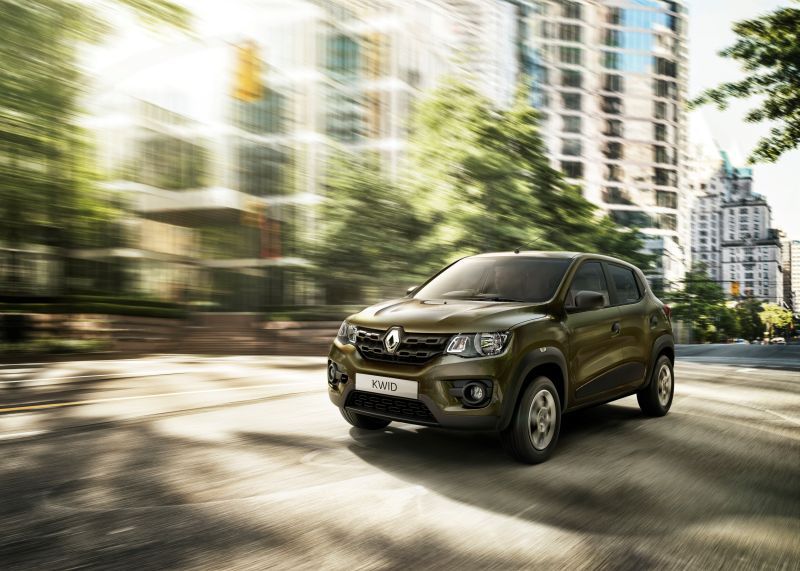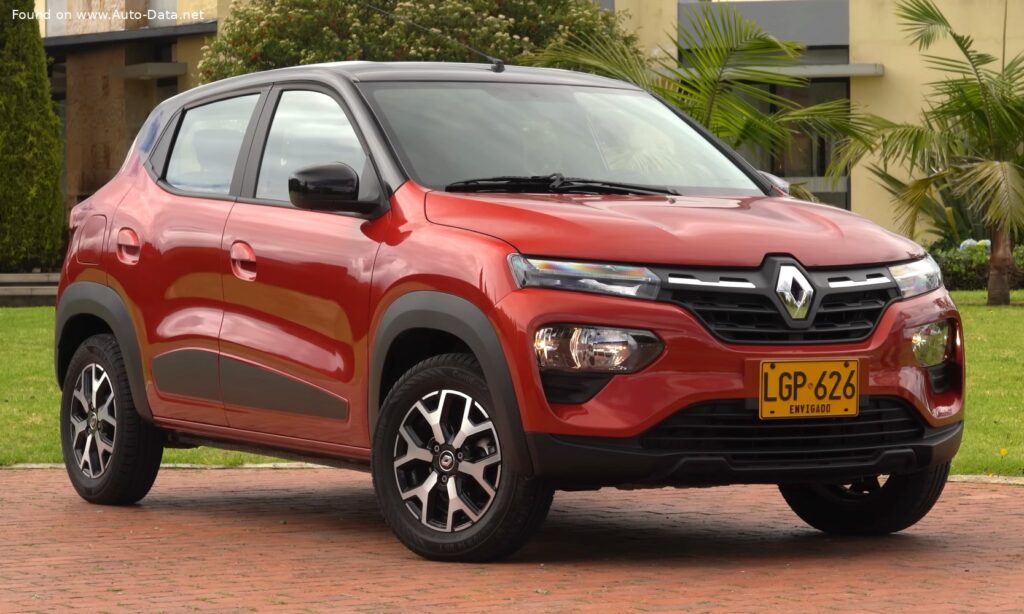
The Renault Kwid is a subcompact crossover SUV produced by the French manufacturer Renault. Introduced in India in 2015, the Kwid was specifically designed for the emerging markets, offering an affordable and practical vehicle option. The Phase II update, launched in November 2019, brought with it styling revisions, improved safety features, and refinements to the powertrain. While not officially sold in the United States, the Kwid represents a significant part of Renault’s strategy to capture market share in price-sensitive regions like India, South Africa, and Latin America. This article details the specifications and characteristics of the 2019 Renault Kwid 1.0 (68 Hp) model.
Renault KWID (Phase II, 2019) 1.0: Overview
The Kwid occupies a unique niche as a crossover designed to appeal to first-time car buyers and those seeking a budget-friendly, yet relatively spacious and versatile vehicle. The Phase II model builds upon the original Kwid’s foundation, addressing some of the initial criticisms regarding safety and refinement. It’s positioned as an entry-level vehicle, competing with other small hatchbacks and crossovers in its target markets. The 1.0-liter engine variant provides a balance between fuel efficiency and adequate performance for urban driving conditions.
Engine & Performance
The 2019 Renault Kwid 1.0 is powered by a 999 cc (60.96 cubic inches) inline three-cylinder petrol engine. This naturally aspirated engine produces 68 horsepower at 5550 rpm and 91 Nm (67.12 lb-ft) of torque at 4250 rpm. The engine utilizes a multi-port manifold fuel injection system. While not a powerhouse, the engine provides sufficient power for typical city driving and light highway use. The power-to-weight ratio is 10.8 kg/Hp, and the torque-to-weight ratio is 8.1 kg/Nm, contributing to a reasonably responsive driving experience considering its price point. Maximum speed is rated at 152 km/h (94.45 mph). Fuel economy figures are noteworthy, with combined fuel consumption rated at 4.7 l/100 km (50 US mpg or 60.1 UK mpg). Urban fuel consumption is 5.9 l/100 km (39.9 US mpg), and extra-urban consumption is 4.1 l/100 km (57.4 US mpg). CO2 emissions are rated at 112 g/km.
Design & Features
The Kwid is a five-door, five-seat crossover with a distinctive and somewhat rugged appearance. The Phase II update included minor cosmetic changes, such as revised front and rear bumpers, updated grille designs, and new alloy wheel options. The vehicle’s relatively high ground clearance of 180 mm (7.09 inches) provides good visibility and the ability to navigate rougher road surfaces, a common requirement in many of its target markets. Inside, the Kwid offers a basic but functional interior. Features typically include manual air conditioning, power steering, and a basic audio system. Safety features, which were enhanced in the Phase II model, include ABS (Anti-lock Braking System) and driver and passenger airbags. The Kwid’s compact dimensions – 3731 mm (146.89 in) in length, 1579 mm (62.17 in) in width, and 1513 mm (59.57 in) in height – make it easy to maneuver in congested urban environments.
Technical Specifications
| Brand | Renault |
| Model | KWID |
| Generation | KWID (Phase II, 2019) |
| Type (Engine) | 1.0 (68 Hp) |
| Start of production | November, 2019 |
| Powertrain Architecture | Internal Combustion engine |
| Body type | Crossover |
| Seats | 5 |
| Doors | 5 |
| Fuel consumption (urban) | 5.9 l/100 km (39.9 US mpg) |
| Fuel consumption (extra urban) | 4.1 l/100 km (57.4 US mpg) |
| Fuel consumption (combined) | 4.7 l/100 km (50 US mpg) |
| CO2 emissions | 112 g/km |
| Fuel Type | Petrol (Gasoline) |
| Maximum speed | 152 km/h (94.45 mph) |
| Weight-to-power ratio | 10.8 kg/Hp |
| Weight-to-torque ratio | 8.1 kg/Nm |
| Power | 68 Hp @ 5550 rpm |
| Torque | 91 Nm @ 4250 rpm (67.12 lb.-ft. @ 4250 rpm) |
| Engine layout | Front, Transverse |
| Engine displacement | 999 cm3 (60.96 cu. in.) |
| Number of cylinders | 3 |
| Engine configuration | Inline |
| Number of valves per cylinder | 4 |
| Fuel injection system | Multi-port manifold injection |
| Engine aspiration | Naturally aspirated |
| Kerb Weight | 736-758 kg (1622.6 – 1671.1 lbs.) |
| Max. weight | 1168 kg (2575 lbs.) |
| Max load | 410-432 kg (903.9 – 952.4 lbs.) |
| Fuel tank capacity | 28 l (7.4 US gal | 6.16 UK gal) |
| Length | 3731 mm (146.89 in.) |
| Width | 1579 mm (62.17 in.) |
| Height | 1513 mm (59.57 in.) |
| Wheelbase | 2422 mm (95.35 in.) |
| Front track | 1387 mm (54.61 in.) |
| Rear track | 1382 mm (54.41 in.) |
| Rear overhang | 607 mm (23.9 in.) |
| Ride height (ground clearance) | 180 mm (7.09 in.) |
| Drivetrain | Front wheel drive |
| Number of gears | 5 gears, manual transmission |
| Front suspension | Independent type McPherson |
| Rear suspension | Torsion |
| Front brakes | Disc |
| Rear brakes | Drum |
| Assisting systems | ABS (Anti-lock braking system) |
| Steering type | Steering rack and pinion |
| Power steering | Electric Steering |
| Tires size | 165/70 R14 |
| Wheel rims size | 14 |
The Renault Kwid, particularly the Phase II 1.0 variant, represents a compelling option for budget-conscious buyers in emerging markets. Its combination of affordability, fuel efficiency, and relatively spacious interior makes it a popular choice for those seeking a practical and reliable vehicle for everyday use. While not available in the US market, it exemplifies Renault’s commitment to providing accessible transportation solutions globally.