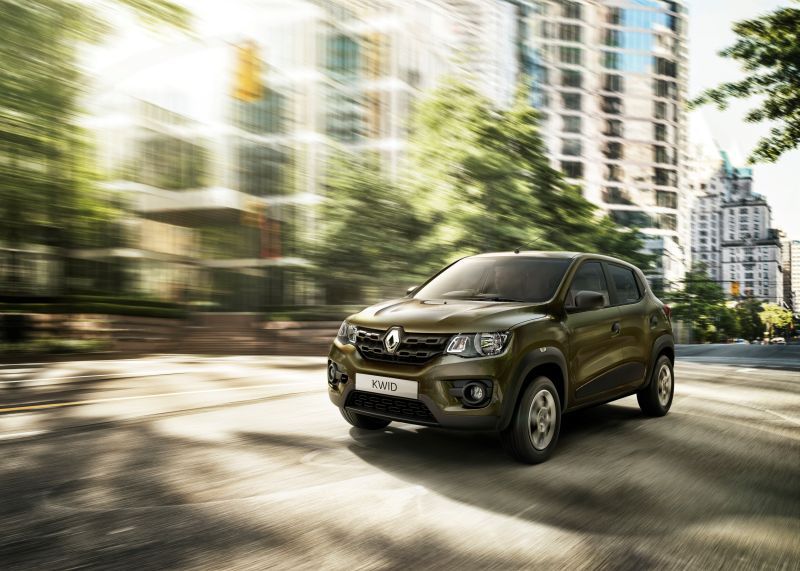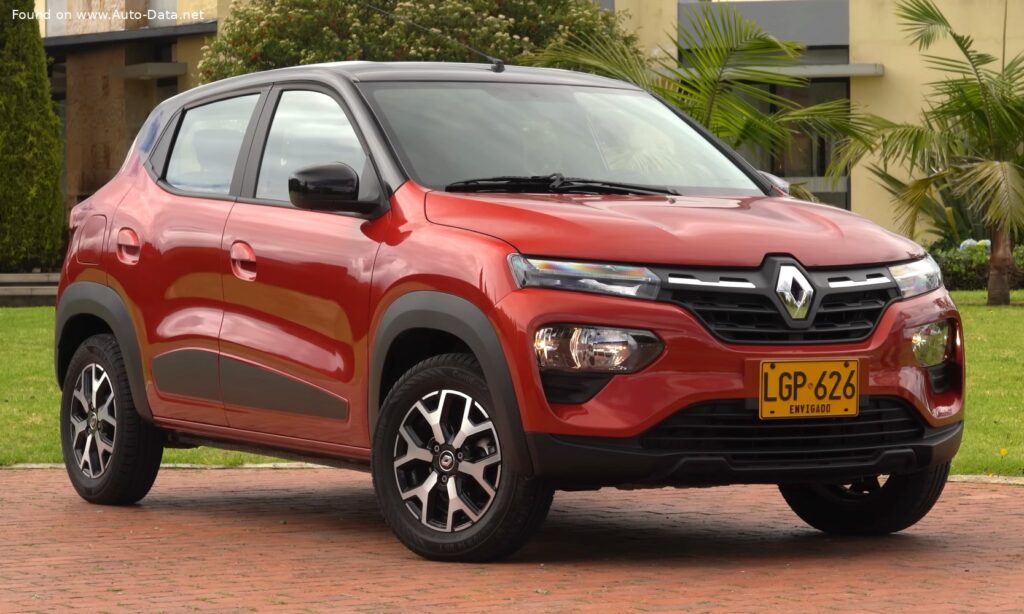
The Renault Kwid is a subcompact crossover SUV produced by the French manufacturer Renault. Introduced in India in 2015, the Kwid was specifically designed for the emerging markets, offering an affordable and practical vehicle option. The Phase II update, launched in November 2019, brought with it styling revisions, enhanced safety features, and improvements to the powertrain. This article focuses on the 2019 Kwid 1.0, equipped with a 68 horsepower engine and an automated manual transmission (AMT), detailing its specifications and characteristics. While not officially sold in the United States, understanding the Kwid provides insight into the evolving automotive landscape of developing nations and Renault’s strategy for those markets.
Renault Kwid (Phase II, 2019) 1.0: An Overview
The Kwid occupies a unique niche as a budget-friendly crossover, designed to appeal to first-time car buyers and those seeking an economical and versatile vehicle. The Phase II model builds upon the original Kwid’s success, addressing some of the initial criticisms and enhancing its overall appeal. It’s important to note that the Kwid’s design and features are tailored to the specific needs and preferences of its target market, prioritizing affordability and practicality over outright performance or luxury. The 1.0-liter engine and AMT transmission combination aims to provide a balance between fuel efficiency and ease of driving.
Engine & Performance
The 2019 Renault Kwid 1.0 is powered by a 999cc inline three-cylinder petrol engine, producing 68 horsepower at 5550 rpm and 91 Nm (67.12 lb-ft) of torque at 4250 rpm. This naturally aspirated engine utilizes a multi-port fuel injection system. While not a powerhouse, the engine provides adequate performance for urban driving and light highway use. The power-to-weight ratio of 11.2 kg/Hp and torque-to-weight ratio of 8.3 kg/Nm contribute to a reasonably responsive driving experience, especially considering the vehicle’s low kerb weight of 759 kg (1673.31 lbs). The engine’s specific output is 68.1 horsepower per liter. The Kwid achieves a maximum speed of 152 km/h (94.45 mph). The five-speed AMT transmission offers the convenience of automatic shifting without the complexity and cost of a traditional automatic gearbox. Fuel economy is a key strength, with combined fuel consumption rated at 4.4 l/100 km (53.5 US mpg or 64.2 UK mpg), and CO2 emissions of 104 g/km.
Design & Features
The Renault Kwid is a five-door, five-seater crossover with a distinctive and somewhat rugged appearance. The Phase II update included minor cosmetic changes, such as revised front and rear bumpers, and updated interior trim. The vehicle’s relatively high ground clearance of 180 mm (7.09 in) provides good visibility and the ability to navigate rough roads, a significant advantage in many of its target markets. The Kwid’s dimensions are 3731 mm (146.89 in) in length, 1579 mm (62.17 in) in width, and 1513 mm (59.57 in) in height, with a wheelbase of 2422 mm (95.35 in). Safety features, while basic, were improved in the Phase II model and include ABS (Anti-lock Braking System). The interior is functional and designed for durability, with a focus on providing essential features at an affordable price point. The Kwid’s compact size makes it easy to maneuver in congested urban environments, while its crossover body style offers a degree of practicality and versatility.
Technical Specifications
| Brand | Renault |
| Model | KWID |
| Generation | KWID (Phase II, 2019) |
| Type (Engine) | 1.0 (68 Hp) Automatic |
| Start of production | November, 2019 |
| Powertrain Architecture | Internal Combustion engine |
| Body type | Crossover |
| Seats | 5 |
| Doors | 5 |
| Fuel consumption (urban) | 5.1 l/100 km (46.1 US mpg, 55.4 UK mpg, 19.6 km/l) |
| Fuel consumption (extra urban) | 4 l/100 km (58.8 US mpg, 70.6 UK mpg, 25 km/l) |
| Fuel consumption (combined) | 4.4 l/100 km (53.5 US mpg, 64.2 UK mpg, 22.7 km/l) |
| CO2 emissions | 104 g/km |
| Fuel Type | Petrol (Gasoline) |
| Maximum speed | 152 km/h (94.45 mph) |
| Weight-to-power ratio | 11.2 kg/Hp |
| Weight-to-torque ratio | 8.3 kg/Nm |
| Power | 68 Hp @ 5550 rpm |
| Power per litre | 68.1 Hp/l |
| Torque | 91 Nm @ 4250 rpm (67.12 lb.-ft. @ 4250 rpm) |
| Engine layout | Front, Transverse |
| Engine displacement | 999 cm3 (60.96 cu. in.) |
| Number of cylinders | 3 |
| Engine configuration | Inline |
| Number of valves per cylinder | 4 |
| Fuel injection system | Multi-port manifold injection |
| Engine aspiration | Naturally aspirated engine |
| Kerb Weight | 759 kg (1673.31 lbs) |
| Max. weight | 1169 kg (2577.2 lbs) |
| Max load | 410 kg (903.9 lbs) |
| Fuel tank capacity | 28 l (7.4 US gal | 6.16 UK gal) |
| Length | 3731 mm (146.89 in) |
| Width | 1579 mm (62.17 in) |
| Height | 1513 mm (59.57 in) |
| Wheelbase | 2422 mm (95.35 in) |
| Front track | 1387 mm (54.61 in) |
| Rear track | 1382 mm (54.41 in) |
| Rear overhang | 607 mm (23.9 in) |
| Ride height (ground clearance) | 180 mm (7.09 in) |
| Drivetrain Architecture | Front wheel drive, Internal Combustion engine |
| Drive wheel | Front wheel drive |
| Number of gears and type of gearbox | 5 gears, automatic transmission AMT |
| Front suspension | Independent type McPherson |
| Rear suspension | Torsion |
| Front brakes | Disc |
| Rear brakes | Drum |
| Assisting systems | ABS (Anti-lock braking system) |
| Steering type | Steering rack and pinion |
| Power steering | Electric Steering |
| Tires size | 165/70 R14 |
| Wheel rims size | 14 |
The Renault Kwid, particularly the Phase II 1.0 Automatic, represents a significant offering in the entry-level crossover segment in markets where affordability and practicality are paramount. While not designed for the American market, its success demonstrates Renault’s ability to cater to the specific needs of emerging economies and provides a compelling example of value-engineered automotive design.