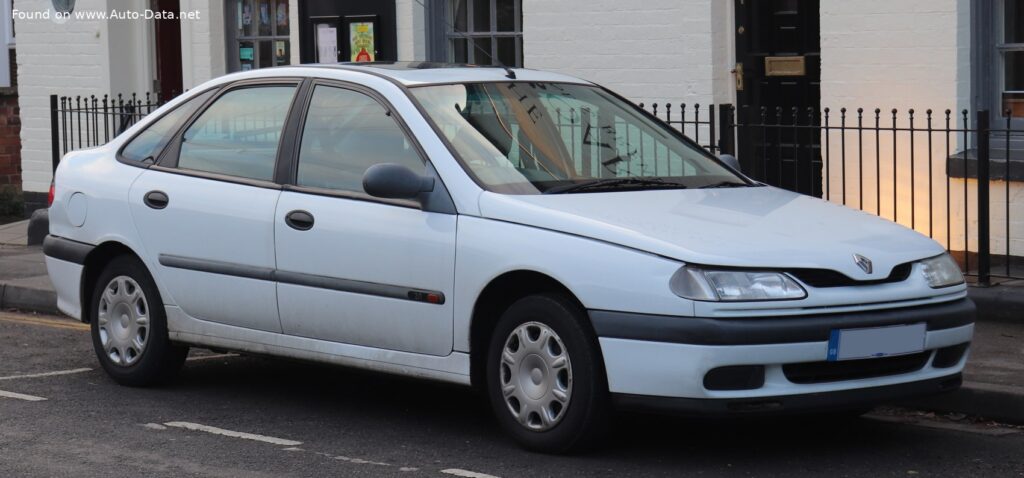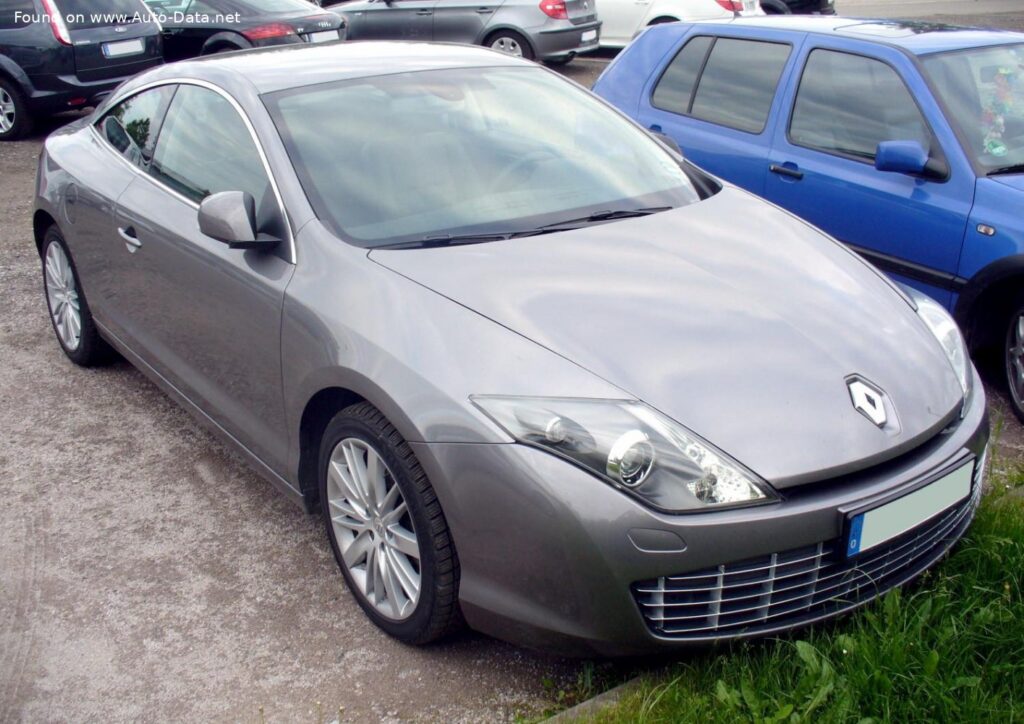
The Renault Laguna Coupe 3.0 dCi V6 FAP (235 Hp) GT Automatic represents a significant, yet often overlooked, chapter in the French automaker’s pursuit of a more premium image during the late 2000s. Launched in 2008 as part of the third-generation Laguna family, this elegant two-door model was designed to elevate Renault’s presence in the competitive European D-segment coupe market. While never officially sold in the United States, the Laguna Coupe was a sophisticated offering aimed at discerning European buyers seeking a blend of distinctive style, refined performance, and advanced technology, all wrapped in a package that exuded a sense of grand touring capability. Its production run from 2008 to 2012 saw it positioned as a halo car for the Laguna range, demonstrating Renault’s engineering prowess and design ambition, particularly with its powerful diesel V6 engine and automatic transmission, making it a compelling alternative to established German rivals in its home market.
The Renault Laguna Coupe: A European Grand Tourer
The Renault Laguna Coupe, particularly in its 3.0 dCi V6 FAP (235 Hp) GT Automatic guise, was a testament to Renault’s ambition to move upscale. Following in the footsteps of previous stylish Renault coupes like the Fuego and the Avantime, the Laguna Coupe sought to blend French elegance with modern performance. Its launch in 2008 was met with considerable interest in Europe, where its sleek lines and purposeful stance stood out. The car was not merely a two-door version of the Laguna sedan; it featured a unique body shell, shorter wheelbase, and a distinctive rear design that gave it a more athletic and upscale appearance. The GT Automatic trim level specifically highlighted its sporting aspirations, combined with the convenience and comfort of an automatic gearbox, making it ideal for both spirited driving on winding European roads and relaxed long-distance cruising on the autobahns.
The overall architecture of the Laguna Coupe was built around an internal combustion engine driving the front wheels, a common configuration for Renault, prioritizing efficient packaging and predictable handling. Its four-seat layout, despite the coupe body, offered reasonable practicality for a car of its type, making it suitable for couples or small families. The vehicle’s dimensions, with a length of 182.8 inches and a width of 71.3 inches, contributed to its substantial road presence, while a height of 55.12 inches ensured a low-slung, dynamic profile. The commitment to performance and luxury was evident in its design, which aimed to evoke a sense of timeless elegance rather than fleeting trends, allowing it to age gracefully within the European automotive landscape.
Engine and Performance
At the heart of the Renault Laguna Coupe 3.0 dCi V6 FAP (235 Hp) GT Automatic lies a formidable diesel powertrain, designated as the V9X engine model. This 3.0-liter (2993 cm³ or 182.64 cu. in.) V6 engine was a significant engineering achievement for Renault, showcasing their expertise in diesel technology. It produced a robust 235 HP at 4400 rpm, delivering impressive power for a diesel engine of its era. More significantly, it generated a massive 331.9 lb.-ft. of torque at a low 1800 rpm, providing excellent low-end grunt and effortless acceleration. This substantial torque output contributed to the car’s relaxed cruising ability and strong overtaking performance, hallmarks of a true grand tourer.
The engine’s configuration was a front, transverse V-engine with six cylinders, each featuring four valves, totaling 24 valves. Fuel delivery was handled by a sophisticated Diesel Commonrail injection system, ensuring precise fuel metering and efficient combustion. A key component of its performance and efficiency was the turbocharger paired with an intercooler, which boosted air intake and optimized power delivery across the rev range. The FAP (Filtre à Particules), or particulate filter, was an integral part of the exhaust system, designed to meet the Euro 4 emission standard, demonstrating Renault’s commitment to environmental responsibility even in a performance-oriented model. This technology was crucial for reducing diesel particulate matter, making the engine cleaner for its time.
Mated to this potent V6 diesel was a 6-speed automatic transmission, specifically chosen to complement the engine’s torque characteristics and provide a smooth, refined driving experience. This gearbox allowed for seamless gear changes, enhancing both comfort and performance. The powertrain architecture drove the front wheels, a common setup for Renault, providing predictable handling dynamics. Performance figures were competitive for its segment, with the Laguna Coupe accelerating from 0 to 60 mph in a swift 6.9 seconds and achieving a top speed of 149.13 mph (240 km/h). Despite its performance, the diesel engine offered commendable fuel economy, with a combined rating of 31.4 US mpg (7.5 l/100 km), showcasing the efficiency benefits of modern diesel technology. The weight-to-power ratio stood at 7.3 kg/Hp (137.8 Hp/tonne), and the weight-to-torque ratio was 3.8 kg/Nm (263.9 Nm/tonne), indicating a well-balanced power-to-weight characteristic for its class.
Design and Features
The design of the Renault Laguna Coupe was undeniably its most striking attribute. Inspired by the Fluence concept car, its exterior was characterized by sleek, flowing lines, a long hood, and a short rear deck, creating classic coupe proportions. The distinctive front fascia, with its elongated headlights and prominent grille, gave it a sophisticated and confident appearance. The rear design, featuring unique LED taillights that wrapped around the corners, further distinguished it from its sedan and wagon siblings. The GT Automatic trim likely included specific styling cues, such as unique alloy wheels and subtle badging, to emphasize its sporty yet luxurious character. The vehicle rode on 18-inch wheels fitted with 225/45 R18 tires, providing a balance of grip, comfort, and visual appeal.
Inside, the Laguna Coupe offered a refined four-seat cabin designed for comfort and ergonomic efficiency. While specific interior features would vary by market and options, the GT Automatic trim would typically include high-quality materials, possibly leather upholstery, and a comprehensive suite of convenience features for its era. These might have encompassed a premium sound system, automatic climate control, advanced infotainment options, and power-adjustable seating. In terms of safety, the Laguna Coupe was equipped with standard features like ABS (Anti-lock Braking System), a critical assisting system for maintaining control during hard braking. The steering system utilized a hydraulic rack and pinion setup, providing direct feedback and a connected driving feel. The suspension system featured Spring Struts at the front and Coil Springs at the rear, a conventional but effective setup for balancing ride comfort with dynamic handling. Braking power was provided by ventilated discs at the front and disc brakes at the rear, ensuring confident stopping performance.
Practicality was not entirely overlooked, with a respectable trunk (boot) space of 14.94 cu. ft. (423 liters), making it capable of accommodating luggage for a weekend getaway. The fuel tank capacity of 17.44 US gallons (66 liters) combined with the efficient diesel engine provided a substantial cruising range, further cementing its credentials as a capable grand tourer. The kerb weight of 3758.88 lbs (1705 kg) and a maximum weight of 4519.48 lbs (2050 kg) indicated a solid, well-built structure, contributing to both occupant safety and ride refinement. The Renault Laguna Coupe, especially with the powerful and efficient 3.0 dCi V6, offered a compelling package for those seeking a stylish, comfortable, and dynamically capable European coupe, even if it remained an exclusive sight on American roads.
Technical Specifications
| Brand | Renault |
| Model | Laguna |
| Generation | Laguna Coupe |
| Type (Engine) | 3.0 dCi V6 FAP (235 Hp) GT Automatic |
| Start of production | 2008 year |
| End of production | 2012 year |
| Powertrain Architecture | Internal Combustion engine |
| Body type | Coupe |
| Seats | 4 |
| Doors | 2 |
| Fuel consumption (economy) – urban | 10.6 l/100 km (22.2 US mpg) |
| Fuel consumption (economy) – extra urban | 5.7 l/100 km (41.3 US mpg) |
| Fuel consumption (economy) – combined | 7.5 l/100 km (31.4 US mpg) |
| Fuel Type | Diesel |
| Acceleration 0 – 60 mph | 6.9 sec |
| Maximum speed | 240 km/h (149.13 mph) |
| Emission standard | Euro 4 |
| Weight-to-power ratio | 7.3 kg/Hp (137.8 Hp/tonne) |
| Weight-to-torque ratio | 3.8 kg/Nm (263.9 Nm/tonne) |
| Power | 235 Hp @ 4400 rpm |
| Power per litre | 78.5 Hp/l |
| Torque | 450 Nm @ 1800 rpm (331.9 lb.-ft. @ 1800 rpm) |
| Engine layout | Front, Transverse |
| Engine Model/Code | V9X |
| Engine displacement | 2993 cm³ (3.0 l, 182.64 cu. in.) |
| Number of cylinders | 6 |
| Engine configuration | V-engine |
| Cylinder Bore | 84 mm (3.31 in.) |
| Piston Stroke | 90 mm (3.54 in.) |
| Compression ratio | 16:1 |
| Number of valves per cylinder | 4 |
| Fuel injection system | Diesel Commonrail |
| Engine aspiration | Turbocharger, Intercooler |
| Engine oil capacity | 6.8 l (7.19 US qt) |
| Coolant | 9.2 l (9.72 US qt) |
| Engine systems | Particulate filter |
| Kerb Weight | 1705 kg (3758.88 lbs) |
| Max. weight | 2050 kg (4519.48 lbs) |
| Max load | 345 kg (760.59 lbs) |
| Trunk (boot) space – minimum | 423 l (14.94 cu. ft.) |
| Fuel tank capacity | 66 l (17.44 US gal) |
| Length | 4643 mm (182.8 in.) |
| Width | 1811 mm (71.3 in.) |
| Height | 1400 mm (55.12 in.) |
| Wheelbase | 2690 mm (105.91 in.) |
| Drivetrain Architecture | Front wheel drive (ICE drives front wheels) |
| Drive wheel | Front wheel drive |
| Number of gears and type of gearbox | 6 gears, automatic transmission |
| Front suspension | Spring Strut |
| Rear suspension | Coil spring |
| Front brakes | Ventilated discs |
| Rear brakes | Disc |
| Assisting systems | ABS (Anti-lock braking system) |
| Steering type | Steering rack and pinion |
| Power steering | Hydraulic Steering |
| Tires size | 225/45 R18 |
| Wheel rims size | 18 |