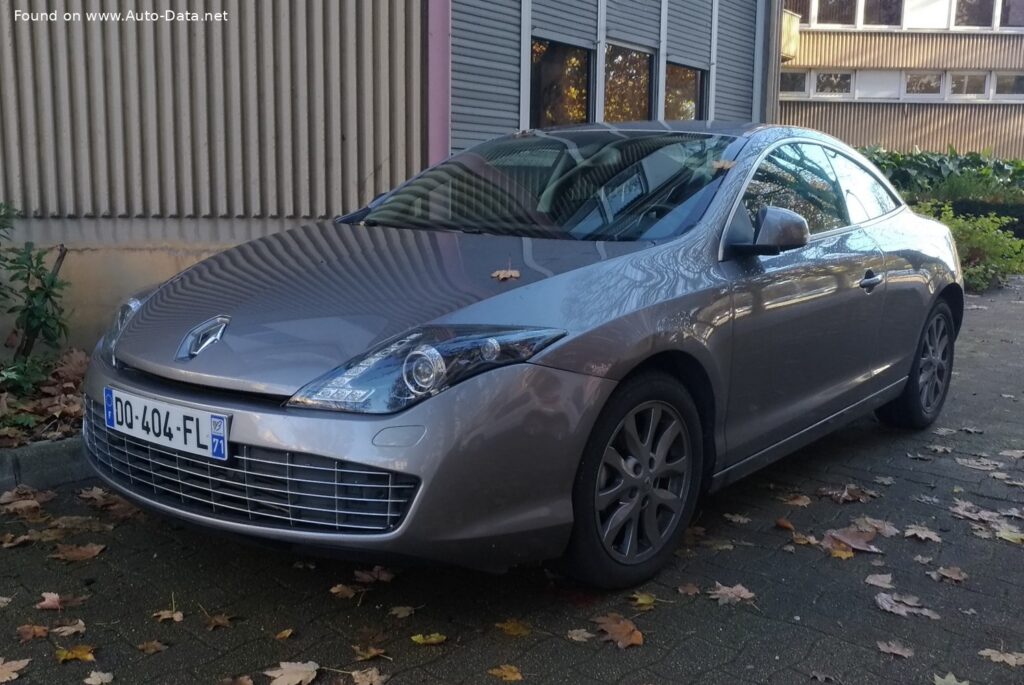
The Renault Laguna Coupe (Phase II) 2.0 dCi (178 Hp) represents a compelling entry in the European D-segment coupe market, offering a blend of sophisticated design, robust diesel performance, and respectable efficiency. Produced by the French automaker Renault from 2012 to 2015, this specific iteration, known as Phase II, built upon the foundation of the original Laguna Coupe, refining its aesthetics and powertrain options. While never officially imported for sale in the United States, the Laguna Coupe carved out a niche in its primary European markets as a stylish, four-seat grand tourer that prioritized comfort and long-distance cruising capability without sacrificing a degree of sporty appeal. It aimed to provide a more emotionally engaging alternative to conventional sedans and wagons, embodying a certain French flair and practicality.
Engine and Performance: The 2.0 dCi (178 Hp) Powertrain
At the heart of the Renault Laguna Coupe (Phase II) 2.0 dCi (178 Hp) lies a meticulously engineered 2.0-liter (1995 cm3 or 121.74 cu. in.) M9R inline four-cylinder diesel engine. This unit was a cornerstone of Renault’s powertrain offerings during its production run, renowned for its balance of power, torque, and fuel economy. Generating a robust 178 horsepower at 3750 revolutions per minute, the engine delivered ample motivation for the coupe. More significantly for a diesel, it produced an impressive 400 Newton-meters (295.02 lb.-ft.) of torque, available at a low 2000 rpm. This substantial torque figure ensured strong acceleration and effortless overtaking, characteristic of a premium European diesel.
The engine’s architecture featured a conventional inline configuration with four cylinders, each equipped with four valves, totaling 16 valves. A bore of 84 mm (3.31 in.) and a piston stroke of 90 mm (3.54 in.) contributed to its 1995 cm3 displacement. With a compression ratio of 16:1, typical for a modern diesel, the engine utilized a sophisticated common rail fuel injection system for precise fuel delivery. A turbocharger, complemented by an intercooler, was instrumental in boosting power output and efficiency, ensuring a broad power band and responsive performance. The maximum engine speed was rated at 5200 rpm, indicating a well-tuned diesel powerplant.
In terms of performance, the Laguna Coupe 2.0 dCi (178 Hp) was capable of accelerating from 0 to 60 miles per hour in a respectable 8.1 seconds (0-100 km/h in 8.5 seconds), culminating in a maximum speed of 137.94 mph (222 km/h). These figures underscored its capability as a competent long-distance cruiser. Power was channeled to the front wheels via a smooth-shifting 6-speed manual transmission, providing engaging driver control. The powertrain architecture was front, transverse, driving the front wheels, a common and efficient layout for this segment.
Fuel efficiency was a significant strong suit for this diesel coupe. The combined fuel consumption was rated at 6.5 liters per 100 kilometers, translating to an impressive 36.2 US miles per gallon (43.5 UK mpg). Urban driving yielded 8.6 l/100 km (27.4 US mpg), while extra-urban conditions saw consumption drop to 5.5 l/100 km (42.8 US mpg). These figures highlight the economic advantages of the diesel engine, particularly relevant in European markets where diesel fuel is prevalent. Furthermore, the vehicle achieved an emission standard of Euro 4, with CO2 emissions of 172 grams per kilometer, reflecting its environmental performance relative to its contemporaries.
The vehicle’s weight-to-power ratio stood at 8.6 kg per horsepower (115.7 Hp per tonne), while the weight-to-torque ratio was 3.8 kg per Newton-meter (259.9 Nm per tonne). These metrics further illustrate the engine’s effectiveness in propelling the coupe’s kerb weight of 1539 kg (3392.91 lbs.), ensuring a lively and engaging driving experience.
Design and Features: The Elegant {Renault Laguna Coupe (Phase II) 2.0 dCi (178 Hp)}
The Renault Laguna Coupe (Phase II) was distinguished by its elegant and fluid design, a hallmark of French automotive styling. As a two-door coupe, it offered seating for four occupants, emphasizing a more personal and dynamic driving experience compared to its sedan and wagon siblings. Its dimensions were substantial yet graceful: a length of 4643 mm (182.8 in.), a width of 1812 mm (71.34 in.) (2082 mm or 81.97 in. including mirrors), and a height of 1398 mm (55.04 in.). The generous wheelbase of 2694 mm (106.06 in.) contributed to both interior space and ride comfort, while front and rear tracks of 1548 mm (60.94 in.) and 1542 mm (60.71 in.), respectively, provided a stable stance.
The exterior design featured a low-slung profile, long bonnet, and a gracefully sloping roofline that seamlessly integrated into the short rear overhang. The drag coefficient (Cd) of 0.30 indicated a well-aerodynamic body, contributing to both fuel efficiency and reduced wind noise at higher speeds. The front fascia, characteristic of Renault’s design language of the era, was assertive yet refined, while the rear showcased distinctive taillights that underlined its premium aspirations.
Underneath its sculpted exterior, the Laguna Coupe was engineered for a balanced ride. It featured an independent McPherson type front suspension, known for its ability to provide a good compromise between comfort and handling. The rear utilized a semi-independent suspension with coil springs, a cost-effective and space-efficient solution that offered adequate stability. Braking performance was managed by ventilated discs at the front and solid discs at the rear, complemented by an Anti-lock Braking System (ABS) for enhanced safety during emergency stops. Steering was handled by a rack and pinion system, assisted by hydraulic power steering, providing a direct and communicative feel to the driver.
The vehicle offered a choice of tire sizes, including 215/50 R17 and 225/45 R18, mounted on corresponding 17-inch or 18-inch wheel rims, allowing for varying degrees of grip and ride comfort. The minimum turning circle ranged from 10.8 to 11.8 meters (35.43 – 38.71 ft.), indicating reasonable maneuverability for a vehicle of its size.
Practicality was also considered within the coupe format. The trunk (boot) space provided a useful 423 liters (14.94 cu. ft.) of cargo volume, sufficient for weekend trips or daily errands. The fuel tank capacity of 66 liters (17.44 US gallons or 14.52 UK gallons) ensured a considerable driving range, especially given the efficient diesel engine. Furthermore, the Laguna Coupe was rated for towing, with a permitted trailer load of 1500 kg (3306.93 lbs.) with brakes and 650 kg (1433 lbs.) without brakes, adding to its versatility. With a maximum permissible weight of 1997 kg (4402.63 lbs.) and a maximum load capacity of 458 kg (1009.72 lbs.), the vehicle demonstrated its robust construction and capability.
Technical Specifications
| Brand | Renault |
| Model | Laguna |
| Generation | Laguna Coupe (Phase II) |
| Type (Engine) | 2.0 dCi (178 Hp) |
| Start of production | 2012 year |
| End of production | 2015 year |
| Powertrain Architecture | Internal Combustion engine |
| Body type | Coupe |
| Seats | 4 |
| Doors | 2 |
| Fuel consumption (economy) – urban | 8.6 l/100 km (27.4 US mpg) |
| Fuel consumption (economy) – extra urban | 5.5 l/100 km (42.8 US mpg) |
| Fuel consumption (economy) – combined | 6.5 l/100 km (36.2 US mpg) |
| CO2 emissions | 172 g/km |
| Fuel Type | Diesel |
| Acceleration 0 – 60 mph | 8.1 sec |
| Acceleration 0 – 100 km/h | 8.5 sec |
| Maximum speed | 222 km/h (137.94 mph) |
| Emission standard | Euro 4 |
| Weight-to-power ratio | 8.6 kg/Hp (115.7 Hp/tonne) |
| Weight-to-torque ratio | 3.8 kg/Nm (259.9 Nm/tonne) |
| Power | 178 Hp @ 3750 rpm |
| Power per litre | 89.2 Hp/l |
| Torque | 400 Nm @ 2000 rpm (295.02 lb.-ft. @ 2000 rpm) |
| Maximum engine speed | 5200 rpm |
| Engine layout | Front, Transverse |
| Engine Model/Code | M9R |
| Engine displacement | 1995 cm3 (2.0 Liters / 121.74 cu. in.) |
| Number of cylinders | 4 |
| Engine configuration | Inline |
| Cylinder Bore | 84 mm (3.31 in.) |
| Piston Stroke | 90 mm (3.54 in.) |
| Compression ratio | 16:1 |
| Number of valves per cylinder | 4 |
| Fuel injection system | Diesel Commonrail |
| Engine aspiration | Turbocharger, Intercooler |
| Engine oil capacity | 7.4 l (7.82 US qt) |
| Coolant | 7.8 l (8.24 US qt) |
| Kerb Weight | 1539 kg (3392.91 lbs.) |
| Max. weight | 1997 kg (4402.63 lbs.) |
| Max load | 458 kg (1009.72 lbs.) |
| Trunk (boot) space – minimum | 423 l (14.94 cu. ft.) |
| Fuel tank capacity | 66 l (17.44 US gal) |
| Permitted trailer load with brakes (12%) | 1500 kg (3306.93 lbs.) |
| Permitted trailer load without brakes | 650 kg (1433 lbs.) |
| Length | 4643 mm (182.8 in.) |
| Width | 1812 mm (71.34 in.) |
| Width including mirrors | 2082 mm (81.97 in.) |
| Height | 1398 mm (55.04 in.) |
| Wheelbase | 2694 mm (106.06 in.) |
| Front track | 1548 mm (60.94 in.) |
| Rear (Back) track | 1542 mm (60.71 in.) |
| Front overhang | 1022 mm (40.24 in.) |
| Rear overhang | 927 mm (36.5 in.) |
| Ride height (ground clearance) | 120 mm (4.72 in.) |
| Drag coefficient (Cd) | 0.30 |
| Minimum turning circle (turning diameter) | 10.8-11.8 m (35.43 – 38.71 ft.) |
| Drivetrain Architecture | Internal combustion engine drives front wheels |
| Drive wheel | Front wheel drive |
| Number of gears and type of gearbox | 6 gears, manual transmission |
| Front suspension | Independent type McPherson |
| Rear suspension | Semi-independent, coil spring |
| Front brakes | Ventilated discs |
| Rear brakes | Disc |
| Assisting systems | ABS (Anti-lock braking system) |
| Steering type | Steering rack and pinion |
| Power steering | Hydraulic Steering |
| Tires size | 215/50 R17; 225/45 R18 |
| Wheel rims size | 17; 18 |