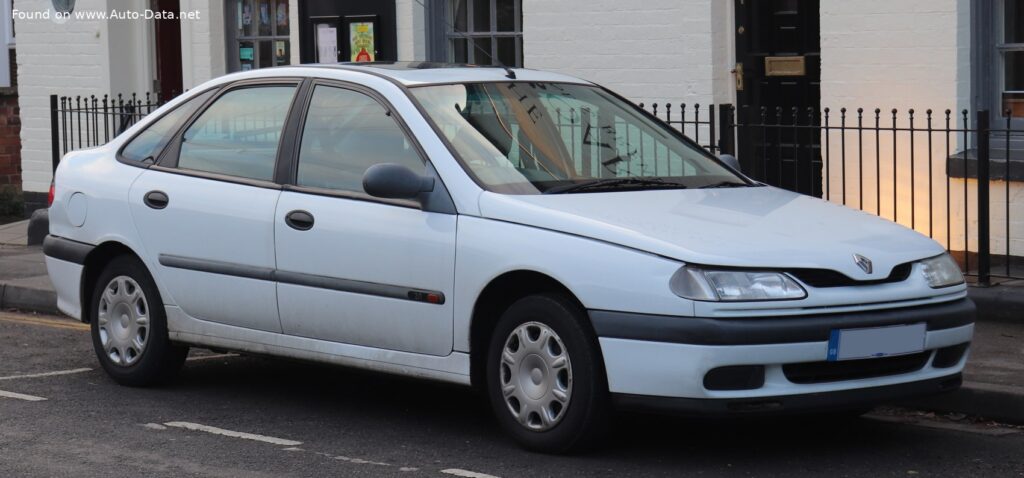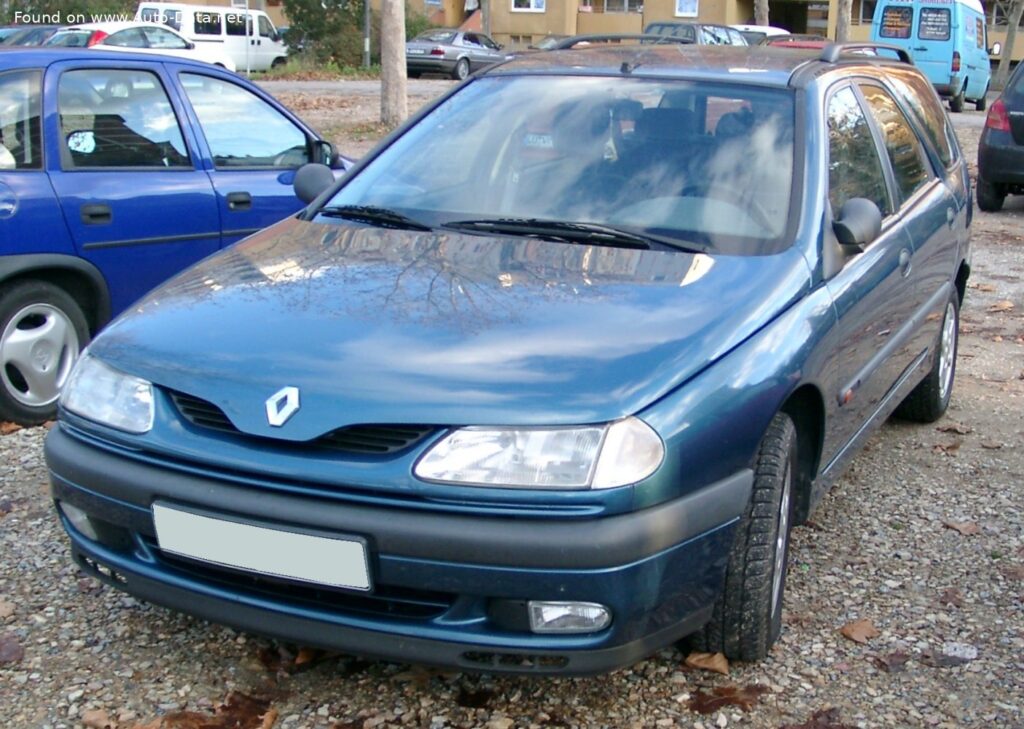
The Renault Laguna Grandtour 1.8 (90 Hp), produced between 1995 and 2000, represents a significant chapter in the European automotive landscape, embodying the French manufacturer’s approach to the competitive mid-size family car segment. As the station wagon variant of the first-generation Laguna, it was specifically designed to cater to the practical demands of families across Europe, where such vehicles were, and remain, immensely popular. Unlike many of its contemporaries, the Laguna Grandtour was never officially sold in the United States, cementing its role as a quintessentially European offering focused on comfort, safety, and versatility. This particular iteration, powered by a modest yet efficient 1.8-liter engine, aimed to strike a balance between everyday usability and economical operation, providing ample space and a smooth driving experience for its target demographic. Its introduction marked Renault’s concerted effort to offer a modern, well-equipped family vehicle that could compete with established rivals from Germany and other European nations, emphasizing its commitment to innovation and practical design within its primary markets.
Engine and Performance of the Renault Laguna Grandtour
At the heart of the 1995-2000 Renault Laguna Grandtour 1.8 (90 Hp) lies a naturally aspirated 1.8-liter (1783 cubic centimeters or 108.81 cubic inches) inline-four engine, designated with the internal code F3P. This powertrain was engineered for reliability and fuel efficiency, rather than outright speed, aligning with the vehicle’s role as a pragmatic family hauler. The engine features an Overhead Camshaft (OHC) valvetrain with two valves per cylinder, a common and robust configuration for the era, contributing to its straightforward maintenance and dependable operation. Fuel delivery was managed by a single-point injection system, a technology prevalent in the mid-1990s that offered a good compromise between cost-effectiveness and precise fuel metering compared to earlier carbureted systems.
The engine generates a peak power output of 90 horsepower at 5750 revolutions per minute, providing sufficient propulsion for daily driving and highway cruising. Its power per liter stands at 50.5 HP/l, a respectable figure for a non-turbocharged engine of its displacement. Torque production is rated at 144 Newton-meters, which translates to approximately 106.21 pound-feet, also achieved at 5750 rpm. This torque curve, peaking at higher engine speeds, suggests a design focused on delivering power smoothly across the rev range, which is beneficial for a comfortable driving experience. The engine is mounted transversely at the front of the vehicle, a configuration typical for front-wheel-drive cars, optimizing packaging and interior space.
Power is transmitted to the front wheels through a 5-speed manual transmission, offering the driver direct control over the power delivery and contributing to the vehicle’s overall fuel economy. The performance figures reflect its utilitarian purpose: the Laguna Grandtour 1.8 (90 Hp) accelerates from 0 to 60 miles per hour in approximately 13 seconds, with a 0 to 100 km/h time of 13.7 seconds. Its maximum speed is rated at 106.88 mph (172 km/h). While these figures may not suggest a sporty character, they are entirely adequate for navigating European roads and highways, ensuring safe overtaking and steady cruising. The weight-to-power ratio of 15.2 kg/Hp (or 65.9 Hp/tonne) further underscores its positioning as a practical rather than a performance-oriented vehicle.
Fuel consumption, a crucial factor for family car buyers, was a strong point for this model. The combined fuel economy is officially rated at 8.4 liters per 100 kilometers, which translates to an impressive 28 US miles per gallon. This efficiency, combined with a generous 66-liter (17.44 US gallon) fuel tank capacity, provided a substantial driving range, reducing the frequency of fuel stops and making it a cost-effective choice for long journeys and daily commutes alike.
Design and Practicality of the Renault Laguna Grandtour
The Renault Laguna Grandtour, with its station wagon (estate) body type, was designed from the outset to prioritize practicality, comfort, and safety for its European family audience. Measuring 181.89 inches (4620 mm) in length, 68.98 inches (1752 mm) in width, and 57.01 inches (1448 mm) in height, the Laguna Grandtour offered a substantial footprint for its class, contributing to both interior volume and road presence. Its 105.12-inch (2670 mm) wheelbase further enhanced cabin space, particularly for rear-seat passengers, and provided a stable, composed ride quality.
The exterior design, characterized by smooth lines and a relatively conservative aesthetic, reflected the prevailing design trends of the mid-1990s. While not overtly sporty, its proportions were well-balanced, and the extended roofline seamlessly integrated with the overall silhouette, creating a cohesive and functional appearance. The five-door configuration, combined with five comfortable seats, ensured easy access for all occupants and facilitated the loading of cargo. The front track measured 58.31 inches (1481 mm) and the rear track 57.48 inches (1460 mm), contributing to the vehicle’s stable handling characteristics.
One of the Grandtour’s most compelling attributes was its impressive cargo capacity. With the rear seats in place, it offered a substantial 18.36 cubic feet (520 liters) of trunk space, ample for family vacations or grocery runs. When the rear seats were folded down, this capacity expanded dramatically to a cavernous 62.93 cubic feet (1782 liters), transforming the Laguna into a highly capable load-hauler. This versatility was a key selling point in markets where station wagons were valued for their ability to accommodate both passengers and large items effortlessly.
Underpinning the Laguna Grandtour’s ride quality was a well-engineered suspension system. The front featured a wishbone setup, known for its ability to provide precise wheel control and a comfortable ride, while the rear employed a torsion beam arrangement, a compact and robust solution that maximized cargo space without compromising stability. The braking system comprised ventilated discs at the front and solid discs at the rear, providing confident stopping power for a vehicle of its size and weight. Furthermore, the inclusion of ABS (Anti-lock Braking System) as an assisting system was a significant safety feature for the era, enhancing control during emergency braking maneuvers. Steering was managed by a rack and pinion system, aided by hydraulic power steering, ensuring light and responsive handling for easy maneuverability in urban environments and on the open road. The vehicle rode on 185/65 R14 tires, fitted to 14-inch wheel rims, a common specification that balanced ride comfort, grip, and replacement cost.
With a kerb weight of 3009.31 pounds (1365 kg) and a maximum permissible weight of 4210.83 pounds (1910 kg), the Laguna Grandtour could carry a substantial maximum load of 1201.52 pounds (545 kg), further cementing its credentials as a practical family and utility vehicle. Its thoughtful design, robust construction, and array of features made the Renault Laguna Grandtour 1.8 (90 Hp) a highly competitive and well-regarded offering in its segment during its production run, a testament to Renault’s understanding of the European family car market.
Technical Specifications
| Brand | Renault |
| Model | Laguna |
| Generation | Laguna Grandtour |
| Type (Engine) | 1.8 (90 Hp) |
| Start of production | 1995 year |
| End of production | 2000 year |
| Powertrain Architecture | Internal Combustion engine |
| Body type | Station wagon (estate) |
| Seats | 5 |
| Doors | 5 |
| Fuel consumption (economy) – combined | 28 US mpg (8.4 l/100 km) |
| Fuel Type | Petrol (Gasoline) |
| Acceleration 0 – 60 mph | 13 sec |
| Maximum speed | 106.88 mph (172 km/h) |
| Weight-to-power ratio | 15.2 kg/Hp |
| Weight-to-torque ratio | 9.5 kg/Nm |
| Power | 90 Hp @ 5750 rpm |
| Power per liter | 50.5 Hp/l |
| Torque | 106.21 lb.-ft. @ 5750 rpm (144 Nm) |
| Engine layout | Front, Transverse |
| Engine Model/Code | F3P |
| Engine displacement | 1.8 l (1783 cm3 / 108.81 cu. in.) |
| Number of cylinders | 4 |
| Engine configuration | Inline |
| Cylinder Bore | 3.26 in. (82.7 mm) |
| Piston Stroke | 3.27 in. (83 mm) |
| Compression ratio | 9.7:1 |
| Number of valves per cylinder | 2 |
| Fuel injection system | Single-point injection |
| Engine aspiration | Naturally aspirated engine |
| Valvetrain | OHC |
| Engine oil capacity | 5.6 US qt (5.3 l) |
| Coolant | 8.98 US qt (8.5 l) |
| Kerb Weight | 3009.31 lbs (1365 kg) |
| Max. weight | 4210.83 lbs (1910 kg) |
| Max load | 1201.52 lbs (545 kg) |
| Trunk (boot) space – minimum | 18.36 cu. ft. (520 l) |
| Trunk (boot) space – maximum | 62.93 cu. ft. (1782 l) |
| Fuel tank capacity | 17.44 US gal (66 l) |
| Length | 181.89 in. (4620 mm) |
| Width | 68.98 in. (1752 mm) |
| Height | 57.01 in. (1448 mm) |
| Wheelbase | 105.12 in. (2670 mm) |
| Front track | 58.31 in. (1481 mm) |
| Rear (Back) track | 57.48 in. (1460 mm) |
| Drivetrain Architecture | Internal Combustion engine drives front wheels |
| Drive wheel | Front wheel drive |
| Number of gears and type of gearbox | 5 gears, manual transmission |
| Front suspension | Wishbone |
| Rear suspension | Torsion |
| Front brakes | Ventilated discs |
| Rear brakes | Disc |
| Assisting systems | ABS (Anti-lock braking system) |
| Steering type | Steering rack and pinion |
| Power steering | Hydraulic Steering |
| Tires size | 185/65 R14 |
| Wheel rims size | 14 |