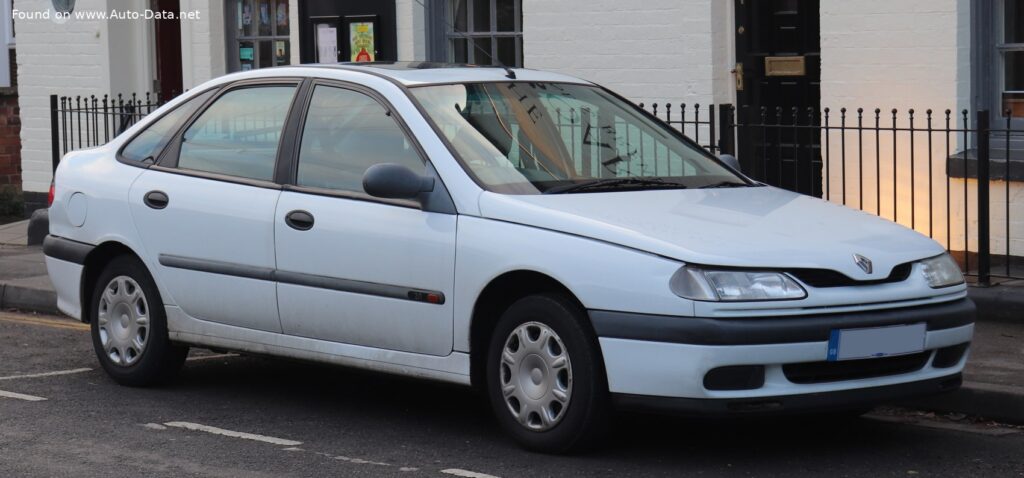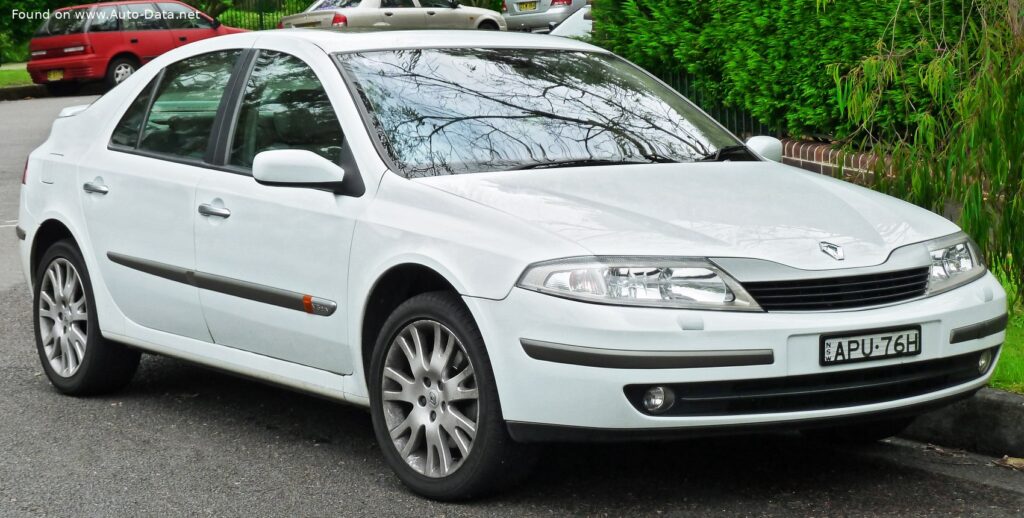
The Renault Laguna II 2.2 dCi (150 Hp) represents a significant chapter in the European automotive landscape of the early 2000s. Launched in 2002 as part of the second generation of Renault’s mid-size family car, the Laguna II aimed to build on the success of its predecessor while introducing a host of technological advancements and a more sophisticated design language. Positioned in the highly competitive D-segment, primarily targeting families and business users across Europe, this particular variant, with its robust diesel powertrain, was a cornerstone of Renault’s strategy to offer a blend of performance, fuel efficiency, and comfort. While never officially sold in the United States, the Laguna II was a common sight on European roads, embodying the continent’s preference for diesel engines in larger family vehicles due to their torque characteristics and economical long-distance cruising capabilities. This generation of Laguna was notable for its emphasis on safety, being one of the first cars to achieve a full five-star Euro NCAP crash test rating, setting a new benchmark for occupant protection.
Engine and Performance: The Heart of the Renault Laguna II
Powering the Renault Laguna II 2.2 dCi (150 Hp) was Renault’s G9T engine, a 2.2-liter (2188 cubic inches) inline four-cylinder diesel unit. This engine was a testament to the advancements in diesel technology at the time, featuring a double overhead camshaft (DOHC) valvetrain with four valves per cylinder, ensuring efficient breathing and combustion. Fuel delivery was handled by a sophisticated common rail direct injection system, which precisely atomized fuel under high pressure directly into the combustion chambers, contributing to both power output and fuel economy. Further enhancing its performance, the engine was equipped with a turbocharger and an intercooler, which compressed and cooled the incoming air, allowing for a denser charge and consequently more power. With a high compression ratio of 18:1, typical for diesel engines, the G9T engine produced a commendable 150 horsepower at 4000 revolutions per minute, yielding a power-per-liter figure of 68.6 HP/l. More significantly for a diesel, it generated a substantial 236.02 lb.-ft. of torque available at a low 1750 rpm, providing excellent pulling power and reducing the need for frequent gear changes, especially in highway driving scenarios.
The powertrain architecture of the Laguna II 2.2 dCi was a conventional front, transverse engine layout, driving the front wheels. This configuration is common for mid-size family cars, optimizing interior space and manufacturing efficiency. Power was transmitted through a precise 6-speed manual transmission, offering drivers greater control over the engine’s power band and contributing to the vehicle’s overall efficiency. Performance figures for the 2.2 dCi were respectable for its class: the car could accelerate from 0 to 60 mph in an estimated 9.3 seconds, with a maximum speed of 133.59 mph. These numbers, combined with its robust torque, made the Laguna II a capable performer for daily commuting and longer journeys across European motorways. The weight-to-power ratio stood at 9.9 kg/Hp (approximately 100.7 Hp/tonne), while the weight-to-torque ratio was 4.7 kg/Nm (214.8 Nm/tonne), indicating a well-balanced power delivery for its size and segment.
Fuel efficiency was a strong selling point for the diesel Laguna II. The combined fuel economy was rated at 37.3 US mpg, a highly competitive figure for a vehicle of its size and performance. In extra-urban driving conditions, this figure improved to an impressive 46.1 US mpg, underscoring the diesel engine’s inherent efficiency during sustained cruising. Even in urban environments, the Laguna II managed 28 US mpg, making it a cost-effective choice for many European drivers facing higher fuel prices. The generous 18.49 US gallon fuel tank capacity further extended its range, allowing for fewer stops on long trips, a crucial advantage for continental travel.
Design and Features of the Renault Laguna II
The Renault Laguna II, available as a 5-door hatchback (and also a wagon, though this data focuses on the hatchback), was characterized by its smooth, somewhat understated design that reflected the prevailing aesthetic trends of the early 2000s. Its exterior dimensions measured 180.16 inches in length, 69.76 inches in width, and 56.26 inches in height, with a substantial wheelbase of 108.27 inches. This generous wheelbase contributed significantly to interior roominess and ride comfort, key attributes for a family-oriented vehicle. The front track measured 60.04 inches, and the rear track was 58.27 inches, providing a stable stance on the road.
Inside, the Laguna II offered seating for five occupants. The hatchback body style provided excellent versatility, with a minimum trunk capacity of 15.19 cubic feet. This could be expanded significantly to a cavernous 46.97 cubic feet with the rear seats folded down, making it highly practical for carrying luggage, groceries, or larger items. The design prioritized occupant comfort and safety, a hallmark of Renault during this era. Standard safety features included an Anti-lock Braking System (ABS) for enhanced stopping power and control, particularly in adverse conditions. The braking system itself comprised ventilated discs at the front and solid discs at the rear, offering robust and fade-resistant performance.
The driving dynamics were managed by a hydraulic power steering system with a rack and pinion setup, providing responsive and comfortable steering feedback. The suspension system featured independent Spring Struts at the front, designed to absorb road imperfections effectively, while the rear utilized a Coil spring setup, balancing ride comfort with handling stability. The vehicle rode on 16-inch wheel rims, shod with 205/55 R16 tires, a common size that offered a good compromise between grip, ride comfort, and replacement cost. With a kerb weight of 3284.89 lbs. and a maximum permissible weight of 4497.43 lbs., the Laguna II was a solid, well-built vehicle capable of carrying a significant payload of 1212.54 lbs. The Renault Laguna II 2.2 dCi (150 Hp) thus presented a compelling package for the European market, blending a powerful and efficient diesel engine with a practical and comfortable design, underpinned by a strong focus on safety and driving refinement.
Technical Specifications
| Brand | Renault |
| Model | Laguna |
| Generation | Laguna II |
| Type (Engine) | 2.2 dCi (150 Hp) |
| Start of production | 2002 year |
| End of production | 2007 year |
| Powertrain Architecture | Internal Combustion engine |
| Body type | Hatchback |
| Seats | 5 |
| Doors | 5 |
| Fuel consumption (economy) – urban | 8.4 l/100 km (28 US mpg) |
| Fuel consumption (economy) – extra urban | 5.1 l/100 km (46.1 US mpg) |
| Fuel consumption (economy) – combined | 6.3 l/100 km (37.3 US mpg) |
| Fuel Type | Diesel |
| Acceleration 0 – 60 mph | 9.3 sec |
| Maximum speed | 215 km/h (133.59 mph) |
| Weight-to-power ratio | 9.9 kg/Hp (100.7 Hp/tonne) |
| Weight-to-torque ratio | 4.7 kg/Nm (214.8 Nm/tonne) |
| Power | 150 Hp @ 4000 rpm |
| Power per litre | 68.6 Hp/l |
| Torque | 320 Nm @ 1750 rpm (236.02 lb.-ft. @ 1750 rpm) |
| Engine layout | Front, Transverse |
| Engine Model/Code | G9T |
| Engine displacement | 2188 cm3 (133.52 cu. in.) |
| Number of cylinders | 4 |
| Engine configuration | Inline |
| Cylinder Bore | 87 mm (3.43 in.) |
| Piston Stroke | 92 mm (3.62 in.) |
| Compression ratio | 18:1 |
| Number of valves per cylinder | 4 |
| Fuel injection system | Diesel Commonrail |
| Engine aspiration | Turbocharger, Intercooler |
| Valvetrain | DOHC |
| Engine oil capacity | 5.7 l (6.02 US qt) |
| Coolant | 6.8 l (7.19 US qt) |
| Kerb Weight | 1490 kg (3284.89 lbs.) |
| Max. weight | 2040 kg (4497.43 lbs.) |
| Max load | 550 kg (1212.54 lbs.) |
| Trunk (boot) space – minimum | 430 l (15.19 cu. ft.) |
| Trunk (boot) space – maximum | 1330 l (46.97 cu. ft.) |
| Fuel tank capacity | 70 l (18.49 US gal) |
| Length | 4576 mm (180.16 in.) |
| Width | 1772 mm (69.76 in.) |
| Height | 1429 mm (56.26 in.) |
| Wheelbase | 2750 mm (108.27 in.) |
| Front track | 1525 mm (60.04 in.) |
| Rear (Back) track | 1480 mm (58.27 in.) |
| Drivetrain Architecture | The Internal combustion engine (ICE) drives the front wheels of the vehicle. |
| Drive wheel | Front wheel drive |
| Number of gears and type of gearbox | 6 gears, manual transmission |
| Front suspension | Spring Strut |
| Rear suspension | Coil spring |
| Front brakes | Ventilated discs |
| Rear brakes | Disc |
| Assisting systems | ABS (Anti-lock braking system) |
| Steering type | Steering rack and pinion |
| Power steering | Hydraulic Steering |
| Tires size | 205/55 R16 |
| Wheel rims size | 16 |