
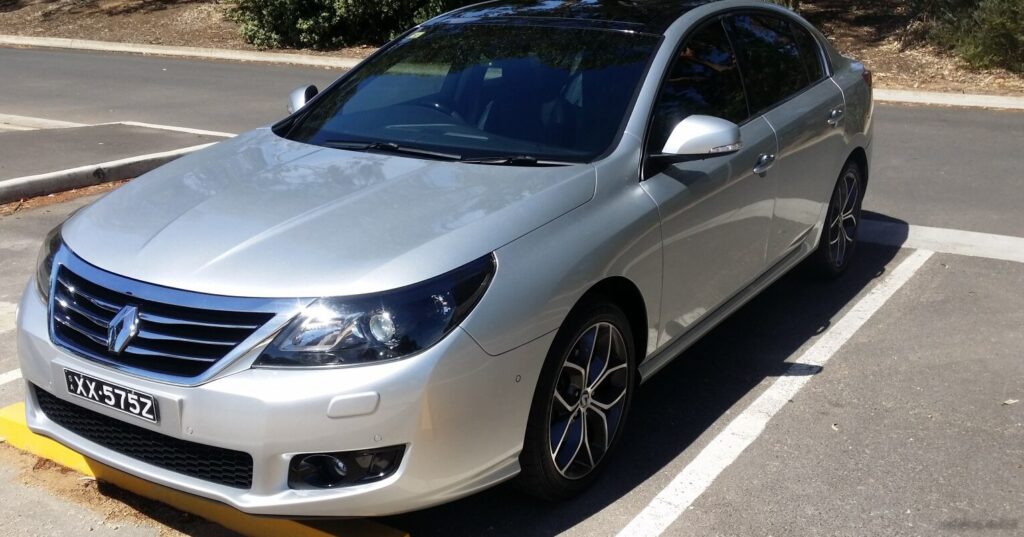
The Renault Latitude 2.0 (140 hp) CVT, produced from 2010 to 2013, was a mid-size sedan positioned as a comfortable and spacious offering within Renault’s lineup. It represented Renault’s attempt to compete in the executive car segment, particularly in markets outside of its traditional European strongholds. The Latitude was built upon the Nissan D platform, shared with models like the Nissan Altima and Nissan Teana, reflecting Renault’s alliance with Nissan. This 2.0-liter variant, paired with a continuously variable transmission (CVT), served as a core model, offering a balance between fuel efficiency and acceptable performance for everyday driving. It aimed to appeal to buyers seeking a refined and practical sedan without the higher price tag of premium competitors.
Technical Specifications
| Brand | Renault |
| Model | Latitude |
| Generation | Latitude |
| Type (Engine) | 2.0 (140 Hp) CVT |
| Start of production | 2010 |
| End of production | 2013 |
| Powertrain Architecture | Internal Combustion engine |
| Body type | Sedan |
| Seats | 5 |
| Doors | 4 |
| Fuel consumption (urban) | 11 l/100 km (21.4 US mpg) |
| Fuel consumption (extra urban) | 7 l/100 km (33.6 US mpg) |
| Fuel consumption (combined) | 8.3 l/100 km (28.3 US mpg) |
| CO2 emissions | 197 g/km |
| Fuel Type | Petrol (Gasoline) |
| Acceleration 0 – 100 km/h | 11.9 sec |
| Acceleration 0 – 62 mph | 11.9 sec |
| Acceleration 0 – 60 mph | 11.3 sec |
| Maximum speed | 186 km/h (115.58 mph) |
| Emission standard | Euro 4 |
| Weight-to-power ratio | 10.7 kg/Hp |
| Weight-to-torque ratio | 7.7 kg/Nm |
| Power | 140 Hp @ 6000 rpm |
| Torque | 195 Nm @ 3750 rpm (143.82 lb.-ft. @ 3750 rpm) |
| Engine layout | Front, Transverse |
| Engine Model/Code | M4R |
| Engine displacement | 1997 cm3 (121.86 cu. in.) |
| Number of cylinders | 4 |
| Engine configuration | Inline |
| Number of valves per cylinder | 4 |
| Fuel injection system | Multi-port manifold injection |
| Engine aspiration | Naturally aspirated engine |
| Engine oil capacity | 4.8 l (5.07 US qt | 4.22 UK qt) |
| Coolant capacity | 7.2 l (7.61 US qt | 6.34 UK qt) |
| Kerb Weight | 1495 kg (3295.91 lbs) |
| Max. weight | 2050 kg (4519.48 lbs) |
| Max load | 555 kg (1223.57 lbs) |
| Trunk (boot) space – minimum | 477 l (16.85 cu. ft.) |
| Trunk (boot) space – maximum | 511 l (18.05 cu. ft.) |
| Fuel tank capacity | 70 l (18.49 US gal | 15.4 UK gal) |
| Length | 4897 mm (192.8 in) |
| Width | 1832 mm (72.13 in) |
| Height | 1483 mm (58.39 in) |
| Wheelbase | 2762 mm (108.74 in) |
| Front track | 1565 mm (61.61 in) |
| Rear track | 1562 mm (61.5 in) |
| Minimum turning circle | 11.2 m (36.75 ft) |
Powertrain & Engine Architecture
The Renault Latitude 2.0 CVT utilized the M4R engine, a 1.997-liter inline-four cylinder gasoline engine. This engine featured multi-point fuel injection and a dual overhead camshaft (DOHC) valvetrain with four valves per cylinder. The M4R engine was a relatively common unit within the Renault-Nissan alliance, known for its generally reliable operation. The 140 horsepower output was achieved at 6000 rpm, with peak torque of 195 Nm (143.82 lb-ft) delivered at 3750 rpm. The engine’s design prioritized smoothness and refinement over outright performance. Paired with the engine was a continuously variable transmission (CVT). This CVT, while contributing to improved fuel economy, was sometimes criticized for its ‘rubber band’ feel during acceleration, where engine speed doesn’t directly correlate to vehicle speed. The CVT was programmed for smooth transitions and prioritized fuel efficiency over sporty responsiveness.
Driving Characteristics
The 2.0-liter CVT Latitude offered a comfortable, but not particularly engaging, driving experience. Acceleration from 0-60 mph took around 11.3 seconds, making it adequate for everyday commuting and highway cruising, but not suited for spirited driving. The CVT’s programming emphasized fuel economy, resulting in a somewhat sluggish response when requesting sudden bursts of power. Compared to other Latitude variants, such as the 2.0 dCi diesel, the gasoline version lacked the low-end torque and overall responsiveness of the diesel. The CVT also differed significantly from the six-speed manual transmission offered on some Latitude models, which provided a more direct and connected feel. The CVT’s gear ratios were optimized for efficiency, prioritizing lower engine speeds at cruising speeds to minimize fuel consumption.
Equipment & Trim Levels
The Renault Latitude 2.0 CVT was typically offered in well-equipped trim levels, focusing on comfort and convenience. Standard features generally included air conditioning, power windows and mirrors, a CD/MP3 stereo system, and ABS brakes. Higher trim levels added features such as leather upholstery, a sunroof, rear parking sensors, and a navigation system. Interior upholstery was typically cloth on base models, with leather options available on higher trims. The dashboard layout was generally straightforward and functional, with a focus on ease of use. Optional extras included a premium sound system, heated seats, and advanced safety features like lane departure warning.
Chassis & Braking
The Latitude featured a typical front-wheel-drive chassis configuration with MacPherson strut suspension in the front and a multi-link suspension in the rear. This setup aimed to provide a comfortable ride quality while maintaining reasonable handling characteristics. Braking systems varied depending on the trim level, with lower trims often equipped with front disc brakes and rear drum brakes, while higher trims featured disc brakes all around. Anti-lock Braking System (ABS) was standard across all models. Stabilizer bars were fitted to both the front and rear axles to reduce body roll during cornering. The Latitude’s suspension tuning prioritized comfort over sporty handling, resulting in a smooth and compliant ride.
Market Reception & Comparison
The Renault Latitude received mixed reviews from automotive critics. While praised for its spacious interior, comfortable ride, and generous equipment levels, it was often criticized for its uninspiring driving dynamics and the somewhat lackluster performance of the 2.0-liter engine, particularly when paired with the CVT. Compared to competitors like the Ford Mondeo, Volkswagen Passat, and Opel Insignia, the Latitude often lagged behind in terms of driving engagement and brand prestige. Fuel economy was respectable, but not class-leading. Reliability reports were generally positive, with the M4R engine proving to be a relatively durable unit. However, some owners reported issues with the CVT transmission, particularly regarding its long-term durability.
Legacy
The Renault Latitude, while not a commercial success in many markets, remains a reasonably affordable and practical used car option. The 2.0-liter CVT powertrain, while not known for its performance, has proven to be generally reliable, provided it has been properly maintained. CVT fluid changes are crucial for longevity. Today, the Latitude is often sought after by buyers looking for a spacious and comfortable sedan at a budget-friendly price. Its relatively simple mechanical design and readily available parts contribute to its appeal as a used car. While it may not offer the driving excitement of some of its competitors, the Latitude provides a comfortable and practical transportation solution for those prioritizing space, comfort, and affordability.
