
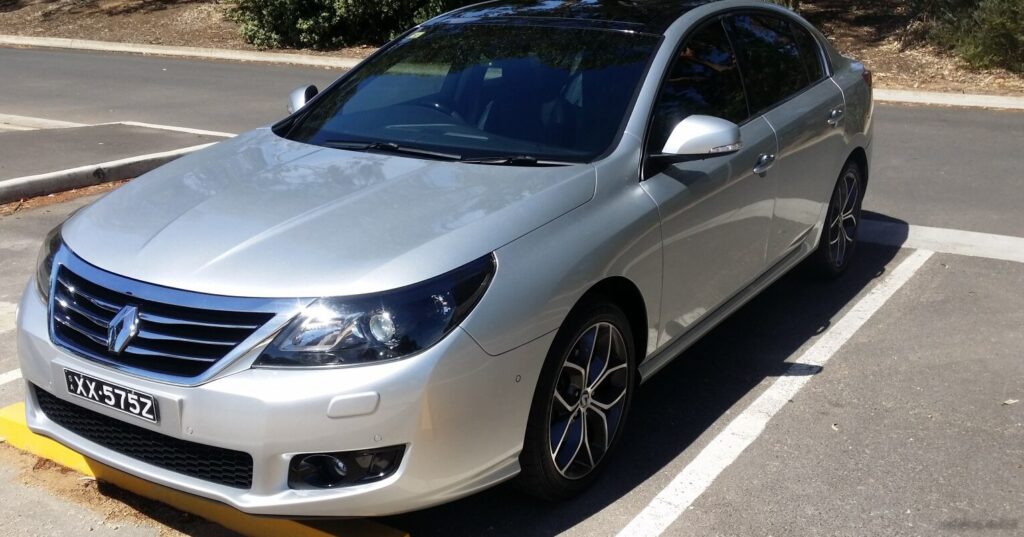
The Renault Latitude 2.5 V6 Automatic, produced between 2010 and 2013, represented Renault’s entry into the upper-midsize sedan segment, primarily aimed at the European and international markets. Positioned as a more premium offering than the Renault Megane but below the flagship models from other manufacturers, the Latitude sought to provide comfort, space, and a refined driving experience. This particular variant, equipped with the 2.5-liter V6 engine and a six-speed automatic transmission, occupied the higher end of the Latitude lineup, offering a balance of performance and convenience. It was designed to compete with vehicles like the Ford Mondeo, Opel Insignia, and Peugeot 508.
Technical Specifications
| Brand | Renault |
| Model | Latitude |
| Generation | Latitude |
| Type (Engine) | 2.5 V6 (180 Hp) Automatic |
| Start of production | 2010 |
| End of production | 2013 |
| Powertrain Architecture | Internal Combustion engine |
| Body type | Sedan |
| Seats | 5 |
| Doors | 4 |
| Fuel consumption (urban) | 13.4 l/100 km (17.6 US mpg, 21.1 UK mpg, 7.5 km/l) |
| Fuel consumption (extra urban) | 7.7 l/100 km (30.5 US mpg, 36.7 UK mpg, 13 km/l) |
| Fuel consumption (combined) | 9.7 l/100 km (24.2 US mpg, 29.1 UK mpg, 10.3 km/l) |
| CO2 emissions | 230 g/km |
| Fuel Type | Petrol (Gasoline) |
| Acceleration 0 – 100 km/h | 10.7 sec |
| Acceleration 0 – 62 mph | 10.7 sec |
| Acceleration 0 – 60 mph | 10.2 sec |
| Maximum speed | 210 km/h (130.49 mph) |
| Emission standard | Euro 4 |
| Weight-to-power ratio | 8.9 kg/Hp, 112.5 Hp/tonne |
| Weight-to-torque ratio | 6.8 kg/Nm, 146.9 Nm/tonne |
| Power | 180 Hp @ 6000 rpm |
| Power per litre | 72.1 Hp/l |
| Torque | 235 Nm @ 4400 rpm (173.33 lb.-ft. @ 4400 rpm) |
| Engine layout | Front, Transverse |
| Engine Model/Code | V4U |
| Engine displacement | 2495 cm3 (152.25 cu. in.) |
| Number of cylinders | 6 |
| Engine configuration | V-engine |
| Number of valves per cylinder | 4 |
| Fuel injection system | Multi-port manifold injection |
| Engine aspiration | Naturally aspirated engine |
| Engine oil capacity | 4.6 l (4.86 US qt | 4.05 UK qt) |
| Kerb Weight | 1600 kg (3527.4 lbs.) |
| Max. weight | 2110 kg (4651.75 lbs.) |
| Max load | 510 kg (1124.36 lbs.) |
| Trunk (boot) space – minimum | 477 l (16.85 cu. ft.) |
| Trunk (boot) space – maximum | 511 l (18.05 cu. ft.) |
| Fuel tank capacity | 70 l (18.49 US gal | 15.4 UK gal) |
| Length | 4897 mm (192.8 in.) |
| Width | 1832 mm (72.13 in.) |
| Height | 1483 mm (58.39 in.) |
| Wheelbase | 2762 mm (108.74 in.) |
| Front track | 1565 mm (61.61 in.) |
| Rear (Back) track | 1562 mm (61.5 in.) |
| Minimum turning circle | 11.2 m (36.75 ft.) |
| Drivetrain Architecture | The Internal combustion engine (ICE) drives the front wheels of the vehicle. |
| Drive wheel | Front wheel drive |
| Number of gears | 6 gears, automatic transmission |
| Front suspension | Independent type McPherson |
| Rear suspension | Independent multi-link suspension |
| Front brakes | Disc |
| Rear brakes | Disc |
| Assisting systems | ABS (Anti-lock braking system) |
| Steering type | Steering rack and pinion |
| Power steering | Electric Steering |
| Tires size | 215/60 R16 |
| Wheel rims size | 16 |
Powertrain & Engine Architecture
The heart of the Latitude 2.5 V6 Automatic is the V4U engine, a 2.5-liter naturally aspirated V6 gasoline engine. This engine utilizes multi-port fuel injection and a double overhead camshaft (DOHC) valvetrain with four valves per cylinder. The engine’s design prioritized smoothness and refinement over outright performance. The 2495cc displacement provides a reasonable amount of power for comfortable cruising and everyday driving. The engine is transversely mounted in the front of the vehicle. Paired with this engine is a six-speed automatic transmission, chosen for its smooth shifting and ease of use. This transmission was a conventional torque converter automatic, offering a balance between efficiency and responsiveness. While not a particularly advanced transmission by modern standards, it was well-suited to the engine’s characteristics and the Latitude’s intended role as a comfortable cruiser.
Driving Characteristics
The 180 horsepower and 173 lb-ft of torque delivered by the 2.5 V6, combined with the six-speed automatic, resulted in a driving experience focused on comfort and ease. Acceleration from 0-60 mph took around 10.2 seconds, which was adequate for most driving situations but not particularly sporty. The automatic transmission was programmed for smooth shifts, prioritizing comfort over aggressive downshifts. The gear ratios were tuned for relaxed highway cruising, with a relatively tall final drive. Compared to other Latitude variants, such as the diesel models, the 2.5 V6 offered less fuel economy but a more refined and responsive engine character. The manual transmission options, where available in other markets, provided a more engaging driving experience but lacked the convenience of the automatic.
Equipment & Trim Levels
The 2.5 V6 Automatic trim typically came well-equipped, reflecting its position as a higher-end variant. Standard features often included leather upholstery, automatic climate control, a premium audio system, and alloy wheels. Optional extras could include a navigation system, parking sensors, and a panoramic sunroof. Interior appointments focused on providing a comfortable and luxurious environment, with attention paid to material quality and design. The dashboard layout was generally straightforward and user-friendly, with logically placed controls.
Chassis & Braking
The Latitude featured an independent suspension setup, with a McPherson strut front suspension and a multi-link rear suspension. This configuration aimed to provide a comfortable ride and good handling characteristics. The Latitude 2.5 V6 typically came equipped with disc brakes on all four wheels, providing adequate stopping power. An Anti-lock Braking System (ABS) was standard, enhancing safety and stability during braking. The suspension was tuned for comfort, prioritizing a smooth ride over sporty handling. Stabilizer bars were fitted to both the front and rear axles to reduce body roll during cornering.
Market Reception & Comparison
The Renault Latitude 2.5 V6 Automatic received mixed reviews from automotive critics. While praised for its comfortable ride, spacious interior, and refined engine, it was often criticized for its relatively uninspired styling and lack of dynamic flair. Fuel economy was also a concern, particularly compared to the more efficient diesel options. In terms of reliability, the V4U engine proved to be generally dependable, although some owners reported minor issues with the automatic transmission. Compared to its competitors, the Latitude offered a good value proposition, providing a generous level of equipment for its price. However, it struggled to gain significant market share, often overshadowed by more established rivals.
Legacy
The Renault Latitude, while not a commercial success, remains a relatively affordable and comfortable used car option. The 2.5 V6 powertrain, when properly maintained, has proven to be reasonably reliable. However, potential buyers should be aware of the potential for transmission issues and the relatively high fuel consumption. Today, the Latitude is appreciated by those seeking a spacious and comfortable sedan with a smooth and refined engine, offering a unique alternative to more mainstream competitors. Its legacy lies in representing Renault’s attempt to compete in the upper-midsize segment with a focus on comfort and practicality.
