
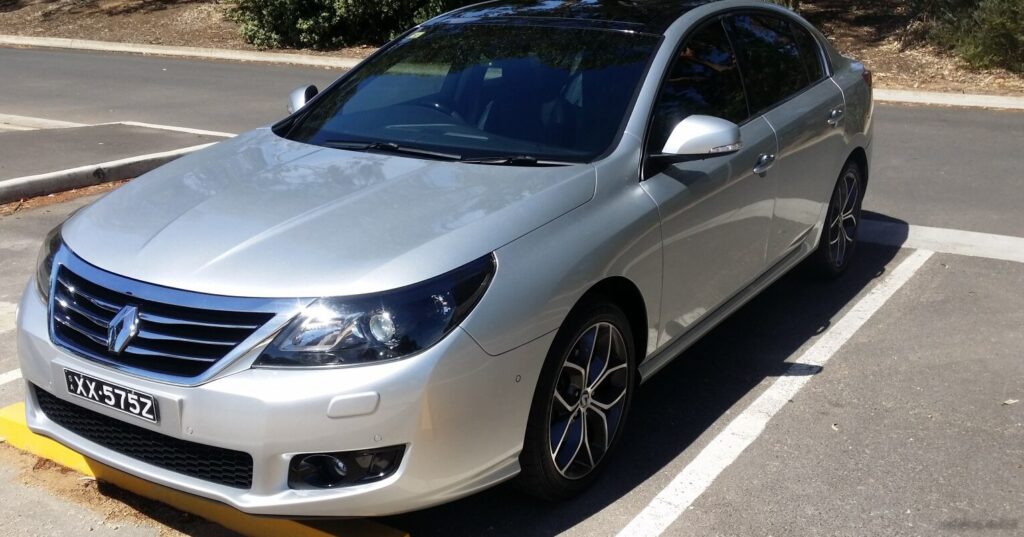
The Renault Latitude 3.0 V6 dCi (240 hp) FAP Automatic, produced between 2010 and 2013, represented the flagship powertrain option for Renault’s large family sedan. Positioned as a premium offering, the Latitude aimed to compete with established players in the European executive car segment, such as the Ford Mondeo, Opel Insignia, and Peugeot 508. This variant, equipped with the powerful V6 diesel engine and a six-speed automatic transmission, was intended to provide a refined and comfortable driving experience, prioritizing performance and luxury over outright fuel economy. It was primarily marketed in Europe and select international markets, offering a more upscale alternative to Renault’s mainstream offerings.
Technical Specifications
| Brand | Renault |
| Model | Latitude |
| Type (Engine) | 3.0 V6 dCi (240 Hp) FAP Automatic |
| Start of production | 2010 |
| End of production | 2013 |
| Powertrain Architecture | Internal Combustion engine |
| Body type | Sedan |
| Seats | 5 |
| Doors | 4 |
| Fuel consumption (urban) | 10 l/100 km (23.5 US mpg) |
| Fuel consumption (extra urban) | 5.7 l/100 km (41.3 US mpg) |
| Fuel consumption (combined) | 7.2 l/100 km (32.7 US mpg) |
| Fuel Type | Diesel |
| Acceleration 0 – 100 km/h | 7.6 sec |
| Acceleration 0 – 62 mph | 7.6 sec |
| Acceleration 0 – 60 mph | 7.2 sec |
| Maximum speed | 234 km/h (145.4 mph) |
| Emission standard | Euro 4 |
| Weight-to-power ratio | 7.2 kg/Hp |
| Weight-to-torque ratio | 3.8 kg/Nm |
| Power | 240 Hp @ 3750 rpm |
| Torque | 450 Nm @ 1500 rpm (331.9 lb.-ft. @ 1500 rpm) |
| Engine layout | Front, Transverse |
| Engine Model/Code | V9X |
| Engine displacement | 2998 cm3 (182.95 cu. in.) |
| Number of cylinders | 6 |
| Engine configuration | V-engine |
| Cylinder Bore | 84 mm (3.31 in.) |
| Piston Stroke | 90 mm (3.54 in.) |
| Compression ratio | 15.5:1 |
| Number of valves per cylinder | 4 |
| Fuel injection system | Diesel Commonrail |
| Engine aspiration | Turbocharger, Intercooler |
| Valvetrain | DOHC |
| Engine oil capacity | 6.8 l (7.19 US qt | 5.98 UK qt) |
| Kerb Weight | 1730 kg (3814 lbs.) |
| Max. weight | 2250 kg (4960.4 lbs.) |
| Max load | 520 kg (1146.4 lbs.) |
| Trunk (boot) space – minimum | 477 l (16.85 cu. ft.) |
| Trunk (boot) space – maximum | 511 l (18.05 cu. ft.) |
| Fuel tank capacity | 70 l (18.49 US gal | 15.4 UK gal) |
| Length | 4897 mm (192.8 in.) |
| Width | 1832 mm (72.13 in.) |
| Height | 1483 mm (58.39 in.) |
| Wheelbase | 2762 mm (108.74 in.) |
| Front track | 1565 mm (61.61 in.) |
| Rear (Back) track | 1562 mm (61.5 in.) |
| Minimum turning circle | 11.2 m (36.75 ft.) |
| Drivetrain Architecture | Front wheel drive |
| Number of gears | 6 |
| Gearbox type | Automatic transmission |
| Front suspension | Independent type McPherson |
| Rear suspension | Independent multi-link suspension |
| Front brakes | Ventilated discs |
| Rear brakes | Disc |
| Assisting systems | ABS (Anti-lock braking system) |
| Steering type | Steering rack and pinion |
| Power steering | Electric Steering |
| Tires size | 235/45 R18 |
| Wheel rims size | 18 |
Powertrain & Engine Architecture
The heart of the Latitude 3.0 V6 dCi was the V9X engine, a 3.0-liter V6 diesel. This engine utilized a common rail direct injection system, delivering fuel at extremely high pressures for optimized combustion. The V9X featured a single turbocharger with an intercooler, boosting power output and improving efficiency. The engine also incorporated a Diesel Particulate Filter (DPF) to meet stringent Euro 4 emissions standards. The engine produced 240 horsepower at 3750 rpm and a substantial 450 Nm (331.9 lb-ft) of torque at just 1500 rpm. This torque curve provided strong acceleration and effortless cruising. The engine’s double overhead camshaft (DOHC) valvetrain, with four valves per cylinder, further enhanced its performance. Paired with the engine was a six-speed automatic transmission, designed for smooth and responsive gear changes. This transmission was not a dual-clutch unit, relying instead on a traditional torque converter for a comfortable driving experience.
Driving Characteristics
The 3.0 V6 dCi Automatic Latitude offered a distinctly refined driving experience. The abundant torque from the engine meant strong acceleration in most situations, with the 0-60 mph sprint taking approximately 7.2 seconds. While not a sports sedan, the Latitude provided ample power for overtaking and highway cruising. The automatic transmission, while smooth, wasn’t particularly quick to shift, prioritizing comfort over outright performance. Compared to the lower-powered 1.5 dCi or 2.0 dCi variants, the V6 offered a significantly more relaxed and effortless driving experience, especially on long journeys. The suspension, tuned for comfort, absorbed bumps and imperfections in the road well, contributing to a smooth ride. However, this did result in some body roll during cornering.
Equipment & Trim Levels
The 3.0 V6 dCi Automatic typically came with a high level of standard equipment. This included leather upholstery, automatic climate control, a premium audio system, and parking sensors. Optional extras included a panoramic sunroof, navigation system, and advanced driver-assistance systems like adaptive cruise control. The interior was designed with a focus on comfort and luxury, featuring high-quality materials and a spacious cabin. Trim levels varied depending on the market, but generally, the V6 model represented the top-of-the-line offering.
Chassis & Braking
The Latitude utilized an independent McPherson strut suspension at the front and an independent multi-link suspension at the rear, providing a comfortable and controlled ride. The front brakes were ventilated discs, offering good stopping power, while the rear brakes were solid discs. Anti-lock Braking System (ABS) was standard. The Latitude’s chassis was designed to prioritize comfort and stability over sporty handling. The steering was electrically assisted, providing a light and easy driving experience.
Market Reception & Comparison
The Renault Latitude 3.0 V6 dCi Automatic received generally positive reviews, with critics praising its comfortable ride, spacious interior, and powerful engine. However, it was often criticized for its somewhat uninspired styling and lack of dynamic flair compared to some of its competitors. Fuel economy, while respectable for a V6 diesel, was not as competitive as some of the smaller-engined alternatives. Compared to the 2.0 dCi variants, the V6 offered significantly more power and refinement, but at a higher price point and with slightly increased running costs. The V6 was aimed at buyers who prioritized comfort and performance over fuel efficiency.
Legacy
The Renault Latitude, while not a commercial success in the same vein as some of its rivals, offered a compelling package for buyers seeking a comfortable and well-equipped executive sedan. The V6 dCi engine proved to be relatively reliable, although the Diesel Particulate Filter (DPF) required regular maintenance to prevent clogging. On the used car market, the Latitude 3.0 V6 dCi Automatic represents a relatively affordable option for those seeking a spacious and comfortable sedan with a powerful engine. However, potential buyers should be aware of the potential maintenance costs associated with the DPF and the age of the vehicle.
