
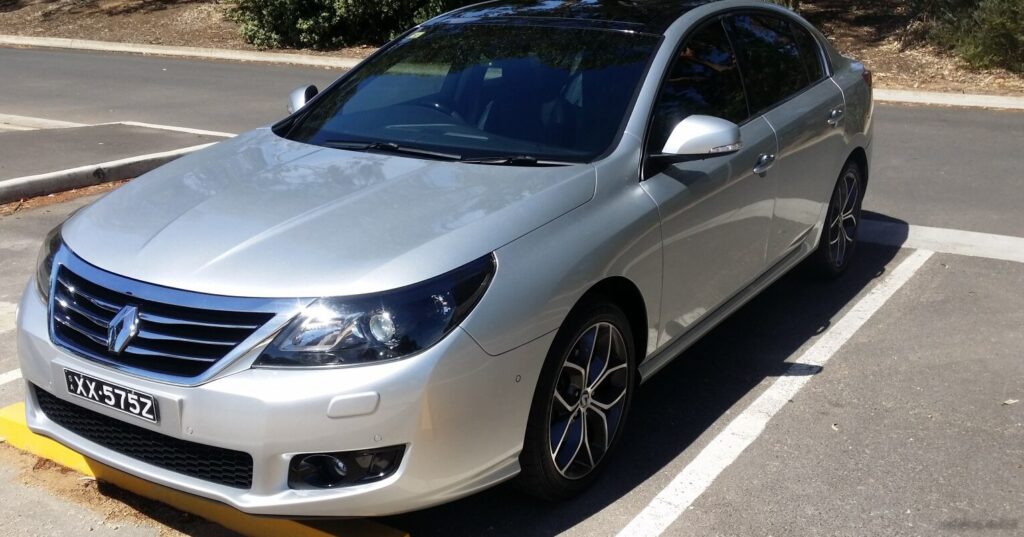
The Renault Latitude 3.5 V6 Automatic, produced between 2010 and 2013, represented the flagship powertrain option for Renault’s large family sedan. Positioned as a premium offering, the Latitude aimed to compete with established players in the European D-segment, such as the Ford Mondeo, Volkswagen Passat, and Peugeot 508. This variant, equipped with the V4Y 3.5-liter V6 engine and a six-speed automatic transmission, was intended to provide a blend of performance, comfort, and refinement for discerning buyers. The Latitude itself was a rebadged and significantly updated version of the previous Renault Vel Satis, sharing the same ‘L’ platform, but with a more mainstream and internationally appealing design.
Technical Specifications
| Brand | Renault |
| Model | Latitude |
| Type (Engine) | 3.5 V6 (240 Hp) Automatic |
| Start of production | 2010 |
| End of production | 2013 |
| Powertrain Architecture | Internal Combustion engine |
| Body type | Sedan |
| Seats | 5 |
| Doors | 4 |
| Fuel consumption (urban) | 15.7 l/100 km (15 US mpg, 18 UK mpg, 6.4 km/l) |
| Fuel consumption (extra urban) | 7.5 l/100 km (31.4 US mpg, 37.7 UK mpg, 13.3 km/l) |
| Fuel consumption (combined) | 10.5 l/100 km (22.4 US mpg, 26.9 UK mpg, 9.5 km/l) |
| CO2 emissions | 250 g/km |
| Fuel Type | Petrol (Gasoline) |
| Acceleration 0 – 100 km/h | 6.4 sec |
| Acceleration 0 – 62 mph | 6.4 sec |
| Acceleration 0 – 60 mph | 6.1 sec |
| Maximum speed | 235 km/h (146.02 mph) |
| Emission standard | Euro 4 |
| Weight-to-power ratio | 6.7 kg/Hp, 148.6 Hp/tonne |
| Weight-to-torque ratio | 4.9 kg/Nm, 204.3 Nm/tonne |
| Power | 240 Hp @ 6000 rpm |
| Torque | 330 Nm @ 4200 rpm (243.4 lb.-ft. @ 4200 rpm) |
| Engine layout | Front, Transverse |
| Engine Model/Code | V4Y |
| Engine displacement | 3498 cm3 (213.46 cu. in.) |
| Number of cylinders | 6 |
| Engine configuration | V-engine |
| Cylinder Bore | 95.5 mm (3.76 in.) |
| Piston Stroke | 81.4 mm (3.2 in.) |
| Compression ratio | 10.3:1 |
| Number of valves per cylinder | 4 |
| Fuel injection system | Multi-port manifold injection |
| Engine aspiration | Naturally aspirated engine |
| Valvetrain | DOHC |
| Engine oil capacity | 4.6 l (4.86 US qt | 4.05 UK qt) |
| Kerb Weight | 1615 kg (3560.47 lbs.) |
| Max. weight | 2180 kg (4806.08 lbs.) |
| Max load | 565 kg (1245.61 lbs.) |
| Trunk (boot) space – minimum | 477 l (16.85 cu. ft.) |
| Trunk (boot) space – maximum | 511 l (18.05 cu. ft.) |
| Fuel tank capacity | 70 l (18.49 US gal | 15.4 UK gal) |
| Length | 4897 mm (192.8 in.) |
| Width | 1832 mm (72.13 in.) |
| Height | 1483 mm (58.39 in.) |
| Wheelbase | 2762 mm (108.74 in.) |
| Front track | 1565 mm (61.61 in.) |
| Rear (Back) track | 1562 mm (61.5 in.) |
| Minimum turning circle | 11.2 m (36.75 ft.) |
| Drivetrain Architecture | Front wheel drive |
| Number of gears | 6 |
| Gearbox type | Automatic transmission |
| Front suspension | Independent type McPherson |
| Rear suspension | Independent multi-link suspension |
| Front brakes | Ventilated discs |
| Rear brakes | Disc |
| Assisting systems | ABS (Anti-lock braking system) |
| Steering type | Steering rack and pinion |
| Power steering | Electric Steering |
| Tires size | 225/50 R17 |
| Wheel rims size | 17 |
Powertrain & Engine Architecture
The heart of the Latitude 3.5 V6 was the V4Y engine, a 3.5-liter naturally aspirated V6. This engine, derived from Nissan’s VQ series, was known for its smoothness and relatively high output. It featured multi-port fuel injection and a double overhead camshaft (DOHC) valvetrain. The engine produced 240 horsepower at 6,000 rpm and 330 Nm (243 lb-ft) of torque at 4,200 rpm. The six-speed automatic transmission, sourced from Aisin, was chosen for its smooth shifting characteristics and ability to handle the engine’s power. While not a dual-clutch transmission, it offered a reasonable level of responsiveness for everyday driving. The engine’s transverse mounting and front-wheel-drive configuration were typical for vehicles in this class.
Driving Characteristics
The 3.5 V6 Automatic Latitude offered a noticeably more spirited driving experience compared to the lower-powered 1.5 dCi diesel or 2.0 petrol variants. Acceleration from 0 to 60 mph was achieved in approximately 6.1 seconds, making it competitive with other V6-powered sedans. The automatic transmission, while smooth, wasn’t particularly quick to downshift, and lacked the sportiness of some competitors. The gear ratios were tuned for comfortable cruising rather than aggressive acceleration. The Latitude’s front-wheel-drive layout meant that it wasn’t as engaging to drive as rear-wheel-drive alternatives, and torque steer could be noticeable under hard acceleration. However, the engine’s ample power and torque made it a capable highway cruiser.
Equipment & Trim Levels
The 3.5 V6 Automatic typically came in the highest trim levels of the Latitude range, often designated as ‘Initiale Paris’ or similar. Standard features included leather upholstery, automatic climate control, a premium audio system, parking sensors, and alloy wheels. Optional extras could include a panoramic sunroof, navigation system, and advanced safety features like adaptive cruise control and lane departure warning. The interior was designed to be spacious and comfortable, with a focus on providing a refined driving experience. The dashboard layout was relatively conventional, with a clear instrument cluster and user-friendly controls.
Chassis & Braking
The Latitude utilized an independent McPherson strut suspension at the front and an independent multi-link suspension at the rear. This setup provided a comfortable ride quality, absorbing bumps and imperfections in the road effectively. The Latitude 3.5 V6 was equipped with ventilated disc brakes at the front and solid disc brakes at the rear. Anti-lock braking system (ABS) was standard. The steering was electrically assisted, providing a light and easy steering feel. The suspension was tuned for comfort rather than outright handling prowess, prioritizing a smooth and relaxed driving experience.
Market Reception & Comparison
The Renault Latitude 3.5 V6 Automatic received mixed reviews from automotive critics. While the engine was praised for its smoothness and power, the car was often criticized for its somewhat bland styling and lack of driving engagement. Fuel economy was also a concern, with the V6 engine consuming significantly more fuel than the diesel alternatives. Compared to rivals like the Ford Mondeo and Volkswagen Passat, the Latitude offered a more luxurious interior but lacked the same level of driving dynamics. The higher price point of the V6 variant also made it a less attractive option for budget-conscious buyers.
Legacy
The Renault Latitude, including the 3.5 V6 Automatic variant, was discontinued in 2013 due to declining sales. While not a commercial success, the Latitude represented Renault’s attempt to compete in the premium D-segment. The V4Y engine proved to be relatively reliable, although regular maintenance is essential. On the used car market, the 3.5 V6 Automatic Latitude can be found at relatively affordable prices, offering a comfortable and well-equipped sedan for those seeking a less common alternative to mainstream brands. However, potential buyers should be aware of the higher fuel consumption and potential maintenance costs associated with the V6 engine.
