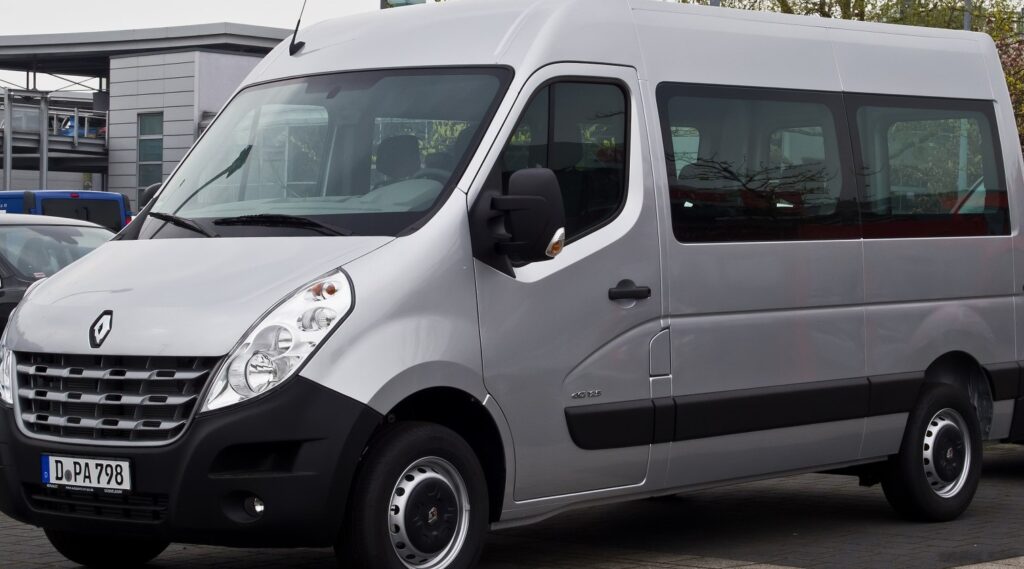
The Renault Master III (Phase II), specifically the 2.3 dCi 150 horsepower automatic bus variant produced from 2014 to 2015, represents a significant iteration of Renault’s large van and bus platform. Positioned as a versatile option within the Master III range, this configuration aimed to balance practicality, fuel efficiency, and ease of operation for commercial and passenger transport applications. It falls within the broader context of the X62/X63 Master III generation, a workhorse vehicle popular throughout Europe and increasingly seen in other markets. This particular model was designed to cater to operators needing a larger capacity vehicle with the convenience of an automatic transmission.
Technical Specifications
| Brand | Renault |
| Model | Master |
| Generation | Master III (Phase II, 2014) Bus |
| Type (Engine) | 2.3 dCi (150 Hp) Automatic |
| Start of production | 2014 |
| End of production | 2015 |
| Powertrain Architecture | Internal Combustion engine |
| Body type | MPV |
| Seats | 17 |
| Doors | 4 |
| Fuel consumption (urban) | 8.9 l/100 km (26.4 US mpg, 31.7 UK mpg, 11.2 km/l) |
| Fuel consumption (extra urban) | 6.7 l/100 km (35.1 US mpg, 42.2 UK mpg, 14.9 km/l) |
| Fuel consumption (combined) | 7.6 l/100 km (30.9 US mpg, 37.2 UK mpg, 13.2 km/l) |
| CO2 emissions | 199 g/km |
| Fuel Type | Diesel |
| Maximum speed | 100 km/h (62.14 mph) |
| Emission standard | Euro 5 |
| Weight-to-power ratio | 18.1 kg/Hp, 55.2 Hp/tonne |
| Weight-to-torque ratio | 7.8 kg/Nm, 128.8 Nm/tonne |
| Power | 150 Hp @ 3500 rpm |
| Power per litre | 65.3 Hp/l |
| Torque | 350 Nm @ 1500-2750 rpm (258.15 lb.-ft. @ 1500-2750 rpm) |
| Engine Model/Code | M9T |
| Engine displacement | 2298 cm3 (140.23 cu. in.) |
| Number of cylinders | 4 |
| Engine configuration | Inline |
| Number of valves per cylinder | 4 |
| Fuel injection system | Diesel Commonrail |
| Engine aspiration | Turbocharger, Intercooler |
| Engine oil capacity | 8 l (8.45 US qt | 7.04 UK qt) |
| Coolant capacity | 11 l (11.62 US qt | 9.68 UK qt) |
| Kerb Weight | 2718 kg (5992.16 lbs.) |
| Max. weight | 3870 kg (8531.89 lbs.) |
| Max load | 1152 kg (2539.73 lbs.) |
| Fuel tank capacity | 80 l (21.13 US gal | 17.6 UK gal) |
| Length | 6198 mm (244.02 in.) |
| Width | 2070 mm (81.5 in.) |
| Width including mirrors | 2470 mm (97.24 in.) |
| Height | 2488 mm (97.95 in.) |
| Wheelbase | 4332 mm (170.55 in.) |
| Front track | 1750 mm (68.9 in.) |
| Rear track | 1730 mm (68.11 in.) |
| Front overhang | 842 mm (33.15 in.) |
| Rear overhang | 1024 mm (40.31 in.) |
| Ride height (ground clearance) | 173 mm (6.81 in.) |
| Minimum turning circle | 15.7 m (51.51 ft.) |
| Drivetrain | Front wheel drive |
| Number of gears | 6 |
| Gearbox type | Automatic transmission |
| Front brakes | Ventilated discs, 302 mm |
| Rear brakes | Disc, 305 mm |
| Tires size | 225/65 R16 |
| Wheel rims size | 16 |
Powertrain & Engine Architecture
The heart of this Master III variant is the Renault M9T 2.3-liter four-cylinder diesel engine. This engine, a member of the dCi (Direct Common-rail Injection) family, utilizes a turbocharger with an intercooler to boost power and efficiency. The M9T engine is known for its robust construction and relatively straightforward maintenance. The common-rail direct injection system, coupled with four valves per cylinder, allows for precise fuel delivery and optimized combustion. The engine produces 150 horsepower at 3500 rpm and a substantial 350 Nm (258 lb-ft) of torque between 1500 and 2750 rpm. This broad torque band is particularly beneficial for a vehicle of this size and weight, providing ample pulling power for carrying passengers or cargo. Paired with the engine is a six-speed automatic transmission, offering smoother gear changes compared to manual options, especially in stop-and-go traffic. This transmission was chosen to enhance driver comfort and reduce fatigue, making it ideal for urban and suburban routes.
Driving Characteristics
The 150 hp automatic Master III delivers a driving experience focused on practicality and ease of use. While not a performance-oriented vehicle, the engine’s torque output provides adequate acceleration for most driving situations. The automatic transmission, while smooth, can sometimes feel slightly hesitant during quick overtaking maneuvers. The gear ratios are tuned for fuel efficiency and load-carrying capability rather than outright speed. Compared to the manual transmission versions, the automatic offers a more relaxed driving experience, particularly in congested areas. However, the automatic does slightly impact fuel economy compared to the manual, though the difference is not substantial. The suspension is tuned for comfort, absorbing bumps and irregularities in the road reasonably well, even when fully loaded.
Equipment & Trim Levels
The 2.3 dCi 150 Automatic bus variant typically came equipped with a functional, yet basic, interior. Standard features included power steering, central locking, an adjustable steering column, and a driver’s seat with basic adjustments. The interior trim was primarily utilitarian, focusing on durability and ease of cleaning. Optional extras included air conditioning, a basic audio system, and upgraded seating configurations. The 17-seat configuration was standard for this bus variant, designed for passenger transport. Safety features included ABS brakes and driver and passenger airbags, meeting the Euro 5 emission standards.
Chassis & Braking
The Master III utilizes a front-wheel-drive layout with independent suspension at the front and a non-independent suspension with leaf springs at the rear. The front brakes are ventilated discs measuring 302mm, while the rear brakes are solid discs measuring 305mm. This braking setup provides adequate stopping power for a vehicle of this weight. Stabilizer bars are fitted to both the front and rear axles to reduce body roll during cornering. The suspension is designed to prioritize ride comfort and load-carrying capacity over sporty handling.
Market Reception & Comparison
The Renault Master III 2.3 dCi 150 Automatic was generally well-received in the commercial vehicle market. Critics praised its practicality, fuel efficiency, and the convenience of the automatic transmission. Compared to other vans and buses in its class, such as the Fiat Ducato and Mercedes-Benz Sprinter, the Master offered a competitive price point and a good balance of features. The automatic transmission was seen as a significant advantage for drivers who spent a lot of time in traffic. However, some reviewers noted that the engine could feel slightly underpowered when fully loaded, and the interior was somewhat basic compared to some competitors.
Legacy
The Renault Master III, including the 2.3 dCi 150 Automatic variant, has proven to be a reliable and durable workhorse. The M9T engine, while not without its quirks, is generally considered to be a robust unit capable of high mileage with proper maintenance. On the used car market, these vehicles remain popular due to their affordability and practicality. Common issues include wear and tear on the turbocharger and potential problems with the fuel injection system, but these are typically manageable with regular servicing. The availability of spare parts is good, and the relatively simple mechanical design makes it accessible for independent mechanics to repair. The Master III continues to be a common sight on European roads, serving as a testament to its enduring appeal and reliability.