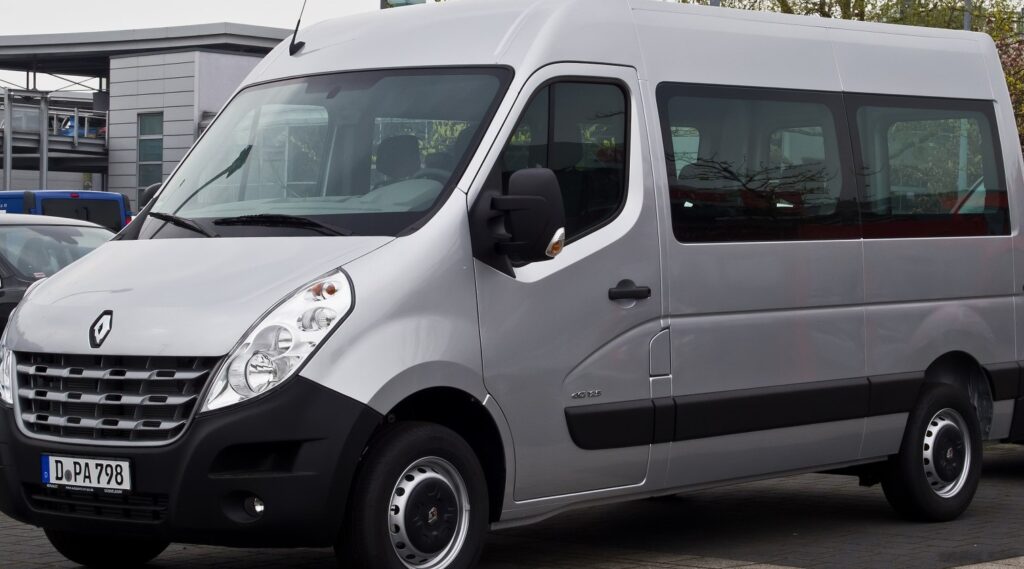
The Renault Master III (Phase II), specifically the 2.3 Energy dCi variant producing 145 horsepower, represents a significant iteration in Renault’s commercial vehicle lineup. Introduced in 2015 and continuing through 2018, this version of the Master primarily served the European market as a versatile workhorse, available in numerous configurations including bus, passenger van, and cargo variants. Positioned as a mid-range offering within the Master III range, it bridged the gap between more basic, lower-powered models and the higher-specification, more powerful options. This particular model was designed to balance fuel efficiency, payload capacity, and operational cost, making it a popular choice for businesses and organizations requiring a dependable and adaptable vehicle.
Technical Specifications
| Brand | Renault |
| Model | Master |
| Generation | Master III (Phase II, 2014) Bus |
| Type (Engine) | 2.3 Energy dCi (145 Hp) |
| Start of production | 2015 |
| End of production | 2018 |
| Powertrain Architecture | Internal Combustion engine |
| Body type | MPV |
| Seats | 17 |
| Doors | 4 |
| Fuel Type | Diesel |
| Maximum speed | 100 km/h (62.14 mph) |
| Emission standard | Euro 6 |
| Weight-to-power ratio | 18.3 kg/Hp, 54.5 Hp/tonne |
| Weight-to-torque ratio | 7.4 kg/Nm, 135.3 Nm/tonne |
| Power | 145 Hp @ 3500 rpm |
| Power per litre | 63.1 Hp/l |
| Torque | 360 Nm @ 1500-2500 rpm (265.52 lb.-ft. @ 1500-2500 rpm) |
| Engine Model/Code | M9T |
| Engine displacement | 2298 cm3 (140.23 cu. in.) |
| Number of cylinders | 4 |
| Engine configuration | Inline |
| Number of valves per cylinder | 4 |
| Fuel injection system | Diesel Commonrail |
| Engine aspiration | Turbocharger, Intercooler |
| Engine oil capacity | 8 l (8.45 US qt | 7.04 UK qt) |
| Coolant | 11 l (11.62 US qt | 9.68 UK qt) |
| Kerb Weight | 2660 kg (5864.3 lbs.) |
| Max. weight | 3960 kg (8730.31 lbs.) |
| Max load | 1300 kg (2866.01 lbs.) |
| Fuel tank capacity | 80 l (21.13 US gal | 17.6 UK gal) |
| Length | 6198 mm (244.02 in.) |
| Width | 2070 mm (81.5 in.) |
| Width including mirrors | 2470 mm (97.24 in.) |
| Height | 2488 mm (97.95 in.) |
| Wheelbase | 4332 mm (170.55 in.) |
| Front track | 1750 mm (68.9 in.) |
| Rear (Back) track | 1730 mm (68.11 in.) |
| Front overhang | 842 mm (33.15 in.) |
| Rear overhang | 1024 mm (40.31 in.) |
| Ride height (ground clearance) | 173 mm (6.81 in.) |
| Minimum turning circle (turning diameter) | 15.7 m (51.51 ft.) |
| Drivetrain Architecture | Front wheel drive |
| Number of gears and type of gearbox | 6 gears, manual transmission |
| Front brakes | Ventilated discs, 302 mm |
| Rear brakes | Disc, 305 mm |
| Tires size | 225/65 R16 |
| Wheel rims size | 16 |
Powertrain & Engine Architecture
The heart of the Renault Master III 2.3 dCi 145 is the M9T engine, a 2.3-liter inline four-cylinder diesel. This engine utilizes a common rail direct injection system, delivering fuel at extremely high pressure for optimized combustion. The turbocharger, coupled with an intercooler, enhances power output and efficiency by forcing more air into the cylinders. The engine features four valves per cylinder, contributing to improved breathing and overall performance. The 145 horsepower variant was specifically tuned for a balance between power and fuel economy, prioritizing usability over outright performance. The engine is known for its relatively robust construction, though like all modern diesels, it relies on a diesel particulate filter (DPF) to meet stringent Euro 6 emissions standards. The six-speed manual transmission was the standard offering, providing a good spread of gears for both city driving and highway cruising.
Driving Characteristics
The 145 hp 2.3 dCi engine in the Master III, paired with the six-speed manual transmission, delivers adequate performance for its intended purpose. Acceleration is not brisk, but sufficient for merging onto highways and maintaining speed with a moderate load. The engine’s torque peak of 360 Nm (265.52 lb-ft) available from 1500-2500 rpm provides good pulling power, making it suitable for carrying heavy loads or navigating hilly terrain. Compared to the lower-powered versions of the Master III, the 145 hp variant offers a noticeable improvement in responsiveness. However, it falls short of the performance offered by the higher-output engines, which were often favored by those requiring maximum capability. The manual transmission provides precise control, and the gear ratios are well-suited to the engine’s characteristics. The front-wheel-drive configuration contributes to reasonable fuel economy, but can sometimes exhibit torque steer under hard acceleration.
Equipment & Trim Levels
The Renault Master III 2.3 dCi 145, in its bus configuration, typically included features geared towards passenger transport. Standard equipment often included power steering, a driver’s airbag, ABS brakes, and basic infotainment system with radio and MP3 compatibility. Higher trim levels offered options such as air conditioning, cruise control, rear parking sensors, and upgraded seating. Interior upholstery was generally durable and practical, designed to withstand heavy use. The dashboard layout was functional and straightforward, prioritizing ergonomics and ease of use. Optional extras could include navigation systems, upgraded audio systems, and various safety features like lane departure warning.
Chassis & Braking
The Master III utilizes a front-wheel-drive chassis with independent suspension at the front and a twist-beam axle at the rear. This configuration provides a reasonable balance between ride comfort and handling. The front brakes are ventilated discs measuring 302mm, while the rear brakes are solid discs measuring 305mm. ABS (Anti-lock Braking System) is standard. The suspension is tuned for comfort and load-carrying capacity, rather than sporty handling. Stabilizer bars are fitted to both the front and rear axles to reduce body roll. The relatively simple rear suspension setup is a cost-saving measure, but it can sometimes result in a less refined ride when the vehicle is heavily loaded.
Market Reception & Comparison
The Renault Master III 2.3 dCi 145 was generally well-received by critics as a practical and reliable workhorse. It was praised for its fuel efficiency, spacious interior, and competitive pricing. Compared to other vans in its class, such as the Mercedes-Benz Sprinter and the Volkswagen Crafter, the Master offered a good value proposition. However, some critics noted that the interior quality was not as refined as some of its competitors. The 145 hp engine was considered a good compromise between power and economy, but some users preferred the higher-output engines for demanding applications. Fuel economy figures typically ranged from 8.0 to 10.0 liters per 100 kilometers (approximately 29 to 35 mpg) depending on driving conditions and load.
Legacy
The Renault Master III 2.3 dCi 145 has proven to be a relatively reliable powertrain in the used car market. The M9T engine, while requiring regular maintenance, is generally durable. Common issues include DPF blockages (particularly with frequent short trips) and wear and tear on the turbocharger. The six-speed manual transmission is also known for its robustness. Today, these vehicles are readily available on the used market at affordable prices, making them an attractive option for businesses and individuals seeking a dependable and versatile van. The Master III continues to be a popular choice for conversions into campervans and mobile workshops, testament to its spacious interior and robust chassis.