
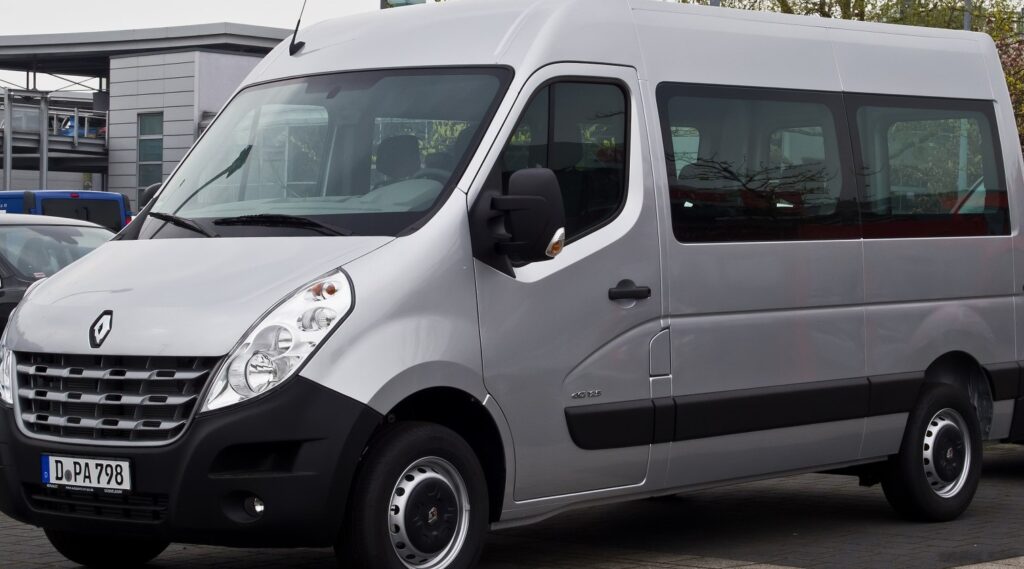
The Renault Master III (Phase II), specifically the Combi 2.3 dCi 110 horsepower variant introduced in 2014, represents a significant iteration of Renault’s large van platform. Positioned as a versatile option within the Master III range – produced from 2010 to 2019, with the Phase II facelift arriving in 2014 – this configuration targeted commercial and family transport needs, offering a balance between fuel efficiency, practicality, and affordability. The L1H1 designation indicates a short wheelbase and low roof height, making it more manageable for urban environments. This model served primarily in the European market, where large vans are commonly used for both business and personal applications, offering a spacious interior and substantial cargo capacity.
Technical Specifications
| Brand | Renault |
| Model | Master |
| Generation | Master III (Phase II, 2014) Combi |
| Type (Engine) | 2.3 dCi (110 Hp) L1H1 Stop&Start |
| Start of production | 2014 |
| End of production | 2016 |
| Powertrain Architecture | Internal Combustion engine |
| Body type | Minivan, MPV |
| Seats | 6 |
| Doors | 4 |
| Fuel consumption (urban) | 7.9-8 l/100 km (29.8 – 29.4 US mpg) |
| Fuel consumption (extra urban) | 6.2-6.3 l/100 km (37.9 – 37.3 US mpg) |
| Fuel consumption (combined) | 6.8-6.9 l/100 km (34.6 – 34.1 US mpg) |
| CO2 emissions | 178-180 g/km |
| Fuel Type | Diesel |
| Emission standard | Euro 5 |
| Power | 110 Hp @ 3500 rpm |
| Torque | 285 Nm @ 1250 rpm (210.21 lb.-ft. @ 1250 rpm) |
| Engine Model/Code | M9T |
| Engine displacement | 2298 cm3 (140.23 cu. in.) |
| Number of cylinders | 4 |
| Engine configuration | Inline |
| Cylinder Bore | 85 mm (3.35 in.) |
| Piston Stroke | 101.3 mm (3.99 in.) |
| Number of valves per cylinder | 4 |
| Fuel injection system | Diesel Commonrail |
| Engine aspiration | Turbocharger, Intercooler |
| Engine oil capacity | 8 l (8.45 US qt | 7.04 UK qt) |
| Coolant capacity | 11 l (11.62 US qt | 9.68 UK qt) |
| Max. weight | 3000 kg (6613.87 lbs.) |
| Trunk (boot) space – maximum | 4100 l (144.79 cu. ft.) |
| Fuel tank capacity | 105 l (27.74 US gal | 23.1 UK gal) |
| Permitted trailer load with brakes (12%) | 2500 kg (5511.56 lbs.) |
| Permitted trailer load without brakes | 750 kg (1653.47 lbs.) |
| Length | 5048 mm (198.74 in.) |
| Width | 2070 mm (81.5 in.) |
| Width including mirrors | 2470 mm (97.24 in.) |
| Height | 2303 mm (90.67 in.) |
| Wheelbase | 3182 mm (125.28 in.) |
| Front track | 1750 mm (68.9 in.) |
| Rear track | 1730 mm (68.11 in.) |
| Front overhang | 842 mm (33.15 in.) |
| Rear overhang | 1024 mm (40.31 in.) |
| Minimum turning circle | 12.5 m (41.01 ft.) |
| Drivetrain | Front wheel drive |
| Number of gears | 6 |
| Gearbox type | Manual |
| Front suspension | Independent, McPherson with coil spring and anti-roll bar |
| Rear suspension | Leaf spring |
| Front brakes | Ventilated discs, 302 mm |
| Rear brakes | Disc, 305 mm |
| Tires size | 215/65 R16 |
| Wheel rims size | 16 |
INTRODUCTION
The Renault Master III Phase II Combi 2.3 dCi 110 hp, launched in 2014, built upon the foundation of the successful Master III platform. This version was specifically tailored for passenger transport, offering a comfortable and practical solution for families or businesses requiring a versatile vehicle. The “Combi” designation signifies a passenger-carrying configuration, differentiating it from the panel van and chassis cab variants. The L1H1 body style, denoting a short wheelbase and low roof, made it particularly suitable for navigating urban areas and tighter parking spaces. Equipped with the M9T 2.3-liter diesel engine and a six-speed manual transmission, this variant occupied a mid-range position in the Master III lineup, offering a balance between performance, economy, and cost.
Powertrain & Engine Architecture
At the heart of the Master III 2.3 dCi 110 is the M9T engine, a 2.3-liter inline-four cylinder diesel. This engine utilizes a common rail direct injection system, delivering fuel at high pressure for optimized combustion and reduced emissions. The engine benefits from a turbocharger with an intercooler, enhancing power output and torque. The 110 horsepower rating is achieved at 3500 rpm, while peak torque of 285 Nm (210.21 lb-ft) is available from a low 1250 rpm, providing good pulling power for carrying passengers and cargo. The six-speed manual transmission was the standard offering for this variant, providing a good spread of gears for both fuel efficiency and performance. The Stop&Start system, included as standard, automatically shuts off the engine when the vehicle is stationary, further improving fuel economy and reducing emissions.
Driving Characteristics
The 110 hp 2.3 dCi engine, coupled with the six-speed manual transmission, delivers adequate performance for everyday driving. While not particularly sporty, it provides sufficient power for highway cruising and carrying a full load of passengers. The low-end torque is a significant advantage, making it easy to accelerate from low speeds and navigate urban traffic. The gear ratios are well-matched, allowing for comfortable and efficient cruising at highway speeds. Compared to higher-output versions of the 2.3 dCi engine (125 hp or 150 hp), this variant offers a more economical driving experience, but with a noticeable reduction in outright acceleration. The manual transmission provides greater driver control compared to the optional automated manual transmission available on some Master III models.
Equipment & Trim Levels
The Master III Combi 2.3 dCi 110 typically came equipped with a reasonable level of standard features. These included air conditioning, power steering, electric front windows, a CD player with auxiliary input, and a driver’s airbag. The interior was typically finished with durable, hard-wearing materials suitable for commercial use. The Combi configuration featured comfortable seating for up to six passengers, with flexible seating arrangements to accommodate varying cargo needs. Optional extras included rear parking sensors, a navigation system, upgraded audio systems, and additional safety features such as side airbags. Trim levels varied depending on the market, but generally offered incremental upgrades in terms of interior comfort and exterior styling.
Chassis & Braking
The Master III utilizes a front-wheel-drive layout, contributing to its relatively low load floor and ease of entry and exit. The front suspension consists of independent McPherson struts with a coil spring and anti-roll bar, providing a comfortable ride and good handling. The rear suspension employs a robust leaf spring setup, designed to handle heavy loads. The braking system features ventilated discs on the front wheels and solid discs on the rear, providing adequate stopping power. The 16-inch wheels were typically fitted with 215/65 R16 tires, offering a good balance between comfort and grip.
Market Reception & Comparison
The Renault Master III Combi 2.3 dCi 110 was generally well-received by critics and customers alike. It was praised for its practicality, spacious interior, and fuel efficiency. Compared to other large vans in its class, such as the Fiat Ducato and Volkswagen Crafter, the Master offered a competitive package in terms of price and features. The 110 hp engine was considered adequate for most applications, but some reviewers noted that the higher-output versions offered a more refined driving experience. Fuel economy was a strong point, with combined fuel consumption figures ranging from 6.8 to 6.9 l/100 km. Reliability was generally good, although some owners reported minor issues with the electrical system.
Legacy
The Renault Master III 2.3 dCi 110 remains a popular choice in the used van market. The M9T engine, while not without its quirks, is generally considered to be a reliable unit when properly maintained. The availability of spare parts is good, and maintenance costs are relatively low. The Combi configuration continues to appeal to families and businesses seeking a versatile and practical vehicle. The Master III platform as a whole established Renault as a major player in the large van segment, and the 2.3 dCi 110 variant played a significant role in its success.

