
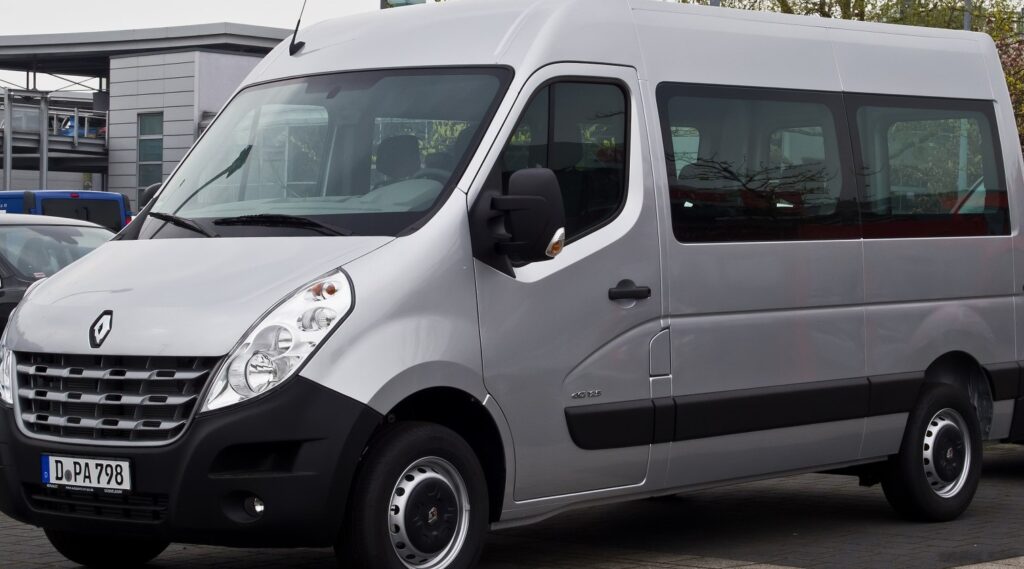
The Renault Master III (Phase II), specifically the Combi 2.3 dCi variant producing 130 horsepower, represents a significant iteration in Renault’s large van lineup. Introduced in 2017 and continuing through 2018, this model served as a versatile option for both commercial and passenger transport, particularly within the European market. The “Combi” designation indicates a configuration geared towards carrying passengers, typically with seating for up to nine individuals, differentiating it from the cargo-focused panel van versions. This variant occupied a middle ground in the Master III range, offering a balance between performance, fuel efficiency, and practicality.
Technical Specifications
| Brand | Renault |
| Model | Master |
| Generation | Master III (Phase II, 2014) Combi |
| Type (Engine) | 2.3 dCi (130 Hp) L1H1 |
| Start of production | 2017 |
| End of production | 2018 |
| Powertrain Architecture | Internal Combustion engine |
| Body type | Minivan, MPV |
| Seats | 6 |
| Doors | 4 |
| Fuel Type | Diesel |
| Emission standard | Euro 6 |
| Power | 130 Hp @ 3500 rpm |
| Power per litre | 56.6 Hp/l |
| Torque | 310 Nm @ 1500 rpm (228.64 lb.-ft. @ 1500 rpm) |
| Engine Model/Code | M9T |
| Engine displacement | 2298 cm3 (140.23 cu. in.) |
| Number of cylinders | 4 |
| Engine configuration | Inline |
| Cylinder Bore | 85 mm (3.35 in.) |
| Piston Stroke | 101.3 mm (3.99 in.) |
| Number of valves per cylinder | 4 |
| Fuel injection system | Diesel Commonrail |
| Engine aspiration | Turbocharger, Intercooler |
| Engine oil capacity | 8 l (8.45 US qt | 7.04 UK qt) |
| Coolant | 11 l (11.62 US qt | 9.68 UK qt) |
| Engine systems | Particulate filter |
| Max. weight | 3000 kg (6613.87 lbs.) |
| Trunk (boot) space – maximum | 4100 l (144.79 cu. ft.) |
| Fuel tank capacity | 80 l (21.13 US gal | 17.6 UK gal) |
| Length | 5048 mm (198.74 in.) |
| Width | 2070 mm (81.5 in.) |
| Width including mirrors | 2470 mm (97.24 in.) |
| Height | 2303 mm (90.67 in.) |
| Wheelbase | 3182 mm (125.28 in.) |
| Front track | 1750 mm (68.9 in.) |
| Rear (Back) track | 1730 mm (68.11 in.) |
| Front overhang | 842 mm (33.15 in.) |
| Rear overhang | 1024 mm (40.31 in.) |
| Minimum turning circle (turning diameter) | 12.5 m (41.01 ft.) |
| Drivetrain Architecture | The Internal combustion engine (ICE) drives the front wheels of the vehicle. |
| Drive wheel | Front wheel drive |
| Number of gears and type of gearbox | 6 gears, manual transmission |
| Front suspension | Independent, type McPherson with coil spring and anti-roll bar |
| Rear suspension | Leaf spring |
| Front brakes | Ventilated discs, 302×28 mm |
| Rear brakes | Disc, 305×12 mm |
| Tires size | 215/65 R16 |
| Wheel rims size | 16 |
Powertrain & Engine Architecture
The heart of the Master III 2.3 dCi 130 is the M9T engine, a 2.3-liter inline four-cylinder diesel. This engine is a product of Renault’s ongoing development of diesel technology, incorporating a turbocharger with an intercooler to enhance power and efficiency. The engine utilizes a common rail direct injection system, delivering fuel directly into the combustion chamber at extremely high pressure for optimized combustion. This system, coupled with four valves per cylinder, contributes to a good balance of power and fuel economy. The 130 horsepower output is achieved at 3500 rpm, while peak torque of 310 Nm (228.64 lb-ft) is available from just 1500 rpm, providing ample pulling power for a vehicle of this size. The engine meets Euro 6 emission standards, incorporating a diesel particulate filter (DPF) to reduce harmful emissions.
Driving Characteristics
The 130 hp 2.3 dCi engine, paired with a six-speed manual transmission, provides adequate performance for the Master Combi. While not designed for outright speed, the engine delivers sufficient power for everyday driving, including carrying a full load of passengers or cargo. The relatively high torque output at low engine speeds makes it easy to navigate urban environments and provides good acceleration for merging onto highways. Compared to the higher-output versions of the 2.3 dCi engine (150 hp and 170 hp), the 130 hp variant offers a more economical driving experience, albeit with slightly reduced performance. The six-speed gearbox is well-matched to the engine’s characteristics, allowing for comfortable cruising at highway speeds.
Equipment & Trim Levels
The Master III Combi 2.3 dCi 130 typically came equipped with a range of features designed for passenger comfort and convenience. Standard equipment often included air conditioning, power windows, central locking, and a basic audio system. Safety features such as ABS brakes, Electronic Stability Program (ESP), and driver and passenger airbags were also standard. The interior upholstery was typically durable cloth, with options for upgraded materials available. Depending on the specific trim level, optional extras could include navigation system, rear parking sensors, cruise control, and upgraded audio systems. The “Combi” configuration specifically featured flexible seating arrangements, allowing for various configurations to accommodate different passenger and cargo needs.
Chassis & Braking
The Master III utilizes a front-wheel-drive layout, contributing to a lower load floor and improved space utilization. The front suspension employs an independent McPherson strut design with coil springs and an anti-roll bar, providing a comfortable ride and good handling characteristics. The rear suspension utilizes a leaf spring setup, which is robust and capable of handling heavy loads. The braking system consists of ventilated discs on the front wheels (302x28mm) and solid discs on the rear wheels (305x12mm). The 16-inch wheels, typically fitted with 215/65 R16 tires, provide a good balance of comfort and grip.
Market Reception & Comparison
The Renault Master III Combi 2.3 dCi 130 was generally well-received in the European market as a practical and versatile vehicle. Critics praised its spacious interior, comfortable ride, and fuel-efficient engine. Compared to other vans in its class, such as the Fiat Ducato and Volkswagen Crafter, the Master offered a competitive combination of features and price. The 130 hp engine was seen as a good compromise for those who prioritized fuel economy over outright performance. However, some reviewers noted that the interior materials were not as refined as those found in some of its competitors.
Legacy
The Renault Master III 2.3 dCi 130 has proven to be a relatively reliable powertrain in the used car market. The M9T engine, while not without its potential issues (such as DPF clogging), is generally considered durable and capable of high mileage with proper maintenance. The availability of spare parts is good, and the relatively simple mechanical design makes it accessible for independent mechanics. Today, these vans continue to be used for a variety of purposes, from family transport to small business operations, demonstrating their enduring practicality and value.

