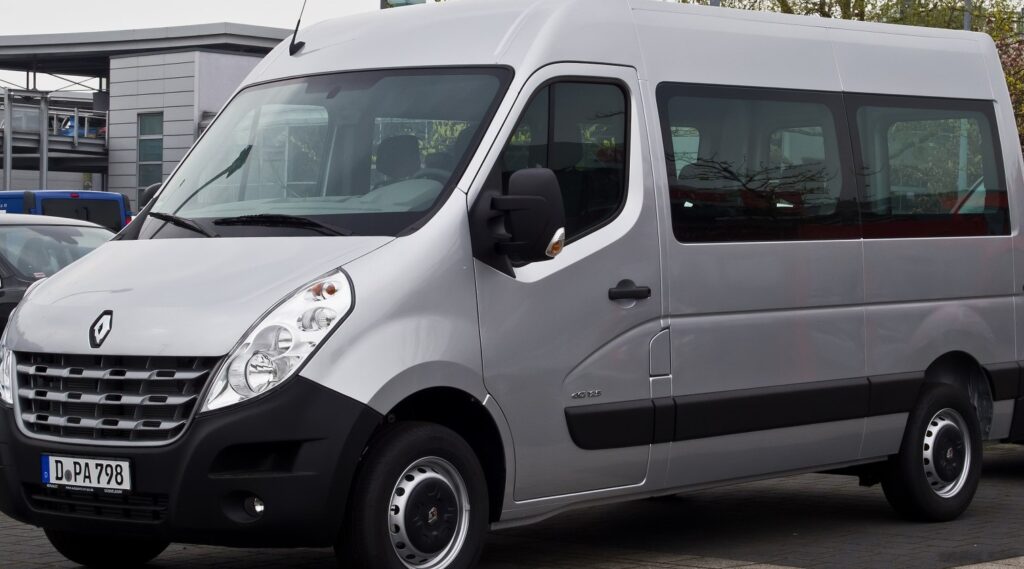
The Renault Master III Phase II, specifically the 2.3 dCi (110 horsepower) Crew Van L1H1 variant produced between 2014 and 2016, represents a key offering in Renault’s commercial vehicle lineup. Positioned as a versatile and practical solution for businesses requiring both cargo space and passenger capacity, this iteration of the Master aimed to balance functionality with reasonable operating costs. The L1H1 designation indicates a short wheelbase and a low roof height, making it suitable for urban environments and applications where overall vehicle size is a consideration. This model falls within the third generation of the Master (X72), which was a significant update to the previous generation, focusing on improved reliability, efficiency, and driver comfort.
Technical Specifications
| Brand | Renault |
| Model | Master |
| Generation | Master III (Phase II, 2014) Crew Van |
| Type (Engine) | 2.3 dCi (110 Hp) L1H1 |
| Start of production | 2014 |
| End of production | 2016 |
| Powertrain Architecture | Internal Combustion engine |
| Body type | Minivan, MPV |
| Seats | 7 |
| Doors | 4 |
| Fuel consumption (urban) | 8.9-9.2 l/100 km (26.4 – 25.6 US mpg) |
| Fuel consumption (extra urban) | 7-7.6 l/100 km (33.6 – 30.9 US mpg) |
| Fuel consumption (combined) | 7.7-8.2 l/100 km (30.5 – 28.7 US mpg) |
| CO2 emissions | 201-216 g/km |
| Fuel Type | Diesel |
| Emission standard | Euro 5 |
| Power | 110 Hp @ 3500 rpm |
| Torque | 285 Nm @ 1500 rpm (210.21 lb.-ft. @ 1500 rpm) |
| Engine Model/Code | M9T |
| Engine displacement | 2298 cm3 (140.23 cu. in.) |
| Number of cylinders | 4 |
| Engine configuration | Inline |
| Number of valves per cylinder | 4 |
| Fuel injection system | Diesel Commonrail |
| Engine aspiration | Turbocharger, Intercooler |
| Engine oil capacity | 8 l (8.45 US qt | 7.04 UK qt) |
| Coolant capacity | 11 l (11.62 US qt | 9.68 UK qt) |
| Max. weight | 3300 kg (7275.25 lbs.) |
| Trunk (boot) space – maximum | 5000 l (176.57 cu. ft.) |
| Fuel tank capacity | 105 l (27.74 US gal | 23.1 UK gal) |
| Length | 5048 mm (198.74 in.) |
| Width | 2070 mm (81.5 in.) |
| Width including mirrors | 2470 mm (97.24 in.) |
| Height | 2303 mm (90.67 in.) |
| Wheelbase | 3182 mm (125.28 in.) |
| Front track | 1750 mm (68.9 in.) |
| Rear track | 1730 mm (68.11 in.) |
| Drivetrain | Front wheel drive |
| Number of gears | 6 gears, manual transmission |
Powertrain & Engine Architecture
The heart of the Master III 2.3 dCi (110) is the M9T engine, a 2.3-liter inline four-cylinder diesel. This engine utilizes a common rail direct injection system, delivering fuel at high pressure for optimized combustion. A turbocharger with an intercooler is employed to increase power output and improve efficiency. The 110 horsepower rating is achieved at 3500 rpm, while peak torque of 285 Nm (210.21 lb-ft) is available from just 1500 rpm, providing good low-end pulling power. The engine is known for its relatively robust construction, although early versions of the M9T engine (prior to the Phase II updates) were sometimes criticized for injector issues. The Phase II revisions aimed to address these concerns. The transmission is a six-speed manual gearbox, chosen for its durability and cost-effectiveness in a commercial vehicle application.
Driving Characteristics
The 110 hp output, coupled with the six-speed manual transmission, provides adequate performance for typical commercial duties. While not a particularly sporty vehicle, the Master offers sufficient power for highway cruising and carrying moderate loads. The gear ratios are tuned for fuel efficiency and usability, rather than outright acceleration. Compared to higher-powered versions of the Master (such as the 125 or 150 hp variants), this model feels noticeably slower, especially when fully loaded. However, the lower power output also contributes to improved fuel economy. The front-wheel-drive configuration provides predictable handling, but it does limit traction in slippery conditions compared to all-wheel-drive options available on some competitors.
Equipment & Trim Levels
The Crew Van L1H1 trim level is designed to offer a balance between cargo capacity and passenger comfort. Standard equipment typically includes air conditioning, a driver’s airbag, electric front windows, and a basic audio system. The Crew Van configuration features seating for up to seven occupants, with a second row of seats behind the driver. Optional extras could include rear parking sensors, a navigation system, and upgraded upholstery. The interior is generally functional and durable, with hard-wearing plastics and a focus on practicality rather than luxury.
Chassis & Braking
The Master III utilizes an independent McPherson strut suspension setup at the front, providing a reasonable level of ride comfort. The rear suspension employs a leaf spring design, which is a cost-effective solution for handling heavier loads. The front brakes are ventilated discs measuring 302mm, while the rear brakes are solid discs measuring 305mm. This braking setup is adequate for the vehicle’s weight and intended use. The steering is hydraulic power-assisted, providing a relatively light and responsive feel.
Market Reception & Comparison
The Renault Master III 2.3 dCi (110) Crew Van was generally well-received in the commercial vehicle market. Critics praised its versatility, fuel efficiency, and competitive pricing. Compared to rivals like the Fiat Ducato, Mercedes-Benz Sprinter, and Ford Transit, the Master offered a compelling package, particularly for businesses seeking a cost-effective and reliable van. The 110 hp engine was considered sufficient for many applications, but some reviewers noted that the higher-powered versions offered a more refined driving experience. Fuel economy figures of 7.7-8.2 l/100 km (30.5 – 28.7 US mpg) were competitive for its class.
Legacy
The Renault Master III 2.3 dCi (110) has proven to be a relatively durable and reliable workhorse in the used vehicle market. While the M9T engine can require maintenance, particularly regarding the fuel injectors, it is generally a robust unit when properly serviced. These vans are still commonly found in service today, testament to their build quality and practicality. The availability of spare parts is good, and maintenance costs are generally reasonable. The Crew Van configuration remains a popular choice for businesses needing to transport both personnel and equipment, making this variant a lasting presence in the commercial vehicle landscape.