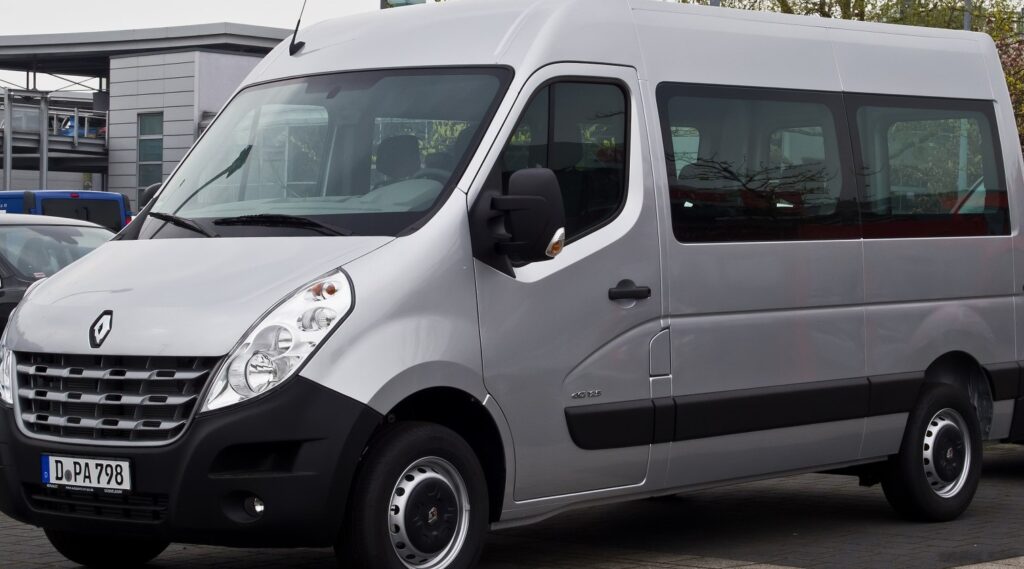
The Renault Master III Phase II, specifically the 2.3 dCi (110 hp) Crew Van L1H2 variant produced between 2014 and 2016, represents a popular configuration within the third generation of Renault’s large van lineup. Positioned as a versatile workhorse, this model catered to businesses and tradespeople requiring both cargo space and passenger capacity. The “L1H2” designation refers to the van’s length and roof height – a relatively compact footprint within the Master range, making it suitable for urban environments while still offering substantial interior volume. This variant was a key offering in European markets, where large vans are essential for commercial operations, and offered a balance between affordability, fuel efficiency, and practicality.
Technical Specifications
| Brand | Renault |
| Model | Master |
| Generation | Master III (Phase II, 2014) Crew Van |
| Type (Engine) | 2.3 dCi (110 Hp) L1H2 |
| Start of production | 2014 |
| End of production | 2016 |
| Powertrain Architecture | Internal Combustion engine |
| Body type | Minivan, MPV |
| Seats | 7 |
| Doors | 4 |
| Fuel consumption (urban) | 8.9-9.2 l/100 km (26.4 – 25.6 US mpg) |
| Fuel consumption (extra urban) | 7-7.6 l/100 km (33.6 – 30.9 US mpg) |
| Fuel consumption (combined) | 7.7-8.2 l/100 km (30.5 – 28.7 US mpg) |
| CO2 emissions | 201-216 g/km |
| Fuel Type | Diesel |
| Emission standard | Euro 5 |
| Power | 110 Hp @ 3500 rpm |
| Torque | 285 Nm @ 1500 rpm (210.21 lb.-ft. @ 1500 rpm) |
| Engine Model/Code | M9T |
| Engine displacement | 2298 cm3 (140.23 cu. in.) |
| Number of cylinders | 4 |
| Engine configuration | Inline |
| Number of valves per cylinder | 4 |
| Fuel injection system | Diesel Commonrail |
| Engine aspiration | Turbocharger, Intercooler |
| Engine oil capacity | 8 l (8.45 US qt | 7.04 UK qt) |
| Coolant capacity | 11 l (11.62 US qt | 9.68 UK qt) |
| Max. weight | 3300 kg (7275.25 lbs.) |
| Trunk (boot) space – maximum | 5300 l (187.17 cu. ft.) |
| Fuel tank capacity | 105 l (27.74 US gal | 23.1 UK gal) |
| Length | 5048 mm (198.74 in.) |
| Width | 2070 mm (81.5 in.) |
| Width including mirrors | 2470 mm (97.24 in.) |
| Height | 2499 mm (98.39 in.) |
| Wheelbase | 3182 mm (125.28 in.) |
| Front track | 1750 mm (68.9 in.) |
| Rear track | 1730 mm (68.11 in.) |
| Front overhang | 842 mm (33.15 in.) |
| Rear overhang | 1024 mm (40.31 in.) |
| Ride height (ground clearance) | 182 mm (7.17 in.) |
| Drivetrain | Front wheel drive |
| Number of gears | 6 |
| Gearbox type | Manual transmission |
| Front suspension | Independent, McPherson with coil spring and anti-roll bar |
| Rear suspension | Leaf spring |
| Front brakes | Ventilated discs, 302 mm |
| Rear brakes | Disc, 305 mm |
| Tires size | 225/65 R16 |
| Wheel rims size | 16 |
Powertrain & Engine Architecture
The heart of the Master III 2.3 dCi 110 hp is the M9T engine, a 2.3-liter inline four-cylinder diesel. This engine utilizes a common rail direct injection system, delivering fuel at high pressure for improved combustion efficiency and reduced emissions. A turbocharger with an intercooler is employed to boost power output, providing 110 horsepower at 3500 rpm and a respectable 285 Nm (210 lb-ft) of torque at a low 1500 rpm. This torque curve is particularly beneficial for a commercial vehicle, offering strong pulling power and responsiveness even when heavily loaded. The engine features four valves per cylinder, contributing to improved breathing and overall performance. The 6-speed manual transmission was the standard offering for this variant, providing a good balance between fuel economy and drivability.
Driving Characteristics
The 110 hp 2.3 dCi engine, paired with the manual transmission, delivers a practical, if not exhilarating, driving experience. Acceleration is adequate for most situations, but the van is not designed for rapid speed. The strength of this powertrain lies in its usability. The readily available torque makes it easy to navigate city streets and maintain highway speeds, even with a full load. The gear ratios are well-chosen to keep the engine within its optimal operating range. Compared to higher-powered versions of the Master III, such as the 125 hp or 150 hp variants, this model offers less outright performance but benefits from improved fuel economy. The manual transmission provides the driver with greater control over gear selection, which is advantageous when navigating challenging terrain or towing.
Equipment & Trim Levels
The Crew Van L1H2 trim level typically included features geared towards practicality and functionality. Standard equipment generally included power steering, a driver’s airbag, ABS brakes, and a basic audio system. The “Crew Van” designation signifies the presence of a second row of seats, increasing passenger capacity to seven. Interior upholstery was typically durable and easy to clean, reflecting the van’s commercial purpose. Optional extras could include air conditioning, electric windows, a passenger airbag, and upgraded audio systems. The dashboard layout was functional and straightforward, prioritizing ease of use over aesthetic appeal.
Chassis & Braking
The Renault Master III utilizes a front-wheel-drive layout, contributing to a lower load floor and improved space utilization. The front suspension employs an independent McPherson strut design with coil springs and an anti-roll bar, providing a comfortable ride and stable handling. The rear suspension utilizes a leaf spring setup, chosen for its durability and load-carrying capacity. Braking duties are handled by ventilated discs at the front and solid discs at the rear, providing adequate stopping power for the vehicle’s weight. The 16-inch steel wheels were standard, fitted with 225/65 R16 tires.
Market Reception & Comparison
The Renault Master III 2.3 dCi 110 hp Crew Van was generally well-received in the commercial vehicle market. Critics praised its practicality, fuel efficiency, and competitive pricing. Compared to rivals like the Fiat Ducato and Volkswagen Crafter, the Master offered a compelling package, particularly for businesses seeking a versatile and affordable van. The 110 hp engine was considered a good compromise between performance and economy, making it a popular choice for operators who prioritized running costs. However, some reviewers noted that the interior was somewhat basic compared to some competitors.
Legacy
The M9T engine, while generally reliable, is known to require regular maintenance, particularly regarding the turbocharger and fuel injection system. The Renault Master III, in general, has proven to be a durable and long-lasting vehicle, and well-maintained examples continue to be a common sight on European roads. In the used car market, this 2.3 dCi 110 hp variant represents a good value proposition for businesses or individuals seeking a practical and affordable large van. Its relatively simple mechanicals and readily available parts contribute to its ongoing appeal.